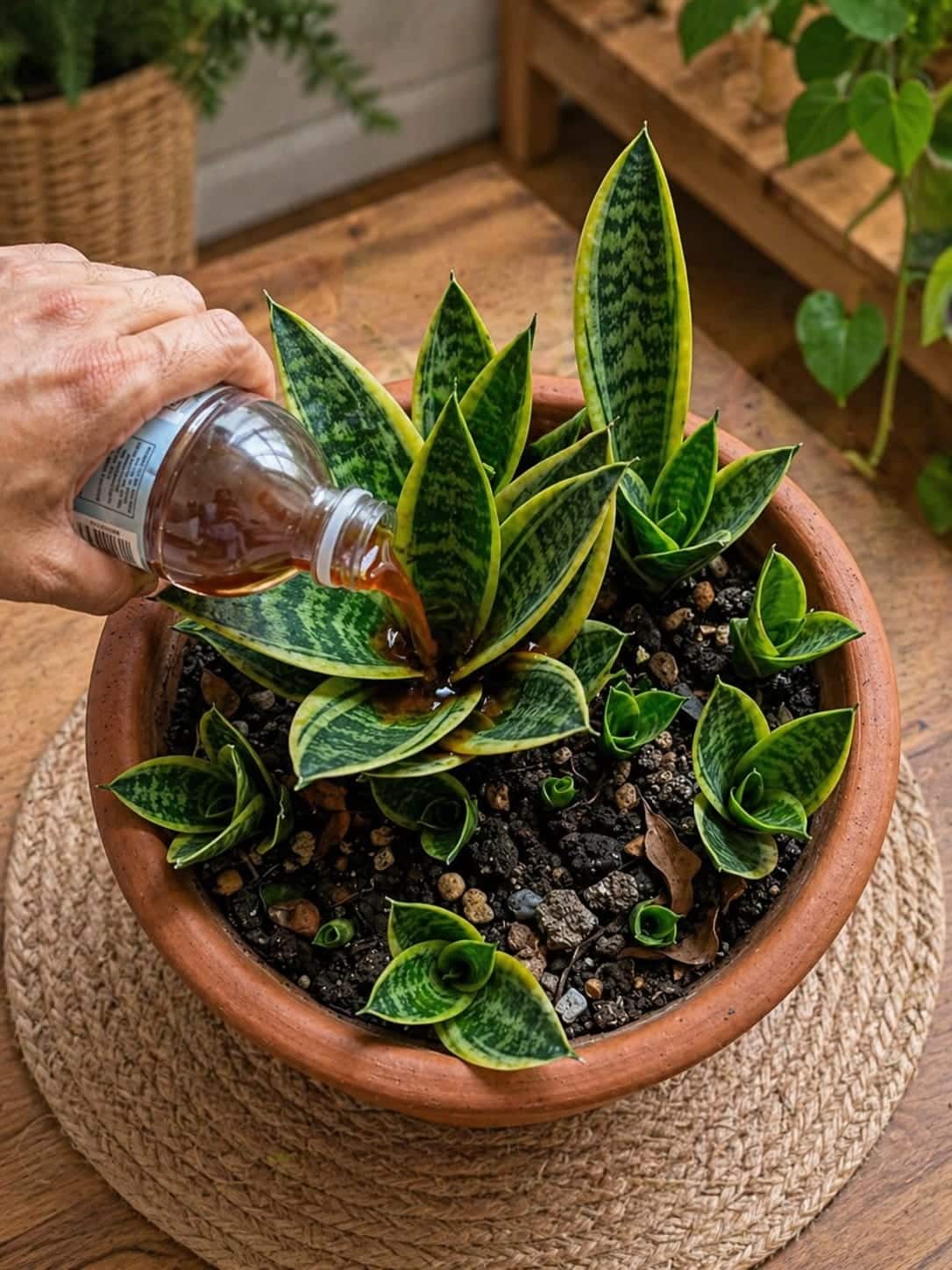
How Often Should You Repeat the Trick?
For homemade brown liquids such as banana peel tea, worm casting tea, or weak tea water, once every six to eight weeks during active growth is enough. For diluted succulent fertilizer, follow the label but use a weak dose, usually once every four to eight weeks during spring and summer.
Do not use brown liquid every week. Do not use it every time you water. Do not combine banana tea, compost tea, coffee, and fertilizer together. Too many additions can create buildup and confuse the plant’s root zone.
Plain water should be used most of the time. The brown liquid is an occasional support, not a regular replacement for water.
Can This Trick Make Snake Plants Grow More Pups?
It may help support pup production only if the plant is already healthy and growing. A weak brown rinse can provide a small nutrient boost, but pups mainly come from strong rhizomes and good conditions.
To encourage more pups, focus on these basics:
- Bright indirect light
- A pot with drainage holes
- Gritty fast-draining soil
- A slightly snug pot
- Careful watering
- Warm indoor temperatures
- Light feeding during active growth
A snake plant in bright light is much more likely to produce pups than one in a dark corner. A plant in well-draining soil is more likely to have healthy rhizomes. A slightly snug pot can also encourage the plant to send up new shoots.
The brown liquid trick can be part of the routine, but it is not the main reason pups appear.
Can This Trick Save a Weak Snake Plant?
Not by itself. If a snake plant is weak because it is dry, underfed, and otherwise healthy, a gentle brown rinse might help a little. But if the plant is weak because of root rot, no homemade liquid will save it.
If leaves are yellow and mushy, remove the plant from the pot and inspect the roots. Rotten rhizomes must be cut away. The plant should be repotted into fresh dry succulent mix.
If leaves are wrinkled and the soil is bone dry, the plant may need proper watering. A weak tonic is not the first step; hydration is.
If the plant is in low light, move it brighter. If the pot has no drainage, fix that first.
Brown liquid can support a healthy plant. It cannot replace rescue care for a sick one.
Can This Trick Make Leaves Taller?
The brown liquid will not make existing leaves taller. Mature leaves do not suddenly stretch higher after watering. New leaves may grow stronger and taller if the plant has enough light, nutrients, and root health.
Different snake plant varieties also have different natural heights. Some stay short and compact. Others grow tall. A small variety will not become a giant because of one homemade trick.
If you want taller, stronger leaves, give the plant bright indirect light and avoid overwatering. Feed lightly during the growing season if needed. Keep roots healthy.
Strong future leaves come from long-term care, not a single pour.
Can This Trick Make Leaves Greener?
A healthy snake plant’s color depends on variety, light, and general health. A brown liquid may support the plant slightly, but it will not instantly deepen the leaf color.
If leaves look pale because the plant is in low light, improve light. If they look dull because they are dusty, wipe them with a damp cloth. If they are yellowing from overwatering, inspect the roots.
Variegated snake plants have natural yellow edges and patterned centers. These markings will not change dramatically from a tonic.
The best way to make the plant look greener is to keep it clean, healthy, and well-lit.
Why Soil Quality Matters More Than the Liquid
The brown liquid trick works only if the soil can handle it. Snake plants need a gritty mix that drains quickly. If the soil is dense and heavy, any liquid can stay too long and create rot.
A good snake plant mix can include:
- 2 parts cactus or succulent mix
- 1 part perlite or pumice
- 1 part coarse sand, lava rock, fine bark, or small gravel
This kind of mix lets oxygen reach the roots. It also allows excess liquid to drain away. If your plant is in regular potting soil that stays wet for many days, repotting will help more than any homemade brown tea.
Before using the trick, ask yourself: does the potting mix dry properly? If not, fix the soil first.
Why Drainage Is Non-Negotiable
A pot without drainage is risky for snake plants. Water collects at the bottom and can rot the roots even when the surface looks dry. Homemade liquids are even riskier because they may turn stale if trapped.
Always use a pot with drainage holes. If you love a decorative pot without holes, use it as an outer cover pot. Keep the snake plant in a plastic nursery pot with drainage inside it. Remove the inner pot for watering, let it drain fully, then place it back.
After using the brown liquid, always empty the saucer. Do not let the pot sit in a puddle.
Drainage is what makes this trick safe.
Best Light After Using the Brown Liquid
After using any growth-support liquid, place the snake plant in bright indirect light. Light helps the plant use water and nutrients. In low light, the soil dries slowly and growth remains weak.
Morning sun is usually fine. Bright filtered light is excellent. If the plant has been in a dim spot, move it gradually to avoid shock.
Do not place a newly watered snake plant in a cold, dark corner. That is the perfect recipe for slow drying and root stress.
If you want the plant to wake up, light is the most important partner to the brown liquid trick.
How to Keep the Pups Healthy
The pups in the image make the plant look lively and full. To keep pups healthy, avoid overwatering. Small pups can rot if water sits around their bases for too long.
Water the soil carefully and let the pot dry between waterings. Do not pour thick liquid into every tiny pup rosette. Keep the leaf centers dry.
Give the pot bright light so the pups grow strong instead of weak and stretched. If the pot becomes crowded, you can divide some pups once they have their own roots.
Pups are a sign of a healthy rhizome system. Protect the roots, and the pups will have the best chance.
Should You Divide the Pups?
You do not have to divide snake plant pups right away. A pot with many pups can look beautiful and full. However, if the plant becomes overcrowded or the pot dries too quickly, division may help.
Wait until pups are large enough to have roots or a rhizome connection. Remove the plant from the pot, gently separate the pup with a clean knife, and plant it in its own small pot with gritty soil.
After division, let cut areas dry briefly before watering. Do not soak freshly divided plants.
Dividing pups is a great way to create new plants, but leaving them together creates a fuller display.
What If the Brown Liquid Smells Bad?
Do not use it. A sour or rotten smell means the liquid is fermenting or contaminated. Snake plants do not need fermented kitchen water in their pots.
Fresh worm casting tea should smell earthy. Fresh banana peel tea should smell mild. Weak tea water should smell like weak tea. If any liquid smells alcoholic, sour, rotten, or unpleasant, discard it.
If you already poured bad-smelling liquid into the pot, let the soil dry and watch for gnats or odor. If the pot smells sour later, remove the top layer of soil or repot into fresh mix.
Freshness is essential for homemade plant liquids.
What If Fungus Gnats Appear?
Fungus gnats are a sign that the soil is staying too moist or has too much decaying organic material. Homemade brown liquids can contribute if used too strongly or too often.
If gnats appear, stop using the brown liquid. Let the soil dry more deeply. Use yellow sticky traps. Remove dead leaves and debris from the soil surface.
If the problem continues, repot into fresh gritty soil. Avoid compost-heavy mixes indoors.
The best gnat prevention for snake plants is dry, clean soil.
What If Mold Appears on the Soil?
Mold can appear if the brown liquid leaves organic residue and the soil stays damp. Stop using the trick immediately. Scrape off the moldy top layer and replace it with fresh dry succulent mix.
Move the plant to brighter indirect light and improve airflow. Water less often. Make sure the pot drains.
If mold returns, the soil may be too heavy or the pot may be staying wet. Repotting is the better solution.
Mold means the environment is too damp for a snake plant.
What If Leaves Turn Yellow After Using It?
Yellow leaves after using brown liquid may mean the soil stayed too wet or the mixture was too strong. Check the base of the yellow leaves. If they are soft or mushy, root or rhizome rot may be starting.
Stop watering. Let the soil dry. If several leaves yellow quickly, remove the plant from the pot and inspect the roots. Cut away rotten sections and repot into fresh gritty mix.
If only one old outer leaf yellows, it may be natural aging. But multiple yellow leaves are a warning sign.
The brown liquid should never make the plant wetter for longer than plain water would.
Can You Mix Brown Liquid With White Powder?
It is better not to combine multiple tricks. Some people use white powder, rice water, banana tea, coffee, eggshells, and fertilizer all at once, hoping for faster results. This can overwhelm the soil and make it hard to know what caused a problem.
If you use a brown liquid, do not add another homemade treatment at the same time. Keep care simple. Use plain water for the next several waterings.
Snake plants prefer moderation. Too many kitchen tricks can create buildup, odor, pests, and root stress.
One gentle method at a time is safest.
Can You Use the Trick on Other Succulents?
Some succulents may tolerate weak worm casting tea or diluted fertilizer, but many succulents are even more sensitive to overwatering than snake plants. Avoid using homemade brown liquids on delicate succulents unless you are very careful.
For most succulents, bright light, gritty soil, and correct watering matter more than plant teas. If using any liquid supplement, keep it weak and rare.
Never use thick compost tea, coffee, or banana water on small succulents that dry slowly.
Snake plants are tough, but the same caution still applies.
A Safe Brown Liquid Snake Plant Routine
If you want to try the trick safely, follow this routine:
- Choose one safe brown liquid: worm casting tea, diluted banana peel tea, weak tea water, or diluted succulent fertilizer.
- Make sure the liquid is fresh and mild.
- Strain homemade liquids completely.
- Check that the snake plant soil is dry.
- Make sure the pot has drainage holes.
- Pour slowly around the soil, not into the leaf centers.
- Use a modest amount.
- Let the pot drain fully.
- Empty the saucer.
- Use plain water for the next several waterings.
This routine gives the plant a gentle boost without turning the pot into a wet compost bin.
Common Mistakes With the Brown Liquid Trick
Using It Too Often
Snake plants do not need frequent tonics. Once every six to eight weeks during active growth is enough for homemade liquids.
Using Strong or Fermented Liquid
Sour banana water, strong compost tea, or old mixtures can attract pests and harm the soil.
Pouring Into the Leaf Center
Liquid trapped in the rosette can cause rot. Aim for the soil.
Using Coffee as a Main Treatment
Coffee can create residue and moisture problems. It is not ideal for snake plants.
Using It on Wet Soil
The soil must be dry before watering with any liquid.
Ignoring Drainage
No trick is safe in a pot that traps water.
Expecting Instant Pups
Pups take time and come from healthy rhizomes.
Signs the Trick Is Working
If the brown liquid trick is working safely, the plant should remain firm and healthy. The soil should dry normally. There should be no sour smell, no mold, no gnats, and no yellow mushy leaves.
Over time, you may notice stronger new leaves or more pups if the plant is in good light and active growth. The change will not be instant. Snake plants grow slowly, so results may take weeks or months.
The best sign is stable, firm growth. If the plant looks clean, upright, and slowly fuller, your routine is working.
Signs You Should Stop
Stop using the brown liquid if the soil smells bad, mold appears, gnats show up, leaves yellow, bases soften, or the pot stays wet too long. Return to plain water and let the plant dry.
If symptoms continue, remove the plant from the pot and inspect the roots. Repot into fresh gritty soil if needed.
A good plant trick should never create more problems than it solves. If your snake plant does not respond well, skip the trick completely.
Frequently Asked Questions
What is the brown liquid poured on snake plants?
It is usually a weak homemade plant tea such as worm casting tea, banana peel tea, weak black tea, or diluted organic fertilizer.
Can brown liquid make snake plants grow pups?
It may support a healthy plant slightly, but pups mainly come from bright light, healthy rhizomes, good soil, and proper watering.
Can I pour coffee on my snake plant?
Coffee is not recommended as a regular treatment. It can affect the soil, leave residue, and contribute to moisture problems.
Is banana peel tea good for snake plants?
It can be used rarely if fresh, strained, and heavily diluted. Do not put banana peel pieces into the pot.
Is worm casting tea safe for snake plants?
Yes, when made weak and used occasionally on dry soil during active growth.
How often should I use the brown liquid?
Once every six to eight weeks during spring or summer is enough for homemade liquids.
Can I use it in winter?
It is better to avoid it in winter unless the plant is actively growing in bright warm conditions.
Can this fix root rot?
No. Root rot requires removing rotten roots and repotting into fresh dry gritty soil.
Should I water after using the brown liquid?
The brown liquid counts as watering. Do not add extra water afterward unless the mixture was extremely weak and the pot still needs a full watering.
What is better than this trick?
Bright indirect light, drainage holes, gritty soil, careful watering, and occasional weak succulent fertilizer are more important for long-term snake plant health.
Final Thoughts
The brown liquid snake plant trick looks powerful because it feels like feeding the plant with a rich homemade tonic. When poured around a pot full of healthy leaves and tiny pups, it gives the impression that one simple ingredient can wake the whole plant up. But the safest version of this trick is gentle, diluted, and occasional.
The brown liquid can be weak worm casting tea, diluted banana peel tea, weak unsweetened black tea, or diluted organic succulent fertilizer. It should never be strong, sticky, sour, salty, sweet, or fermented. It should never be poured into a pot without drainage. It should never be used on wet soil or repeated every week.
Snake plants grow best when their rhizomes are healthy. That means the soil must be airy and fast-draining. The pot must have drainage holes. The plant must receive bright indirect light. Watering must happen only after the soil dries. These basics matter more than any homemade plant tea.
If your snake plant is already healthy and actively growing, the brown liquid trick can be a small seasonal boost. It may lightly refresh the soil and support new growth. If your plant is weak, yellowing, mushy, or sitting in wet soil, do not reach for a tonic first. Check the roots, fix the soil, and correct the watering routine.
Used wisely, this trick can become a satisfying part of your indoor plant care. It can help you slow down, inspect the soil, care for the pups, and support the plant during the growing season. Used too strongly, it can cause the very problems snake plants hate: wet soil, odor, gnats, and rot.
Keep the liquid weak. Keep the pot draining. Keep the leaf centers dry. Give the plant bright light and patience. With steady care, your snake plant can continue producing firm upright leaves, fresh pups, and a full beautiful shape that makes your indoor garden feel alive.