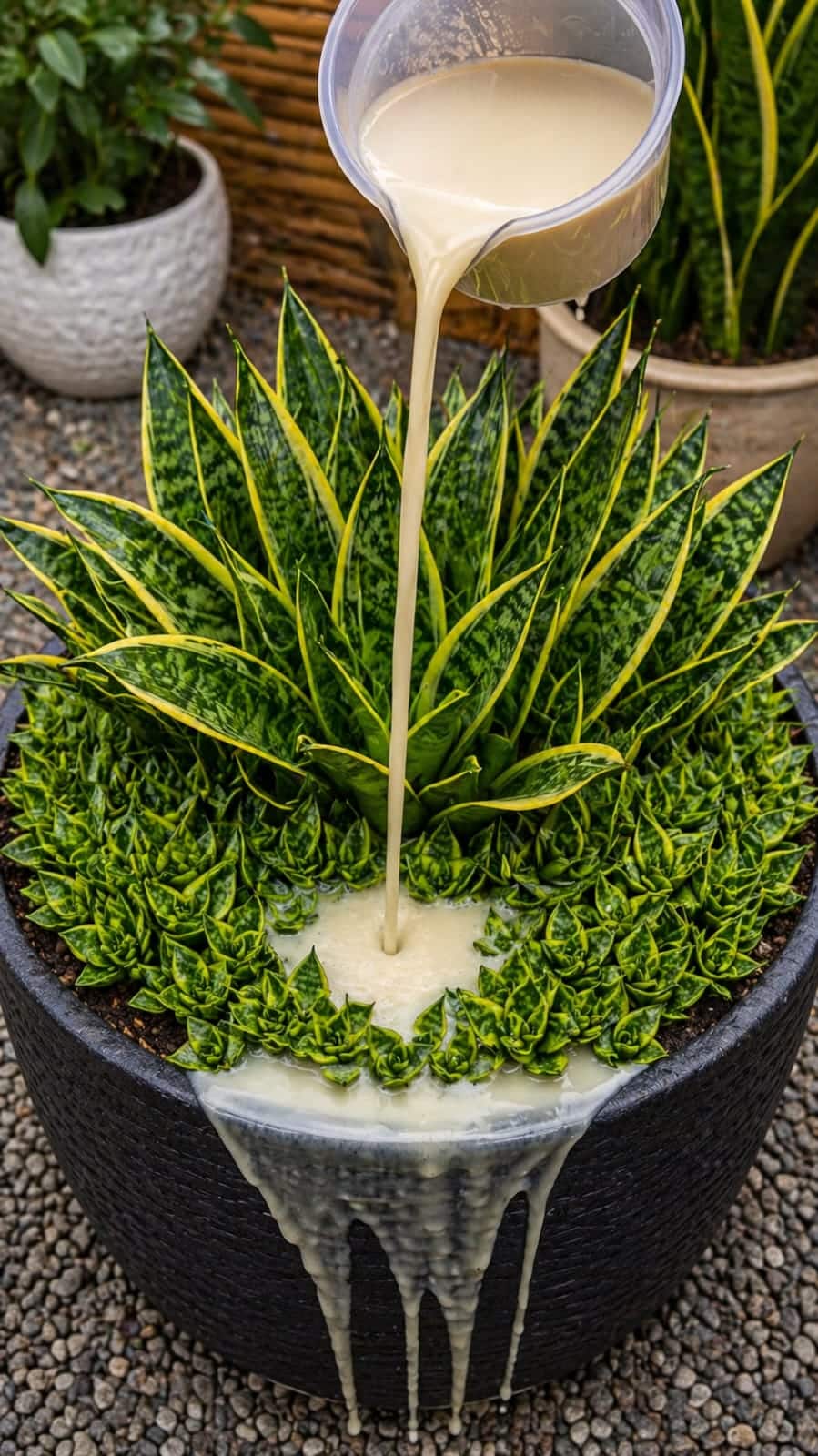
What About the Liquid Dripping Over the Pot?
The dripping effect looks dramatic in the image, but in real life you should avoid letting homemade liquid run down the outside of the pot. It can stain the planter, attract insects, smell bad, or leave sticky residue.
If liquid overflows, clean it immediately. Wipe the pot and the surface underneath. Check the saucer and empty it. If the pot is outdoors, rinse the outside of the container.
Overflow also means the soil may not be absorbing properly or the liquid is being poured too fast. Slow down and use less next time.
A plant tonic should go to the roots, not down the side of the container.
Can Rice Water Attract Fungus Gnats?
Rice water can contribute to fungus gnats if it is too strong, used too often, or poured into soil that stays wet. Fungus gnats love damp organic surfaces. Snake plants should not have constantly moist soil.
To reduce the risk, use fresh rice water only. Dilute it well. Apply it rarely. Let the soil dry completely before watering again. Do not leave rice particles on the soil surface.
If fungus gnats appear, stop using rice water. Let the soil dry more deeply. Use yellow sticky traps. Remove decaying debris. If the problem continues, repot into fresh gritty soil.
The best fungus gnat prevention is dry, clean, airy soil.
What If Mold Appears After the White Pour?
Mold means the surface stayed too damp or the liquid left too much organic material behind. Stop using the white pour immediately.
Scrape off the moldy top layer of soil and replace it with fresh dry succulent mix. Move the plant to brighter indirect light and improve airflow. Water less often.
If mold keeps returning, the potting mix may be too dense or the pot may not be draining well. Repotting is the better solution.
A small amount of surface mold may not kill the plant immediately, but it is a warning sign that conditions are too moist for snake plants.
What If the Soil Smells Sour?
A sour smell after using the creamy white pour means the liquid was too strong, too old, or the soil stayed wet too long. Stop using the trick.
Let the soil dry. Remove any visible residue from the surface. If the smell remains, remove the plant from the pot and inspect the roots. Rotten roots or rhizomes should be trimmed away. Repot into fresh gritty soil.
Do not try to cover the smell with more powders, perfumes, cinnamon, or another homemade liquid. Fix the moisture problem.
Healthy snake plant soil should smell earthy or neutral, not sour.
What If Leaves Turn Yellow After Using It?
Yellow leaves after using the white pour may mean overwatering or root stress. Check the base of the yellow leaves. If they are soft or mushy, root or rhizome rot may be starting.
Stop watering. Let the pot dry. If more leaves yellow, remove the plant and inspect the roots. Healthy rhizomes are firm. Rotten ones are soft, dark, or smelly.
Cut away rotten tissue and repot into fresh dry mix. Do not use the white pour again until the plant has fully recovered.
One old yellow leaf may be normal. Several yellow leaves after a creamy treatment are a warning.
Can You Use This Trick Outdoors?
If your snake plant arrangement is outdoors in warm weather, the trick may be slightly less risky because airflow and evaporation are better. However, the same rules still apply. Use a thin liquid, not a thick one. Apply only when the soil is dry. Make sure the pot drains. Avoid pouring into leaf centers.
Outdoor pots may dry faster, but they can also receive rain. Do not use the white pour right before heavy rain. Too much water can still cause rot.
If the plant is in direct sun, avoid splashing liquid on the leaves because residue may burn or mark the foliage.
Outdoor use still requires moderation.
Best Light After Using the White Pour
After using the white pour, keep the plant in bright indirect light. Light helps the plant use water and nutrients. In a dim room, the soil will dry more slowly and growth may remain sluggish.
Snake plants can tolerate low light, but they grow better and produce more pups in bright conditions. Morning sun is often fine. Bright filtered light is excellent. Avoid sudden harsh afternoon sun if the plant has been indoors or shaded.
If your snake plant is not growing, better light may help more than any homemade liquid.
The white pour works best when light, soil, and watering are already correct.
How to Keep the Pups Healthy
The small pups around the base are the most exciting part of the arrangement. To keep them healthy, avoid trapping liquid in their centers. Small rosettes can rot more easily than tall mature leaves because they sit closer to the soil.
When watering, pour between the pups, not into them. After applying the liquid, look closely and blot away any puddles sitting inside the small leaves.
Give the pups bright indirect light so they grow firm and colorful. Do not overfeed them. Young snake plants still prefer careful watering.
As the pups grow, you can leave them for a fuller pot or divide some later to create new plants.
Should You Divide a Pot Full of Pups?
A pot full of pups can look beautiful, but eventually it may become crowded. Crowding is not always bad for snake plants, but too many pups can make watering difficult and reduce airflow.
You can divide pups when they are large enough to have their own roots or rhizome connection. Remove the plant from the pot, gently separate the pup with a clean knife, and plant it in gritty soil. Let cut areas dry before watering.
If you want the lush full look, leave the pups together. If you want more plants, divide them.
Do not divide immediately after using a creamy liquid. Let the soil dry and the plant settle first.
Can This Trick Replace Fertilizer?
Rice water and milk water do not replace fertilizer. They are mild homemade rinses, not balanced plant food. If your snake plant truly needs nutrients, a weak succulent fertilizer is more predictable.
Snake plants do not need much fertilizer. Too much can cause weak growth, brown tips, or salt buildup. Feed lightly during spring and summer only.
If you use rice water one month, do not also fertilize heavily at the same time. Keep the routine simple. Too many treatments can overwhelm the soil.
The best long-term feeding plan is occasional weak fertilizer and mostly plain water.
Can You Mix the White Pour With Other Tricks?
It is better not to mix multiple tricks at once. Do not combine rice water, milk, banana peel tea, coffee, baking soda, eggshell powder, and fertilizer in the same pot. This can create buildup, odor, pests, and root stress.
If you use the white pour, keep the next few waterings plain. Watch how the plant responds. If the plant stays firm and healthy, you can repeat the trick weeks later. If there are problems, stop.
Snake plants respond best to simple care. One gentle supplement at a time is enough.
Common Mistakes With the Creamy White Pour Trick
Using Straight Milk
Straight milk is too strong and can sour in the soil. Use rice water or weak fertilizer instead.
Making the Liquid Too Thick
Thick liquid can coat the soil and reduce airflow. Keep it watery.
Using It on Wet Soil
The soil must be dry before applying any liquid.
Pouring Into Leaf Centers
Liquid trapped between leaves can cause rot. Aim for the soil.
Using It Too Often
Once every six to eight weeks is enough for rice water.
Ignoring Drainage
A pot without drainage makes any liquid risky.
Expecting Instant Pups
Pups grow from healthy rhizomes over time. No liquid creates them overnight.
Signs the Trick Is Working
If the trick is working safely, the plant should remain firm and upright. The soil should dry normally. There should be no sour smell, no mold, no gnats, and no mushy leaves.
Over time, during active growth, you may notice fresh pups, stronger leaves, or a fuller arrangement. These changes may take weeks or months. Snake plants are slow and steady growers.
A successful result is not a dramatic overnight transformation. It is a stable plant that continues producing healthy new growth.
Signs You Should Stop Immediately
Stop using the white pour if you notice sour soil, mold, fungus gnats, yellow leaves, soft bases, sticky residue, or soil that stays wet too long. Return to plain water and let the plant dry.
If the plant continues to decline, inspect the roots. Repot into fresh gritty soil if needed.
Do not keep adding more homemade liquid to fix a problem caused by too much moisture. More liquid will not solve root stress.
Frequently Asked Questions
What is the creamy white liquid poured on snake plants?
It is usually diluted rice water, very weak milk water, or a pale diluted fertilizer. The safest homemade version is fresh diluted rice water.
Can I pour milk on my snake plant?
Straight milk is not recommended. If using milk at all, dilute 1 teaspoon of plain milk in 4 cups of water and use rarely.
Is rice water good for snake plants?
Fresh diluted rice water can be used occasionally as a mild rinse, but it is not a complete fertilizer and should not be overused.
How often should I use the white pour?
Use rice water once every six to eight weeks during spring or summer. Use plain water most of the time.
Can this make snake plants grow more pups?
It may support healthy growth slightly, but pups mainly come from bright light, healthy rhizomes, good soil, and correct watering.
Can I use it on wet soil?
No. Only use it when the soil is dry and the plant is ready for watering.
Can I pour it into the center of the plant?
It is safer to pour around the soil, not into leaf centers. Trapped liquid can cause rot.
What if the liquid spills over the pot?
Clean it immediately and use less next time. Overflow can leave residue and may mean you poured too much.
Can this save a dying snake plant?
No. A dying snake plant needs diagnosis first. Root rot requires trimming and repotting, not a creamy pour.
What matters more than this trick?
Bright indirect light, fast-draining soil, drainage holes, careful watering, and healthy rhizomes matter much more than any homemade liquid.
Final Thoughts
The creamy white pour snake plant trick looks powerful because it creates such a dramatic plant-care moment. A pale liquid flowing into a full pot of snake plants makes it seem like the roots are receiving a secret growth formula. When the pot is already packed with pups, the effect is even more exciting.
But the safest version of this trick is gentle. The liquid should be thin, fresh, diluted, and used only occasionally. Fresh rice water is one of the best homemade options. Weak succulent fertilizer is the most reliable option for actual nutrition. Milk water should be used only with extreme dilution, and straight milk should be avoided.
Snake plants do not like heavy, wet, sticky soil. They need drainage, airflow, and dry-down time. Always use a pot with drainage holes. Always check that the soil is dry before applying the white pour. Always pour around the soil instead of into the leaf centers. Always let the pot drain fully.
If the soil smells sour, mold appears, gnats show up, or leaves become yellow and mushy, stop using the trick. Return to plain water, let the plant dry, and inspect the roots if needed.
The white pour can be a small seasonal boost for a healthy plant, but it is not the real secret behind a full snake plant arrangement. The real secret is bright indirect light, gritty soil, healthy rhizomes, careful watering, and patience. Those are the conditions that allow snake plants to produce firm leaves and fresh pups.
Use the creamy white pour wisely, and it can become a satisfying part of your plant-care routine. Keep it light, keep it rare, keep it clean, and let the plant do the rest. Over time, your snake plant can reward you with stronger leaves, fresh baby shoots, and a lush full display that looks beautiful in any indoor garden.