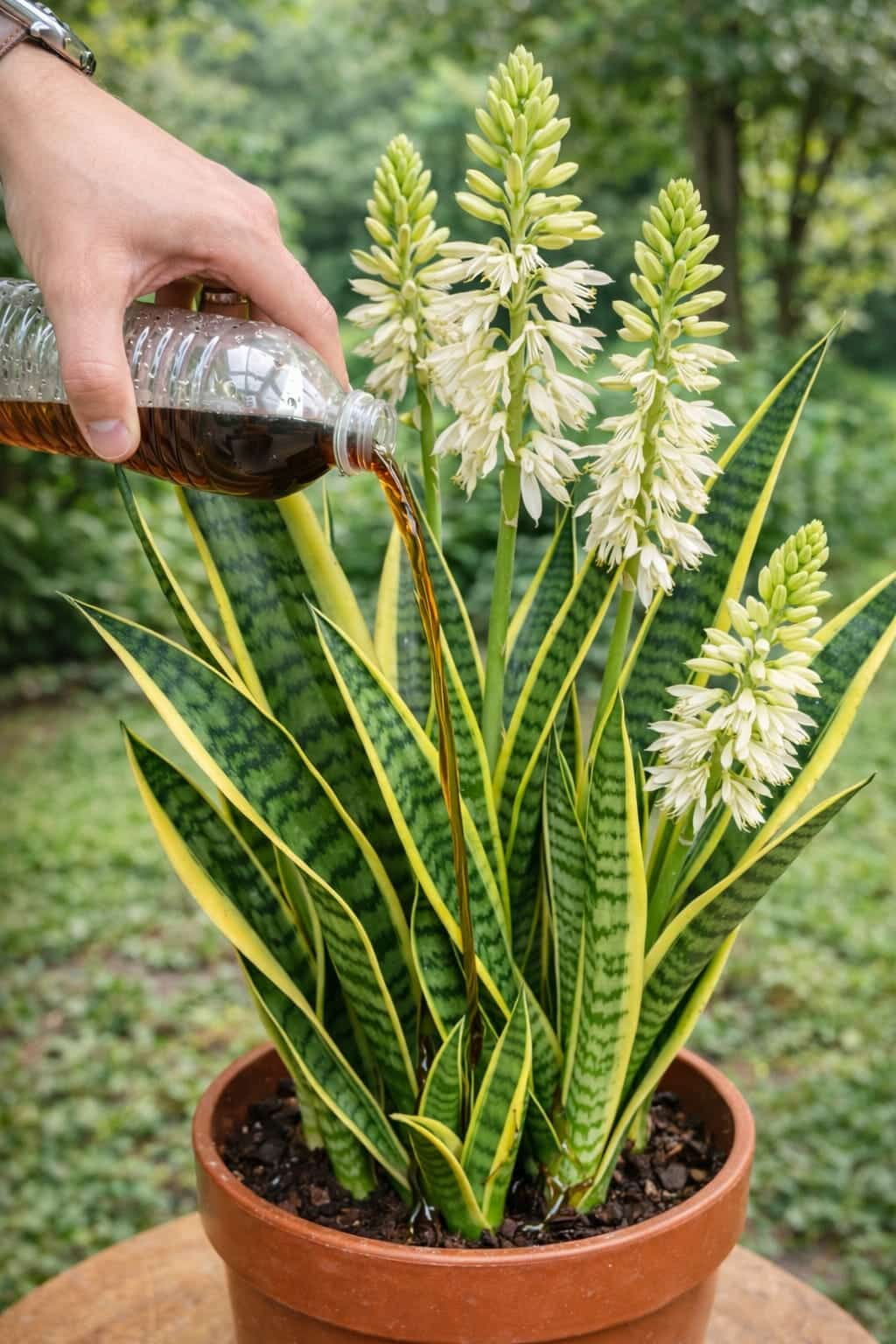
Snake plants rarely bloom indoors – but when they do, it’s magical. Learn the real secrets: bright light, controlled stress, root‑bound pots, and patience. No magic ingredients, just proven care.
Let’s be honest: snake plants (Sansevieria, now Dracaena) are famous as the “indestructible plant.” They survive neglect, low light, irregular watering, and even the occasional forgotten month. They’re the plant you buy when you’re not sure you can keep anything alive.
But blooming? That’s a completely different level.
Most plant owners will never see their snake plant flower – even after years of care. When those rare, fragrant blooms appear, it feels like magic. But the path to that magic is often misunderstood. People search for “secret tricks,” miracle ingredients, or viral hacks, hoping for a shortcut.
👉 They’re missing the real truth.
In this guide, I’ll reveal the hidden secrets that actually trigger snake plant blooms. No hype, no false promises – just the science of how these resilient plants reproduce, and exactly what you need to do (and stop doing) to encourage those elusive flowers.
Let’s set the record straight.
Why Snake Plant Blooming Is So Rare Indoors
First, you need to understand this: snake plants don’t bloom easily indoors. They are built to survive – not to flower constantly. In their native habitat of West Africa, they experience seasonal changes: periods of drought, bright sun, and cooler nights. These conditions trigger a survival response: reproduce before resources run out.
Indoors, we tend to provide consistent, comfortable conditions – regular water, stable temperatures, and often low light. That’s great for survival, but it doesn’t signal the plant to bloom.
In fact, blooming only happens when:
· The plant is mature (usually 3–5 years old or more).
· The environment feels stable (not constantly changing).
· And there’s just a bit of “controlled stress” – not neglect, but gentle pressure.
Flowering is a reproduction response, not a growth phase. The plant shifts energy from producing leaves and roots to producing flowers and seeds.
The Real Secret: Slight Stress (Not Perfect Care)
Here’s something most people don’t expect: snake plants bloom when conditions are slightly uncomfortable. Yes, you read that right.
When your plant feels:
· Slightly root‑bound – roots are crowded, but not strangling.
· A bit dry – soil is allowed to dry out completely between waterings.
· Undisturbed for long periods – not moved, rotated, or repotted frequently.
👉 It shifts energy from survival mode into reproduction mode (flowers).
This is not neglect – it’s mimicking the natural cycle of drought and recovery that signals “time to reproduce before conditions get worse.” But there’s a fine line. Too much stress (severe underwatering, extreme root crowding) will harm the plant. The goal is mild, healthy stress.
The 5 Real Requirements for Snake Plant Blooms
Let’s break down exactly what your snake plant needs – and what you need to stop doing.
☀️ 1. Light Is the #1 Trigger
If your snake plant is sitting in a dark corner, it will never bloom. Even though it survives in low light, blooming requires energy – and energy comes from light.
Light Level Bloom Potential
Low light (north window, dark corner) Almost zero chance
Medium light (few feet from east/west window) Rare, possible
Bright, indirect light (right by east/west window, or filtered south window) Best chance
What to do: Move your snake plant to a spot where it receives several hours of bright, indirect light daily. An east‑facing window is ideal – gentle morning sun, bright indirect light the rest of the day. If you only have a south window, use a sheer curtain to filter harsh afternoon rays.
Pro tip: If your snake plant has been in a dark corner for years, move it gradually over 2–3 weeks to avoid shock. A sudden move to bright light can cause leaf burn.
💧 2. Water Less Than You Think
Overwatering is the #1 mistake that prevents blooming. Snake plants are succulents – they store water in their thick leaves and roots. They come from dry environments and are adapted to long periods without rain.
Watering Guideline For Bloom Encouragement
When to water Only when the soil is completely dry all the way through. Stick your finger 2–3 inches into the soil – if dry, water; if damp, wait.
How often In bright light: every 2–3 weeks. In lower light: every 4–6 weeks.
Drought stress Allowing the plant to experience mild thirst signals it to bloom.
What to avoid: Watering on a schedule, keeping the soil constantly moist, or letting water sit in the saucer. Too much water keeps the plant in “growth mode” instead of “bloom mode.”
Pro tip: When you do water, water thoroughly until it runs out the drainage holes, then empty the saucer. Let the soil dry completely before the next watering.
🪴 3. Keep It Root‑Bound – Don’t Repot Too Often
Most people repot their snake plants too often, thinking they’re “helping.” But here’s the truth: a slightly crowded pot actually encourages blooming.
When roots feel tight, the plant senses limited space and tries to reproduce (flowers) before it runs out of room. This is a natural survival mechanism.
Repotting Guideline For Blooms
How often Every 2–3 years, or when roots are visibly growing out of the drainage holes.
Pot size Only 1–2 inches larger than the current pot. A snug pot is better.
Avoid Repotting annually or moving to a much larger pot.
Pro tip: If your snake plant hasn’t bloomed and seems happy, leave it alone. Don’t repot just because you think you “should.” Let it get a little crowded.
🌡️ 4. Stability Matters More Than Any Trick
Snake plants hate constant change. If you keep moving it around, rotating it weekly, or shifting it from room to room, it will never feel secure enough to bloom.
Stability Factor Best Practice
Location Keep the plant in one spot for months at a time.
Temperature Avoid drafts, sudden drops, or proximity to heating/cooling vents.
Rotation If you rotate for even growth, do it slowly – once a month at most.
Pro tip: Mark the pot with a small piece of tape on the side facing the window. That way you can return it to the exact same orientation after cleaning or watering.
⏳ 5. Age Is a Non‑Negotiable Factor
If your plant is young, it won’t bloom – no matter what you do. Most snake plants need to be at least 3–5 years old (sometimes older) before they have enough energy reserves to produce flowers.
Age Bloom Likelihood
Under 2 years Almost zero
3–5 years Possible with perfect conditions
5+ years Most likely
Pro tip: If you bought a small snake plant from a big box store, it’s probably only 1–2 years old. Be patient. Focus on keeping it healthy, and in a few years, you might be rewarded.
Continue to Page 2
Continue to page 2 for more details about this article and the key points many readers miss on the first page.