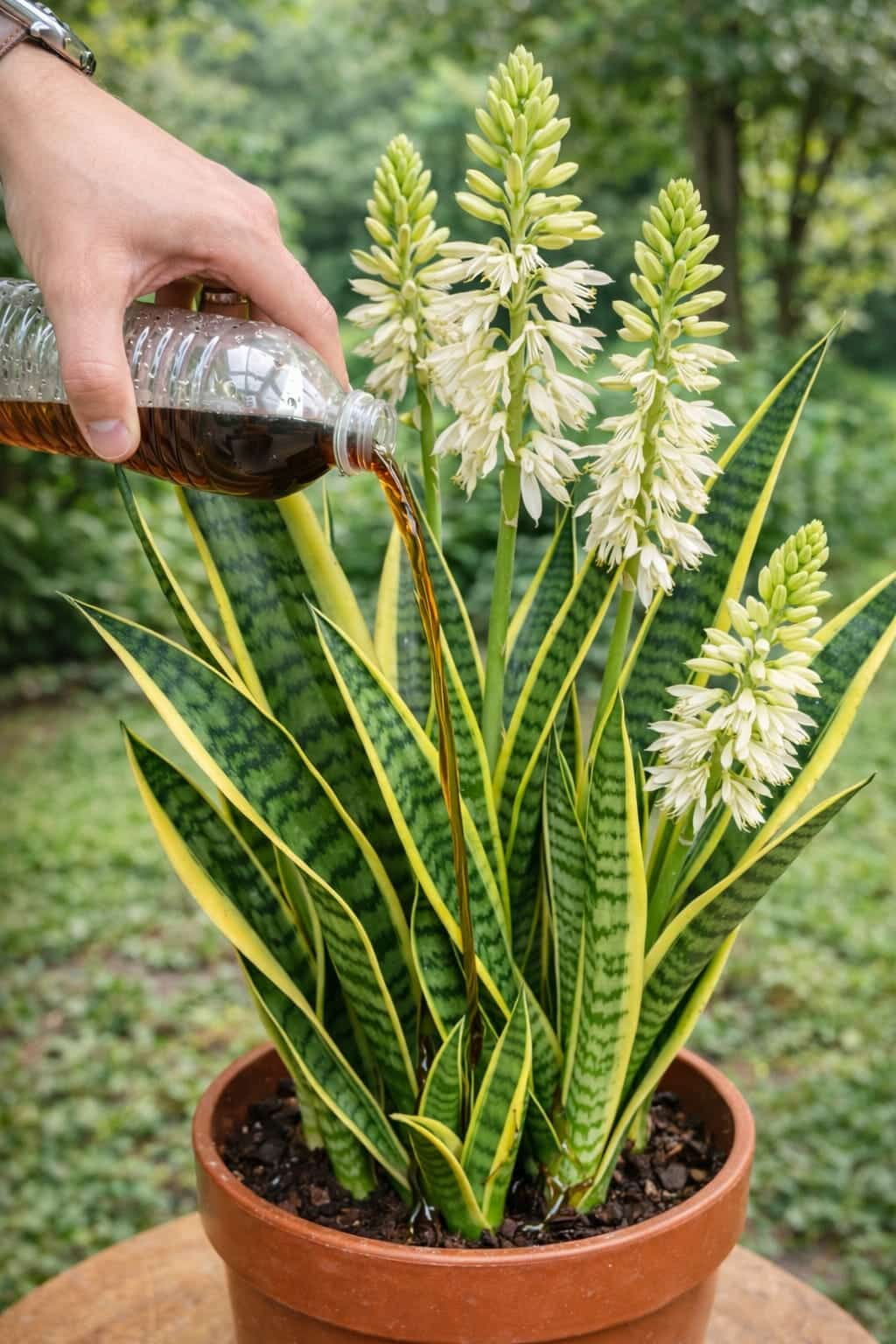
What Happens When It Finally Blooms?
When all conditions align – bright light, dry soil, root‑bound pot, stable environment, and maturity – you’ll notice:
- A tall flower stalk emerging from the center of a leaf cluster. It may look like a thin asparagus spear at first.
- Small buds forming along the stalk.
- Flowers opening – usually in the evening or at night. They are small, tubular, and greenish‑white or cream‑colored.
- A strong, sweet fragrance – often compared to jasmine or hyacinth, most noticeable at night.
The flowers last 2–4 weeks, with individual blooms opening sequentially. After flowering, the stalk will remain for a while, then dry and turn brown. Cut it off at the base once it’s completely dry.
Does flowering mean the plant is dying? No – it means it’s mature and healthy. Continue normal care.
Common Mistakes That Stop Blooming (Even on Healthy Plants)
Even a healthy snake plant won’t bloom if you make these mistakes:
Mistake Why It’s Harmful Correct Approach
Overwatering Keeps plant in “growth mode” Let soil dry completely
Low light No energy for flowers Move to bright, indirect light
Repotting too often Plant focuses on root growth Repot every 2–3 years only
Large pot Excess soil holds moisture Use a snug pot
Moving frequently Plant never feels secure Keep in one spot
Over‑fertilizing Promotes leaves, not flowers Use low‑nitrogen fertilizer sparingly
The bottom line: Too much “care” – overwatering, overfeeding, over‑repotting – is the real enemy of blooms.
The Truth About “Magic Ingredients” – Rice Water, Banana Peels, and More
You’ve probably seen viral hacks claiming that rice water, banana peels, coffee grounds, or lemon juice can “force” your snake plant to bloom. Do they work?
Ingredient What It Actually Does Does It Force Blooms?
Rice water Provides trace nutrients; improves general health No – supports health, not a trigger
Banana peels Adds potassium; supports flower production if plant is ready No – only helps if conditions are already right
Coffee grounds Adds nitrogen; can compact soil No – can even harm snake plants
Epsom salt Provides magnesium; may help with deficiencies No – not a bloom trigger
The truth: These ingredients can improve plant health, but they don’t force blooming. Blooming depends on light, stress, maturity, and stability – not what you pour into the soil. Think of them as supporting actors, not the star of the show.
If you want to use rice water or banana peel tea safely, do so occasionally (every 3–4 weeks) and always dilute. But don’t expect miracles.
Frequently Asked Questions (FAQs)
Q: How long do snake plant flowers last?
Individual flowers last 1–2 days, but the stalk produces new blooms over 2–4 weeks, so the overall display can last a month.
Q: Should I cut the flower stalk after blooming?
Yes – once the stalk turns brown and dries, cut it off at the base with clean scissors. This prevents the plant from wasting energy on dead tissue.
Q: Will my snake plant bloom again next year?
Maybe, if conditions remain ideal. Some snake plants bloom annually; others go years between blooms. Don’t be disappointed if it doesn’t.
Q: Can I propagate my snake plant from the flower stalk?
No – the flower stalk will not produce new plants. Propagate from leaf cuttings or division of offsets (pups).
Q: Why are my snake plant’s leaves turning yellow during the bloom period?
Yellow leaves can indicate overwatering, underwatering, or natural aging. Check your watering routine. If only older leaves are yellowing and the plant is otherwise healthy, it may be normal.
Q: Is it true that snake plant flowers only open at night?
Many snake plant species produce flowers that open in the evening and close during the day. This is to attract nocturnal pollinators. The fragrance is strongest at night.
Q: Can I force my snake plant to bloom by stressing it more?
No – there’s a fine line between “controlled stress” and actual harm. Severe underwatering, extreme root crowding, or temperature shock can kill the plant. Aim for mild, consistent conditions – not extremes.
Quick Recap – How to Encourage Snake Plant Blooms
Factor What to Do
Light Bright, indirect light (east/west window)
Water Let soil dry completely between waterings
Pot Slightly root‑bound; repot every 2–3 years
Stability Keep in one spot; avoid drafts
Temperature 65–85°F day; 55–65°F night (cool drop helps)
Age Plant must be mature (3–5+ years)
Patience Blooming is rare – enjoy the foliage regardless
Final Verdict – What No One Tells You
Most people are trying to “fix” their snake plant – adding more water, more fertilizer, more attention. They think if they just find the right magic ingredient, the flowers will appear.
👉 But the real secret is the opposite.
Do less… but do it right.
· Give it light – bright, indirect, consistent.
· Let it dry – water only when the soil is bone dry.
· Keep it snug – don’t repot too often.
· Leave it alone – stability over constant change.
· Be patient – maturity takes years.
Snake plants don’t bloom because you try harder. They bloom when you finally understand them – when you stop over‑caring and start providing the right conditions.
And if you’re patient… one day, your “boring” snake plant might surprise you with one of the rarest indoor blooms. When it happens, it feels like magic – because you’ve earned it.
Now it’s your turn! Have you ever had a snake plant bloom? What conditions seemed to trigger it? Drop a comment below – I’d love to hear your story.
And if you found this guide helpful, share it with a friend who’s been chasing viral “bloom hacks.” Pin it for later, and subscribe to our newsletter for more honest, evidence‑based plant care.
Stay bright, stay patient, and let your snake plant thrive. 🌿✨