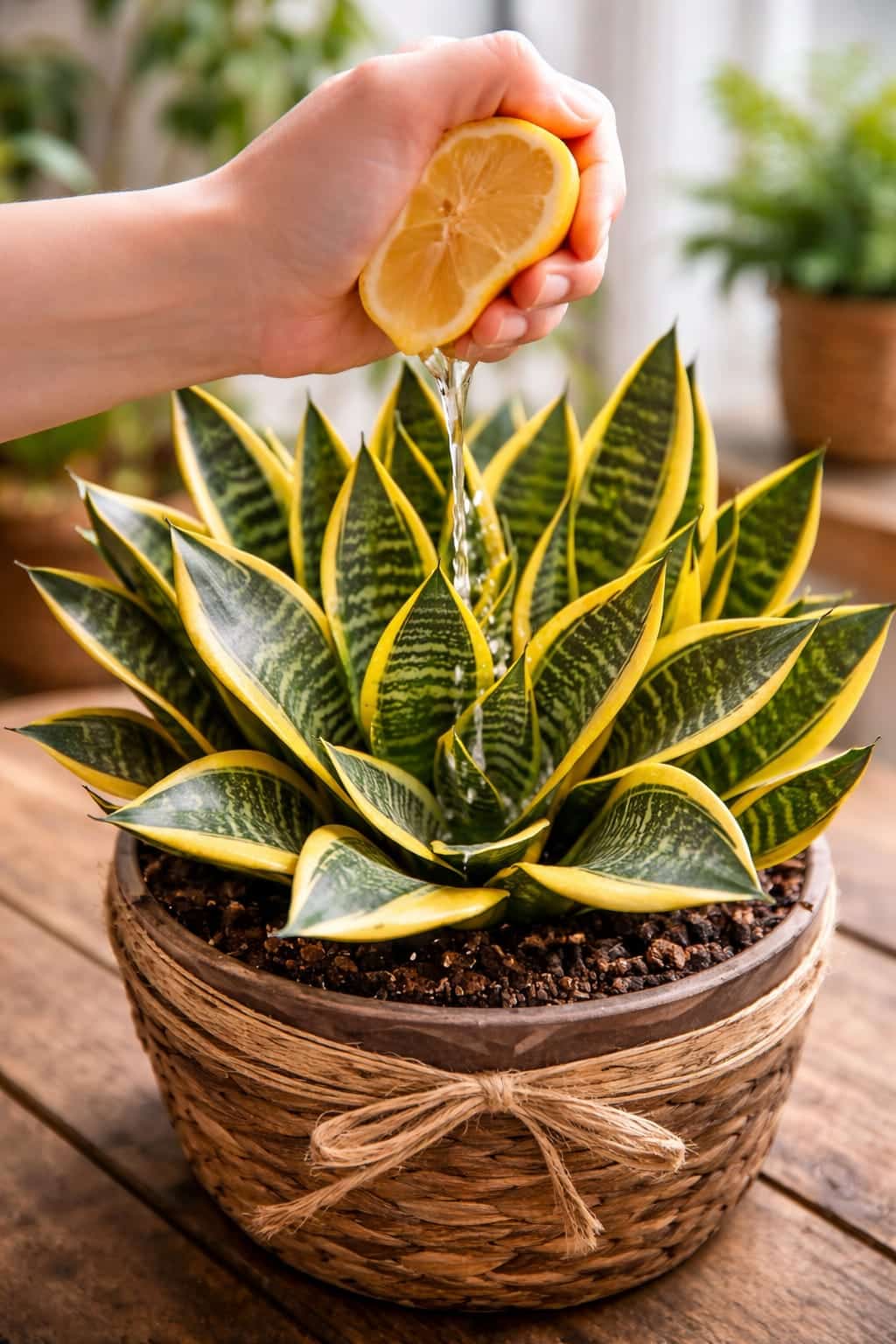
Lemon juice makes snake plant leaves shiny and healthy. But is it safe? Learn the truth about using lemon on Sansevieria, including risks to soil pH, roots, and better alternatives for thriving plants.
Let’s be honest: snake plants (Sansevieria, now Dracaena) are practically superheroes of the houseplant world. They survive low light, infrequent watering, and general neglect. They’re the plant you buy when you’re not sure you can keep anything alive. But even the toughest plants have their limits – and sometimes, well‑meaning “hacks” can do more harm than good.
Recently, a simple kitchen trick has been going viral: adding lemon juice to your snake plant. The videos are convincing – a squeeze of fresh lemon, a little water, and suddenly the leaves look shinier, greener, and healthier. Some people swear it cleans the leaves, boosts growth, and even prevents pests.
But here’s the truth: snake plants have specific needs. They prefer neutral to slightly alkaline soil, and lemon juice is acidic. While a light application might create a temporary cosmetic shine, over time, lemon juice can lower soil pH, damage roots, and disrupt nutrient absorption. The “lemon trick” might be quietly harming your plant while you think you’re helping it.
In this guide, I’ll give you an honest, science‑backed look at what lemon juice can and cannot do for snake plants. You’ll learn the risks of acidic soil, the safe way to use lemon (if at all), and – most importantly – the proven care tips that actually make snake plants thrive.
Let’s separate the viral hype from the horticultural reality.
Why People Use Lemon on Snake Plants – The Viral Appeal
Lemon juice is a common household ingredient with several properties that seem beneficial for plants:
Property Why People Think It Helps
Slightly acidic Believed to “balance” soil pH or remove mineral buildup.
Naturally antibacterial May help kill harmful soil bacteria or prevent mold.
Rich in vitamin C and citric acid Thought to act as a mild nutrient boost or leaf cleaner.
Fresh scent Makes the plant smell clean and “natural.”
The viral videos often show someone wiping or spraying diluted lemon juice on snake plant leaves, then marveling at the instant shine. The idea is simple: lemon cleans dust, removes hard water spots, and makes leaves look glossy – all without harsh chemicals.
And to be fair, lemon juice can clean leaves. The acidity helps dissolve mineral deposits and cut through grime. But there’s a big difference between wiping leaves and pouring lemon into the soil – and that’s where the trouble begins.
⚠️ The Hidden Risk Most People Ignore – Soil pH and Root Damage
Snake plants are succulents. They evolved in dry, rocky environments with neutral to slightly alkaline soil (pH 6.5–7.5). They are not adapted to acidic conditions. Lemon juice, on the other hand, has a pH of about 2–3 – highly acidic.
What Happens When You Add Lemon Juice to Snake Plant Soil
Effect Explanation
Lowers soil pH too much Repeated applications can drop the pH below 6.0, making the soil too acidic for snake plants.
Damages roots over time Acidic conditions can burn delicate root hairs, reducing the plant’s ability to absorb water and nutrients.
Disrupts nutrient absorption In acidic soil, essential nutrients like nitrogen, phosphorus, and potassium become less available. Calcium and magnesium can also be locked out.
Encourages root rot Acidic, wet conditions favor harmful fungi and bacteria that attack roots.
Signs of acid damage in snake plants:
· Yellowing leaves (especially older leaves)
· Slow or stunted growth
· Brown, mushy roots (root rot)
· Leaf tips turning brown or black
Why Leaves Sometimes Look Better (The Cosmetic Effect)
Here’s the confusing part: after applying diluted lemon juice, the leaves may appear shinier and cleaner. That’s because the acid temporarily dissolves dust and mineral deposits on the leaf surface. But this is a cosmetic effect, not real growth improvement. The plant itself isn’t healthier – the leaves are just temporarily polished.
If you continue the practice, the soil pH will drop, and the roots will suffer. Eventually, the leaves will yellow and the plant will decline.
✅ If You Still Want to Try Lemon – The Safe Way (Leaf Wipe Only)
If you’re curious and want to use lemon as a leaf cleaner only (not a soil treatment), follow these strict guidelines. Never pour lemon juice into the pot.
Safe Lemon Leaf Wipe Method
Step Instructions
1 Mix 1–2 drops of fresh lemon juice in 1 cup of water (distilled or filtered is best).
2 Dip a soft, lint‑free cloth into the solution and wring it out so it’s damp, not dripping.
3 Gently wipe the top surface of each leaf. Support the leaf from underneath to avoid bending.
4 Do not pour any liquid into the soil. Do not let solution drip into the pot.
5 Use this method once a month at most – not weekly.
Important: Rinse the cloth frequently to avoid spreading dirt. After wiping, you can go over the leaves with a clean, damp cloth (plain water) to remove any residual acid.
Never:
· Spray lemon solution directly on the plant (can pool in leaf joints).
· Use undiluted lemon juice.
· Pour lemon water into the soil.
· Use lemon on a stressed or recently repotted plant.
Can Banana Peels Really Boost Orchid Growth? Continue to Page 2
Discover the safer method, the real risks, and the smart orchid care details that many gardeners miss on the first page.