Why Drainage Is Essential
ZZ plants are very sensitive to sitting in water. Their rhizomes can rot if the bottom of the pot stays wet. A pot without drainage is risky because extra water has nowhere to go.
If you love a decorative pot without holes, use it as a cover pot. Keep the ZZ plant in a plastic nursery pot with drainage holes inside the decorative container. Remove it for watering, let it drain completely, and then place it back.
The saucer under the pot should also be emptied after watering. Standing water around the bottom can cause root issues.
Healthy ZZ growth starts with dry-down time and drainage.
What to Do After Cutting ZZ Plant Stems
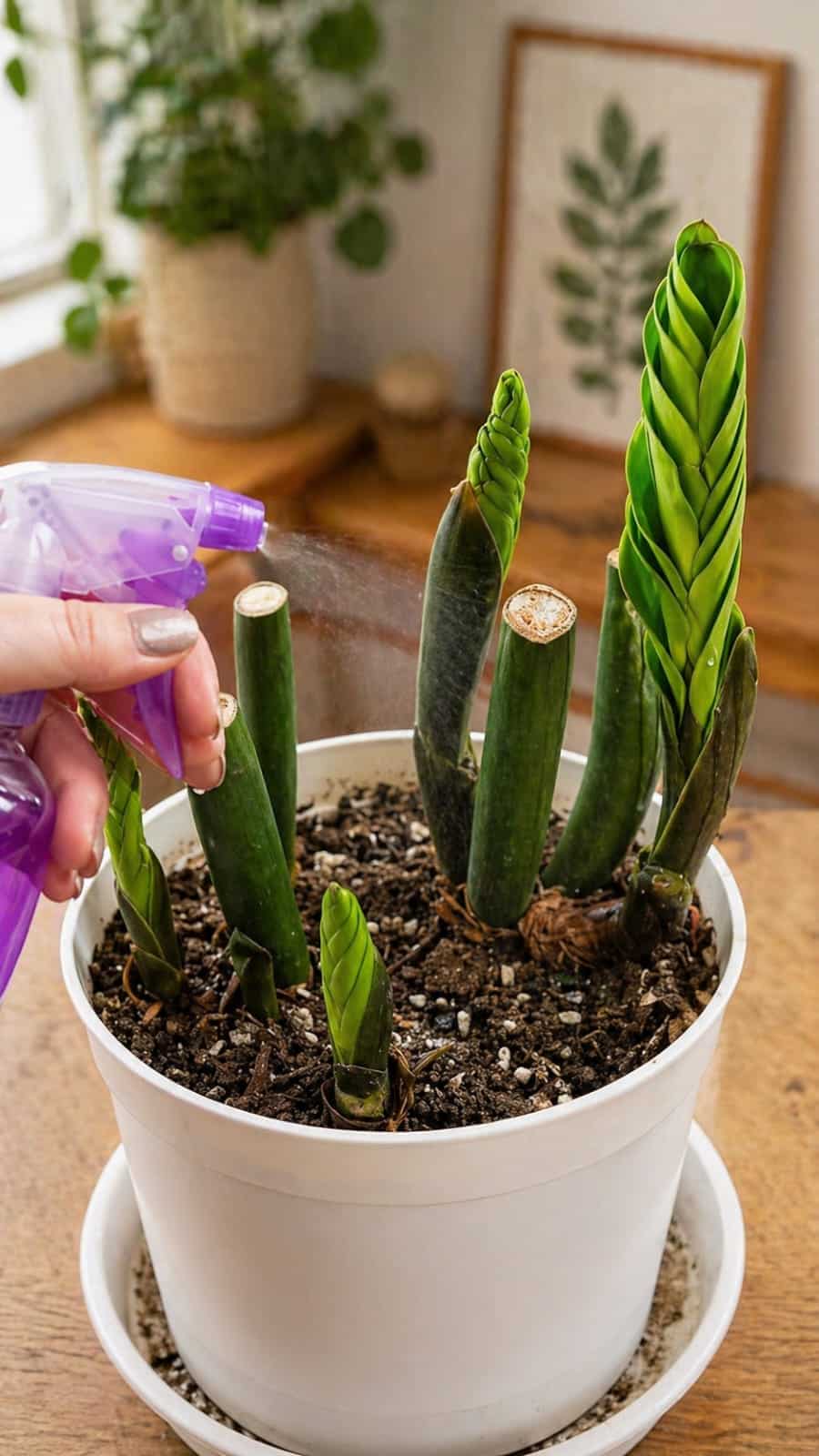
If you prune a ZZ plant, care for the cut areas properly. Use clean tools and cut close to the soil line if removing a whole stem. After cutting, keep the area dry. Do not mist directly into the cut.
The cut stem will not regrow from the top. Instead, new shoots may eventually come from the rhizome below the soil. This can take time.
If the cut stump dries and remains firm, it is fine. If it becomes mushy, remove it. A mushy stump can spread rot.
After pruning, avoid heavy watering for a little while unless the soil is already dry and the plant needs it. A freshly pruned plant should not be kept wet.
Can Cut ZZ Stems Be Propagated?
Yes. If you cut healthy ZZ stems, you can propagate them. ZZ plant propagation is slow, but it is possible.
You can propagate by stem cuttings or leaf cuttings. For stem cuttings, place the cut stem in water or moist but airy soil. Over time, roots and small rhizomes may form. This can take months.
Leaf cuttings are also possible. Remove healthy leaflets and place the base in soil. Eventually, tiny rhizomes may form. Again, this is slow.
If you are pruning healthy stems only for shape, consider propagating them instead of throwing them away.
Should You Spray Fertilizer on New ZZ Shoots?
It is better not to spray fertilizer directly on new ZZ shoots unless you are using a product specifically designed for foliar feeding and mixed very weakly. New shoots are tender and can be sensitive to residue.
If you want to fertilize a ZZ plant, feed through the soil during active growth. Use a balanced houseplant fertilizer at half strength or weaker. Once every one to two months during spring and summer is usually enough.
Do not fertilize in winter if the plant is not growing. Do not fertilize a stressed or rotting plant.
Clean water is the best spray for the mist trick. Fertilizer belongs in the soil, used carefully.
Can You Add Rice Water to the Spray Bottle?
Rice water is sometimes used as a plant trick, but it is better as an occasional soil rinse than as a leaf mist. Rice water can leave a starchy film on leaves. That film may attract dust or pests, and it can make glossy ZZ leaves look dull.
If you want to try rice water, use it very diluted and pour it into the soil only when the plant is dry and ready for watering. Do not spray it on the leaves or cut stems.
For misting, plain water is cleaner and safer.
Can You Add Milk to the Spray Bottle?
No. Milk should not be sprayed on ZZ plant leaves. It can leave residue, sour, smell bad, and attract pests. It may also make leaves sticky or spotty.
Some plant tricks use milk water, but it is not necessary for ZZ plants. If the goal is shiny leaves, wipe with clean water instead. If the goal is feeding, use proper diluted fertilizer in the soil.
Milk in a spray bottle creates more risk than benefit.
Can You Add Baking Soda or Vinegar?
No. Baking soda and vinegar should not be used as routine ZZ plant sprays. Baking soda can leave residue and may damage leaves if used too strongly. Vinegar is acidic and can burn plant tissue.
ZZ plants do not need kitchen chemistry on their leaves. Clean water is enough.
If you are dealing with pests or disease, use a proper houseplant-safe treatment and follow directions. Do not experiment with strong homemade sprays on new growth.
How to Clean ZZ Plant Leaves
ZZ plants are loved for their natural shine. Dust can hide that shine, so cleaning is important. Misting alone may loosen dust, but wiping is better.
Use a soft damp cloth. Support the stem gently and wipe each leaflet from base to tip. Do not use oils or leaf shine sprays. ZZ leaves already have a natural gloss, and oily products can clog the surface or attract dust.
If the plant is large, you can give it a gentle shower, but only if the pot drains well and you let the plant dry afterward. Avoid soaking cut stems.
Clean leaves help the plant absorb light better and look instantly healthier.
What If New Shoots Look Pale?
New ZZ shoots often look lighter green than mature stems. This is normal. As they grow and harden, they become darker and glossier.
If new shoots are extremely pale, weak, or stretched, the plant may need more light. Move it to a brighter indirect location. Do not place it suddenly in harsh sun, because tender shoots can scorch.
A little patience is important. New shoots unfold slowly and change color as they mature.
What If New Shoots Turn Brown?
If new shoots turn brown, something is wrong. Possible causes include overwatering, underwatering during active growth, cold damage, harsh sun, fertilizer burn, or physical damage.
Check the soil first. If it is wet and smells sour, inspect the roots and rhizomes. If it is bone dry and the shoot is shriveling, water properly. If the plant was moved into strong direct sun, move it back to bright indirect light.
Do not keep misting a browning shoot heavily. More moisture on damaged tissue can make problems worse.
Find the cause before adding treatments.
What If Cut Stems Become Soft?
A soft cut stem may be rotting. Remove it with clean scissors or shears, cutting close to the soil line. Keep the area dry. Check whether the soil is staying too wet.
If several stems become soft, remove the plant from the pot and inspect the rhizomes. Healthy rhizomes should be firm. Rotten rhizomes are soft, mushy, dark, or smelly.
Repot into fresh well-draining soil if needed. Reduce watering.
Misting should be paused until the plant is stable again.
What If Fungus Gnats Appear?
Fungus gnats usually mean the soil is staying too damp. Misting too often can contribute if it keeps the surface wet. ZZ plants should not have constantly damp soil.
If gnats appear, stop misting the soil surface. Let the pot dry more deeply. Use yellow sticky traps. Remove decaying debris from the pot. If the problem continues, repot into fresh airy mix.
Fungus gnats are not solved by spraying more water. They are solved by moisture control.
Does Humidity Matter for ZZ Plants?
ZZ plants tolerate normal indoor humidity very well. They do not require high humidity like some tropical plants. This is why they are easy in homes and offices.
However, extremely dry air can make new growth feel less fresh, and dust may build up faster. A light mist can help temporarily, but it is not necessary for survival.
If your home is very dry and you want a more lasting humidity boost, grouping plants together or using a humidifier nearby is more effective than misting. Just do not make the ZZ plant’s soil stay wet.
ZZ plants like stable conditions more than dramatic moisture changes.
How to Make a Sparse ZZ Plant Fuller
If your ZZ plant looks sparse, there are several ways to improve it over time.
First, give it brighter indirect light. More light often leads to more growth. Second, be patient. ZZ plants grow slowly, and fullness takes time. Third, avoid overwatering because root damage reduces new shoots. Fourth, feed lightly during the growing season. Fifth, consider planting several ZZ divisions together in one pot for a fuller look.
If old stems are damaged or unattractive, prune them close to the soil line. New shoots may eventually replace them.
The plant in the image shows exactly this transition: old stems cut back, new shoots emerging, and a fresh routine beginning.
Can You Cut All ZZ Stems Back?
You can cut a ZZ plant back hard if it has many damaged stems, but it should be done only if the rhizomes are healthy. If you cut all stems, the plant will lose its ability to photosynthesize temporarily and must rely on stored energy.
After a hard cutback, new growth may take a long time. Keep the plant in bright indirect light and water carefully. Do not overwater a leafless or nearly leafless ZZ plant because it will use water slowly.
It is often better to remove only damaged stems and leave healthy ones to support the plant.
Pruning should improve the plant, not shock it unnecessarily.
Can Misting Help After Pruning?
Light misting can help freshen the area after pruning, but it should not wet the cut stems. After pruning, the most important thing is keeping the plant stable. Bright indirect light, dry cut surfaces, and careful watering matter most.
If you mist after pruning, aim above the plant and let only a fine cloud settle on leaves. Avoid direct spraying of stumps.
If the plant has very few leaves left, misting is not very useful. Focus on the root zone and light instead.
A pruned ZZ plant needs patience more than moisture.
Best Temperature for New ZZ Growth
ZZ plants prefer warm indoor temperatures. They grow best in comfortable room conditions. Cold drafts can slow growth or damage tender shoots.
Keep the plant away from cold windows in winter, air conditioner blasts, and exterior doors. Also avoid placing it near heaters that dry the air intensely.
Stable warmth helps new shoots develop properly. If the room is cold, the plant may pause growth even if you mist it regularly.
Warmth, light, and correct watering are the true growth triggers.
Should You Repot a ZZ Plant With New Shoots?
It is usually better not to repot while new shoots are actively emerging unless there is a serious problem such as root rot or no drainage. New shoots are tender and can break easily during repotting.
If the plant is healthy and producing shoots, let it finish that growth cycle. Repot later if needed.
Repot if the pot is cracked by rhizomes, the soil is staying too wet, roots are rotting, or the plant is extremely crowded and unstable. Use a pot only slightly larger than the current one.
ZZ plants often like being somewhat snug. A huge pot can hold too much moisture.
Common Mistakes With the Mist Spray Trick
Misting Too Much
Daily heavy misting can keep the soil surface damp and invite fungus gnats. Mist lightly and occasionally.
Spraying Cut Stems
Water inside cut stems can cause rot. Keep cut areas dry.
Using Additives in the Spray Bottle
Milk, fertilizer, vinegar, baking soda, and oils can leave residue or damage leaves. Use plain water.
Thinking Mist Replaces Watering
ZZ plants need root watering when dry. Mist does not hydrate the rhizomes enough.
Keeping the Plant in Low Light
Low light slows growth. New shoots need brightness.
Overwatering After Pruning
A pruned plant may use less water. Let the soil dry before watering.
Expecting Fast Growth
ZZ plants are naturally slow. New shoots take time to open and mature.
Signs the Mist Trick Is Working
The mist trick is working safely if the new shoots remain firm, bright, and upright. The mature leaves should look clean and glossy. The soil should not stay damp for too long. There should be no mold, no gnats, no soft cut stems, and no sour smell.
Over time, the new shoots should unfurl and darken into mature stems. More shoots may appear if the rhizomes are healthy and the plant receives good light.
The best sign is steady, healthy development. ZZ plants grow slowly, so progress may be gradual.
Signs You Should Stop Misting
Stop misting if the soil surface stays damp, fungus gnats appear, cut stems soften, new shoots develop brown spots, leaves remain wet for hours, or the room is cool and humid.
Return to basic care. Let the soil dry. Improve airflow. Keep cut areas dry. Check the roots if the plant smells bad or stems become mushy.
A ZZ plant does not need misting to survive. If misting creates problems, skip it.
A Simple ZZ Plant New Shoot Routine
Here is a safe routine for a ZZ plant with fresh shoots:
- Place the plant in bright indirect light.
- Keep it in a pot with drainage holes.
- Use airy, well-draining soil.
- Water only when the soil is dry.
- Mist lightly with plain water if the air is dry.
- Avoid spraying cut stems.
- Wipe mature leaves to remove dust.
- Feed lightly during spring or summer.
- Keep the plant warm and away from drafts.
- Be patient while new shoots unfold.
This routine gives your ZZ plant the best chance to turn small green spears into strong glossy stems.
Frequently Asked Questions
Should I mist my ZZ plant?
You can mist lightly if you enjoy it or if the air is very dry, but ZZ plants do not require misting. Use plain water and avoid soaking the soil or cut stems.
Does misting make ZZ plants grow faster?
Not directly. Growth depends more on light, healthy rhizomes, warmth, and proper watering.
What should I put in the spray bottle?
Use clean room-temperature water. Avoid milk, fertilizer, oils, vinegar, baking soda, or sugary liquids.
Why are new ZZ shoots bright green?
New shoots are naturally lighter and softer. They darken and harden as they mature.
Should I spray new shoots directly?
A very light mist is fine, but do not soak them. Make sure they dry quickly.
Can cut ZZ stems grow back?
A cut stem will not regrow from the cut top. New shoots come from the rhizome under the soil.
Why are my ZZ stems cut short?
Stems are usually cut back when they are yellow, damaged, bent, or removed for shaping.
How do I get more ZZ shoots?
Give bright indirect light, water correctly, use well-draining soil, keep the plant warm, and feed lightly during active growth.
Can I mist every day?
Daily misting is usually unnecessary and may keep the soil too damp. Mist lightly only when needed.
What if cut stems become mushy?
Remove mushy stems with clean tools, keep the area dry, and check whether the soil is too wet.
Final Thoughts
The mist spray ZZ plant trick looks simple because it is simple. A light spray of clean water around fresh shoots can make a pruned ZZ plant feel refreshed and cared for. It can help remove dust, briefly improve local humidity, and support a clean environment while new growth develops.
But misting is not the true secret behind new ZZ shoots. The real growth comes from healthy rhizomes under the soil. Those rhizomes need bright indirect light, dry-down time, well-draining soil, drainage holes, warmth, and patience.
If your ZZ plant has been cut back, keep the cut stems dry. Do not spray water directly into hollow stumps. Do not use milk, fertilizer, rice water, vinegar, oils, or baking soda in the spray bottle. Plain water is safest.
Mist lightly in the morning if the air is dry, then let the plant dry quickly. Water the soil only when it is dry. Feed lightly during active growth if needed. Keep the plant in a bright location and avoid overwatering.
A ZZ plant may not grow fast, but when it sends up new shoots, it is worth the wait. Those bright green spears are signs that the plant is alive and rebuilding. With the right care, they will unfold into glossy stems and make the plant fuller over time.
Use the mist spray trick as a gentle finishing touch, not as the whole care plan. Keep the roots healthy, keep the leaves clean, and give the plant enough light. With patience, your ZZ plant can reward you with strong new growth, fresh upright stems, and the polished tropical look that makes this plant so loved indoors.