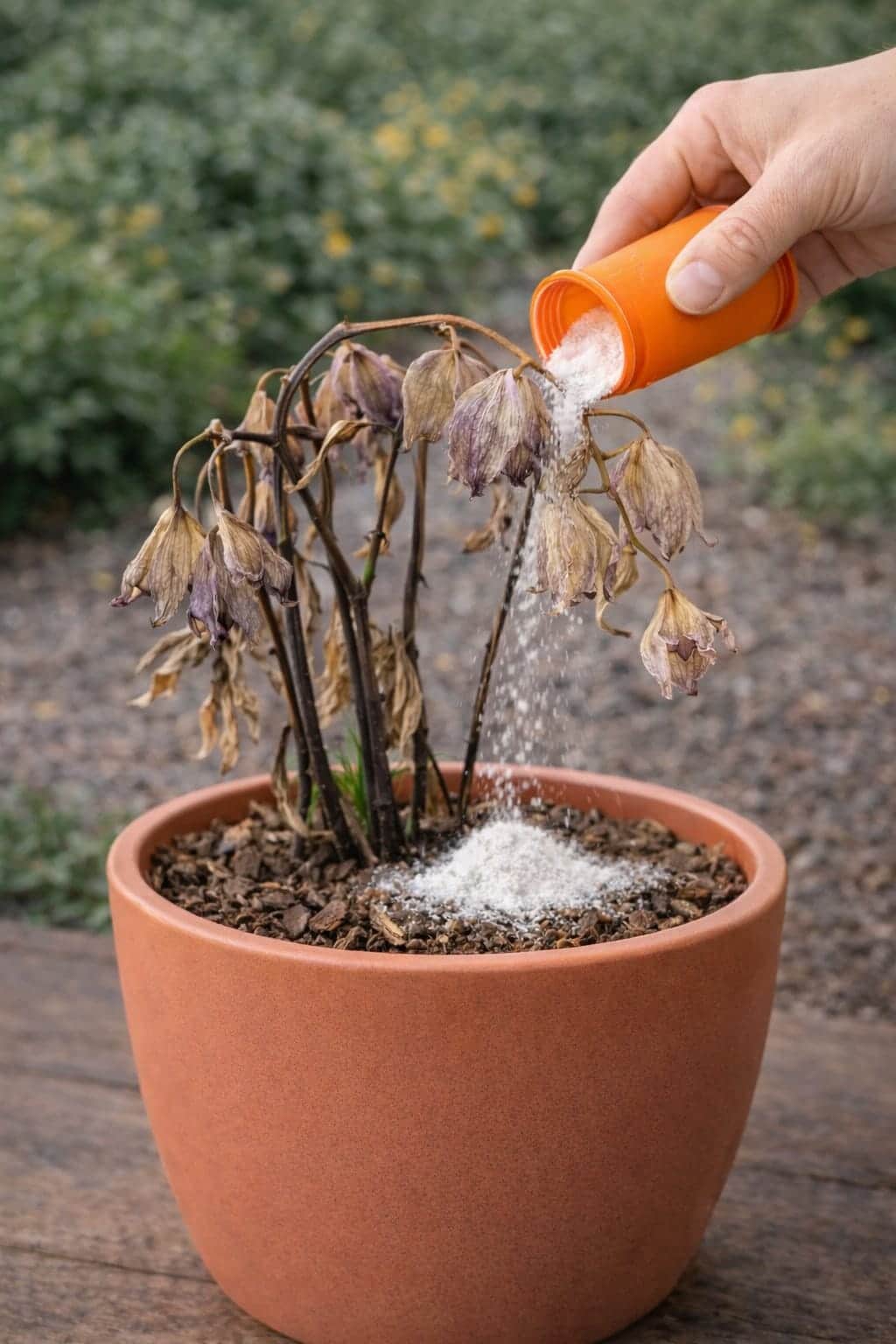
🧪 The White Powder Explained (What It Really Does)
The white powder used in many viral “orchid revival” methods is typically:
· A mild mineral supplement
· A calcium‑based additive
· A light nutrient support
It can help:
· Strengthen weak plants
· Support recovery
· Encourage blooming
👉 But only if the plant is already in the right environment. Without proper care, the powder does nothing.
🧴 How to Use It the Right Way
To avoid damaging your orchid, follow these guidelines:
- Use a very small amount – a light dusting, not a thick layer.
- Apply only to dry bark – never to wet medium.
- Keep it away from leaves – concentrate on the potting medium.
- Water lightly after application – to settle the powder.
- Use occasionally – once every 4–6 weeks, not frequently.
👉 Think of it as a boost, not a fix.
⚠️ The Most Common Orchid Mistakes
Mistake Why It’s Harmful Correct Approach
Using soil instead of bark Roots suffocate, rot develops Always use orchid bark.
Overwatering Root rot, yellow leaves Water only when bark is dry.
Poor lighting No blooms, weak growth Provide bright, indirect light.
Lack of airflow Fungal issues Ensure good air circulation.
Overfeeding Salt buildup, root burn Fertilize sparingly (diluted).
👉 Fixing these will have a bigger impact than any product.
Complete Orchid Care Table – Quick Reference
Factor Ideal Condition Why It Matters
Light Bright, indirect Supports blooms and leaf health
Growing medium Bark mix (not soil) Airflow around roots
Water Controlled – water when bark is dry Prevents rot
Temperature 18–25°C (65–77°F) Stability
Humidity 40–60% Balanced growth
White powder Occasional, light use Gentle mineral support (optional)
How to Revive a Struggling Orchid – Step by Step
- Check the roots – remove the orchid from its pot. Trim any black, mushy, or foul‑smelling roots.
- Repot in fresh orchid bark – never reuse old, broken‑down bark.
- Use a transparent inner pot with drainage holes – monitor root health.
- Place in bright, indirect light – east or north‑east window.
- Water only when the bark is dry – stick your finger in; if dry, water thoroughly.
- Maintain 40–60% humidity – use a pebble tray or humidifier if needed.
- Once stable (new roots or leaves appear), use a light dusting of white powder once a month (optional).
- Be patient – recovery takes weeks to months.
Frequently Asked Questions (FAQs)
Q: Why are my orchid leaves turning yellow?
Most common cause: overwatering. Check roots for rot. Also possible: too much direct sun or nutrient deficiency.
Q: Can orchids grow in regular potting soil?
No. Soil suffocates orchid roots. Always use orchid bark.
Q: How often should I water my orchid?
When the bark is completely dry. In typical indoor conditions, every 7–10 days.
Q: Does white powder make orchids bloom faster?
It may help slightly by providing trace minerals, but it is not essential. Proper light and temperature are the real bloom triggers.
Q: Can too much powder harm orchids?
Yes. Overuse can cause salt buildup and root damage. Use sparingly.
Q: What is the best light for orchids?
Bright, indirect light – an east or north‑east window is ideal.
Q: Why are orchid roots turning brown?
Usually too much moisture. Check your watering habits and ensure the bark drains well.
Q: Do orchids need humidity?
Yes – 40–60% is ideal. Low humidity can cause bud drop and leaf stress.
Q: Can orchids bloom again after flowers drop?
Yes. With proper care (rest period, light, temperature drop), they can rebloom.
Q: What is the biggest mistake people make?
Overwatering – it is the #1 killer of orchids.
Printable Orchid Care Checklist
☐ Use orchid bark – never soil
☐ Use a transparent pot with drainage holes
☐ Place in bright, indirect light (east/north‑east window)
☐ Water only when bark is completely dry
☐ Allow full drainage – never let pot sit in water
☐ Maintain temperature 18–25°C (65–77°F)
☐ Keep humidity 40–60% (pebble tray or humidifier)
☐ Fertilize sparingly with diluted orchid fertilizer (optional)
☐ Use white powder (optional) – light dusting once a month
☐ Trim dead roots when repotting
☐ Be patient – orchids grow slowly
Final Thoughts – Support, Not Magic
A struggling orchid is not beyond saving. The solution is not a magic white powder – it is correcting the environment: bark instead of soil, proper watering (let it dry), bright indirect light, stable temperatures, and adequate humidity.
The white powder can be a helpful addition – a gentle mineral boost when the plant is already healthy. But it will not fix overwatering, poor drainage, or the wrong growing medium. Use it as a supplement, not a cure‑all.
With patience and the right care, your orchid can become elegant, healthy, and ready to bloom again.
Now it’s your turn! Have you tried a white powder on your orchids? What worked – or didn’t? Drop a comment below – I’d love to hear your experience.
And if you found this guide helpful, share it with a friend who’s struggling with an orchid. Pin it for later, and subscribe to our newsletter for more practical plant care.
Stay bright, stay dry, and watch your orchid thrive. 🌸✨