Can Rice Water Make Peace Lilies Bloom?
Rice water alone cannot force a peace lily to bloom. Blooms depend on maturity, light, root health, and overall care. A peace lily in a dark room may grow leaves but produce few or no flowers. A plant with weak roots may not have enough energy to bloom.
However, rice water may support a healthy plant slightly during active growth. If the plant is already receiving good light and proper care, an occasional mild boost can be part of a routine that supports blooming.
The most important bloom trigger for peace lilies is bright indirect light. Many people keep peace lilies in corners that are too dark. The plant survives, but it does not flower well.
If you want more blooms, move the plant to a brighter spot before relying on rice water.
Best Light for Peace Lily Blooms
Peace lilies prefer bright indirect light. They can tolerate lower light, but low light usually means fewer flowers. If your plant has not bloomed in a long time, light is the first thing to improve.
Place the plant near a bright window where it receives filtered light. An east-facing window is often excellent. A north-facing window can work if it is bright. South or west windows may need a sheer curtain to prevent leaf burn.
Do not place the plant in harsh direct afternoon sun. Peace lily leaves can scorch. The best light is bright but gentle.
Rice water may help the soil routine, but light is what gives the plant energy to bloom.
Best Soil for Peace Lilies
Peace lilies like soil that holds some moisture but still drains well. They do not want bone-dry cactus soil, but they also do not want heavy mud. A good peace lily mix should be airy, rich, and lightly moisture-retentive.
A good mix can include:
- 2 parts indoor potting mix
- 1 part perlite or pumice
- 1 part orchid bark or coco chips
- A small amount of compost or worm castings if desired
This type of mix holds enough moisture for the plant while allowing air to reach the roots. If your peace lily soil is dense, compacted, or sour-smelling, repotting will help more than rice water.
Healthy roots are the foundation of glossy leaves and white blooms.
How to Water Peace Lilies Normally
Peace lilies like consistent moisture, but they should not sit in water. Water when the top inch of soil feels dry. In warm bright conditions, this may be once a week. In cooler or lower-light conditions, it may be less often.
When watering, water thoroughly until excess drains from the bottom. Then empty the saucer. Do not leave the pot standing in water.
If your peace lily droops from dryness, water it and wait. It may lift within several hours or by the next day. If it does not recover and the soil is wet, the roots may be damaged.
Rice water should be used only occasionally in place of a normal watering, not in addition to one.
What to Do Before Using Rice Water on a Drooping Peace Lily
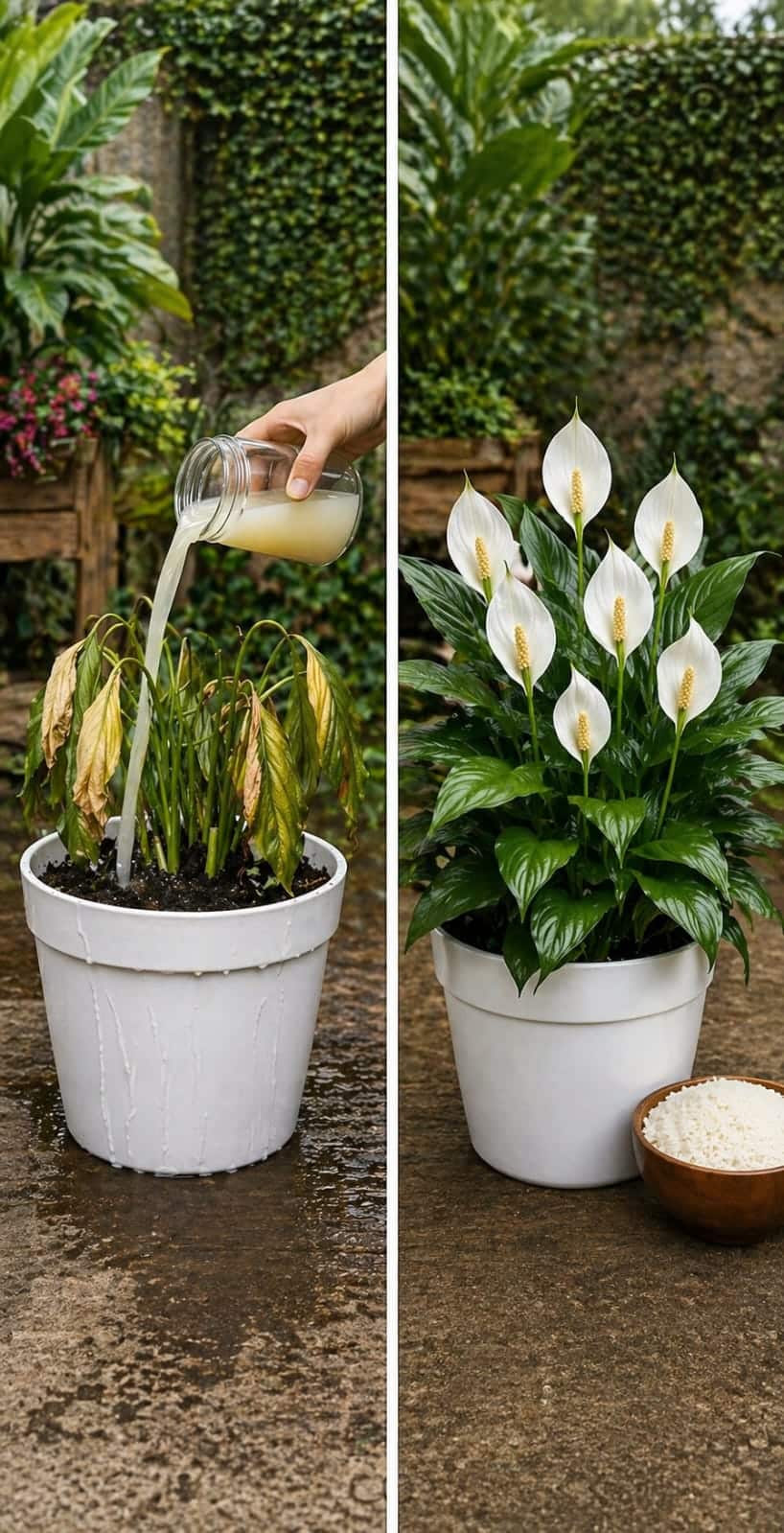
If your peace lily looks like the left side of the image, do not immediately pour rice water without checking the plant. First, touch the soil. If the soil is dry, the plant needs moisture. If the soil is wet, pause and check for root problems.
Remove dead or fully yellow leaves. They will not turn green again. Use clean scissors and cut them close to the base.
Check the pot. Does it have drainage? Is there water sitting in the saucer? Does the soil smell sour? Are there gnats? These clues tell you what the plant really needs.
If the plant is dry and otherwise healthy, diluted rice water can be used as the watering. If the plant is wet and drooping, skip rice water and inspect the roots.
Can Yellow Leaves Turn Green Again?
No. Once peace lily leaves turn fully yellow, they usually will not turn green again. The plant may grow new healthy leaves later, but old yellow leaves should be removed when they become unattractive or weak.
Yellow leaves can happen for many reasons: overwatering, underwatering, old age, low light, nutrient issues, or transplant stress. One yellow leaf is not always a problem. Several yellow leaves at once mean the plant needs attention.
Rice water will not repair yellow leaves. It may support future growth if the rest of the care is correct.
Focus on new leaves and new blooms, not repairing leaves that are already finished.
What If the Plant Is Overwatered?
If a peace lily is drooping in wet soil, it may be overwatered. The roots may be struggling because they cannot breathe. In this case, adding rice water will make the problem worse.
Remove the plant from the pot and inspect the roots if the problem is serious. Healthy roots are firm and light-colored. Rotten roots are brown, black, mushy, or smelly. Trim away rotten roots with clean scissors and repot in fresh airy soil.
After repotting, water lightly and let the plant recover in bright indirect light. Do not fertilize or use rice water immediately on a stressed root system.
Overwatering is one of the most common reasons peace lilies decline. The cure is oxygen and better drainage, not more liquid.
What If the Plant Is Underwatered?
If the soil is very dry and the peace lily is drooping, water is the first solution. You can use plain water or fresh diluted rice water if it is time for the occasional trick.
For a severely dry plant, plain water may be better because it is simple and clean. Water thoroughly until the pot drains. If the soil has become hydrophobic and water runs straight through, soak the pot in a basin of water for 15 to 20 minutes, then let it drain fully.
The plant may perk up within hours. Remove any leaves that are too damaged to recover.
After recovery, try to water before the plant collapses completely. Peace lilies are dramatic, but repeated severe wilting can stress them.
Can Rice Water Cause Fungus Gnats?
Yes, if used too often or too strongly. Fungus gnats love damp organic soil. Rice water contains starch, and if the soil remains wet, it can encourage gnat problems.
To prevent gnats, use rice water only occasionally. Dilute it well. Do not leave rice particles in the soil. Let the top layer dry slightly between waterings. Remove dead leaves and debris.
If gnats appear, stop using rice water. Let the soil dry more between waterings and use yellow sticky traps. If the problem is severe, repot into fresh soil.
Rice water should be a gentle boost, not a food source for pests.
Can Rice Water Cause Mold?
Rice water can cause mold if it is too thick, used too frequently, or applied to soil that stays damp. Mold may appear as white fuzzy growth on the soil surface.
If mold appears, stop using rice water. Scrape off the moldy top layer and replace it with fresh potting mix. Improve airflow and avoid overwatering. Make sure the pot drains well.
A small amount of surface mold is not always fatal, but it is a sign that the soil environment is too damp or rich in residue.
For indoor peace lilies, fresh diluted rice water is much safer than thick or fermented rice water.
Should You Spray Rice Water on Leaves?
No. Rice water is better used on the soil, not as a leaf spray. Spraying it on leaves can leave a starchy film, attract dust, and make the foliage look dull. It may also encourage spots if it dries unevenly.
Peace lily leaves are best cleaned with plain water. Wipe them gently with a soft damp cloth. Clean leaves can absorb light better and look glossier.
If rice water splashes on the leaves, wipe it off. Do not let it dry on the foliage or flowers.
Use rice water for the root zone only.
Can You Use Cooked Rice Water?
Water from boiling rice can contain more starch than rinse water. It may also contain salt if you cook rice with salt. Salted cooking water should never be used on plants.
If you want to use rice water, use rinse water from uncooked rice. It is lighter and safer. Do not use oily, salted, seasoned, or leftover cooking water.
Thick cooked rice water can become sticky and sour in soil. It is not ideal for indoor peace lilies.
Fresh uncooked rice rinse water is the better version of this trick.
Can You Use Brown Rice Water?
Yes, you can rinse brown rice and use the diluted water, but it may contain more particles than white rice water. Strain it well and dilute it. Use it fresh.
Do not assume stronger is better. Whether using white rice, brown rice, or another variety, the final liquid should be light and watery.
If it smells odd or looks thick, do not use it.
The safest plant trick is always the mildest version.
Can Rice Water Replace Fertilizer?
No. Rice water is not a complete fertilizer. It may contain tiny traces of nutrients, but it does not provide the balanced nutrition a peace lily may need during active growth.
If your peace lily is healthy and growing, use a balanced houseplant fertilizer at half strength every four to eight weeks during spring and summer. Do not overfertilize, because peace lilies can be sensitive to salts.
You can use rice water occasionally, but do not use it as the only feeding method if the plant needs real nutrients.
Rice water is a mild homemade supplement. Fertilizer is more predictable.
How to Encourage More Peace Lily Blooms
If your goal is a blooming peace lily like the right side of the image, focus on these key factors:
- Bright indirect light
- Consistent moisture
- Good drainage
- Airy potting mix
- Warm temperatures
- Light feeding during the growing season
- Removing spent blooms
- Avoiding repeated severe wilting
Peace lilies often fail to bloom because they are in too much shade. They can live in low light, but blooming requires more energy. Move the plant closer to a bright window and give it time.
Rice water can be part of a caring routine, but light is the real bloom-maker.
Should You Cut Off Old Peace Lily Flowers?
Yes. Peace lily flowers eventually fade, turn green, brown, or droop. Once a bloom is past its best, cut the flower stalk near the base. This keeps the plant tidy and allows it to direct energy toward new growth.
Do not cut healthy leaves unless they are damaged or yellow. The leaves are the plant’s energy source.
A clean plant often looks healthier immediately. Removing old blooms and yellow leaves can make a tired peace lily look much fresher even before new growth appears.
How Long Does It Take to See Results?
If the peace lily was drooping from dryness, it may perk up within hours after watering. That quick response can make rice water look like a miracle. But if you are waiting for new leaves or blooms, expect weeks or months.
New blooms require energy, light, and time. A plant that has been stressed may need to rebuild roots and leaves before flowering again.
Use rice water as part of a long-term routine, not as a one-day transformation. The plant on the right side of the image represents what is possible after consistent care, not necessarily after one pour.
Patience is part of successful peace lily care.
What If Rice Water Makes the Plant Worse?
If the plant develops gnats, mold, sour soil, yellowing, or limp wet leaves after rice water, stop using it immediately. Return to plain water and check the soil.
If the soil smells bad or stays wet, repot into fresh airy mix. Trim any rotten roots. Improve drainage and airflow.
Not every plant needs every trick. If your peace lily does better with plain water and regular fertilizer, skip rice water completely.
The best plant care is the care your plant responds to well.
A Safe Rice Water Peace Lily Routine
Here is a simple routine you can follow:
- Keep the peace lily in bright indirect light.
- Use a pot with drainage holes.
- Water when the top inch of soil feels dry.
- Use plain water most of the time.
- Make fresh diluted rice water once every four to six weeks during spring or summer.
- Pour it onto the soil, not the leaves.
- Let excess liquid drain fully.
- Empty the saucer.
- Remove yellow leaves and spent blooms.
- Stop rice water if mold, gnats, or sour smells appear.
This routine keeps the trick gentle and safe while supporting the peace lily’s natural growth cycle.
Common Mistakes With the Rice Water Trick
Using Rice Water Too Often
Using it every watering can create residue in the soil. Once every four to six weeks is enough.
Using Fermented Rice Water Indoors
Fermented rice water can smell bad and attract pests. Fresh diluted rinse water is safer.
Using Thick Rice Water
Thick, starchy liquid can feed mold. Keep it watery and light.
Pouring It on Wet Soil
If the soil is already wet, do not add more liquid. Check the roots if the plant is drooping.
Using Salted Cooking Water
Salted water can harm roots. Use only unsalted fresh rinse water.
Expecting Instant Blooms
Blooms require bright light, maturity, and consistent care. Rice water alone will not force flowers.
Ignoring Drainage
Drainage is essential. Rice water trapped in the pot can turn sour.
Frequently Asked Questions
What is the white liquid poured on the peace lily?
It is most likely fresh diluted rice water, made from rinsing uncooked rice in water. It should be used lightly and occasionally.
Is rice water good for peace lilies?
Fresh diluted rice water can be used occasionally as a mild supplement, but it is not a complete fertilizer and should not be overused.
How often should I use rice water?
Once every four to six weeks during the growing season is enough for most peace lilies.
Can rice water make peace lilies bloom?
Rice water alone cannot force blooms. Bright indirect light, healthy roots, proper watering, and light feeding are more important.
Can I use fermented rice water?
Fresh diluted rice water is safer for indoor peace lilies. Fermented rice water can smell and attract pests.
Can I spray rice water on leaves?
No. It can leave residue. Pour it into the soil only.
Can I use cooked rice water?
It is better to use rinse water from uncooked rice. Do not use salted or seasoned cooking water.
Why is my peace lily drooping after watering?
If the soil is wet and the plant still droops, the roots may be stressed or rotting. Check drainage and root health.
Should I cut yellow leaves?
Yes. Fully yellow leaves will not turn green again. Remove them with clean scissors.
What matters more than rice water?
Bright indirect light, consistent watering, drainage, healthy roots, and an airy potting mix matter much more than any homemade trick.
Final Thoughts
The rice water peace lily trick is popular because it looks simple, natural, and dramatic. A milky white pour over a tired plant makes it feel like a secret revival treatment, especially when the after-result shows glossy leaves and elegant white blooms.
Used correctly, fresh diluted rice water can be a gentle part of peace lily care. It may lightly refresh the soil and support the plant during active growth. It also encourages a mindful routine: checking soil moisture, removing old leaves, watching the plant closely, and watering with intention.
But rice water is not a miracle. It will not fix root rot, repair yellow leaves, or force instant flowers. A peace lily blooms and grows well when it has bright indirect light, healthy roots, steady moisture, good drainage, warm temperatures, and occasional balanced feeding.
The safest recipe is simple: rinse uncooked rice, dilute the cloudy water, and use it fresh. Do not ferment it. Do not use thick rice water. Do not use salted cooking water. Do not pour it on wet soil. Do not use it every week.
If your peace lily is dry and drooping, water it properly. If it is wet and drooping, inspect the roots. If it refuses to bloom, improve the light. If the soil smells sour, repot. Rice water should support good care, not replace it.
With the right routine, your peace lily can recover from drooping, produce glossy green leaves, and reward you with beautiful white blooms again. The white pour can be a helpful touch, but the real secret is consistent care, clean roots, and enough light to let the plant shine.