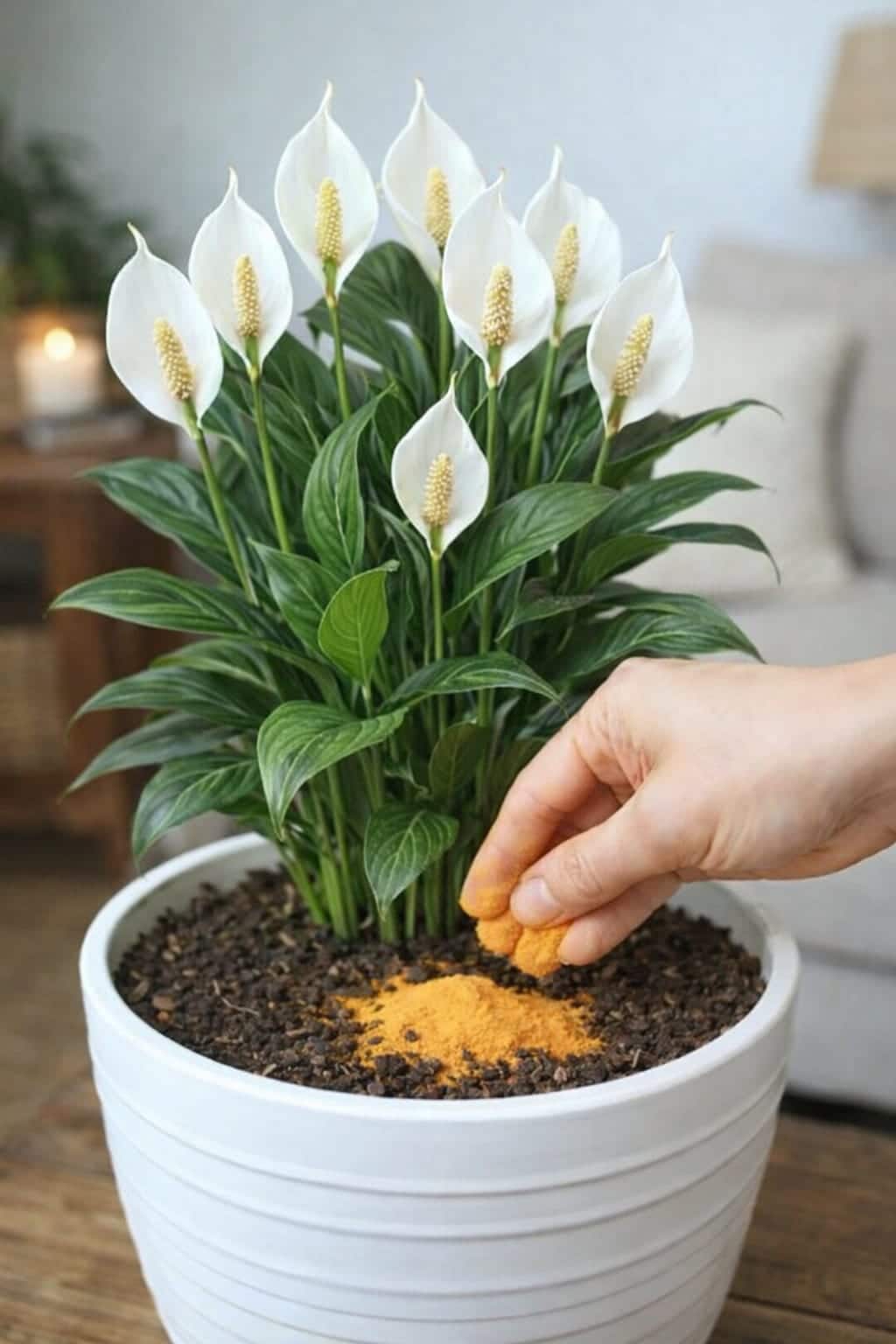
If You Want to Use Turmeric – The Safe Method
If you’re still curious about turmeric, use it sparingly and correctly. Do not rely on it as a primary care tool.
Step Instructions
1 Use only a tiny pinch – about ⅛ teaspoon or less.
2 Sprinkle it lightly on the soil surface, not on leaves.
3 Do not water immediately – let it sit.
4 Use occasionally – once a month at most, and only during the growing season.
5 Stop if you see any negative effects (yellowing, crust buildup).
When to use turmeric:
· To lightly suppress surface mold (after correcting overwatering).
· As a root dusting during repotting (apply directly to cut roots).
When NOT to use turmeric:
· As a regular “fertilizer” – it provides no meaningful nutrition.
· On a plant that is already healthy – it’s unnecessary.
· In large amounts – it will build up and cause problems.
Better Natural Alternatives for a Thriving Peace Lily
Instead of turmeric, try these proven natural amendments:
Alternative Benefits How to Use
Worm castings Gentle, slow‑release nutrients; improves soil structure Mix 1–2 tablespoons into the top inch of soil every 2–3 months.
Compost tea Provides beneficial microbes and trace nutrients Dilute with water (1:10 ratio) and use as a monthly watering.
Diluted liquid seaweed Contains trace minerals and growth hormones Mix according to label directions; use monthly.
Diluted liquid fertilizer Balanced NPK for leaves, roots, and blooms Use half‑strength every 4–6 weeks in spring/summer.
These actually feed your plant – turmeric does not.
Pro Tip for More Blooms – The Real “Secret”
If you want your peace lily to flower consistently, focus on these three factors:
- Bright, indirect light – without enough light, it will never bloom.
- Slightly root‑bound pot – peace lilies bloom more when they’re a little crowded.
- Consistent watering – never let the soil dry out completely, but don’t overwater.
Bonus tip: Peace lilies often bloom in response to a “rest period” – slightly cooler temperatures (60–65°F) and reduced watering for a few weeks in winter can trigger spring flowers.
Common Mistakes That Keep Peace Lilies Struggling
Mistake Why It’s Harmful Correct Approach
Overwatering Root rot, yellow leaves Let soil dry slightly between waterings
Using random kitchen hacks (turmeric, coffee, milk) No real nutrition; can cause buildup or mold Use proper fertilizer or proven amendments
Keeping in very dark corners No energy for growth or blooms Move to bright, indirect light
Ignoring humidity Brown tips, weak growth Increase humidity with tray or humidifier
Never fertilizing Nutrient deficiency, poor flowering Feed lightly in spring and summer
Using tap water with fluoride Brown leaf tips Use filtered or distilled water
Frequently Asked Questions (FAQs)
Q: Can turmeric cure root rot in peace lilies?
No. Turmeric may help prevent infection on cut roots, but it will not cure existing root rot. The only cure is to remove rotten roots, repot in fresh soil, and adjust watering.
Q: How often should I use turmeric on my peace lily?
At most, once a month and only a tiny pinch. Less is more.
Q: Can I mix turmeric with water and spray it on leaves?
Not recommended. Turmeric can stain leaves and may clog leaf pores. Stick to soil application.
Q: Why are my peace lily’s leaves turning yellow even with turmeric?
Because turmeric does not fix the underlying problem – likely overwatering, low light, or nutrient deficiency. Diagnose the real cause.
Q: Is turmeric safe for pets?
Turmeric is generally safe in small amounts, but large ingestion may cause stomach upset. Keep plants and powders out of reach of curious pets.
Q: Can I use turmeric on other houseplants?
Yes, the same principles apply – it’s a mild antifungal, not a fertilizer. Use sparingly.
Final Thoughts – Skip the Shortcuts, Master the Basics
That “simple powder” – turmeric – can help a little in specific situations, like preventing mold or protecting cut roots. But it is NOT the reason your peace lily thrives. Real growth, lush leaves, and beautiful blooms come from proper care, not kitchen shortcuts.
Instead of sprinkling turmeric and hoping for magic, focus on the fundamentals:
· Water correctly – keep soil lightly moist, never soggy.
· Provide bright, indirect light – more light = more flowers.
· Fertilize lightly – use a balanced fertilizer, not spices.
· Boost humidity – prevent brown tips.
· Repot when needed – don’t let roots get too crowded.
Most people keep adding things to their plant – when the real fix is removing the mistakes. Stop overwatering. Move it closer to a window. Give it proper food. That’s the real secret.
Now it’s your turn! Have you tried turmeric on your peace lily? What worked – or didn’t? Drop a comment below – I’d love to hear your experience.
And if you found this guide helpful, share it with a friend who’s been tempted by viral plant hacks. Pin it for later, and subscribe to our newsletter for more evidence‑based plant care.
Stay bright, stay consistent, and let your peace lily thrive. 🌿✨