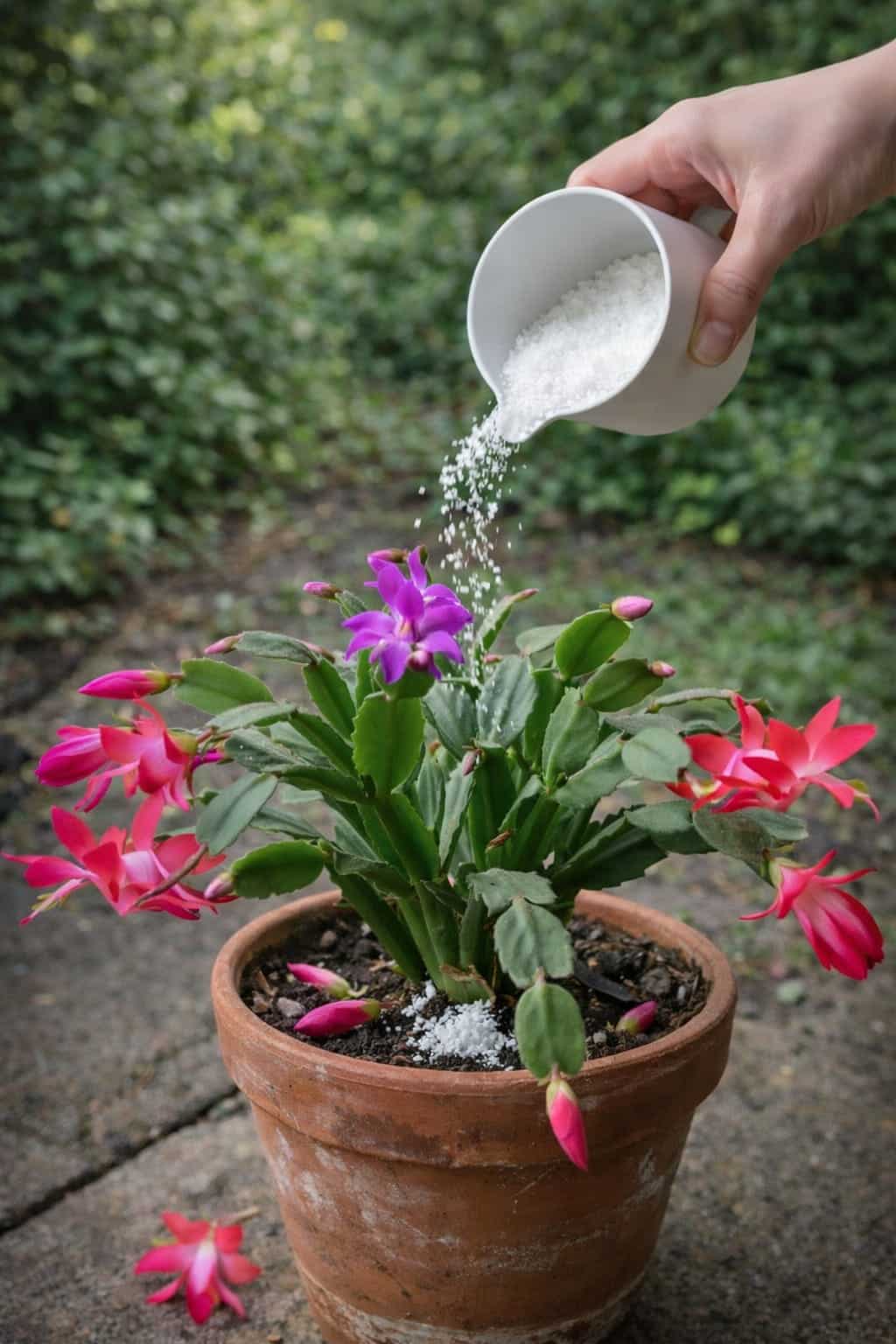
- Soil Needs to Stay Airy and Fast‑Draining
African violets do best in a light, well‑draining, slightly acidic mix (pH 6.0–6.5). Heavy garden soil is a bad choice – it compacts and suffocates roots.
Soil Component Purpose
Peat moss or coconut coir Retains moisture while staying airy.
Perlite Increases drainage and aeration.
Vermiculite Helps retain moisture and nutrients.
Commercial African violet mix Pre‑mixed blends are convenient and reliable.
DIY mix: 2 parts peat moss + 1 part perlite + 1 part vermiculite.
Why fresh soil matters: Over time, potting mix breaks down, becomes compacted, and loses nutrients. Even if the plant isn’t root‑bound, repotting with fresh mix every 6–12 months can restart growth and blooming.
Fertilizer helps, but too much is a mistake. African violets usually respond best to light, regular feeding with a fertilizer made for blooming houseplants or specifically for African violets.
Fertilizer Guideline Details
N‑P‑K ratio Look for a high‑phosphorus formula (e.g., 15-30-15 or 7-9-5) to encourage blooms.
Urea‑free African violets are sensitive to urea; use a urea‑free fertilizer.
How often Every 2–4 weeks during spring and summer (active growing season).
Dilution Mix at half strength – less is more.
When to stop Reduce or stop fertilizing in winter when growth slows.
Signs of over‑fertilizing: Brown leaf tips, salt crust on soil surface, leafy growth with no flowers.
Pro tip: If you use a self‑watering pot, use a very dilute fertilizer (¼ strength) with every watering, or use slow‑release pellets formulated for African violets.
- Temperature and Humidity Matter More Than Most People Think
African violets are tropical plants. They prefer comfortable indoor temperatures and moderate humidity.
Factor Ideal Range
Temperature 65–80°F (18–27°C). Avoid cold drafts below 60°F and hot blasts from heaters.
Nighttime drop A slight drop of 5–10°F at night can encourage blooming, but avoid sudden swings.
Humidity 50–60% is ideal. Below 40%, leaf edges may brown and buds may fail to open.
How to increase humidity:
· Use a humidifier (best).
· Place the pot on a pebble tray filled with water (pot sits on pebbles, not in water).
· Group plants together to create a humid microclimate.
· Mist lightly in the morning (avoid wetting flowers). Mist only the air around the plant, not the leaves directly.
Avoid: Placing African violets near heating vents, air conditioners, or drafty windows. Sudden temperature changes can cause bud drop.
- Grooming Helps the Plant Redirect Energy
If you want more flowers, remove spent blooms and damaged leaves. This simple step helps the plant redirect energy into fresh buds instead of holding old growth. It also improves airflow and keeps the plant looking neat.
Grooming Task How Often Benefit
Remove faded flowers As soon as they wilt Prevents seed formation; encourages new buds.
Trim yellow or brown leaves As needed Improves appearance; redirects energy.
Remove suckers (small side shoots) Every few months Suckers drain energy from the main plant.
Clean leaves Monthly Dust blocks light; use a soft brush or gentle rinse (dry leaves quickly).
Pro tip: Use clean, sharp scissors or tweezers to avoid damaging the main stem.
- Watch for Pests – They Can Quietly Stop Blooming
Tiny insects can reduce blooming even before obvious damage appears. Common pests include:
Pest Signs Treatment
Aphids Small green or black insects on new growth Insecticidal soap or neem oil.
Thrips Silvery streaks on leaves, distorted flowers Systemic insecticide (for severe cases).
Cyclamen mites Stunted growth, tight center leaves, no blooms Often fatal – discard plant to protect others.
Mealybugs White cottony clusters Wipe with alcohol on a cotton swab.
Prevention: Inspect new plants before bringing them home. Quarantine for 2–3 weeks. Keep leaves clean and provide good air circulation.
The Real Secret – Consistency, Not Magic
The real secret to abundant African violet flowers is not a magic powder, one spoon of something, or a random kitchen hack. It is consistency.
Factor Ideal Condition
Light Bright, indirect (east window or grow light)
Water Evenly moist; bottom watering preferred
Pot size Small (⅓ of leaf spread)
Soil Light, well‑draining, slightly acidic
Fertilizer High‑phosphorus, urea‑free, half strength, every 2–4 weeks (spring/summer)
Temperature 65–80°F; avoid drafts
Humidity 50–60% (use pebble tray or humidifier)
Grooming Remove spent blooms and dead leaves regularly
Give the plant bright indirect light, evenly moist soil, a small pot, gentle feeding, stable temperatures, and enough humidity, and it will usually reward you with blooms.
African violets are one of those plants that seem fussy until you understand them. After that, they become surprisingly dependable. And once they settle into the right routine, they do exactly what people love them for most: they bloom beautifully, often, and for a very long time.
Frequently Asked Questions (FAQs)
Q: How often do African violets bloom?
With proper care, African violets can bloom for 6–9 months of the year, with each bloom cycle lasting 2–4 weeks. After a rest period, they often rebloom.
Q: Why are my African violet’s leaves turning yellow?
Most common causes: overwatering, old age (lower leaves naturally yellow), or nutrient deficiency. Check soil moisture first.
Q: Can I use regular potting soil for African violets?
No – it’s too heavy. Use a light, well‑draining African violet mix or DIY with peat, perlite, and vermiculite.
Q: How do I get my African violet to bloom again after a long rest?
Ensure bright indirect light, repot with fresh soil if it’s been over a year, and resume gentle feeding. A slightly cooler night (60–65°F) for a few weeks can also trigger buds.
Q: Should I cut off the old flower stems?
Yes – once the flowers have faded, cut the stem back to the base. This encourages new flower stalks.
Q: Can African violets grow under artificial light?
Yes – they thrive under fluorescent or LED grow lights. Keep the light 8–12 inches above the plant for 12–16 hours per day.
Q: Why do my African violet’s buds fall off before opening?
Bud drop is usually caused by dry air, inconsistent watering, or sudden temperature changes. Increase humidity and keep conditions stable.
Q: Is it true that African violets don’t like water on their leaves?
Yes – water droplets can leave spots and promote rot. Always water from below or direct water to the soil, not the leaves.
Quick Care Summary – African Violet at a Glance
Care Factor Recommendation
Light Bright, indirect (east window or grow light)
Water Bottom water when top ½ inch is dry
Pot size Small – ⅓ of leaf spread
Soil Light, well‑draining African violet mix
Fertilizer High‑phosphorus, urea‑free, half strength, every 2–4 weeks (spring/summer)
Temperature 65–80°F (18–27°C); avoid drafts
Humidity 50–60% (pebble tray or humidifier)
Grooming Remove spent blooms and dead leaves
Repotting Every 6–12 months with fresh mix (same pot size)
Final Thoughts – Small Plant, Big Rewards
African violets are proof that small plants can bring enormous joy. Their velvety leaves and clusters of jewel‑toned flowers brighten windowsills, desks, and kitchen counters. And once you learn their language – bright indirect light, consistent moisture, small pots, gentle feeding, and stable warmth – they become some of the most reliable bloomers you can grow.
Don’t be discouraged if your violet hasn’t bloomed in a while. Often, one small change – moving it closer to a window, switching to bottom watering, or repotting into a smaller container – is all it takes.
Now it’s your turn! Have you struggled with African violets? What finally worked for you – more light, different watering, or a smaller pot? Drop a comment below – I’d love to hear your story.
And if you found this guide helpful, share it with a friend who loves African violets. Pin it for later, and subscribe to our newsletter for more plant care wisdom.
Stay bright, stay consistent, and watch your violets bloom. 🌸✨