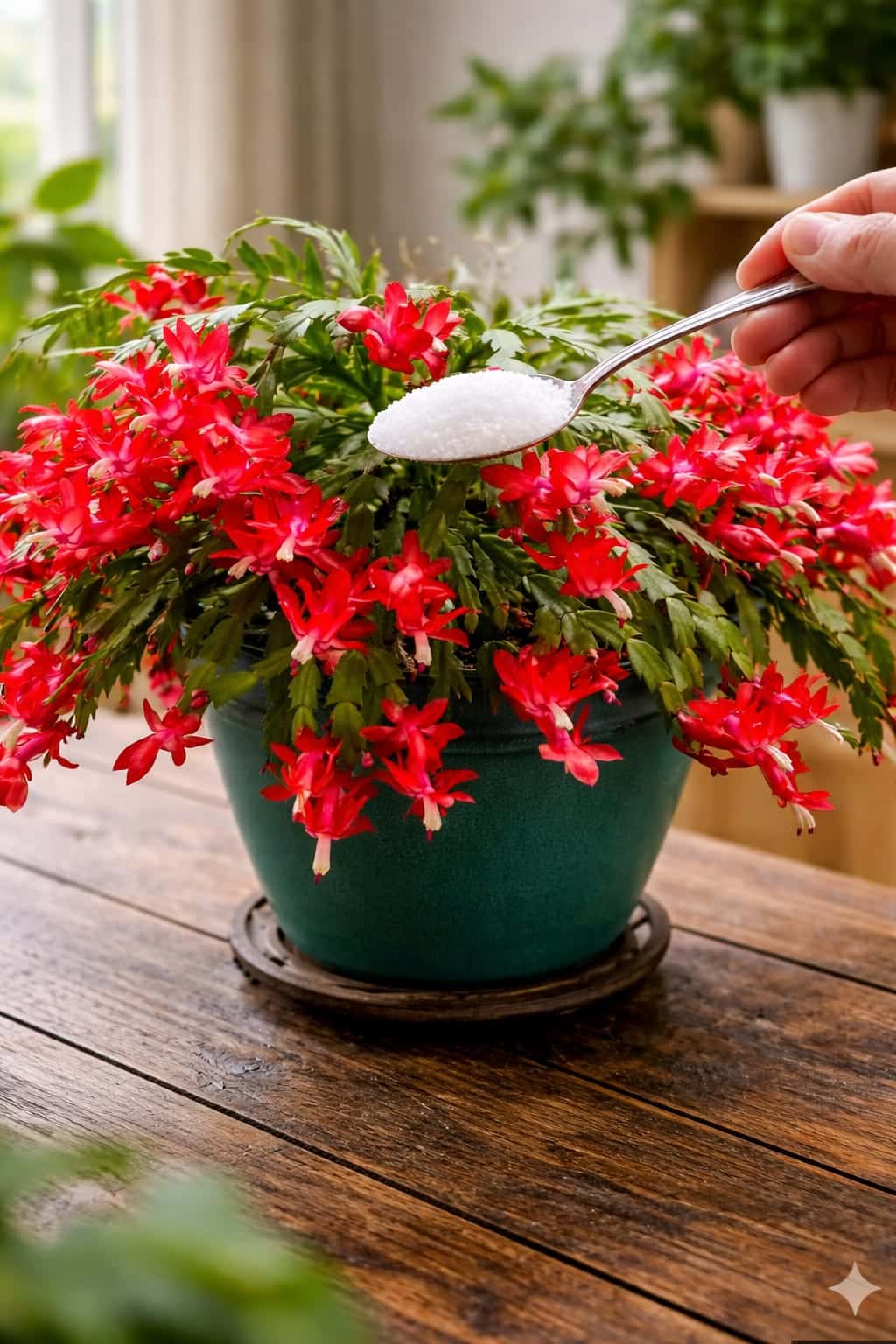
The Truth About Other Viral “Hacks” for Christmas Cactus
Viral Trick Reality
Sugar water Harmful – feeds bacteria, attracts pests.
Milk Can sour, cause odors, and promote mold. Never pour milk into soil.
Coffee grounds Too acidic; can compact soil and cause nutrient lockout.
Eggshells Take months to break down; minimal calcium benefit.
Banana peels Attract fruit flies; decompose slowly.
The only “hack” that works: proper care – light, water, humidity, and the right fertilizer.
How to Grow a Fuller, Bushier Christmas Cactus
Want your Christmas cactus to look lush and cascading, not sparse? Follow these tips.
- Prune After Blooming
After the flowers fade, twist off 1–2 segments from the ends of branches. This encourages branching – each cut will produce 2 new branches, doubling potential flower sites.
- Repot Every 2–3 Years
Christmas cacti like to be slightly root‑bound, but they eventually need fresh soil.
· When: Early spring, after blooming.
· Pot size: Only 1–2 inches larger than current pot.
· Soil: Use a well‑draining mix: 2 parts potting soil + 1 part perlite + 1 part orchid bark.
- Rotate the Plant
Rotate your plant every few weeks so all sides receive equal light. This prevents lopsided growth.
- Propagate to Fill Out the Pot
Take 2–3 segment cuttings, let them callus for 2–3 days, then plant them directly into the same pot. They’ll root and fill empty spaces.
Frequently Asked Questions (FAQs)
Q: Can I use Epsom salt on my Christmas cactus?
Epsom salt (magnesium sulfate) is sometimes used to correct magnesium deficiency. If your plant has yellowing between leaf veins, a very diluted solution (1 tsp per gallon of water) once a month can help. It is not a general fertilizer. Do not overuse.
Q: How do I know if my Christmas cactus needs fertilizer?
Signs of nutrient deficiency: pale green or yellow segments, slow growth, small or no blooms. If your plant is otherwise healthy (good light, proper water) but still not performing, it may need feeding.
Q: Why are my Christmas cactus segments turning purple or red?
This is usually a sign of stress – too much direct sun, cold temperatures, or phosphorus deficiency. Move to indirect light, check temperature, and consider a phosphorus‑rich fertilizer.
Q: Can I put my Christmas cactus outside in summer?
Yes – they love being outdoors in warm weather. Place in a shady spot (no direct sun). Bring inside before temperatures drop below 50°F (10°C). Outdoor light and humidity can boost growth and energy for winter blooms.
Q: How long do Christmas cactus flowers last?
Individual flowers last 5–7 days, but because buds open sequentially, the overall bloom period can last 4–6 weeks.
Q: Why did my Christmas cactus drop its buds before opening?
Bud drop is usually caused by environmental stress: moving the plant, temperature swings, drafts, overwatering, or underwatering during bud development. Keep conditions stable once buds appear.
Q: Is coffee grounds good for Christmas cactus?
No. Coffee grounds are acidic and can lower soil pH too much. They also tend to compact, reducing drainage. Compost them first, then use sparingly in outdoor gardens – not on indoor Christmas cacti.
Final Thoughts – Real Care Beats Viral Tricks
The “sugar trick” might look simple, but it’s not the secret to a healthy Christmas cactus. In fact, it can harm your plant. The real magic comes from light, proper watering, humidity, the right fertilizer, and – for blooms – cool nights and long darkness.
Don’t fall for viral shortcuts. Instead, invest your time in understanding what your Christmas cactus actually needs. When you provide those basics, your plant will reward you with lush growth and stunning blooms year after year.
Now it’s your turn! Have you tried the sugar trick? What worked – or didn’t? Drop a comment below – I’d love to hear your experience.
And if you found this guide helpful, share it with a friend who’s been tempted by viral plant hacks. Pin it for later, and subscribe to our newsletter for more evidence‑based plant care.
Stay green, stay curious, and let your Christmas cactus thrive. 🌺✨