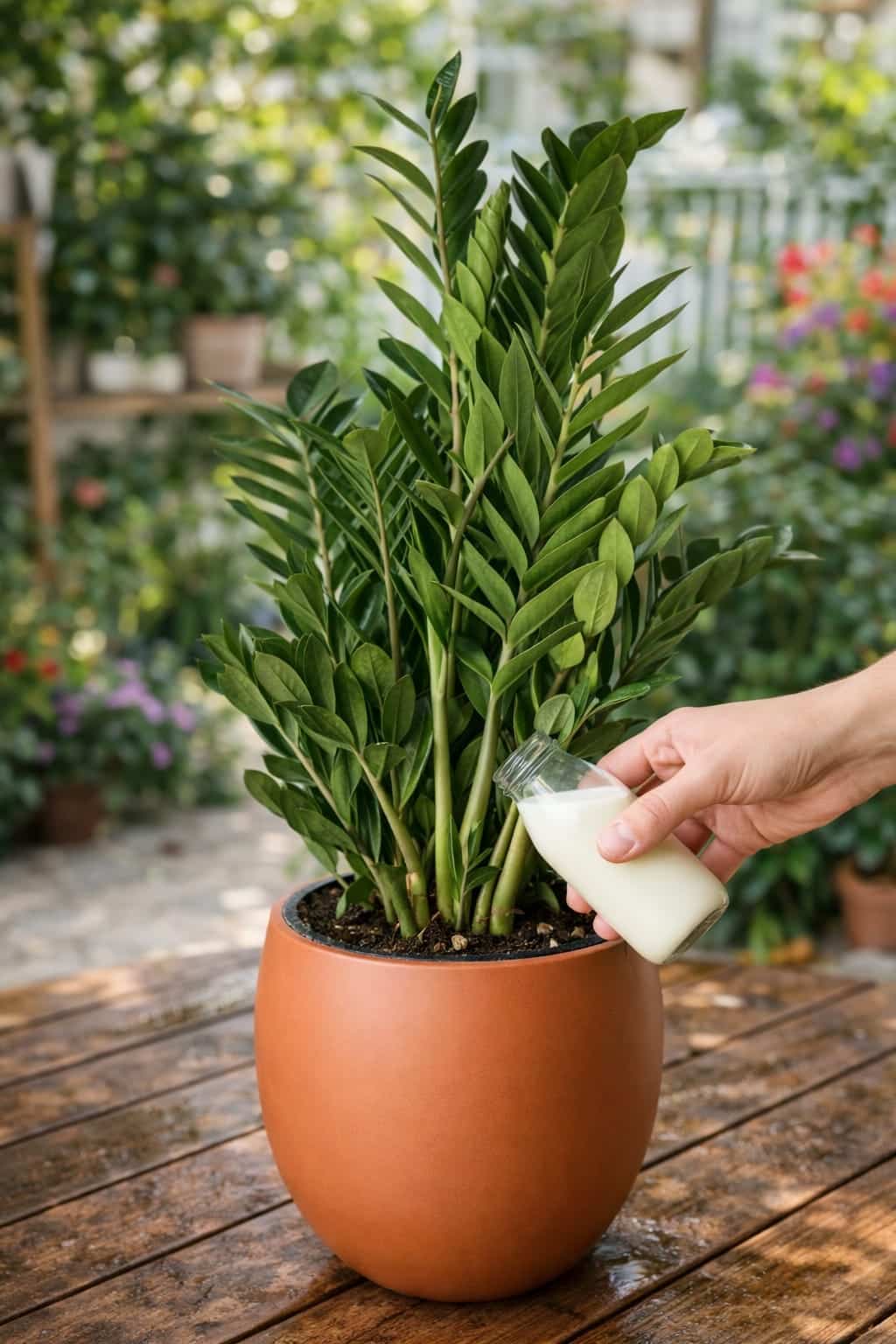
Want glossy, vibrant ZZ plant leaves? The viral milk trick promises natural shine. Learn how to use it safely (and why you should never pour milk into the soil). Plus, real care tips for healthy, shiny leaves.
Let’s be honest: ZZ plants (Zamioculcas zamiifolia) are already stunning. Their thick, waxy, deep green leaves have a natural glossy finish that makes them a favorite for low‑light spaces and forgetful plant owners. But what if you could make them look even healthier and shinier?
A viral trick circulating on social media claims that a simple “white liquid” – regular milk – can enhance the natural beauty of your ZZ plant leaves. The posts show people wiping leaves with a milky solution, and the results look impressive. But does it really work? And more importantly, is it safe for your plant?
In this guide, I’ll explain what the “white liquid” trick is, why some people use milk on plants, the critical safety warnings (especially about pouring milk into the soil), and the correct way to use it for a temporary leaf shine. Plus, you’ll learn the real secrets to keeping your ZZ plant glossy and healthy – no gimmicks required.
Let’s separate the viral hype from the horticultural reality.
What Is the “White Liquid”? The Viral Milk Trick Explained
The “white liquid” you see in viral plant videos is typically diluted milk – regular cow’s milk from your kitchen. Sometimes it’s mixed with water, sometimes used straight. The idea is that milk’s natural fats and proteins can clean dust off leaves, add a temporary shine, and even provide minor nutrients.
This isn’t a new concept. Gardeners have used milk sprays for decades – mainly to combat powdery mildew on outdoor plants. But using it as a leaf shine for houseplants like ZZ plants has gained recent popularity on social media.
Why Some People Use Milk on Plants
Component Potential Benefit
Calcium Essential for cell wall structure; may be absorbed in tiny amounts
Small amounts of protein Can create a thin, reflective film on leaves
Natural fats Add temporary shine and help dust adhere to the cloth
Lactic acid Very mild cleaning agent
When diluted and used properly (as a leaf wipe), milk can:
· Gently clean dust off leaves
· Add a temporary, non‑toxic shine
· Make leaves look healthier and more vibrant
👉 It acts more like a natural leaf cleaner than a fertilizer. Think of it as a gentle, homemade “leaf polish” – not a magic potion.
⚠️ Important Warning: Don’t Pour Milk Into the Soil
Here’s where many people go wrong – and where this trick can turn harmful. Viral posts sometimes show people pouring milk directly into the potting soil. Do not do this.
Why Pouring Milk Into Soil Is Dangerous for ZZ Plants
Problem Explanation
Bad odors Milk sours and rots in warm, moist soil, creating a foul smell.
Attracts pests Fermenting milk attracts fungus gnats, fruit flies, ants, and other insects.
Promotes bacteria and mold Milk is an organic substance; in soil, it feeds harmful bacteria and fungi.
Root rot Excess liquid (even milk) can waterlog the soil, and ZZ plants are extremely sensitive to overwatering.
Salt buildup Dried milk leaves behind proteins and salts that can coat roots and block absorption.
ZZ plants are succulents. They store water in their thick rhizomes and prefer dry, well‑drained soil. Adding milk – or any liquid other than water – to the soil disrupts this balance and can quickly lead to root rot.
The golden rule: Keep milk on the leaves, out of the soil.
The Safe Way to Use Milk for Shiny ZZ Leaves
If you want to try the milk trick for a temporary shine, follow this safe, leaf‑only method.
🧴 Leaf Wipe Method – Step by Step
What you need:
· Fresh milk (any kind – whole, 2%, or skim)
· Water
· Soft, lint‑free cloth (microfiber or old cotton t‑shirt)
· Small bowl or cup
Instructions:
- Dilute the milk: Mix 1 part milk with 3–4 parts water. This prevents the milk from being too thick or sticky. A good ratio is ¼ cup milk + 1 cup water.
- Dip the cloth: Dip the soft cloth into the diluted milk mixture. Wring it out so it’s damp, not dripping. Excess liquid can run down into the soil.
- Wipe each leaf: Gently wipe the top surface of each leaf. Support the leaf from underneath with your other hand to avoid bending or breaking it.
- Avoid the soil: Be careful not to let liquid drip into the pot. Tilt the plant slightly if needed.
- Let it air dry: Place the plant back in its spot. The leaves will dry within 10–15 minutes, leaving a subtle shine.
How often: Once every 2–3 months at most. Overdoing it can leave residue.
🧽 Alternative: Plain Water Wipe (Safer, Just as Effective)
For most people, a damp cloth with plain water is just as effective at removing dust and revealing the ZZ plant’s natural gloss. Water doesn’t leave any residue, doesn’t attract pests, and is completely safe.
Try water first. If you want extra shine, then experiment with diluted milk.
Does Milk Actually Make Leaves Shinier? The Realistic Verdict
Yes – but temporarily. Here’s what actually happens:
Effect Explanation
Cleans dust The main benefit. Dust dulls leaves. Removing it instantly reveals natural gloss.
Thin protein film Milk leaves a microscopically thin, slightly reflective film that can enhance shine for a few days to a week.
No long‑term benefit The shine fades as the film wears off. Milk does not change the leaf’s natural waxy coating permanently.
The bottom line: The milk trick can make your ZZ plant look polished for a short time, but it’s not a substitute for healthy leaves. The best shine comes from a healthy, well‑cared‑for plant.
Can Banana Peels Really Boost Orchid Growth? Continue to Page 2
Discover the safer method, the real risks, and the smart orchid care details that many gardeners miss on the first page.