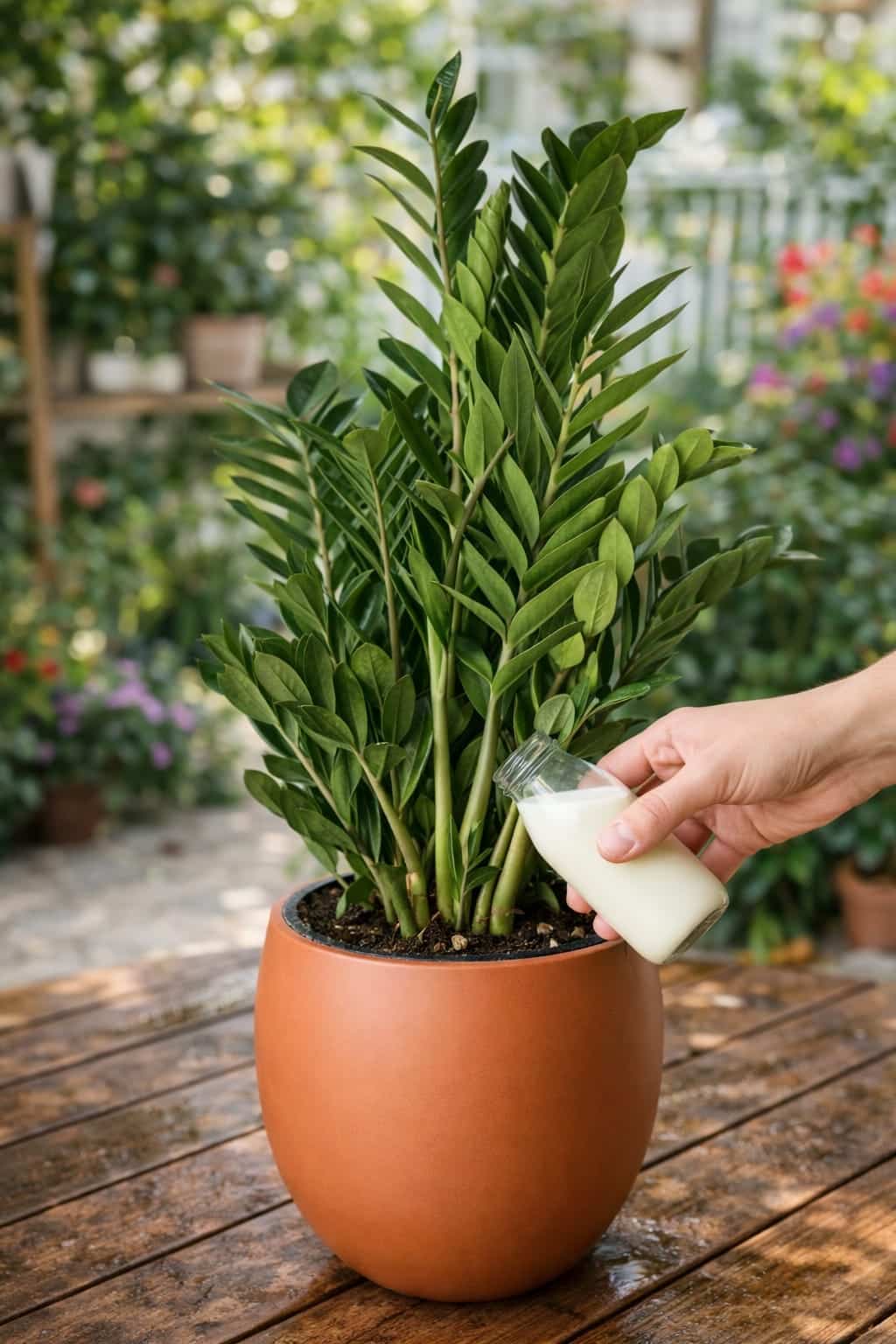
The Real Secret to Glossy ZZ Leaves – Proper Care
Instead of relying on temporary tricks, focus on the fundamentals. Healthy ZZ plants are naturally glossy. Here’s how to keep them that way.
☀️ 1. Light – Bright, Indirect Light
ZZ plants are famous for tolerating low light, but they thrive – and look glossier – in brighter conditions.
Light Level Leaf Appearance
Low light (dark corner) Leaves become darker green, but growth slows; may look dull
Medium light (few feet from window) Good growth, decent gloss
Bright, indirect light (near east/west window) Best – vibrant, glossy, fast growth
Pro tip: If your ZZ plant has been in a dark spot for a long time, move it gradually to brighter light over a few weeks to avoid shock.
💧 2. Water – Less Is More
Overwatering is the #1 killer of ZZ plants. They store water in their thick rhizomes and can go weeks without a drink.
· When to water: Only when the soil is completely dry all the way through. Stick your finger 2–3 inches into the soil – if dry, water. If damp, wait.
· How often: In bright light, every 2–3 weeks. In low light, every 4–6 weeks or even less.
· Signs of overwatering: Yellowing leaves, soft stems, foul smell from soil.
· Signs of underwatering: Wrinkled stems, drooping leaves, brown tips.
🪴 3. Soil – Well‑Draining Mix
ZZ plants need soil that dries out quickly.
· Best mix: Cactus/succulent mix, or DIY: 2 parts potting soil + 1 part perlite + 1 part coarse sand.
· Pot: Must have drainage holes. Terracotta pots help wick away moisture.
🌿 4. Regular Cleaning – Dust Removal
Dust accumulates on leaves, blocking light and making the plant look dull. This is the #1 reason ZZ plants lose their gloss.
· How to clean: Use a soft, damp cloth to wipe each leaf every 2–4 weeks. Plain water works perfectly.
· Why it matters: Clean leaves can photosynthesize more efficiently, keeping the plant healthy and shiny.
🌱 5. Fertilizer – Very Light Feeding
ZZ plants are not heavy feeders. Over‑fertilizing can cause salt buildup, leading to brown leaf tips.
· When: Once in spring and once in summer.
· What: Balanced houseplant fertilizer (like 10-10-10) diluted to half strength.
· Do not fertilize in fall and winter.
🌡️ 6. Temperature and Humidity
ZZ plants are adaptable but prefer:
· Temperature: 65–80°F (18–27°C). Avoid cold drafts below 50°F (10°C).
· Humidity: Average indoor humidity is fine. No misting needed.
Common Myths About ZZ Plant Leaf Shine – Debunked
Myth Truth
“Milk makes leaves permanently shiny” No – the shine is temporary and fades within a week.
“You can pour milk into the soil for nutrients” Dangerous – causes rot, pests, and odors. Never pour milk into soil.
“Mayonnaise or oil makes leaves shine” Oils clog leaf pores (stomata) and can burn leaves. Never use.
“Commercial leaf shine products are safe” Most contain oils and silicones that coat leaves and block gas exchange. Avoid.
“ZZ plants don’t need cleaning” Dust blocks light. Regular wiping keeps them healthy and glossy.
Natural Alternatives to Milk for Leaf Shine
If you’re uncomfortable using milk, try these safe, effective alternatives:
Method How to Use Effectiveness
Plain water + soft cloth Wipe leaves with damp microfiber cloth Excellent – removes dust, reveals natural gloss
Distilled water Use instead of tap water to avoid mineral spots Same as above
Diluted vinegar (1:10 with water) Wipe leaves, then wipe again with plain water Removes hard water spots, but can be harsh; rinse well
Neem oil solution (very diluted) Mix ½ tsp neem oil + 1 liter water + few drops soap Adds shine and acts as pest repellent; use sparingly
Best for most people: Plain water and a soft cloth. Simple, free, and safe.
Frequently Asked Questions (FAQs)
Q: Can I use skim milk instead of whole milk?
Yes – skim milk has less fat, so it may leave less residue. It still cleans and adds a slight shine. Dilute it the same way (1 part milk + 3 parts water).
Q: How often can I use the milk wipe method?
Once every 2–3 months at most. Overusing milk can leave protein residue that attracts dust and pests.
Q: My ZZ plant leaves are still dull after wiping. What’s wrong?
Dullness can be a sign of underwatering, overwatering, or insufficient light. Check your care routine. A healthy ZZ plant has natural gloss – if it’s consistently dull, something is off.
Q: Can I use coconut milk or almond milk?
Plant‑based milks are not recommended. They contain oils, thickeners, and additives that can leave sticky residue. Stick to dairy milk if you try this trick – but plain water is safer.
Q: Will milk attract bugs to my ZZ plant?
If you use it correctly (diluted, wiped on leaves, not soil) and let it dry, the risk is low. But any organic residue can attract fungus gnats over time. That’s why water is better.
Q: Can I spray the milk solution instead of wiping?
Spraying increases the chance of liquid dripping into the soil. Wiping gives you control and ensures leaves are not oversaturated.
Q: Is it true that ZZ plants are toxic to pets?
Yes – ZZ plants are toxic to cats and dogs if ingested. The leaves contain calcium oxalate crystals that cause mouth irritation, drooling, and vomiting. Keep them out of reach.
Final Thoughts – Healthy Leaves Come from Healthy Care
The “white liquid” milk trick can make your ZZ plant look more polished – but it’s not magic. The temporary shine is mostly from cleaning dust and a thin protein film. The real secret to glossy, vibrant leaves is proper care: bright indirect light, infrequent watering, well‑draining soil, and regular dusting.
If you want to try the milk trick, use it safely – diluted, wiped on leaves only, never poured into the soil. But remember: a healthy ZZ plant is naturally shiny. Focus on the fundamentals first, and you won’t need gimmicks.
Now it’s your turn! Have you tried the milk trick on your ZZ plant? What worked – or didn’t? Drop a comment below – I’d love to hear your experience.
And if you found this guide helpful, share it with a friend who’s considering pouring milk into their plant pot. Pin it for later, and subscribe to our newsletter for more honest, evidence‑based plant care.
Stay glossy, stay safe, and keep growing. 🌿✨