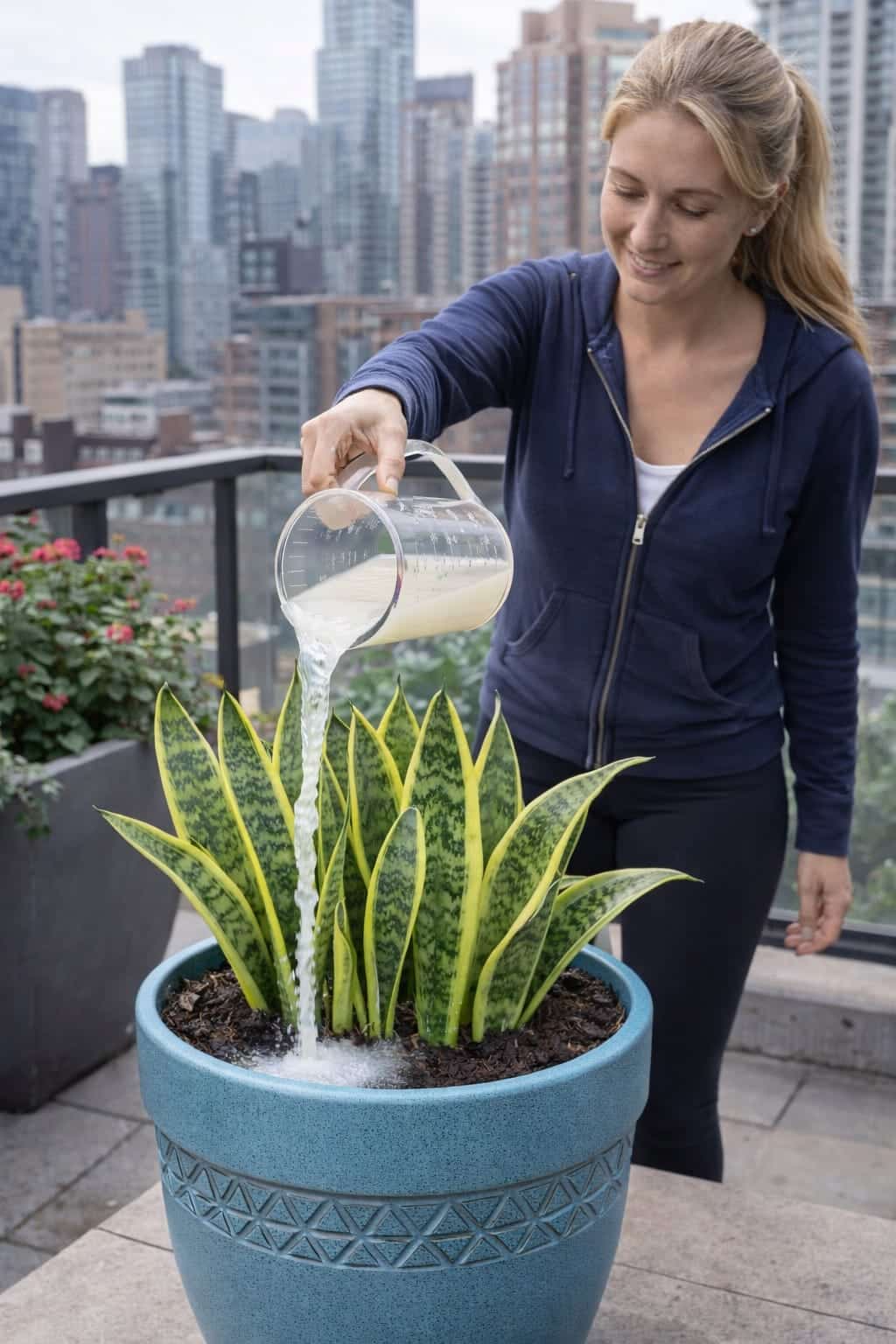
Can rice water help your snake plant grow faster and healthier? Learn how to use rice water correctly – as a gentle natural supplement – alongside proper light, soil, and watering. Practical tips inside.
Let’s be honest: snake plants (Sansevieria, now Dracaena) are one of the most popular indoor plants in modern homes – and for good reason. Their upright structure, bold green patterns, and low‑maintenance nature make them perfect for both beginners and experienced plant lovers.
But even though they are known for being “easy,” snake plants can still struggle. You might notice slow or no growth, pale or weak leaves, dry edges or curling, or a lack of new shoots. That’s when many people start searching for natural methods to boost growth.
One of the most talked‑about techniques right now is using rice water as a natural liquid boost. It looks simple… but when used correctly, it can support healthier growth. However, rice water is not magic – it only works when the basics are right.
In this guide, you’ll learn what rice water is, why people use it, how to apply it safely, and – most importantly – the real factors that make snake plants grow strong: soil, light, temperature, and watering. No hype, just practical care.
🌱 What Is Rice Water and Why People Use It
Rice water is the starchy liquid left after rinsing or soaking rice. It is a traditional natural remedy used in some gardening circles as a mild plant supplement.
What Rice Water Contains
· Trace minerals – small amounts of potassium, magnesium, and phosphorus.
· Small amounts of nutrients – from the rice grains.
· Natural starch compounds – which can feed beneficial soil microbes.
How It Can Help
· Support soil microbes – starch can act as a food source for beneficial bacteria.
· Improve root environment – healthier soil life leads to better nutrient availability.
· Encourage gentle growth – a mild, natural boost.
👉 It is a light, natural supplement – not a strong fertilizer. Think of it as a probiotic drink for your soil, not a meal replacement.
🌿 Understanding Snake Plant Growth (Indoor & Outdoor)
Snake plants grow slowly – but steadily. They are not fast growers like pothos or philodendrons. To get consistent, healthy growth, they need the right conditions.
What Snake Plants Prefer
Factor Ideal Condition
Light Bright, indirect light (east or west window)
Soil Well‑draining cactus or succulent mix
Water Low to moderate – let soil dry completely between waterings
Temperature 18–30°C (65–86°F), stable
When these are balanced, growth becomes consistent and healthy. If any of these is off, the plant may stall or decline.
🪴 Soil — The Real Growth Engine
Even the best rice water cannot fix bad soil. Snake plants need fast‑draining soil to thrive.
Ideal Soil Mix
· Cactus or succulent mix (available at garden centers)
· Perlite or coarse sand (add 30% for extra drainage)
· Light organic matter (not heavy compost)
Why This Works
· No water buildup – roots don’t sit in moisture.
· Healthy root oxygen – roots can breathe.
· Strong structure – plant stands upright.
Poor Soil Problems
· Heavy soil → root rot.
· Wet soil that stays soggy → weak growth, yellow leaves.
👉 Soil matters more than any liquid. If your snake plant is struggling, check the soil first.
💧 How Rice Water Supports Growth (Realistic Benefits)
When used occasionally and correctly, rice water can:
· Improve soil activity – the starch feeds beneficial microbes.
· Add mild nutrients – trace minerals in small amounts.
· Support root health – indirectly, through better soil biology.
But only if you avoid overuse. Rice water is not a substitute for proper fertilizing or good soil.
🧴 How to Use Rice Water Properly – Step by Step
https://bigzazoo.com/?s=Garlic+Parmesan+Pizza+Grilled+Cheese
If you want to try rice water, follow these guidelines to avoid harming your snake plant.
What You’ll Need
· Plain, unsalted rice (white or brown)
· Water
· A container for soaking
Step‑by‑Step Method
- Rinse the rice – save the cloudy water from the first or second rinse. Alternatively, soak rice in water for 30 minutes and strain.
- Let the rice water cool to room temperature (if using warm water from cooking rice, cool completely).
- Dilute – mix with equal parts plain water. Undiluted rice water can be too starchy and may ferment.
- Apply once every 2–3 weeks – not weekly, not daily.
- Pour lightly around the soil – avoid the leaves and crown. Use about ¼ to ½ cup for a standard pot.
- Do not overwater – rice water counts as a watering session. Check soil moisture first.
Important Reminders
· Use only plain, unsalted rice water. Seasoned or salted rice water will harm the plant.
· Do not use rice water that has fermented (smells sour). Use it fresh.
· Always combine with regular watering habits – rice water is not a standalone treatment.
⚠️ Common Mistakes with Rice Water
Mistake Why It’s Harmful
Using it too often (more than once every 2 weeks) Can cause mold, attract pests, or lead to root rot.
Using salted or seasoned water Salt damages roots.
Overwatering after application Rice water adds moisture; overwatering leads to rot.
Relying on it as the main nutrient Rice water is very low in NPK; it does not replace fertilizer.
👉 Moderation is key. A little rice water every few weeks can help; too much creates problems.
🌞 Light & Temperature — The Real Growth Boosters
No amount of rice water will make a snake plant grow if it’s sitting in a dark corner or cold room.
Ideal Conditions for Growth
Factor Ideal Range Effect
Light Bright, indirect (east/west window) Steady growth, upright leaves.
Temperature 18–30°C (65–86°F) Active growth, healthy roots.
Humidity Average (30–50%) – snake plants are tolerant No special needs.
Poor Conditions
· Low light (north window, dark corner) → very slow growth, pale leaves.
· Extreme heat (above 35°C / 95°F) → stress, leaf curling.
· Cold (below 10°C / 50°F) → growth stops.
👉 Light and temperature are more important than any liquid supplement.
Snake Plant Growth Table – Quick Reference
Factor Ideal Condition Result
Soil Fast‑draining (cactus mix + perlite) Strong roots, no rot
Water Low to moderate – let soil dry completely Healthy plant
Light Bright, indirect Steady growth
Temperature 18–30°C (65–86°F) Active growth
Rice water Occasional (every 2–3 weeks), diluted Gentle soil and microbial support
Frequently Asked Questions (FAQs)
Q: Can rice water help snake plants grow?
Yes, in moderation. It can support soil microbes and add trace minerals, but it is not a strong fertilizer.
Q: How often should I use rice water on my snake plant?
Once every 2–3 weeks during spring and summer. Do not use in fall and winter.
Q: Can I overuse rice water?
Yes. Overuse can cause mold, attract fungus gnats, and lead to root rot.
Q: Does rice water replace fertilizer?
No. Rice water is very low in nitrogen, phosphorus, and potassium. Use a balanced houseplant fertilizer once or twice a year if needed.
Q: What is the best soil for snake plants?
A well‑draining cactus or succulent mix, or regular potting soil amended with perlite or coarse sand.
Q: Do snake plants grow fast?
Moderately – they are slow to medium growers. Under ideal conditions, they produce several new leaves per year.
Q: Can snake plants bloom indoors?
Rarely, but it is possible with maturity, bright light, and slight stress (root‑bound, dry periods). Rice water does not trigger blooms.
Q: Should I keep my snake plant indoors or outdoors?
Both – indoors near a bright window, or outdoors in shade during warm months (bring inside before frost).
Q: What is the biggest mistake people make with snake plants?
Overwatering. Snake plants prefer to dry out completely between waterings.
Q: Is this method beginner‑friendly?
Yes – but beginners should focus on soil, light, and watering first. Rice water is an optional extra.
Printable Snake Plant Rice Water Checklist
☐ Use plain, unsalted rice water (no salt, no seasoning)
☐ Let it cool to room temperature
☐ Dilute with equal parts plain water
☐ Check soil moisture – only apply if soil is dry
☐ Apply once every 2–3 weeks (spring/summer only)
☐ Pour lightly around soil – not on leaves or crown
☐ Do not overwater – rice water counts as a watering
☐ Do not use fermented (sour) rice water
☐ Combine with proper light, soil, and temperature
☐ Be patient – growth takes weeks to months
Final Thoughts – A Gentle Boost, Not a Miracle
Rice water can be a helpful, natural addition to your snake plant care routine – but only when used correctly and sparingly. It is not a magic growth potion. The real drivers of healthy snake plants are:
· Fast‑draining soil – to prevent root rot.
· Bright, indirect light – for energy.
· Proper watering – let the soil dry completely.
· Stable, warm temperatures – for active growth.
If those basics are right, a little rice water every few weeks can support soil health and give your plant a gentle nudge. If they are wrong, rice water will not fix the problem.
Start with the fundamentals. Then, if you want to experiment, use rice water as a light supplement. Your snake plant will thank you with steady, healthy growth.
Now it’s your turn! Have you tried rice water on your snake plant? What results did you see? Drop a comment below – I’d love to hear your experience.
And if you found this guide helpful, share it with a friend who loves natural plant care. Pin it for later, and subscribe to our newsletter for more practical plant tips.
Stay bright, stay dry, and watch your snake plant thrive. 🌿✨