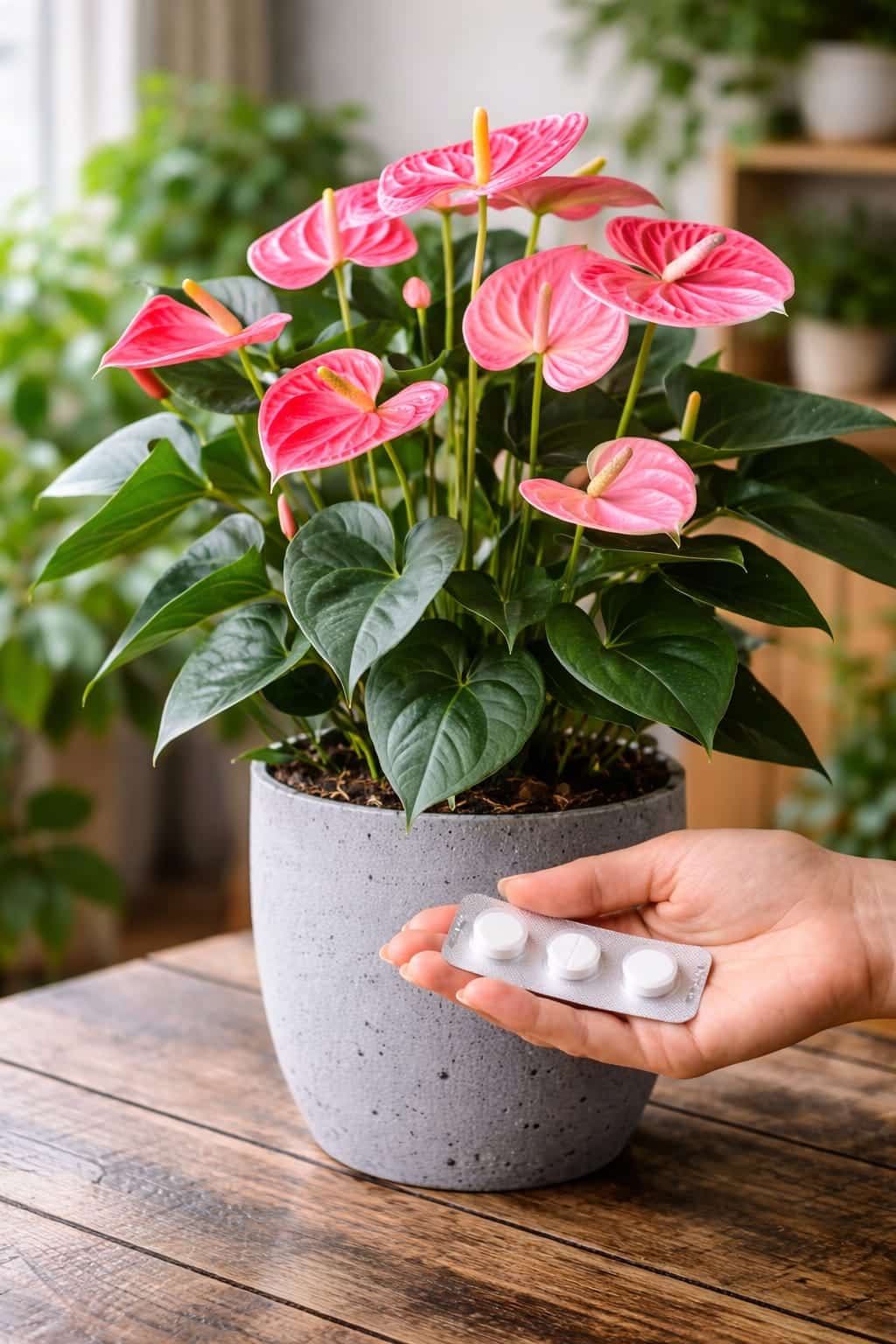
Can fertilizer tablets make your Anthurium bloom more? Learn the truth about “pills” for plants, how to use slow‑release fertilizers safely, and the real care secrets for vibrant, long‑lasting flowers.
Let’s be honest: Anthuriums are showstoppers. With their glossy, heart‑shaped leaves and waxy, long‑lasting blooms in shades of red, pink, white, and even purple, they’re one of the most rewarding houseplants to own. Naturally, plant lovers are always looking for ways to keep them strong, vibrant, and flowering all year round.
Recently, a new trend has emerged: using “pills” for Anthuriums. You might have seen videos or posts where someone pushes a small tablet into the potting soil, promising bigger blooms, faster growth, and healthier leaves. But do these “pills” really work? Or are they just another gimmick?
In this guide, I’ll give you an honest, science‑backed look at what these plant “pills” actually are, how they work (when used correctly), the serious dangers of using the wrong tablets, and – most importantly – the real secrets to keeping your Anthurium thriving. No hype, just practical advice.
Let’s separate fact from fiction.
What Are These “Pills”? – The Truth About Plant Fertilizer Tablets
In the viral videos, what you’re seeing are usually slow‑release fertilizer tablets or nutrient spikes designed specifically for houseplants. They are small, compressed discs or tablets that contain a balanced blend of nitrogen (N), phosphorus (P), and potassium (K) – the primary macronutrients plants need – plus trace minerals.
Common Types of Plant Tablets
Type How It Works Best For
Slow‑release fertilizer tablets Dissolve gradually over weeks or months, releasing nutrients with each watering Anthuriums, ferns, philodendrons
Fertilizer spikes Similar to tablets, but shaped to be pushed deep into the soil Trees, large potted plants
Nutrient pellets Small, bead‑like; mixed into soil or sprinkled on top General use, including Anthuriums
When used correctly, these tablets can provide a steady, long‑term food source for your plant – no need to remember liquid fertilizer every week.
What’s Inside a Quality Plant Tablet?
Nutrient Role in Anthurium Health
Nitrogen (N) Promotes lush, green leaf growth
Phosphorus (P) Encourages strong root development and blooming
Potassium (K) Supports overall plant health, disease resistance, and water uptake
Trace minerals (iron, magnesium, calcium) Prevent deficiencies that cause yellowing or stunted growth
High‑quality tablets are formulated to match the needs of flowering houseplants like Anthuriums. They typically have a balanced or slightly phosphorus‑heavy ratio, such as 10-10-10 or 12-10-10.
How Fertilizer Tablets Work (When Used Correctly)
Proper plant fertilizer tablets are designed to dissolve slowly over time. Here’s how they benefit your Anthurium:
- Provide Steady Nutrients
Unlike liquid fertilizers that give a quick burst of nutrients (and can burn roots if overused), slow‑release tablets release small amounts continuously. This mimics natural nutrient cycles and reduces the risk of over‑feeding.
- Support Healthy Leaf Growth
Nitrogen in the tablets keeps those glossy, heart‑shaped leaves vibrant and lush. A nitrogen deficiency causes older leaves to turn yellow.
- Encourage More Frequent Blooming
Phosphorus is the key nutrient for flower production. Anthuriums are heavy bloomers under the right conditions, but without adequate phosphorus, they may produce few or no flowers. Quality tablets provide a consistent phosphorus supply.
- Strengthen Root Systems
Potassium and trace minerals improve root health, helping the plant absorb water and nutrients more efficiently. Strong roots = a stronger plant.
- Long‑Term Convenience
One tablet can feed your Anthurium for 2–6 months, depending on the brand. This is perfect for forgetful plant owners or anyone who wants a “set it and forget it” solution.
⚠️ Important Warning: Not All “Pills” Are Safe
Here’s where things get dangerous. Some viral posts show people using household tablets – like aspirin, ibuprofen, vitamin C, or even antacids – claiming they “boost” plant growth. Do not do this.
Why Human Medications Are Harmful to Plants
Substance Why It’s Dangerous
Aspirin (acetylsalicylic acid) Can acidify soil too much; may damage roots; no proven benefit for Anthuriums
Ibuprofen or other painkillers Toxic to plants; can kill roots and soil microbes
Vitamins (human grade) Not formulated for plant uptake; can cause salt buildup
Antacids Drastically alter soil pH, making nutrients unavailable
Always use products made specifically for plants. If the tablet isn’t labeled for use on houseplants, don’t put it in your pot.
Signs You’ve Used the Wrong Tablet
· Yellowing or browning leaf edges
· Wilting despite moist soil
· White crust on soil surface (salt buildup)
· Foul odor from the pot (root rot)
If you accidentally used a human medication, remove it immediately, flush the soil with plenty of water, and repot if necessary.
The Right Way to Use Fertilizer Tablets for Anthuriums
If you’ve purchased genuine slow‑release fertilizer tablets for houseplants, follow these guidelines for safe and effective use.
Step‑by‑Step Instructions
- Read the label: Different tablets have different strengths and durations. Never exceed the recommended dose.
- Insert the tablet into the soil: Push it about 1–2 inches deep, near the edge of the pot (not directly against the main stem or roots). Avoid damaging roots.
- Water normally: The tablet will begin dissolving with moisture. Do not overwater – Anthuriums prefer slightly moist but well‑drained soil.
- Reapply as directed: Most tablets last 2–6 months. Mark your calendar so you don’t forget to replace them.
- Monitor your plant: If you see signs of over‑fertilization (brown leaf tips, salt crust), remove the tablet and flush the soil.
How Often to Use Tablets
Plant Age / Condition Recommended Frequency
Young Anthurium (newly potted) Wait 3–4 months before first tablet
Mature, healthy Anthurium One tablet every 3–4 months during growing season (spring/summer)
Resting period (fall/winter) No fertilizer – let the plant rest
Less is more. Over‑feeding causes more problems than under‑feeding. Anthuriums are not heavy feeders; they prefer a light, consistent supply.
Can Banana Peels Really Boost Orchid Growth? Continue to Page 2
Discover the safer method, the real risks, and the smart orchid care details that many gardeners miss on the first page.