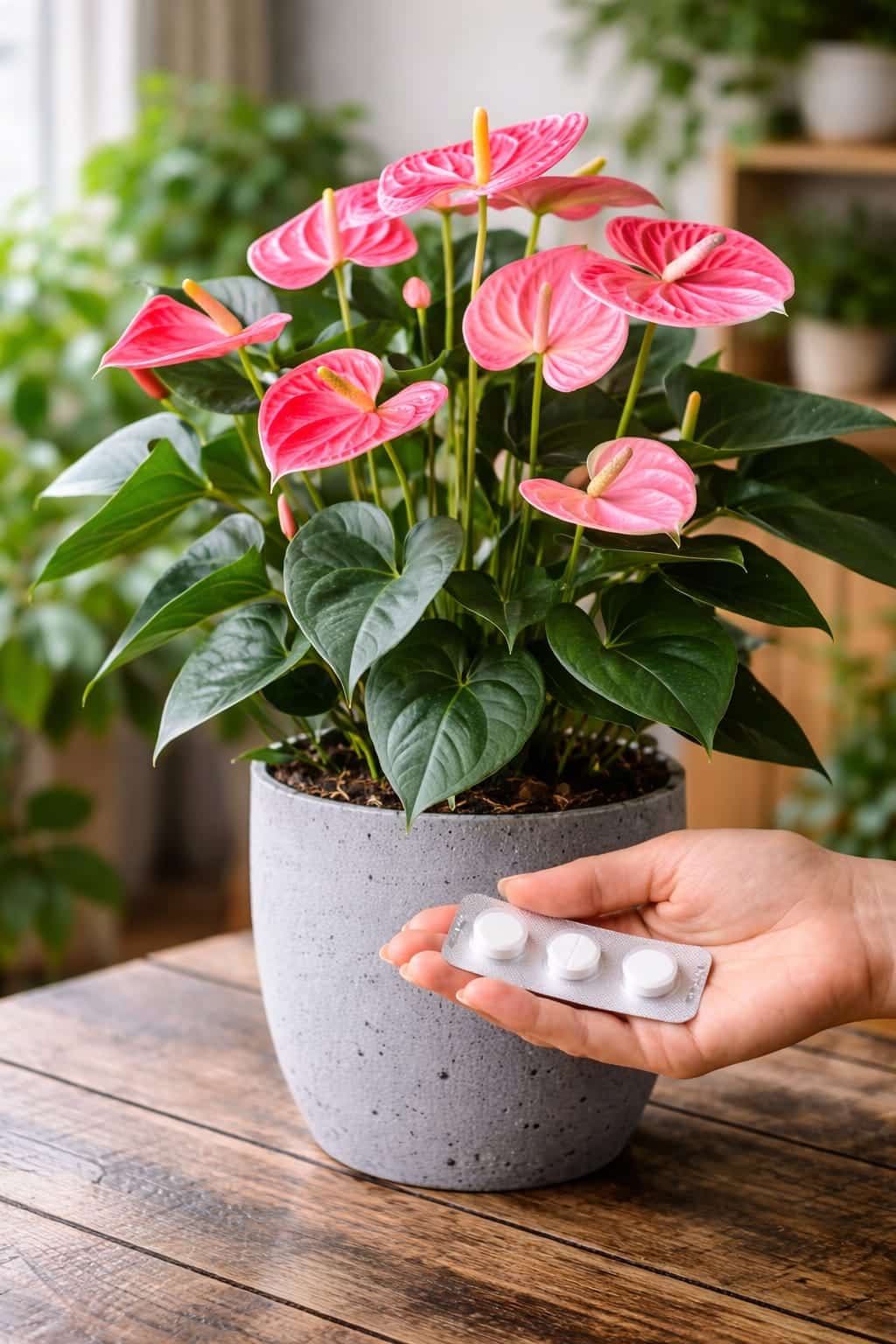
The Real Secret to a Thriving Anthurium – Beyond “Pills”
Even the best fertilizer tablets won’t save an Anthurium that’s not getting proper light, water, or humidity. Think of tablets as support, not a shortcut. Here’s what actually makes Anthuriums thrive.
☀️ 1. Light – Bright, Indirect Sunlight
Anthuriums are native to tropical rainforests, where they grow under the canopy of larger trees. They need bright, indirect light.
Light Level Effect on Anthurium
Low light (north window, dark corner) Slow growth, few or no blooms, dark green leaves
Bright, indirect light (east/west window) Ideal – vibrant leaves, regular blooms
Direct sun (south window without curtain) Scorched leaves, brown patches
Pro tip: If your Anthurium hasn’t bloomed in over a year, it’s likely not getting enough light. Move it closer to a window.
💧 2. Water – Keep Soil Slightly Moist (Not Soggy)
Anthuriums like consistent moisture but hate sitting in water. Overwatering leads to root rot – the #1 killer.
· Check soil moisture: Stick your finger 1–2 inches into the soil. If it feels dry, water. If damp, wait.
· Water quality: Use room‑temperature, filtered or distilled water if your tap water is hard. Anthuriums are sensitive to chlorine and fluoride.
· Drainage: Your pot must have drainage holes. Never let the plant sit in standing water.
Signs of overwatering: Yellowing leaves, mushy stems, foul smell.
Signs of underwatering: Wilting, brown leaf tips, dry soil.
🌬️ 3. Humidity – Anthuriums Love Moist Air
In their natural habitat, humidity is high (70–80%). Indoor air, especially with heating or AC, is often much drier.
· Ideal humidity: 60–80%. They can tolerate lower, but blooms may suffer.
· How to increase humidity: Use a humidifier, place the pot on a pebble tray with water, or group plants together. Misting is less effective and can lead to leaf spots.
🪴 4. Soil – Well‑Draining, Airy Mix
Anthuriums are epiphytes (they grow on trees in nature). Their roots need oxygen. Heavy, compacted soil suffocates them.
· Best mix: Orchid bark + perlite + peat moss (or coco coir). A commercial aroid mix works well.
· Avoid: Regular potting soil alone – it holds too much moisture.
🌿 5. Cleaning – Wipe Leaves Regularly
Dust accumulates on those glossy leaves, blocking light and reducing photosynthesis. Wipe them with a soft, damp cloth every 2–4 weeks. This also helps prevent pests like spider mites.
🌸 6. Deadhead Spent Blooms
Anthurium flowers (actually modified leaves called spathes) can last for weeks or even months. Once they turn brown and dry, cut the flower stalk at the base. This encourages the plant to produce new blooms.
Common Myths About Anthurium “Pills” – Debunked
Myth Truth
“Fertilizer tablets replace all care” No – they only supplement nutrients. Light, water, and humidity are still critical.
“More tablets = more blooms” Over‑fertilizing causes salt buildup and root burn, leading to fewer blooms.
“Any pill works – aspirin, vitamins” Dangerous. Only use plant‑specific tablets.
“Tablets work instantly” Slow‑release tablets take weeks to show effects. They are not instant.
“You don’t need to water after adding a tablet” Watering activates the tablet. Always water as usual.
Fertilizer Tablets vs. Liquid Fertilizer – Which Is Better for Anthuriums?
Feature Slow‑Release Tablets Liquid Fertilizer
Convenience Set and forget for months Must mix and apply every 1–2 weeks
Risk of over‑feeding Low (slow release) High (easy to overdo)
Speed of effect Gradual Quick (within days)
Control Less precise Highly controllable
Best for Busy plant owners, steady maintenance Fine‑tuning growth, correcting deficiencies
For most Anthurium owners, a combination works best: Use slow‑release tablets as a baseline, and supplement with a diluted liquid fertilizer during the active growing season if you want an extra bloom boost.
Frequently Asked Questions (FAQs)
Q: Can I use orchid fertilizer tablets for Anthuriums?
Yes – orchids and Anthuriums have similar needs (well‑draining soil, airy roots, moderate feeding). Orchid tablets are usually balanced or slightly higher in phosphorus, which benefits blooming.
Q: How do I know if my Anthurium needs fertilizer?
Signs of nutrient deficiency: pale or yellow leaves, slow growth, small or no blooms, leaf drop. If your plant is otherwise healthy (good light, proper water) but still not performing, it may need feeding.
Q: Can I make my own fertilizer tablets at home?
Not recommended. Homemade tablets won’t have consistent nutrient release and may contain harmful additives. Stick to commercial products designed for houseplants.
Q: My Anthurium has white crust on the soil – is that from tablets?
That’s usually salt buildup from fertilizer or hard tap water. Scrape off the crust, flush the soil with plenty of water, and reduce fertilizer use.
Q: Can I use tablets in semi‑hydroponics (LECA)?
No – tablets are designed for soil. In semi‑hydroponics, use liquid hydroponic nutrients.
Q: Should I fertilize my Anthurium in winter?
No – Anthuriums naturally slow down in fall and winter. Fertilizing then can cause weak, leggy growth. Stop feeding in October and resume in early spring.
Final Thoughts – No Magic Pill, But the Right Support Helps
There’s no magic pill that keeps an Anthurium strong forever – but the right nutrients (slow‑release fertilizer tablets), combined with proper care, can make a huge difference. Think of tablets as support, not a shortcut.
Healthy Anthuriums come from balance: bright indirect light, consistent moisture, high humidity, well‑draining soil, and occasional feeding. When you provide these basics, your plant will reward you with glossy leaves and those stunning, long‑lasting blooms.
So yes – fertilizer tablets can help. But never use random pills from your medicine cabinet. Always choose products made for plants, follow the instructions, and remember that good care is the real secret.
Now it’s your turn! Have you tried fertilizer tablets for your Anthurium? What’s your experience – more blooms, or no change? Drop a comment below – I’d love to hear your story.
And if you found this guide helpful, share it with a fellow Anthurium owner who’s considering a “pill” trend. Pin it for later, and subscribe to our newsletter for more honest, evidence‑based plant care.
Stay blooming, stay balanced, and keep growing. 🌺✨