Discover the natural secret ingredient that can make your Peace Lily bloom for up to 10 years! Learn how banana peels, garlic, and proper care keep these beautiful plants thriving and flowering continuously.
Let me ask you something: have you ever brought home a gorgeous, blooming Peace Lily from the store, only to watch the flowers fade and never return?
You’re not alone. It’s one of the most common frustrations among houseplant lovers. Those elegant white blooms that made you fall in love with the plant seem to vanish—sometimes for years. But here’s the truth: with the right care and a few natural secrets, your Peace Lily can bloom again and again, year after year.
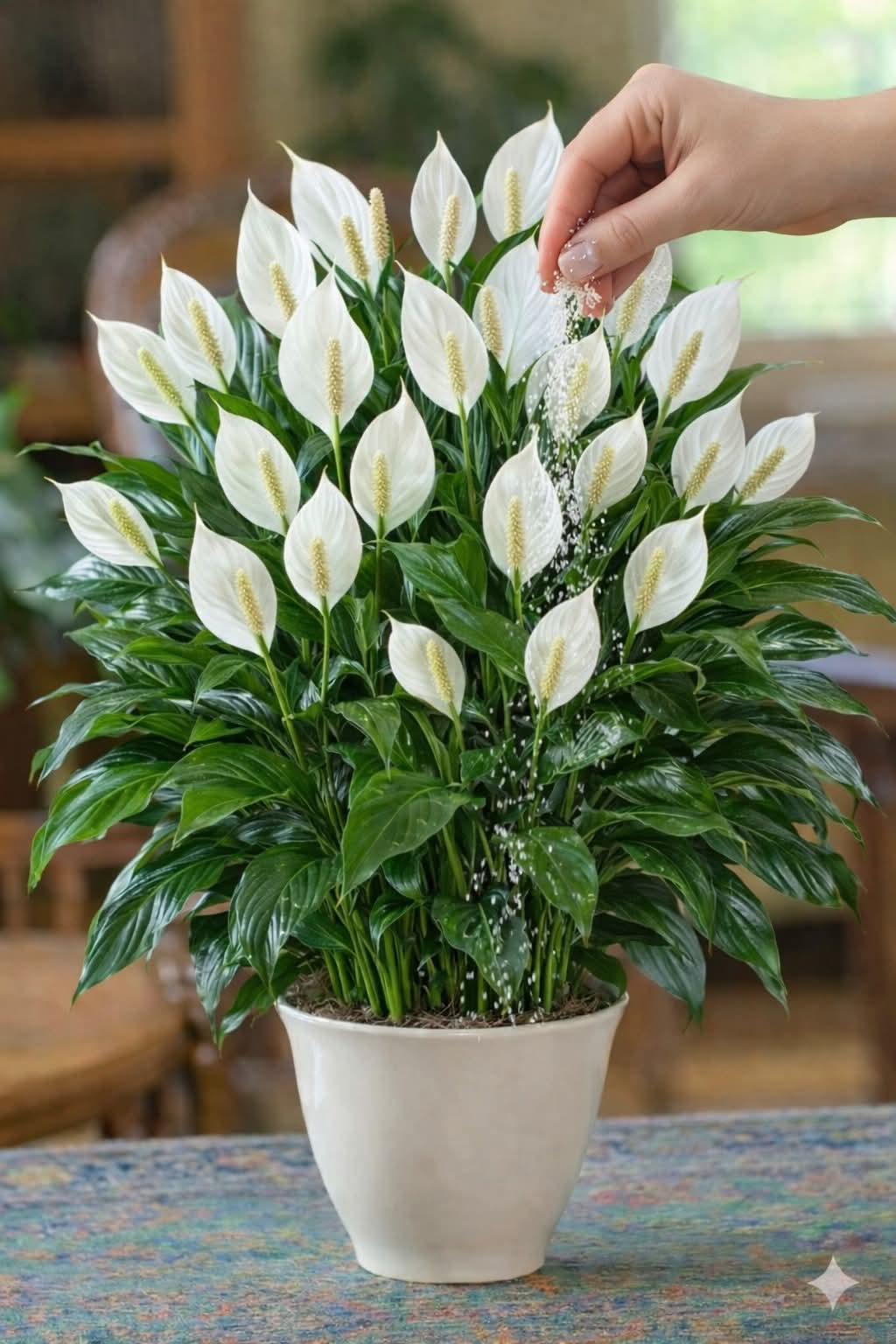
Peace lilies (Spathiphyllum) are actually perennials—they can live for a decade or more with proper care . And those stunning white “flowers” (technically called spathes) aren’t a one-time show. Under the right conditions, your plant will reward you with blooms every spring and often again in the fall .
So what’s the secret ingredient? It’s not expensive fertilizer or complicated techniques. It’s simple, natural items you probably already have in your kitchen. Let’s dive into the surprising secrets that can transform your Peace Lily from a leafy green wallflower into a blooming superstar.
Understanding Your Peace Lily: The Key to Blooms
Before we get to the “secret ingredient,” let’s understand what’s actually happening when your Peace Lily blooms.
What Is a Peace Lily Flower, Really?
The beautiful white structure we call a Peace Lily flower is actually a modified leaf called a spathe. Its job is to protect the real flowers—tiny, finger-like clusters on the spike in the center, called the spadix . This clever design attracts pollinators in the plant’s native rainforest habitat.
How Long Do They Bloom?
A healthy Peace Lily typically blooms twice a year—once in spring and again in fall . Each individual bloom lasts about 2 to 4 weeks before it slowly fades to green and eventually brown . With optimal care, some can produce flowers sporadically throughout the year.
Can They Really Bloom for 10 Years?
Yes! Peace lilies are perennials. With proper care, a single plant can live and bloom for over a decade . The key is providing consistent care and the right nutrients.
The #1 Reason Peace Lilies Won’t Bloom (And How to Fix It)
Before we add any “secret ingredients,” let’s address the most common reason Peace Lilies fail to bloom: light.
Light Is Everything
Here’s what many plant owners get wrong: Peace lilies are often labeled as “low-light plants,” but that doesn’t mean they bloom in low light. According to gardening experts, “Light is the single most important factor in peace lily flowering – and also the most misunderstood” .
In low light, your Peace Lily will survive. Its leaves will stay green. But flower production will stop .
The Perfect Light Formula
For continuous blooms, your Peace Lily needs:
· Bright, indirect light for 4-6 hours daily
· An east-facing window is ideal—gentle morning sun is perfect
· If you have a south or west window, place the plant a few feet back or use sheer curtains
Signs of Light Issues
Problem What You’ll See Solution
Too Little Light Dark green leaves, no flowers Move to brighter spot
Too Much Direct Sun Yellow leaves, brown crispy edges Move back from window
Perfect Light Deep green leaves, regular blooms Keep doing what you’re doing!
The Secret Ingredient: Banana Peels (Yes, Really!)
Now for the secret that Peace Lily owners swear by. The “magic” ingredient that can trigger blooms faster than ever? Banana peels.
Why Banana Peels Work
Banana peels are packed with potassium—a nutrient essential for flower production. Without adequate potassium, a Peace Lily is “unlikely to produce flowers,” according to lawn care specialists .
Bananas also contain:
· Phosphorus for root development
· Calcium for cell wall strength
· Magnesium for chlorophyll production
One Peace Lily owner shared on Facebook: “Since using banana peels on it, the plant has a new lease of life. New blooms have appeared faster than I’ve ever seen them grow before. I’ve even started to use them on my two orchids and it works great” .
How to Make Banana Peel Fertilizer
You have two easy options:
Option 1: Banana Peel Tea
- Place fresh banana peels in a jar and cover with water
- Let steep for 2-3 days (longer = stronger)
- Strain the liquid
- Dilute with fresh water at a 1:4 ratio (1 part tea, 4 parts water)
- Use to water your Peace Lily once a week during growing season
Option 2: Banana Peel Powder
- Slice banana peels and let them dry in the sun for a few days
- Grind into a fine powder
- Sprinkle a small amount directly on the soil around your plant
- Water as usual
How Often Should You Apply?
Apply banana peel fertilizer once a week during spring and summer (the active growing season). Reduce to once a month in fall and stop completely in winter .
3 More Natural Secrets for Year-Round Blooms
Banana peels are fantastic, but they work best alongside these other natural methods.
- The Garlic Clove Trick (Surprising but Effective)
Many gardeners have discovered that placing one clove of garlic in the soil can make a remarkable difference .
Why it works: Garlic contains allicin, a natural compound with antifungal and antibacterial properties. When buried in the soil, it helps suppress harmful pathogens that may be silently affecting your plant’s ability to thrive .
How to do it:
· Choose one fresh, firm garlic clove (not sprouted or moldy)
· Peel it but do not cut or crush it—keep it whole
· Push it about 1 inch into the soil near the edge of the pot, away from the central roots
· Water as usual
· Replace with a fresh clove every 6-8 weeks
- Rice Water Fertilizer
Rice water is rich in vitamins, calcium, potassium, magnesium, and boron—all essential for healthy growth and vibrant blooms .
How to make it:
· Measure 1 small cup of raw rice
· Add 2 liters of water (preferably without chlorine)
· Blend for 2-3 minutes until cloudy
· Strain out the rice particles
· Use the liquid to water your Peace Lily
Frequency: Twice a week for new plants, three times a week for older plants that haven’t been blooming .
- The Bottom Watering Method
This simple watering technique was shared by a Peace Lily owner who claimed her plant had been “non-stop blooming for three years” .
Why it works: Top watering often doesn’t reach the entire root system. Bottom watering ensures moisture reaches all the roots, promoting stronger, healthier plants .
How to do it:
· Fill a tray or saucer with filtered or distilled water
· Place your Peace Lily pot in the tray (water should rise about halfway up the pot)
· Let it sit for 10 minutes
· Check if the soil feels moist throughout
· Remove any excess water from the tray
The Complete Care Routine for Continuous Blooms
Natural boosters are powerful, but they work best as part of a complete care routine. Here’s everything your Peace Lily needs to bloom year after year.
Light (The #1 Factor)
· Bright, indirect light for 4-6 hours daily
· East-facing windows are ideal
· Avoid direct sun—it burns leaves
Watering
· Water when the top inch of soil feels dry
· Use filtered, distilled, or rainwater—peace lilies are sensitive to chemicals in tap water
· Never let the plant sit in standing water (root rot risk)
Humidity
As tropical plants, peace lilies love humidity. Aim for 50-60% humidity by:
· Misting leaves every few days
· Using a pebble tray with water
· Grouping with other plants
· Running a humidifier nearby
Temperature
Peace lilies thrive in 65-85°F (18-30°C) . Avoid cold drafts and sudden temperature changes .
Soil and Potting
· Use a well-draining, peat-free potting mix
· Repot every 1-2 years to refresh soil and prevent compaction
· Choose a pot with drainage holes
· Only go up 1-2 inches in pot size—being slightly root-bound can actually encourage blooming
Pruning and Cleaning
· Cut spent flowers at the base—this directs energy toward new growth
· Wipe leaves with a damp cloth every few weeks to remove dust and allow efficient photosynthesis
What Results to Expect (Realistic Timeline)
If you start using these natural methods and proper care, here’s what you can expect:
Timeframe What You May See
2-3 weeks New leaf growth, greener foliage
4-6 weeks First flower buds may appear
2-3 months Full blooms opening
6+ months Multiple bloom cycles throughout the year
Note: Results vary based on your plant’s age, health, and growing conditions.
Troubleshooting Common Problems
Why Are My Flowers Green?
A green spathe is usually not a problem—it’s part of the natural aging process. As blooms fade, they often turn from white to green. It can also happen with too much direct light or excess nitrogen fertilizer . Simply trim the flower at the base when it fully fades .
Brown, Crispy Leaf Tips
This is almost always a water or humidity issue. Common causes:
· Low humidity
· Chemicals in tap water
· Inconsistent watering
Solutions: Increase humidity, switch to filtered water, and water when the top inch of soil is dry .
Yellow Leaves
· One or two older leaves: Natural aging
· Multiple yellow leaves: Usually overwatering. Check soil moisture and reduce frequency .
No Blooms Despite Healthy Leaves
If your plant is lush and green but won’t bloom, check these three things:
- Light: Is it getting enough bright, indirect light?
- Pot size: Is it too large? Being slightly root-bound encourages blooming
- Fertilizer: Are you using a potassium-rich option like banana peels?
Frequently Asked Questions
Q: How often should a Peace Lily bloom?
A healthy, mature Peace Lily typically blooms twice a year—once in spring and again in fall. With optimal light and care, some can bloom sporadically throughout the year .
Q: Can Peace Lilies really bloom for 10 years?
Yes! Peace lilies are perennials with an average lifespan of 3-5 years under standard care, but with excellent care (proper light, water, and nutrients), they can live and bloom for over a decade .
Q: Are Peace Lilies toxic to pets?
Yes, they are. Peace lilies contain calcium oxalate crystals, which are toxic to cats and dogs if ingested. Chewing on the plant can cause oral irritation, drooling, and vomiting. Keep them out of reach of pets .
Q: Should I cut off dead flowers?
Absolutely! Once a flower fades, follow the stalk all the way down to the base of the plant and make a clean cut. This directs the plant’s energy toward producing new leaves and future flowers .
Q: Can I use banana peels on other plants?
Yes! Banana peel fertilizer works well for many flowering plants, including orchids, roses, and other houseplants .
Q: What’s the secret behind store-bought Peace Lilies always blooming?
Nurseries treat peace lilies with a plant hormone called gibberellin that forces flowering regardless of season. Once you bring the plant home, this effect wears off—which is why they often stop blooming . This is completely normal! Your plant just needs to find its natural rhythm.
Your Year-Round Blooming Calendar
Here’s a simple guide to keep your Peace Lily blooming all year:
Season Light Water Fertilizer What to Expect
Spring Bright indirect When top inch dry Banana peel tea weekly New growth, spring blooms
Summer Bright indirect When top inch dry Banana peel tea weekly Peak blooming period
Fall Bright indirect Slightly less Banana peel tea monthly Possible second bloom
Winter Still bright When almost dry None (rest period) Leaves only; rest for spring
Final Thoughts: Your Peace Lily’s Journey
Your Peace Lily isn’t broken when it stops blooming. It’s simply adjusting to its new home and finding its natural rhythm. With patience, proper care, and a few natural secrets from your kitchen—banana peels, garlic, and rice water—you can help it thrive.
The woman who used banana peels on her Peace Lily saw “new blooms appear faster than I’ve ever seen them grow before” . The gardener who bottom-watered her plant kept it “non-stop blooming for three years” . And countless others have discovered that with the right light and natural nutrients, these resilient plants can bloom for a decade or more.
Now it’s your turn. Start with light—move your Peace Lily to that east-facing window. Then try the banana peel trick. Add bottom watering. And watch what happens.
Your Peace Lily has so much more to give than just green leaves. Those elegant white blooms are waiting to emerge. All they need is a little help from you.
Have you tried any of these natural methods? Do you have a Peace Lily that blooms year after year? Share your experience in the comments below!
And if you’re looking for more plant care secrets, check out our guides on How to Make Your Orchid Rebloom, The Best Natural Fertilizers for Houseplants, and Reviving a Dying Snake Plant.
More Recipes You Might Like
-

How to Make Your Spider Plant Bushy and Full Instead of Thin and Sparse – The Complete Guide
Is your spider plant looking thin, stretched, or uneven? Learn how to make it bushy and full with better light, … Read more
-

How to Make African Violets Bloom Abundantly All Year Long
Are your African violets all leaves and no flowers? Learn the secrets to abundant blooms – bright indirect light, proper … Read more
-
How to Make a Snake Plant Grow in a Spiral or Circular Shape – The Complete Guide
Want a stunning spiral snake plant? Learn how to gently train your Sansevieria into a spiral or circular shape. Step‑by‑step … Read more