Let’s be honest: tulips are one of the most iconic flowering plants, known for their vibrant colors and elegant shape. Whether planted in garden beds, containers, or forced indoors, they bring a burst of spring beauty that few other flowers can match. But keeping them healthy and getting strong blooms – especially indoors or in containers – can be tricky.
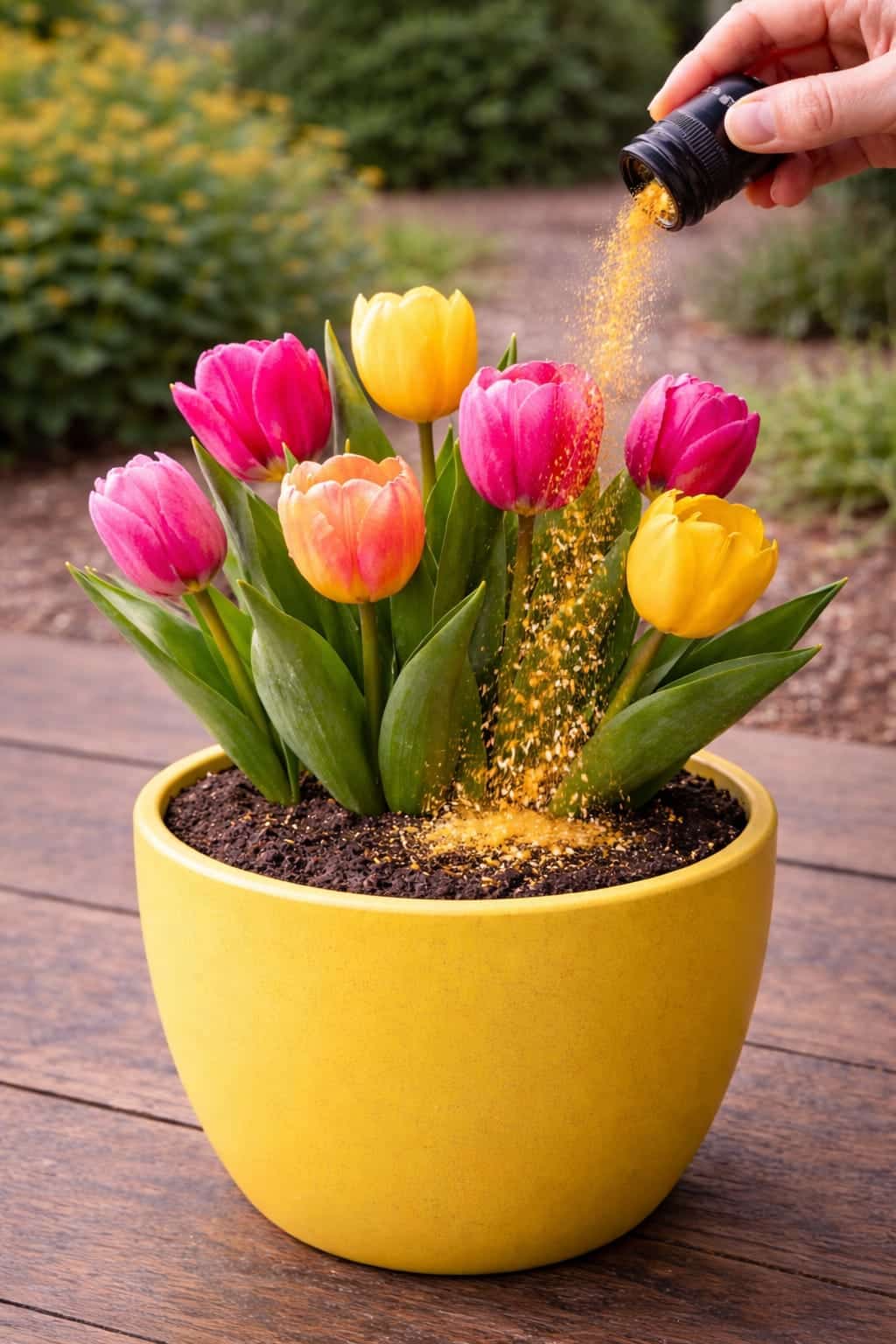
Recently, a new trend has been circulating among gardeners: sprinkling a “golden powder” on the soil to boost tulip growth and flowering. It looks simple… almost magical. The results appear stunning: larger flowers, brighter colors, stronger stems.
But here’s what’s really happening. The golden powder is not magic – it’s a plant food (balanced granular fertilizer or phosphorus‑rich blend) that supports tulips at critical growth stages. However, timing and amount matter enormously. Too much, and you can burn roots or damage bulbs. Used correctly, it can transform your tulip display.
In this guide, you’ll learn what the golden powder is, why tulips need proper feeding, when and how to apply it safely, and the complete care routine for stunning tulips – from planting to post‑bloom care. No hype, just practical gardening advice.
🌿 What Is the “Golden Powder”?
In most cases, this powder is:
· A balanced granular fertilizer – such as 10-10-10 or 5-10-5.
· A phosphorus‑rich plant food – the middle number (P) supports root and flower development.
· Sometimes a natural mineral blend – like bone meal, rock phosphate, or kelp meal.
The “golden” color often comes from natural nutrients and minerals – for example, bone meal has a tan/golden hue, and many organic blends contain corn gluten or other golden‑toned ingredients.
What It Does
· Supports root development – strong roots anchor the plant and absorb water/nutrients.
· Strengthens stems – prevents flopping.
· Enhances flower size and color – bigger, brighter blooms.
· Improves overall plant health – better resistance to pests and diseases.
👉 The powder is not magic. It is a supplemental food that works best when soil, light, and watering are already correct.
🌱 Why Tulips Need Proper Feeding
Tulips grow from bulbs. A bulb is a living storage organ that contains the energy (carbohydrates) needed for one bloom cycle. The mother bulb produces a flower, leaves, and sometimes new smaller bulbs (offsets).
The Energy Cycle
· At planting – the bulb uses stored energy to grow roots.
· In spring – it pushes up leaves and a flower stalk.
· After blooming – the leaves continue to photosynthesize, recharging the bulb for next year.
👉 Without proper nutrients, the bulb cannot rebuild its energy reserves. As a result:
· Blooms become smaller each year.
· Colors fade.
· Plants weaken.
· Next season’s growth declines.
That’s where feeding can help – if done correctly.
⚠️ The Most Common Mistake Gardeners Make
Many gardeners think: “More powder = bigger flowers.” But tulips are sensitive to over‑feeding.
What Happens with Too Much Fertilizer
Problem Consequence
Root burn Fertilizer salts damage tender roots.
Bulb damage Excess nitrogen can rot bulbs.
Leggy growth Too much nitrogen produces weak, floppy stems.
Reduced bloom quality Flowers may be smaller or fail to open.
Foliage burn Leaf tips turn brown and crispy.
👉 Tulips need balanced, light feeding – not excess. A little goes a long way.
🌷 When to Use the Golden Powder – Timing Is Everything
Timing is the most critical factor for successful tulip feeding.
✅ Best Times to Apply
Time Purpose
At planting time (autumn) Mix into the soil to support root development.
Early growth stage (spring, when shoots are 2–4 inches tall) Light feeding to boost stem and flower strength.
After blooming (immediately after flowers fade) Recharge the bulb for next year.
❌ When to Avoid
· During full bloom – fertilizer at this stage can shorten flower life.
· In very dry soil – always water before and after feeding to prevent burn.
· In high heat conditions – fertilizer can stress plants further.
· When bulbs are already rotting – fix drainage first.
👉 Overfeeding during bloom is a common mistake that reduces the display you worked for.
🌱 Step‑by‑Step Tulip Care for Stunning Blooms
Follow this proven routine instead of relying on trends alone. The golden powder is just one small piece of the puzzle.
- Light – Bright or Partial Sun
· Ideal: 6+ hours of direct or filtered sunlight per day.
· Indoors: South or east‑facing window.
· Outdoors: Full sun to partial shade (morning sun, afternoon shade in hot climates).
👉 More light = stronger stems, larger flowers, better color.
- Watering – Keep Soil Slightly Moist (Not Soggy)
· When to water: When the top inch of soil feels dry.
· How to water: Deeply, until it runs out the drainage holes. Empty the saucer.
· Frequency: Outdoors, about once a week (depending on rain). Indoors, every 7–10 days.
👉 Overwatering is the #1 killer of tulip bulbs. They rot easily in wet soil.
- Soil – Well‑Draining Soil Is Essential
Tulips hate wet feet. Use:
· For garden beds: Loamy, sandy soil amended with compost.
· For containers: High‑quality potting mix with added perlite (30%).
· Avoid: Heavy clay soil that stays wet for days.
👉 If your soil is heavy, plant tulips in raised beds or containers.
- Feeding – Use the Golden Powder Correctly
· At planting: Mix 1–2 tablespoons of granular fertilizer (low nitrogen, high phosphorus) into the soil per square foot.
· Early spring: Sprinkle a light layer around emerging shoots (avoid direct contact with leaves).
· After blooming: Apply a light dose of balanced fertilizer to recharge bulbs.
· Always water before and after feeding to distribute nutrients and prevent burn.
- Bulb Care – Allow Leaves to Die Back Naturally
After the flowers fade:
· Deadhead (remove spent flowers) to prevent seed formation.
· Leave the leaves – do not cut them off. They need to photosynthesize to store energy for next year.
· Wait until leaves turn yellow and dry (4–6 weeks after bloom) before removing them.
👉 This is the most overlooked step. Cutting leaves too early weakens bulbs for the next season.
Tulip Growth Optimization Table – Quick Reference
Factor Ideal Condition Result
Light Bright / partial sun (6+ hours) Vibrant blooms, strong stems
Water Moderate – keep soil slightly moist, not soggy Healthy roots, no rot
Soil Well‑draining (sandy loam or potting mix + perlite) Strong bulbs
Feeding Light & timed (at planting, early growth, post‑bloom) Better flowers, bulb recharge
Bulb care Allow leaves to die back naturally Future growth success
Frequently Asked Questions (FAQs) – Tulip Care
- Why are my tulips not blooming well?
Often due to weak bulbs (old or small), lack of nutrients, or insufficient sunlight. Also, bulbs may not have received a cold period (vernalization) if grown indoors
- Can I use fertilizer on tulips?
Yes, but only in small amounts and at the right times (planting, early growth, after bloom). Over‑fertilizing damages bulbs.
- When should I fertilize tulips?
· At planting (autumn)
· Early spring (when shoots appear)
· After blooming (to recharge bulbs)
- Do tulips need full sun?
They prefer bright light or partial sun. At least 6 hours of direct or filtered light is ideal.
- How often should I water tulips?
Keep soil slightly moist – water when the top inch feels dry. In containers, this may be every 7–10 days; in garden beds, less often.
- Can I grow tulips indoors?
Yes, but they require a chilling period (simulate winter) before they will bloom. Place bulbs in the refrigerator for 8–12 weeks, then pot up and provide bright light.
- Why are my tulips drooping?
Possible causes: overwatering (weak stems), underwatering (wilting), or heavy blooms (use stakes). Also, tulips naturally droop slightly in heat.
- Should I remove dead flowers?
Yes – deadhead spent blooms to prevent the plant from wasting energy on seed production. Cut the flower stem but leave the leaves.
- Do tulips rebloom every year?
Some varieties (species tulips, Darwin hybrids) are more likely to perennialize. Many hybrid tulips weaken after one season and are best treated as annuals or replaced.
- What soil is best for tulips?
Loose, well‑draining soil – sandy loam or potting mix with perlite. Avoid heavy clay.
- Can I overfertilize tulips?
Yes, very easily. Too much fertilizer burns roots, damages bulbs, and can cause leggy, weak growth. Always use half strength or less.
- Why are leaves important after bloom?
Leaves photosynthesize and recharge the bulb for next year’s growth. Cutting them early weakens or kills the bulb.
- Should I cut leaves after flowering?
No – wait until they turn yellow and die back naturally (4–6 weeks after bloom).
- Do tulips need a cold period?
Yes, most tulips require a chilling period (8–12 weeks at 35–45°F / 2–7°C) to trigger flowering. This happens naturally in winter outdoors, but must be simulated for indoor forcing.
- Is the golden powder necessary?
No – it is helpful, but not essential. Healthy soil, proper watering, and good light are more important. The powder is a supplement, not a cure‑all.
Printable Tulip Care Checklist
☐ Plant bulbs in autumn (September–November, before ground freezes)
☐ Choose a sunny or partially sunny location (6+ hours light)
☐ Use well‑draining soil – add perlite or sand if heavy
☐ Plant bulbs at 2–3 times their own depth (6–8 inches deep)
☐ Space bulbs 4–6 inches apart
☐ Water thoroughly after planting
☐ In early spring, when shoots appear, sprinkle a light layer of golden powder (optional)
☐ Water when top inch of soil is dry
☐ Deadhead spent flowers – cut stem, leave leaves
☐ After blooming, allow leaves to yellow naturally (4–6 weeks)
☐ Apply a light dose of fertilizer after bloom to recharge bulbs (optional)
☐ Remove dried leaves only when completely yellow/brown
☐ For perennial tulips, leave bulbs in ground; for annuals, lift and discard
Final Thoughts – Support, Not Magic
The “golden powder” trend is not magic – it is a useful tool when used correctly. A balanced, phosphorus‑rich fertilizer can support root development, stem strength, and flower size. But it will not fix poor soil, overwatering, or lack of sunlight.
The real secrets to stunning tulips are:
· Proper planting (depth, spacing, timing)
· Well‑draining soil – tulips rot in wet conditions
· Adequate light – 6+ hours of sun
· Consistent moisture – not too much, not too little
· Post‑bloom care – let leaves die back naturally
· Light, timed feeding – as a supplement, not a substitute
If you get those basics right, your tulips will reward you with vibrant, long‑lasting blooms – with or without the golden powder
Now it’s your turn! Have you tried a golden powder on your tulips? What worked – or didn’t? Drop a comment below – I’d love to hear your experience.
And if you found this guide helpful, share it with a friend who loves tulips. Pin it for later, and subscribe to our newsletter for more practical gardening advice.
Stay bright, stay balanced, and watch your tulips shine. 🌷✨