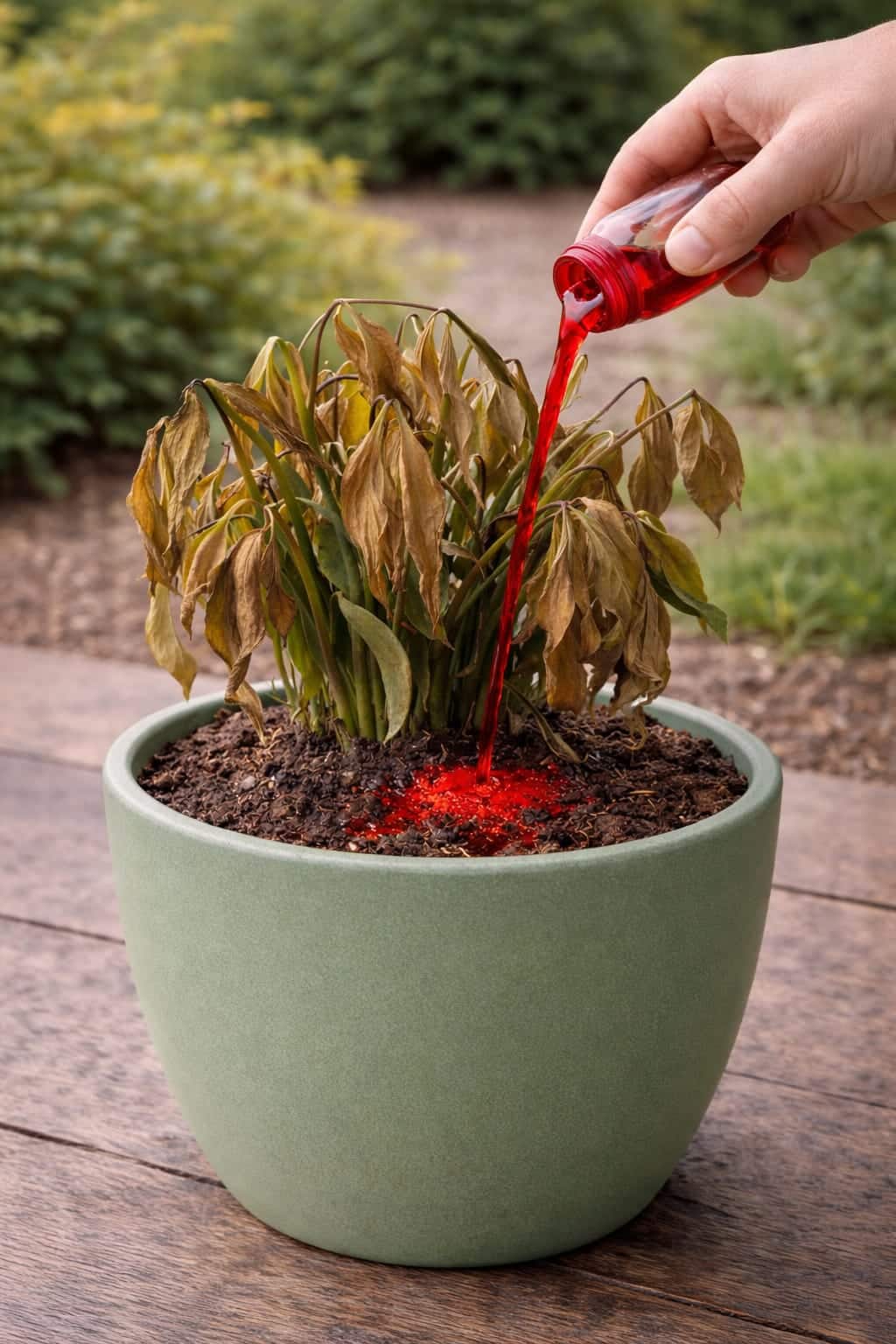
Is the red liquid trend for ZZ plants a miracle growth hack or a risky mistake? Learn what the red liquid really is, why ZZ plants don’t need much feeding, and the real secrets to keeping them healthy and glossy.
Let’s be honest: the ZZ plant (Zamioculcas zamiifolia) is known for being one of the toughest houseplants you can own. It thrives in low light, survives irregular watering, and still maintains its deep green, glossy leaves. It’s the plant that refuses to die – even when you forget about it for weeks.
So when you see people pouring a bright red liquid onto it, it looks like a powerful growth hack. The videos are dramatic: a struggling ZZ plant, a splash of red, and suddenly – vibrant, glossy leaves. The results appear shocking.
👉 But here’s the reality: for ZZ plants, this trend is more risky than helpful if misunderstood.
In this guide, you’ll learn what the red liquid really is, why ZZ plants don’t need much feeding, the hidden dangers of overwatering and over‑fertilizing, and the real secrets to keeping your ZZ plant healthy and thriving. No magic – just practical plant care.
🌿 What Is the “Red Liquid”?
In most cases, the red liquid seen in viral plant videos is:
· A liquid fertilizer – sometimes dyed red for visibility or marketing.
· A nutrient solution or plant tonic – containing nitrogen, phosphorus, potassium, and trace minerals.
· Occasionally a homemade mix – with added color or minerals (like beet juice or red food coloring – not recommended).
It is used to:
· Enhance leaf color (in theory)
· Support growth
· Provide nutrients
· Improve overall plant appearance
👉 But here’s the catch: ZZ plants are different from most houseplants.
🌱 Why ZZ Plants Don’t Need Much Feeding
ZZ plants are survivors. They have evolved to thrive in harsh, dry conditions. Their secret? They store water and nutrients in:
· Thick stems – which act like water reservoirs.
· Underground rhizomes – potato‑like structures that hold energy and moisture.
This means:
👉 They already have a natural reserve system. They don’t need constant feeding like a hungry tropical plant (e.g., a fern or a peace lily).
Because of this:
· They grow slowly – this is normal, not a sign of deficiency.
· They need less water – overwatering is deadly.
· They rarely need fertilizer – once or twice a year is plenty, if at all.
⚠️ The Hidden Danger of This Trend
The biggest mistake people make is assuming: “More nutrients = faster growth.” But with ZZ plants, the opposite is often true.
What Can Go Wrong
Mistake Consequence
Too much liquid (even water) Roots suffocate → root rot.
Excess fertilizer Burns tender roots → leaf yellowing, tip burn.
Wet soil for too long Rhizomes rot → plant collapses.
Feeding in winter Plant is resting; unused fertilizer causes salt buildup.
👉 Overwatering + feeding = the fastest way to kill a ZZ plant. The “shocking results” you see online are often staged or temporary – the plant may look worse later.
🌿 When Liquid Feeding Actually Makes Sense
If you still want to use a liquid feed (red or otherwise), follow these strict guidelines to avoid harming your ZZ plant.
Safe Feeding Schedule
· Only during spring and summer – the active growing season.
· Once every 4–6 weeks – not weekly.
· Always heavily diluted – use quarter strength or less.
What to Avoid
· Feeding in winter (October to February).
· Feeding in low light – the plant cannot use nutrients efficiently.
· Feeding already moist soil – wait until soil is dry.
👉 In many homes, ZZ plants grow perfectly fine with no fertilizer at all. They are adapted to low‑nutrient environments.
Continue to Page 2
Continue to page 2 for more details about this article and the key points many readers miss on the first page.