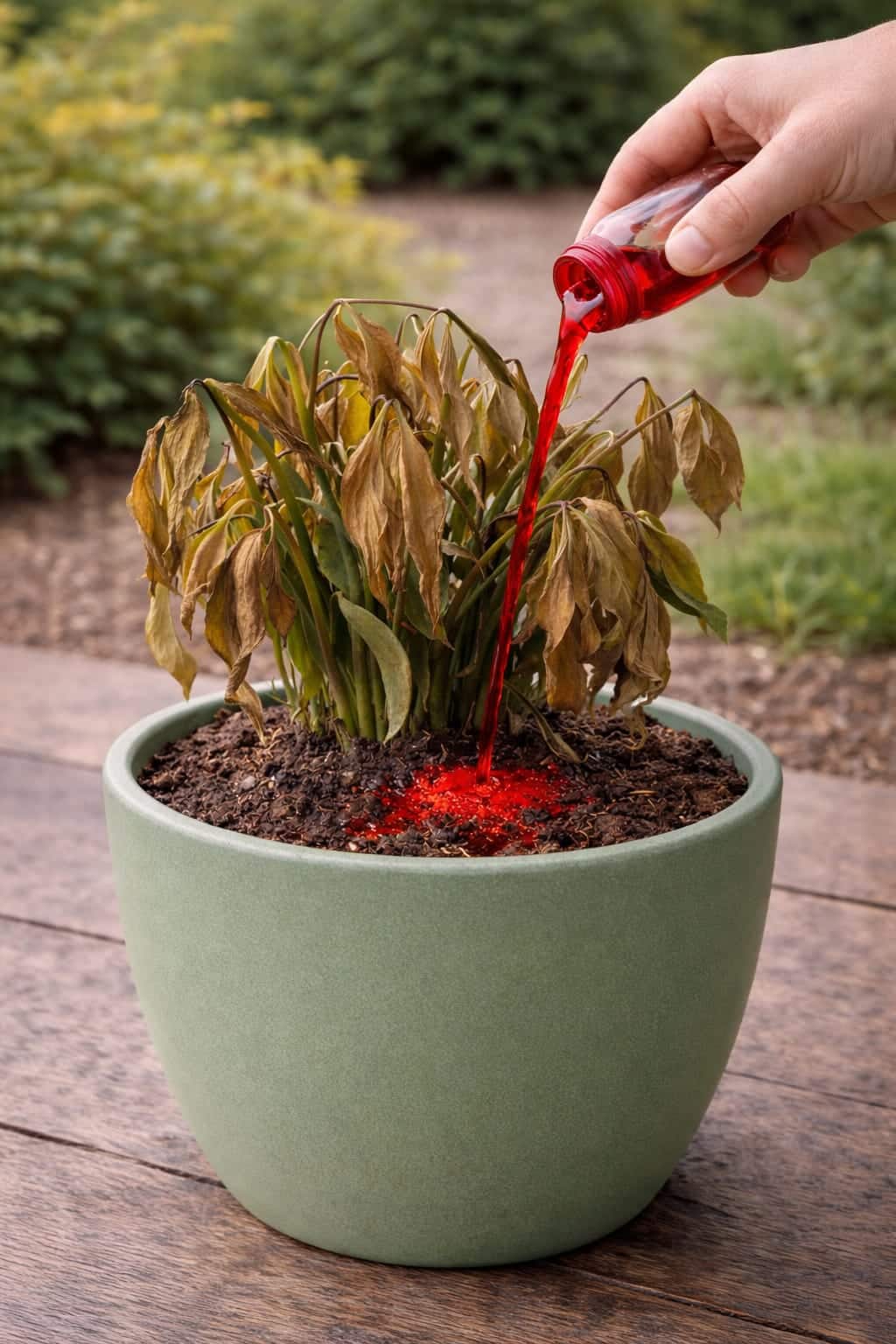
🌱 The Real Secret to a Healthy ZZ Plant (No Red Liquid Required)
Instead of chasing viral trends, focus on these fundamentals. They matter far more than any colored liquid.
- Light
ZZ plants are famously adaptable. They tolerate:
· Low light (north window, dark corner) – survival mode.
· Bright, indirect light (east/west window) – faster, healthier growth.
👉 More light = more energy = glossier leaves. But they won’t die in low light.
- Watering – The #1 Rule
ZZ plants hate wet feet. They prefer to be underwatered rather than overwatered.
· Let the soil dry completely between waterings. Stick your finger 2–3 inches deep – if dry, water; if damp, wait.
· Frequency: In bright light, every 2–3 weeks. In low light, every 4–6 weeks.
· Water deeply until it runs out the drainage holes, then empty the saucer.
- Soil – Fast‑Draining Mix is Essential
Regular potting soil holds too much moisture. Use:
· Cactus or succulent mix – designed for fast drainage.
· DIY mix: 2 parts potting soil + 1 part perlite + 1 part coarse sand.
- Pot – Always Use Drainage Holes
· Terracotta pots are ideal – they wick away excess moisture.
· Plastic pots with holes work too. Avoid decorative pots without drainage.
· Size matters: Too large a pot holds too much soil, which stays wet longer.
- Patience – Slow Growth is Normal
ZZ plants are slow growers. In low light, they might produce only 2–3 new leaves per year. In brighter light, they grow faster – but still not as fast as pothos or philodendrons.
👉 Don’t mistake slow growth for a problem. It’s just how ZZ plants are.
ZZ Plant Care Optimization Table – Quick Reference
Factor Ideal Condition Result
Light Low to bright, indirect Stable growth, glossy leaves
Water Infrequent – let soil dry completely No root rot
Soil Fast‑draining (cactus mix + perlite) Healthy roots
Feeding Rare & diluted (once every 4–6 weeks, spring/summer only) Balanced growth
Pot Drainage holes required Long‑term health
Frequently Asked Questions (FAQs) – ZZ Plant Care
- Why are my ZZ plant leaves turning yellow?
Most common cause: overwatering. Check soil moisture. If soil is wet and leaves are yellow, root rot may have started.
- How often should I water my ZZ plant?
Only when the soil is completely dry. In typical indoor conditions, every 2–4 weeks.
- Does it need fertilizer?
Not necessarily. ZZ plants grow well without it. If you want to feed, use a diluted balanced fertilizer once a month in spring/summer.
- Can I overfeed a ZZ plant?
Yes, very easily. Over‑fertilizing burns roots and causes leaf tip burn. Less is more.
- Why are stems soft or mushy?
This is a sign of root rot from overwatering. Stop watering immediately, check roots, and repot if necessary.
- Can ZZ plants grow in low light?
Yes, they are very adaptable. Growth will be slower, but the plant will survive.
- What type of soil is best?
Well‑draining soil – cactus mix or regular potting soil amended with 30% perlite.
- Should I mist the leaves?
No, it’s not required. ZZ plants tolerate low humidity. Misting can lead to leaf spots.
- How fast does it grow?
Slow to moderate. In bright light, you may see a few new leaves per year. In low light, very slow.
- Can I propagate it?
Yes – through leaf cuttings or stem cuttings. Place cuttings in water or moist soil; roots take weeks to months.
- Why are leaves dull?
Dust buildup or low light. Wipe leaves with a soft, damp cloth every few weeks.
- Can I place it in direct sunlight?
Avoid strong direct sun – it can scorch leaves. Morning sun is okay, but afternoon sun is harsh.
- Does it improve indoor air?
It contributes slightly – like many houseplants, it can remove some volatile organic compounds (VOCs).
- Is the red liquid necessary?
No – it is optional and often unnecessary. Proper care (light, water, soil) is far more important.
- What is the biggest mistake with ZZ plants?
Overwatering – it is the #1 killer. ZZ plants prefer dry soil.
Printable ZZ Plant Care Checklist
☐ Place in bright, indirect light (east/west window) – tolerates low light
☐ Use a pot with drainage holes (terracotta preferred)
☐ Fill with fast‑draining cactus/succulent soil (add perlite)
☐ Water only when soil is completely dry (check with finger)
☐ Water deeply, then empty saucer
☐ Do not water again for 2–4 weeks (depending on light)
☐ Fertilize rarely – once every 4–6 weeks in spring/summer (diluted)
☐ Do not fertilize in fall/winter
☐ Wipe leaves with damp cloth monthly
☐ Inspect roots annually – repot if root‑bound or soil degraded
☐ Be patient – slow growth is normal
Final Thoughts – Skip the Trend, Focus on the Basics
The “red liquid” trend for ZZ plants is more about viral engagement than plant health. While a diluted fertilizer can be beneficial in the right conditions, the real secret to a healthy ZZ plant is much simpler:
· Let the soil dry completely before watering.
· Use fast‑draining soil and a pot with drainage holes.
· Provide bright, indirect light for faster growth (but low light is fine).
· Feed rarely, if at all – ZZ plants are not heavy feeders.
· Be patient – slow growth is normal.
A healthy ZZ plant does not need colored liquids or daily attention. It needs you to do less – less water, less fertilizer, less fuss. That’s the real “shocking” result.
Now it’s your turn! Have you tried a red liquid on your ZZ plant? What worked – or didn’t? Drop a comment below – I’d love to hear your experience.
And if you found this guide helpful, share it with a friend who’s been tempted by viral plant hacks. Pin it for later, and subscribe to our newsletter for more practical plant care.
Stay dry, stay patient, and watch your ZZ plant thrive. 🌿✨