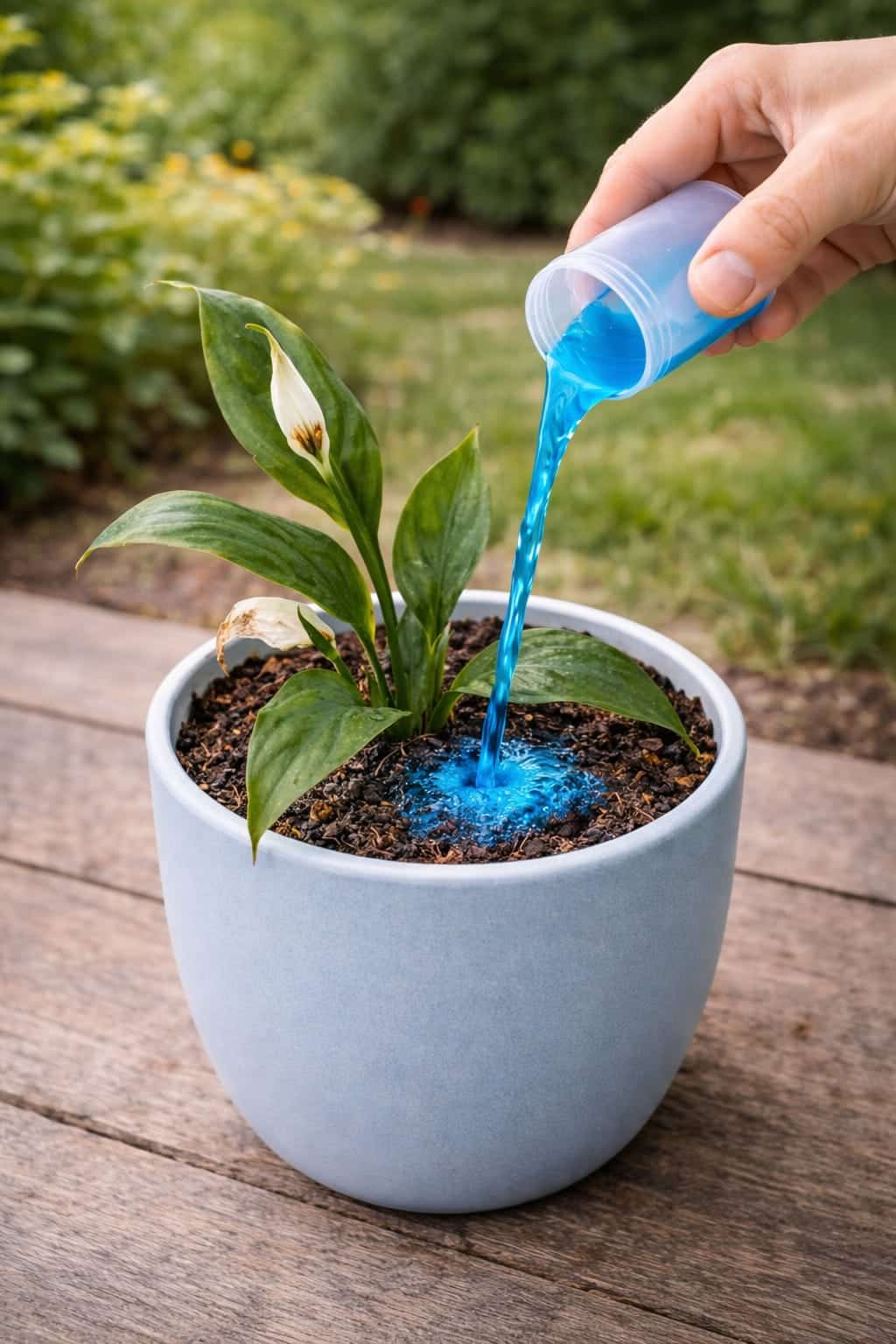
🪴 Soil & Drainage — The Foundation of Healthy Growth
Even the best blue liquid cannot fix bad soil. Peace lilies need soil that holds some moisture but still drains well.
Ideal Soil Mix
· Light potting soil – not heavy garden soil.
· Perlite – for airflow and drainage (add about 20–30%).
· Organic material – peat moss or coco coir for moisture retention.
This allows:
· Roots to breathe – no suffocation.
· Moisture to stay balanced – not too wet, not too dry.
· Healthy root development – strong plant.
Common Soil Mistake
Heavy soil leads to:
· Water retention → root rot.
· Weak growth → yellow leaves.
· Plant decline over weeks.
👉 If soil stays wet for more than a week after watering, it’s too heavy. Add perlite or repot.
🏺 Pot Setup Used in Modern & Luxury Homes
In high‑end interior design and real estate staging, peace lilies are often styled using a dual‑pot system:
· Inner pot with drainage holes – holds the soil and allows water to escape.
· Decorative outer pot – catches excess water and looks beautiful.
· Clean, minimal design – fits modern aesthetics.
This setup is common in:
· Luxury homes
· Office interiors
· Property staging
· Hotel lobbies
👉 It keeps the plant healthy while enhancing aesthetics. Always lift the inner pot to check for standing water.
🌡️ Ideal Indoor Conditions for Peace Lilies
Peace lilies prefer stable, comfortable environments – similar to what humans enjoy.
Factor Ideal Range Why
Temperature 18–27°C (65–80°F) Active growth, no stress.
Light Bright, indirect (east or north window) Energy for leaves and blooms.
Humidity Moderate to high (50–70%) Prevents brown tips.
Airflow Gentle, not drafty Reduces fungal issues.
👉 If your home is dry (especially in winter), increase humidity with a pebble tray or humidifier.
💧 Watering — The Balance Rule
Peace lilies are unique because they like moisture – but not excess. They will droop dramatically when thirsty, which makes them easy to read.
Correct Watering Method
· Keep soil slightly moist – not soggy, not bone dry.
· Water when the top inch of soil feels dry – use your finger.
· Water thoroughly until it runs out the drainage holes.
· Empty the saucer – never let the plant sit in standing water.
Common Mistakes
· Constant wet soil → root rot, yellow leaves.
· Letting soil dry completely for too long → wilting, brown tips.
· Watering on a schedule without checking soil moisture.
👉 Balance is everything. A peace lily that droops dramatically but perks up after watering is healthy. One that stays droopy despite wet soil may have root rot.
🧪 What Is the Blue Liquid? (And What It Actually Does)
The blue liquid seen in many viral plant care methods is usually:
· A diluted nutrient solution – balanced liquid fertilizer (e.g., 20-20-10).
· A mild fertilizer mix – often dyed blue for visibility.
· Mineral‑based plant support – contains nitrogen, phosphorus, potassium, and trace minerals.
How It May Help
· Improve nutrient availability – if the soil is depleted.
· Support flowering – phosphorus encourages blooms.
· Encourage leaf growth – nitrogen promotes green leaves.
👉 But it only works if the plant is already in the right conditions. The blue liquid is a supplement, not a cure‑all.
🧴 How to Use It Safely – Step by Step
If you want to try the blue liquid method, follow these guidelines to avoid harming your peace lily.
What You’ll Need
· A balanced, water‑soluble houseplant fertilizer (look for a blue tint, or any balanced fertilizer)
· Water
· Measuring spoons
Step‑by‑Step Application
- Dilute heavily – use half or quarter of the recommended strength. Peace lilies are sensitive to over‑feeding.
- Water with plain water first – moisten the soil to prevent root burn.
- Apply the diluted blue liquid – pour onto the soil, not the leaves.
- Use occasionally – once every 4–6 weeks during spring and summer.
- Do not use in fall and winter – the plant rests.
What to Avoid
· Overusing – more than once a month can burn roots.
· Applying to dry soil – always water first.
· Using full strength – dilute, dilute, dilute.
👉 Think of it as a vitamin supplement – helpful when needed, but not a substitute for good food (soil) and care.
⚠️ Common Peace Lily Mistakes (Even with Good Intentions)
Mistake Why It’s Harmful Correct Approach
Overwatering Root rot, yellow leaves Let top inch of soil dry before watering.
Poor drainage Water pools, roots suffocate Use pot with holes; add perlite to soil.
Low humidity Brown tips, slow growth Use pebble tray or humidifier.
Direct sunlight Leaf burn, pale color Place in bright, indirect light.
Irregular care Stress, drooping Consistent watering schedule (check soil).
Over‑fertilizing Brown tips, salt buildup Dilute fertilizer; use sparingly.
👉 Fixing these brings better results than any product.
Peace Lily Care Table – Quick Reference
Factor Ideal Condition Result
Light Bright, indirect (east/north window) Healthy leaves, regular blooms
Soil Moist but well‑draining (potting soil + perlite) Root balance, no rot
Water Moderate – water when top inch dries No stress, upright leaves
Temperature 18–27°C (65–80°F) Stable growth
Humidity Moderate to high (50–70%) No brown tips
Blue liquid Occasional, diluted (once a month, spring/summer) Gentle nutrient boost
How to Revive a Drooping Peace Lily – Step by Step
If your peace lily is already struggling, follow this recovery plan.
- Check soil moisture – if wet and drooping, overwatering is likely. Let it dry out completely.
- If soil is dry and drooping – water thoroughly. It should perk up within a few hours.
- Inspect roots – if the plant doesn’t improve, remove from pot. Trim any black, mushy roots.
- Repot in fresh, well‑draining soil – use a pot with drainage holes.
- Move to bright, indirect light – no direct sun.
- Increase humidity – pebble tray or humidifier.
- Wait – recovery takes 1–2 weeks.
- Once stable, use a diluted blue liquid once a month (spring/summer) as a gentle boost.
Frequently Asked Questions (FAQs)
Q: Why are my peace lily leaves drooping?
Most common cause: watering imbalance – either too much (root rot) or too little. Check soil moisture.
Q: Can peace lilies grow in low light?
Yes, but they will grow slower and may not bloom as often. Bright, indirect light is best for flowers.
Q: How often should I water my peace lily?
When the top inch of soil feels dry. In typical indoor conditions, this is every 7–10 days.
Q: Is the blue liquid necessary?
No. It is an optional supplement. The real keys are proper light, water, soil, and humidity.
Q: Can I overuse the blue liquid?
Yes. Over‑fertilizing causes brown leaf tips and salt buildup. Use sparingly.
Q: Why are my peace lily’s leaf tips turning brown?
Most common causes: low humidity, fluoride or chlorine in tap water, or over‑fertilizing. Use filtered water and increase humidity.
Q: Do peace lilies need humidity?
Yes. They prefer 50–70% humidity. In dry homes, use a pebble tray or humidifier.
Q: Can peace lilies bloom again after flowers fade?
Yes. Remove spent blooms at the base, provide good light, and the plant will produce new flowers with time.
Q: What is the best location for a peace lily indoors?
Near an east or north window – bright, indirect light. Avoid south or west windows without a sheer curtain.
Q: What is the biggest mistake people make with peace lilies?
Overwatering. They are often over‑loved. Let the soil dry slightly between waterings.
Printable Peace Lily Care Checklist
☐ Place in bright, indirect light (east/north window)
☐ Use a pot with drainage holes (inner pot + decorative outer pot)
☐ Use well‑draining potting soil mixed with perlite
☐ Water when top inch of soil is dry
☐ Empty saucer after watering – never leave standing water
☐ Maintain temperature 18–27°C (65–80°F)
☐ Increase humidity with pebble tray or humidifier
☐ Use filtered or distilled water if tap water has chlorine/fluoride
☐ Fertilize with diluted blue liquid once a month (spring/summer only)
☐ Remove spent blooms to encourage new flowers
☐ Wipe leaves with damp cloth monthly to remove dust
☐ Be patient – recovery and blooming take time
Final Thoughts – Support, Not Magic
A drooping peace lily with brown tips and weak blooms is not beyond saving. The solution is not a magic blue liquid – it is correcting the environment: proper light, balanced watering, well‑draining soil, and adequate humidity.
The blue liquid can be a helpful addition – a gentle nutrient boost when the plant is already healthy. But it will not fix overwatering, low humidity, or poor drainage. Use it as a supplement, not a cure‑all.
With patience and the right care, your peace lily can become lush, green, and covered in elegant white blooms once again.
Now it’s your turn! Have you tried a blue liquid on your peace lily? What worked – or didn’t? Drop a comment below – I’d love to hear your experience.
And if you found this guide helpful, share it with a friend who’s struggling with a peace lily. Pin it for later, and subscribe to our newsletter for more practical plant care.
Stay bright, stay balanced, and watch your peace lily thrive. 🌿✨