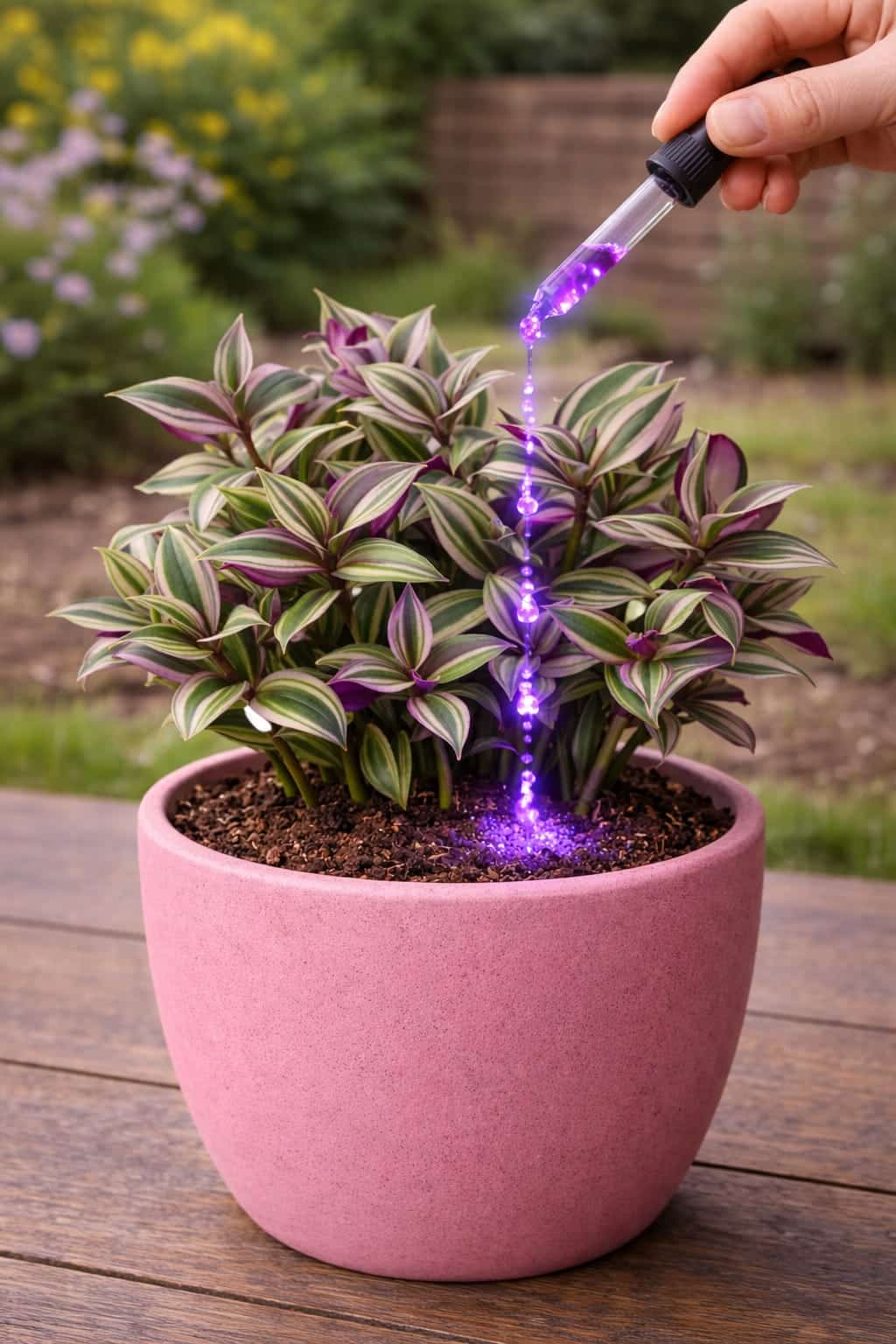
Is your Wandering Jew losing its vibrant purple color? Learn why a purple liquid (diluted fertilizer) can help – but only when light, watering, and pruning are correct. Complete care guide inside.
Let’s be honest: the Wandering Jew plant (Tradescantia zebrina or Tradescantia pallida) is already one of the most eye‑catching houseplants thanks to its vibrant purple and green striped leaves. It’s fast‑growing, easy to propagate, and adds a pop of color to any shelf or hanging basket. But recently, many homeowners have started using a “purple liquid” (typically a diluted plant nutrient or fertilizer solution) to boost growth and color intensity.
At first, it looks like a powerful secret. The videos are dramatic: a dull, leggy plant, a splash of purple liquid, and suddenly – vibrant, deep purple leaves.
👉 But the truth is: the liquid only works if the basics are already right.
In this guide, you’ll learn why Wandering Jew plants lose their color and strength, what the purple liquid really is, how to use it safely, and – most importantly – the real secrets to vibrant growth: bright indirect light, proper watering, well‑draining soil, and regular pruning. No magic, just practical plant care.
🌿 Why Wandering Jew Plants Lose Color & Strength
Even though this plant grows fast, it can quickly lose its beauty if conditions aren’t ideal. Wandering Jew is a trailing plant native to Mexico, Central America, and South America, where it grows in bright, filtered light. Indoors, small problems build up over time.
Common Issues Include
· Faded or dull purple color – not enough light.
· Leggy, stretched stems – reaching for light.
· Slow or weak growth – poor nutrition or compacted soil.
· Drooping leaves – overwatering or underwatering.
· Dry or compact soil – old, exhausted potting mix.
Most of these problems come from light and watering mistakes, not lack of “special liquids.” Fix the environment first, and the plant will reward you.
💜 What Is the “Purple Liquid”?
In most viral plant videos, the purple liquid is:
· A diluted liquid fertilizer – a balanced houseplant food (e.g., 10-10-10 or 20-20-20) that may be dyed purple for branding.
· A nutrient solution – containing nitrogen, phosphorus, potassium, and trace minerals.
· Occasionally a homemade mix – like diluted seaweed extract or compost tea (which can be purple‑brown).
It may appear purple due to added minerals or artificial coloring.
It is used to:
· Support leaf color (indirectly, through better health)
· Encourage faster growth
· Improve overall plant vitality
· Provide essential nutrients
⚠️ But it must always be diluted and used occasionally. It is a supplement, not a cure‑all.
⚠️ The Biggest Mistake People Make
People think the liquid is the reason for the transformation — but that’s not true. Many before‑and‑after videos are staged, or the plant improved because other care habits (light, water) were also corrected at the same time.
Continue to Page 2
Continue to page 2 for more details about this article and the key points many readers miss on the first page.