Houseplants bring a sense of life, calm, and freshness to our homes, and few plants do this as beautifully as the peace lily (Spathiphyllum). With its glossy green leaves and elegant white blooms, it’s a favorite for beginners and seasoned plant lovers alike. But let’s be honest — sometimes we forget to water, sometimes we overwater, and sometimes we struggle to keep our peace lilies looking as vibrant as the day we bought them.
Luckily, there’s a simple hack circulating in the gardening world that claims you can “forget about water” and instead use an easy household item to keep your peace lily thriving for years. The method involves sprinkling or mixing a special supplement, such as Epsom salt (magnesium sulfate) or baking soda, into the soil to boost the plant’s growth, reduce stress, and improve overall health. But does it really work? And if so, how do you use it properly without harming your plant?
Let’s dive deep into peace lily care, this fascinating hack, and everything you need to know to keep your plant alive and thriving for decades.
Why Peace Lilies Are Special
Peace lilies are one of the most popular houseplants in the world for good reason. They are:
Easy to grow – They thrive in low to medium light, making them perfect for apartments and homes.
Air purifiers – NASA famously included peace lilies in their “clean air” study, proving they can help filter out common indoor toxins.
Beautiful year-round – Their green foliage is stunning, and their signature white blooms (called spathes) can appear multiple times a year.
Great communicators – Unlike some houseplants, peace lilies let you know when they need water by drooping dramatically. A quick drink perks them right back up.
Because they’re forgiving plants, peace lilies are often recommended for beginners. But they do have one major weakness: watering mistakes. Too much water leads to root rot, too little leads to crispy leaves. That’s why the “forget water, use this instead” hack has gained so much attention.
The Hack: Forget Water, Use Epsom Salt or Baking Soda
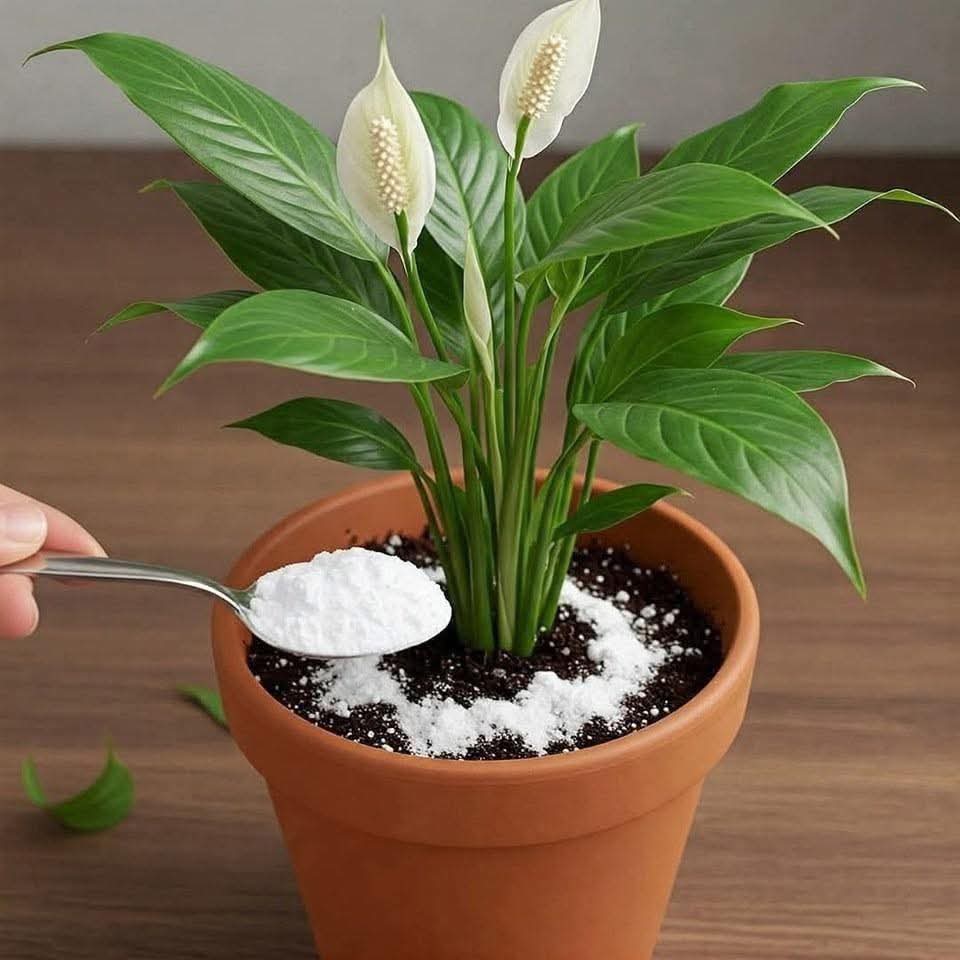
The viral plant-care trick suggests sprinkling a spoonful of Epsom salt or baking soda around the base of your peace lily and letting it soak in during normal watering routines. These powders can’t replace water entirely (since all plants need hydration), but they can:
Boost leaf health – Magnesium in Epsom salt promotes chlorophyll production, resulting in greener, shinier leaves.
Encourage blooms – A healthier plant often produces more flowers.
Fight fungal issues – Baking soda has mild antifungal properties that may protect roots and leaves from diseases.
Balance soil nutrients – Both powders can alter soil chemistry slightly, creating a friendlier environment for peace lilies.
Important Note:
These hacks are supplements, not substitutes. You should never eliminate water completely. Instead, think of Epsom salt or baking soda as vitamins for your peace lily, while water remains the essential food and drink.
What You’ll Need
To try this peace lily care hack, gather:
A healthy peace lily in a pot with drainage holes
Filtered or distilled water (peace lilies dislike hard water)
1 tablespoon Epsom salt or 1 teaspoon baking soda
A small spoon or watering can
Optional:
A spray bottle for misting leaves
Balanced houseplant fertilizer for additional nutrients
Step-by-Step Guide: How to Use This Hack
Check Your Plant’s Soil
Before adding anything, stick your finger about 1 inch into the soil. If it feels dry, your peace lily is ready for some hydration and nutrients.
Measure the Additive
For Epsom salt: Use about 1 teaspoon per quart of water. Dissolve it completely before watering.
For Baking soda: Sprinkle a very light layer (no more than ½ teaspoon) over the soil surface. Too much can harm the plant.
Apply to Soil
If using dissolved Epsom salt, water your plant as normal.
If using baking soda, sprinkle it around the base, then water lightly to help it absorb.
Repeat Occasionally
Use the Epsom salt solution about once a month.
Use baking soda every 6–8 weeks if you notice fungal issues or dull leaves.
Maintain Normal Care
Keep up with your usual peace lily care — indirect light, moderate watering, and occasional fertilizing. Remember, this hack supports your plant but doesn’t replace its fundamental needs.
Extra Peace Lily Care Tips for Success
✨ Lighting: Peace lilies thrive in medium to low indirect light. Avoid harsh direct sun, which can scorch leaves.
✨ Watering: Always let the top inch of soil dry before watering again. If leaves droop, that’s your peace lily’s natural way of asking for a drink.
✨ Humidity: These tropical plants love humidity. Mist leaves weekly or place the pot on a pebble tray with water.
✨ Fertilizer: Use a balanced liquid fertilizer every 6–8 weeks during spring and summer.
✨ Repotting: Peace lilies grow quickly. Repot every 1–2 years with fresh soil to give roots more space.
✨ Leaf Care: Wipe leaves with a damp cloth occasionally to remove dust and help photosynthesis.
Why This Hack Works
The reason this hack seems magical comes down to chemistry:
Magnesium (from Epsom salt) is an essential nutrient that boosts photosynthesis, helping plants produce energy and grow stronger.
Sulfur (also from Epsom salt) supports enzyme function and root health.
Sodium bicarbonate (baking soda) helps balance soil pH and can inhibit fungal growth, keeping roots healthier.
By providing these extras, your peace lily becomes more resilient, vibrant, and long-lasting. It’s not that you can truly “forget water,” but these additives make your plant more forgiving when you occasionally miss a watering.
Common Mistakes to Avoid
⚠️ Overusing additives – Too much Epsom salt or baking soda can build up in the soil and damage roots. Stick to recommended amounts.
⚠️ Using hard tap water – Minerals in tap water can cause brown leaf tips. Use filtered or distilled water when possible.
⚠️ Skipping drainage – Never let your plant sit in soggy soil. Make sure the pot has drainage holes.
⚠️ Direct sunlight – Peace lilies love light but not sunburn. Keep them in bright, indirect light for best results.
Long-Term Benefits of This Hack
If used correctly, this care method can:
Keep leaves greener and glossier
Encourage more frequent blooming
Reduce fungal and pest problems
Extend the overall life of your peace lily
Many plant owners have reported their peace lilies thriving for 10–15 years with proper care and occasional use of these soil supplements.
Final Thoughts
Peace lilies are already one of the easiest and most rewarding houseplants to care for, but with this simple hack, you can take their beauty and resilience to the next level. By occasionally adding Epsom salt or baking soda to the soil, you’ll provide extra nutrients, discourage disease, and support lush growth.
Remember: the secret isn’t to replace water but to enhance it. Think of these powders as a bonus boost to keep your plant looking healthy and blooming beautifully year after year.
So next time you’re worried about forgetting to water your peace lily, don’t stress. Give this hack a try, and enjoy a thriving, evergreen companion that truly lasts forever.
More Recipes You Might Like
-

Why Some Homeowners Are Using Onion Water Around Orchids and What Usually Helps More for Strong Roots, Healthy Leaves, and Long-Lasting Blooms
Orchids are among the most elegant indoor flowering plants for homeowners who want graceful stems, glossy green leaves, long-lasting blooms, and a refined decorative display that fits beautifully in living rooms, bedrooms, apartments, home offices, bright kitchens, windowsills, covered patios, commercial interiors, luxury home staging, and premium indoor plant styling. A healthy orchid can turn…
-

Why Some Homeowners Are Pouring Aloe Water Around Orchids and What Usually Helps More for Strong Roots, Healthy Leaves, and Long-Lasting Blooms
Orchids are among the most elegant indoor flowering plants for homeowners who want graceful blooms, sculptural roots, glossy leaves, and a premium decorative display that fits beautifully in living rooms, bedrooms, apartments, home offices, bright kitchens, balcony gardens, covered patios, commercial interiors, luxury home staging, and refined indoor plant styling. A healthy orchid can make…
-
Why Some Homeowners Are Adding Brown Powder Around Snake Plants and What Usually Helps More for Strong Roots, Fuller Growth, and Healthy Indoor Leaves
Snake plant is one of the most dependable indoor plants for homeowners who want strong upright leaves, bold green patterning, yellow-edged variegation, easy maintenance, and a clean decorative display that fits beautifully in living rooms, bedrooms, apartments, home offices, bright kitchens, entry corners, sunny windowsills, plant shelves, commercial interiors, luxury home staging, and premium indoor…