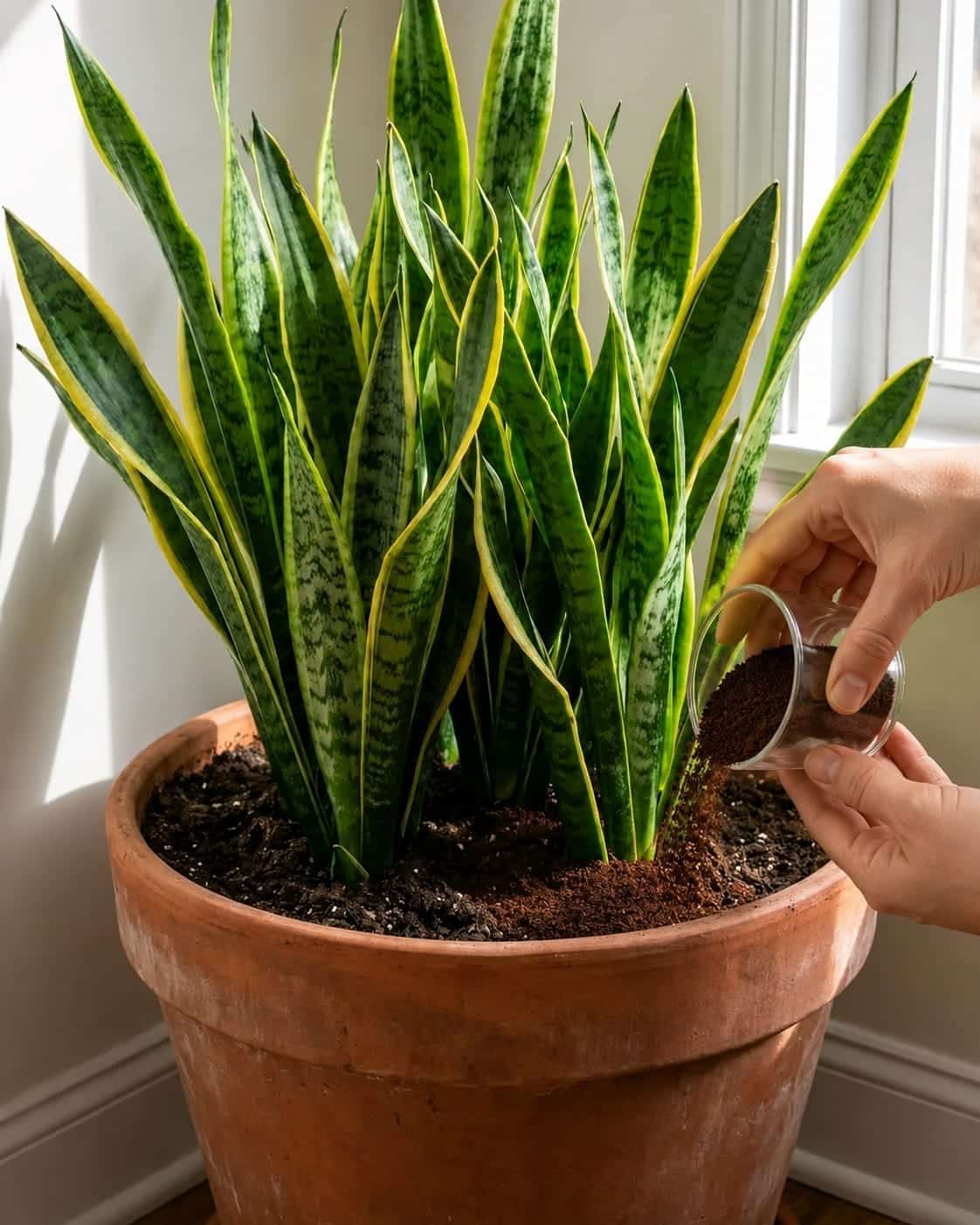
Snake plant is one of the most dependable indoor plants for homeowners who want strong upright leaves, bold green patterning, yellow-edged variegation, easy maintenance, and a clean decorative display that fits beautifully in living rooms, bedrooms, apartments, home offices, bright kitchens, entry corners, sunny windowsills, plant shelves, commercial interiors, luxury home staging, and premium indoor plant styling. Its tall sword-like leaves create structure and height, while its simple care routine makes it a favorite for people who want a plant that looks elegant without needing constant attention.
Many plant lovers become curious when they see a brown powder being poured around the base of a snake plant. This kind of powder is often described online as a simple homemade trick for richer soil, stronger roots, greener leaves, faster growth, and more offshoots. The brown powder may be used coffee grounds, compost powder, worm castings, cocoa-colored organic fertilizer, dried banana peel powder, cinnamon powder, tea grounds, coco coir dust, or another homemade amendment. Because many brown powders look almost the same, the exact ingredient matters. A snake plant is tough, but its rhizomes can still be harmed by too much moisture, organic buildup, fertilizer burn, sour soil, fungus gnats, mold, and root rot.
The safest way to understand this method is to treat brown powder as an optional soil amendment, not a miracle plant booster. A snake plant does not become full, upright, and pup-filled because a cup of brown powder is poured into the pot. It grows best when it has bright indirect light, fast-draining soil, drainage holes, careful watering, warm stable conditions, clean leaves, and gentle feeding only during active growth. If the plant already looks healthy, the best routine is usually simple. If it is yellowing, soft at the base, slow to grow, or sitting in damp soil, the first step is checking roots, drainage, and light before adding anything extra.
Why Snake Plants Need a Lean Root Zone
Snake plants grow from underground rhizomes. These rhizomes store water and energy, which is why the plant can survive dry indoor conditions and missed waterings better than many tropical houseplants. This storage system makes snake plant strong, but it also means the roots and rhizomes do not want heavy, wet, rich soil that stays damp for too long.
A healthy snake plant root zone should be airy and quick-draining. The soil should not smell sour, feel muddy, or stay wet for many days after watering. When the soil remains damp, the rhizomes can soften and rot. Once rhizomes begin to rot, the tall leaves may collapse from the base even if the upper foliage still looks green for a while.
This is why brown powder must be used carefully. Some brown powders add organic matter that holds moisture. Others add nutrients that may be too strong. Some attract fungus gnats when they stay damp on the soil surface. Snake plants usually prefer a cleaner, leaner potting environment than a rich compost-heavy mix.
What the Brown Powder Might Be
The brown powder may be used coffee grounds. Coffee grounds are one of the most common brown materials used in houseplant tips, but they are not ideal for snake plants when used heavily. They can hold moisture, compact on the soil surface, and attract fungus gnats if they remain damp.
The brown powder may be worm castings. Worm castings can be useful as a gentle organic amendment when used sparingly, but they should not be piled thickly around the base of a snake plant. Too much can make the surface richer and wetter than the plant prefers.
The brown powder may be compost powder. Compost can contain nutrients, but indoor pots are small and do not behave like outdoor garden beds. Compost-heavy layers can stay damp, smell earthy or sour, and attract insects if the pot is not drying properly.
The powder may be cinnamon. Cinnamon is sometimes used lightly on cut surfaces, but it is not a complete fertilizer. Pouring a lot of cinnamon into the soil does not create strong rhizomes or more pups. It can also create a dusty layer that does not improve drainage.
The powder may be dried banana peel powder. This is often promoted as a potassium source, but it is not a complete plant food. If it is not fully dried and used lightly, it can mold or attract pests.
Why Coffee Grounds Are Risky for Snake Plants
Coffee grounds are popular because they are easy to find and look like rich soil. However, used coffee grounds can create problems in indoor snake plant pots. When applied as a thick layer, they may compact and block air from reaching the soil. They can also hold moisture near the surface, which is not ideal for a dry-leaning plant.
Snake plants do not need coffee grounds to grow. Their main needs are light, drainage, and correct watering. If coffee grounds are added too often, they can contribute to fungus gnats, mold, sour smell, or uneven soil moisture. A small sprinkle once may not destroy a healthy plant, but repeated layers can create buildup.
If the goal is stronger growth, coffee grounds are not the best choice. A weak balanced fertilizer or succulent fertilizer used during active growth is cleaner and easier to control. If the soil needs improvement, perlite, pumice, and a gritty succulent mix are safer than coffee.
Can Worm Castings Help Snake Plants?
Worm castings are gentler than many homemade powders. They can add mild nutrients and improve soil biology in some plant mixes. However, snake plants do not need rich feeding, and worm castings should be used lightly. A thin amount mixed into the soil during repotting is usually safer than a heavy layer poured on top.
If worm castings are placed on the surface, they should not become a wet, muddy layer. The soil still needs to dry between waterings. If the castings stay damp, gnats may appear. If the pot has poor drainage, even a gentle amendment can become part of a moisture problem.
For a healthy snake plant, worm castings may be used sparingly during active growth, but they are not necessary. The plant can thrive for years with a fast-draining mix and occasional weak fertilizer.
Compost Powder and Indoor Snake Plants
Compost is valuable in outdoor gardens, but indoor pots are different. An outdoor bed has more airflow, more soil volume, rain, worms, microbes, and natural drainage. A small indoor snake plant pot is a closed system. Anything added to the pot stays close to the roots.
Compost powder can be too rich or too moisture-retentive for snake plants if used heavily. It can also make the soil surface attractive to fungus gnats. If compost smells sour, rotten, or unpleasant, it should not be used indoors. Good compost should smell earthy, not spoiled.
If compost is used, it should be fully finished, dry, crumbly, and added in a very small amount. For most snake plants, a commercial cactus or succulent mix with added perlite or pumice is a safer foundation than compost-heavy soil.
Cinnamon Powder Is Not a Fertilizer
Cinnamon is often shown in plant-care tips because it is natural and easy to use. It may be helpful in limited situations, such as dusting a small cut surface after pruning or division. However, cinnamon does not provide complete nutrition. It will not replace fertilizer, light, or healthy soil.
Pouring cinnamon around the base of a snake plant can create a dusty brown surface. When watered, it may clump or wash unevenly into the soil. It is not needed for routine snake plant care, and using too much can make the pot look messy.
If a snake plant has root rot or soft leaves, cinnamon on the surface will not solve the problem. The plant needs rotten tissue removed, fresh fast-draining soil, and better watering habits.
Dried Banana Peel Powder for Snake Plant
Dried banana peel powder is often promoted because banana peels are associated with potassium. Potassium is important for plants, but snake plant growth does not depend on potassium alone. The plant needs balanced conditions and a clean root zone more than a single homemade ingredient.
If banana peel powder is not fully dried, it can mold. If it is added heavily, it can attract insects or create organic residue. Even when fully dried, it should be used sparingly. Indoor snake plant pots are not compost bins.
If you want to feed a snake plant, use a weak balanced fertilizer during warm active growth. That gives more predictable nutrition than banana powder.
Why Brown Powder Can Cause Fungus Gnats
Fungus gnats are common in indoor plants when the soil surface stays moist and rich in organic material. Brown powders like coffee grounds, compost powder, tea grounds, and banana peel powder can become attractive to gnats if they remain damp. The adult gnats are annoying, and their larvae live in moist organic soil.
Snake plants should not have constantly damp soil. If gnats appear after adding powder, stop using the powder. Let the soil dry properly. Remove the top layer if it looks wet, sticky, or moldy. Replace it with a dry, gritty mix.
Prevention is easier than correction. Keep the soil surface clean, avoid food-like amendments, and water only when the plant needs it.
Why Mold Can Appear on Powdered Soil
Mold can appear when organic powder is added to damp soil. It may look white, gray, fuzzy, or dusty. While some surface mold may not kill the plant immediately, it is a sign that the soil surface is staying too wet or too rich. It also makes the plant display look dirty.
If mold appears, remove the affected top layer and improve airflow. Let the soil dry more before watering. Check drainage. Do not add more powder. A snake plant should have a clean, dry-looking soil surface most of the time.
A premium indoor plant display should look tidy. Visible mold, clumps, and wet brown residue reduce the beauty of the plant and may signal root-zone problems.
Best Soil for Snake Plant Growth
The best soil for snake plant is fast-draining and airy. A cactus or succulent mix is a good base. It can be improved with perlite, pumice, coarse sand, lava rock, or small bark pieces. The goal is to create a soil structure that allows water to pass through and air to reach the roots.
If the soil is heavy, dark, compacted, and slow to dry, brown powder will not fix it. Adding more organic material may make it worse. Repotting into a gritty mix is usually the better solution.
Good soil supports strong rhizomes, upright leaves, and new pups. The plant does not need rich compost-like soil. It needs a clean structure that protects it from rot.
Drainage Holes Matter More Than Any Powder
A snake plant pot must have drainage holes. This is especially important when adding any amendment or liquid. If water cannot drain, moisture collects at the bottom and may rot the roots. The top can look dry while the lower pot remains wet.
Terracotta pots are helpful because they breathe and allow soil to dry more evenly. Ceramic and plastic pots can work if they have drainage and the soil is fast-draining. Decorative pots without drainage should be used only as outer cover pots.
No brown powder can protect a snake plant from a pot that traps water. Drainage is the foundation of safe care.
How to Water After Adding Brown Powder
If brown powder has been added, be extra careful with watering. Do not water immediately if the soil is already damp. Wait until the soil has dried properly. When watering, use room-temperature water and allow excess to drain fully.
Water can carry powder deeper into the pot. If the powder is unknown, thick, food-like, or heavily applied, remove as much as possible before watering. Do not wash a large amount of coffee, compost, or spice powder into the rhizomes.
If the plant is healthy and the powder is a known mild amendment, use only a light amount and monitor the soil. The surface should not become muddy, sticky, or sour-smelling.
Best Light for Strong Snake Plant Leaves
Snake plants tolerate low light, but they grow stronger in bright indirect light. Bright filtered light helps the plant produce energy, maintain rich leaf patterning, and support rhizome growth. A plant in a dark corner may survive but produce fewer new leaves and pups.
A window with bright indirect light is ideal. Gentle morning sun may be fine if the plant is acclimated. Harsh direct afternoon sun can scorch leaves, especially through hot glass. If leaves develop dry bleached patches, move the plant slightly back from the window.
If the goal is faster growth, improve light first. Nutrients from powder cannot help much if the plant does not have enough light to use them.
How Snake Plants Produce More Pups
Snake plant pups grow from rhizomes below the soil. A plant with healthy rhizomes, enough light, and a stable watering routine is more likely to send up new shoots. Pups are not created by one powder. They are the result of stored energy and a healthy root system.
A slightly snug pot can sometimes encourage pups because the rhizomes fill the space. However, the pot should not be so crowded that soil is exhausted or roots are stressed. If the plant is bursting from the pot, division may be needed.
To encourage pups safely, provide bright indirect light, use fast-draining soil, avoid overwatering, and feed lightly during active growth. Keep the base clean and avoid piling wet organic powder around emerging shoots.
Feeding Snake Plants Safely
Snake plants are light feeders. They do not need frequent fertilizer. During spring and summer, a diluted balanced houseplant fertilizer or succulent fertilizer can support growth. Use a weak dose. Strong feeding can burn roots and cause brown tips or yellowing.
Do not fertilize during winter or in very low light. The plant grows more slowly and uses fewer nutrients. Feeding during slow growth can create buildup in the soil.
If the brown powder is a fertilizer product, follow the label. Do not pour a random amount into the pot. Fertilizer strength matters, especially in indoor containers.
When Brown Powder Should Be Avoided Completely
Brown powder should be avoided if you do not know exactly what it is. It should also be avoided if the soil is damp, the pot has no drainage, fungus gnats are present, mold is visible, the plant is yellowing, leaf bases are soft, or the soil smells sour. These signs suggest the root zone may already be stressed.
It should also be avoided during winter, in cool rooms, or in low-light corners. In these conditions, the plant uses water slowly and organic powder can sit unused in the soil.
Do not use thick coffee grounds, cocoa powder, sugar, tea dust, cinnamon piles, compost sludge, banana powder, spice blends, or unknown kitchen powders heavily in snake plant soil. If it can spoil, smell, or clump, it is not ideal for a snake plant pot.
What to Do If Too Much Brown Powder Was Added
If too much brown powder was added, remove the excess from the soil surface before watering. Use a spoon or your fingers gently, taking care not to damage leaf bases or new pups. Replace the removed layer with fresh dry succulent mix if needed.
If the powder has already become wet and muddy, remove the top layer and let the pot dry. If the soil smells sour or gnats appear, repotting may be safer. Remove old contaminated soil, inspect the rhizomes, trim any rotten sections, and repot into a fresh gritty mix.
If the plant is in a pot without drainage, move it into a draining container. This one change is often more important than any amendment.
Continue to Page 2
Continue to page 2 for more details about this article and the key points many readers miss on the first page.