Signs of Healthy Snake Plant Roots
A healthy snake plant should have firm leaf bases and strong upright leaves. The rhizomes should be firm, not mushy. New pups should emerge as firm pointed shoots. The soil should smell neutral or lightly earthy, never sour or rotten.
Healthy growth may be slow. Snake plants do not always produce visible changes quickly. A plant can be healthy even if it grows only a few new leaves in a season. Patience is part of snake plant care.
If the plant is firm and the leaves look good, avoid over-treating it. Too much attention often causes more problems than neglect.
Signs the Plant Is Stressed
Warning signs include yellow leaves, mushy bases, collapsing leaves, sour soil smell, fungus gnats, mold, soft rhizomes, or wet soil that never dries. These signs are not solved by adding more powder. They require better drainage, less watering, root inspection, or fresh soil.
If only the leaf tips are brown, the cause may be water quality, fertilizer buildup, dry air, physical damage, or inconsistent care. Brown tips will not turn green again, but the plant can continue growing if conditions improve.
If the base is soft, act quickly. Soft bases often indicate rot. Remove affected parts and repot into dry, fast-draining soil.
Cleaning Snake Plant Leaves
Snake plant leaves can collect dust, especially near windows. Dust makes the pattern look dull and can reduce light absorption. Wipe the leaves gently with a soft damp cloth. Support each leaf while cleaning so it does not bend or crack.
If brown powder lands on the leaves, wipe it away. Powder can settle into the leaf texture and make the plant look dirty. If it becomes wet, it may leave stains or residue.
Avoid oily leaf shine sprays. They can attract dust and make the leaves look artificial. Clean water and a soft cloth are enough.
Indoor Styling With Snake Plants
Snake plants are perfect for modern styling because their vertical leaves create height and structure. A terracotta pot gives a warm natural look. A black container creates dramatic contrast. A white ceramic pot feels clean and minimal. A concrete-style planter makes the plant look architectural. A woven basket softens the display and works well in cozy interiors.
Place the plant where it receives bright indirect light and where the leaves have room to stand. A living room corner, bedroom floor planter, office shelf, entryway, kitchen window, or plant stand can work beautifully. Avoid placing the plant where curtains or furniture constantly rub the leaves.
For a premium display, keep the soil surface tidy, wipe the pot rim, remove fallen debris, and avoid visible piles of brown powder. The plant’s natural leaf pattern should be the focus.
Common Mistakes With Brown Powder Tricks
One common mistake is assuming brown powder always means rich plant food. Many brown powders are kitchen leftovers, not balanced fertilizer. Another mistake is applying too much at once. Indoor pots are small, and heavy amendments can overwhelm the root zone.
A third mistake is using coffee grounds repeatedly. This can compact the surface and attract gnats. A fourth mistake is adding powder to wet soil. This creates clumps and mold. A fifth mistake is using powder to fix low light. Nutrients cannot replace brightness.
A sixth mistake is ignoring drainage. If the pot has no drainage holes, the plant is at risk no matter what powder is added. Simple care usually works better than dramatic hacks.
Better Alternatives for Stronger Snake Plant Growth
If the goal is stronger roots, use fast-draining soil and a pot with drainage holes. If the goal is more pups, improve bright indirect light and keep the plant warm during active growth. If the goal is greener leaves, clean dust from the foliage and avoid harsh sun. If the goal is nutrition, use weak fertilizer during spring or summer.
If the soil is compacted, repot. If the plant is soft, inspect the roots. If gnats are present, stop adding organic material and let the soil dry. If the plant is slow but healthy, be patient. Snake plants are naturally slow growers.
These steps support real plant health more safely than unknown brown powder.
Final Thoughts
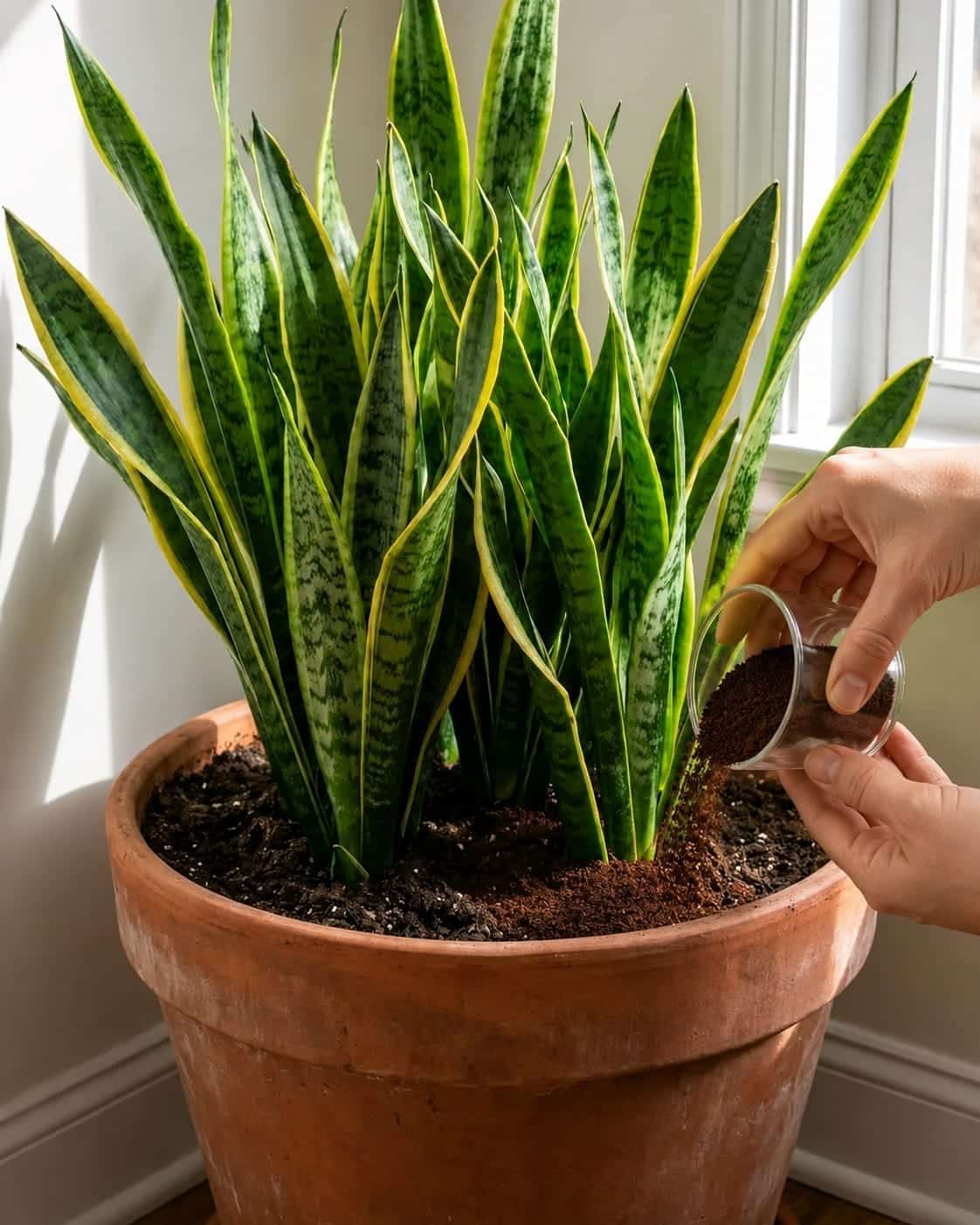
A brown powder poured around a snake plant may look like a simple natural trick for stronger roots, more pups, and greener leaves, but it should be used carefully. The powder could be coffee grounds, worm castings, compost powder, cinnamon, dried banana peel powder, tea grounds, coco coir dust, organic fertilizer, or another unknown material. Some mild plant-safe amendments can help when used lightly, but heavy kitchen powders can hold moisture, clump, attract fungus gnats, create mold, sour the soil, or stress rhizomes.
The real foundation of snake plant health is bright indirect light, fast-draining succulent soil, drainage holes, deep but infrequent watering, full dry-down time, warm stable conditions, clean leaves, and gentle feeding only during active growth. If the soil is wet, do not add powder. If the plant is soft, check the roots. If the plant is not producing pups, improve light and patience. If the plant is healthy, keep the routine simple.
With steady care and clean styling, snake plants can remain beautiful indoor plants for living rooms, bedrooms, home offices, apartments, bright kitchens, entry corners, windowsills, commercial interiors, luxury home staging, and premium plant displays. Strong upright leaves, healthy rhizomes, fresh offshoots, tidy soil, and balanced maintenance will always create a safer and more elegant result than relying on risky brown powder shortcuts.