How I Used Banana Feed for Lush Spider Plant Blooms 🌿🍌
Spider plants (Chlorophytum comosum) are famous for their elegant arching leaves and adorable baby “spiderettes.” But many people don’t realize that these plants can also produce delicate white flowers that eventually grow into new baby plants.
For years, my spider plant stayed green and healthy but never produced flowers or pups. Then I tried a simple natural trick using banana-based plant feed, and the results surprised me. Within weeks, my plant started sending out long stems filled with tiny white blooms—and soon after, dozens of baby spider plants appeared.
In this guide, I’ll explain how banana feed works, how to make it, and how to use it safely to encourage lush spider plant blooms.
Why Spider Plants Sometimes Don’t Bloom
Before understanding the banana trick, it’s important to know why spider plants often refuse to flower.
Many indoor spider plants focus only on leaf growth. Flowering requires the right balance of nutrients, light, and mild stress. Without those conditions, the plant simply keeps producing leaves.
Common reasons spider plants don’t bloom include:
Too much nitrogen fertilizer
Low potassium levels
Not enough bright light
Pots that are too large
Lack of nutrients in the soil
The secret is boosting potassium and phosphorus, which trigger flowering and pup production. That’s exactly where bananas help.
Why Banana Feed Works for Spider Plants
Bananas are one of the best natural fertilizers for flowering houseplants.
Banana peels contain important nutrients such as:
Potassium (K)
Encourages flowering and stronger stems.
Phosphorus (P)
Supports root growth and bloom formation.
Calcium & Magnesium
Improve overall plant health and leaf color.
Natural sugars
Feed beneficial soil microbes that help release nutrients.
When used correctly, banana feed acts like a gentle organic bloom booster.
My Simple Banana Feed Recipe
This is the method I personally used that triggered flowering.
Ingredients
1 ripe banana peel
1 cup of water
A small jar or blender
Preparation
Cut the banana peel into small pieces.
Place the pieces into a blender or jar.
Add one cup of water.
Blend or crush the mixture well.
Strain the liquid if you prefer a smoother fertilizer.
You now have a mild potassium-rich plant feed.
How to Use Banana Feed on Spider Plants
Using it properly is very important. Too much organic fertilizer can cause problems.
Step 1 – Water the Plant Normally
Before feeding, make sure the soil is slightly moist.
Step 2 – Apply the Banana Feed
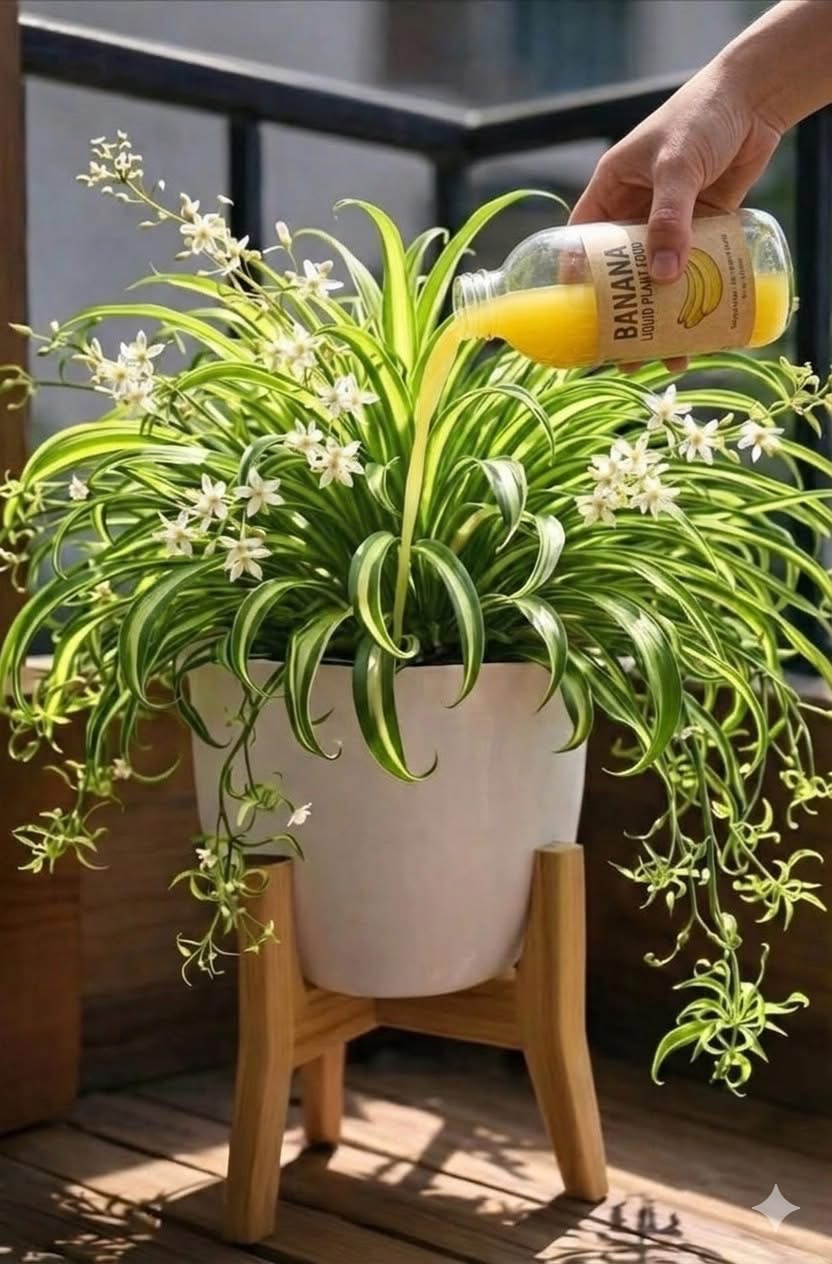
Pour 2–3 tablespoons around the base of the plant.
Avoid pouring directly on the leaves.
Step 3 – Repeat Every Two Weeks
Spider plants don’t need heavy feeding.
Applying this mixture every 10–14 days is enough.
After about 3–4 weeks, I noticed new stems growing from the center of the plant.
Signs Your Spider Plant Is About to Bloom
When the plant responds to the banana feed, you may notice:
🌱 Thin stems growing from the center
🌸 Tiny star-shaped white flowers forming
🌿 Baby spider plants developing along the stems
✨ Faster overall growth
Each flowering stem can produce multiple spiderettes, giving you dozens of new plants.
Additional Tips to Encourage Spider Plant Flowers
Banana feed works best when combined with proper plant care.
1. Give Bright Indirect Light
Spider plants bloom better in bright filtered sunlight.
A spot near an east or west window is perfect.
2. Keep the Plant Slightly Root-Bound
Spider plants actually prefer tight pots.
If the pot is too large, the plant focuses on roots instead of flowers.
3. Avoid Too Much Nitrogen
High nitrogen fertilizers produce lush leaves but stop flowering.
That’s why banana feed works well—it’s naturally low in nitrogen and high in potassium.
4. Let the Soil Dry Slightly
Spider plants like moderate watering.
Allow the top layer of soil to dry before watering again.
Mistakes to Avoid When Using Banana Fertilizer
Many people make mistakes that can harm plants.
❌ Using large amounts
Too much banana fertilizer can cause fungus or soil pests.
❌ Leaving banana chunks in the soil
Always use liquid feed instead of burying peels.
❌ Feeding too often
Once every two weeks is enough.
Other Natural Boosters for Spider Plants
If you want even stronger growth, you can combine banana feed with other gentle natural fertilizers.
Eggshell water
Adds calcium to strengthen leaves.
Rice water
Provides minerals and beneficial starch.
Epsom salt solution
Improves magnesium levels for greener leaves.
But remember: less is more with houseplants.
What Happens After the Flowers Appear
Spider plant flowers are small but beautiful. They usually last only a few days.
After blooming, something magical happens:
The flower stems begin producing tiny baby plants.
These pups eventually grow roots and can be:
Left on the mother plant for decoration
Cut and propagated into new plants
Shared with friends
One healthy spider plant can produce dozens of new plants every year.
My Results After Using Banana Feed
Within one month, my spider plant transformed.
Before:
Only green leaves
No stems or flowers
After banana feeding:
Multiple flowering stems
White star-shaped blooms
Baby spider plants forming everywhere
The plant looked fuller, healthier, and more vibrant.
Frequently Asked Questions
Can banana fertilizer attract insects?
If used in liquid form and small amounts, it usually does not attract pests.
Can I store banana feed?
Yes. Store it in the refrigerator for up to 3 days.
Fresh fertilizer works best.
Can this work for other plants?
Yes! Banana feed is great for:
Peace lilies
Orchids
Anthuriums
Tomatoes
Flowering houseplants
How long does it take to see flowers?
Most spider plants respond within 3–6 weeks, depending on light and plant maturity.
Final Thoughts
Sometimes the best plant care solutions are the simplest and most natural. A basic banana peel mixture can provide the potassium boost spider plants need to start blooming and producing pups.
With proper light, balanced watering, and occasional banana feeding, your spider plant can transform from a simple leafy houseplant into a beautiful cascading display of flowers and baby plants.
If your spider plant has never bloomed before, try this easy banana feed method—you might be surprised by how quickly those delicate white flowers appear.
✅ If you want, I can also give you:
SEO title (high CTR)
Meta description
Pinterest traffic title ideas
High RPM keywords for U.S. traffic
These can increase AdSense RPM and traffic to your gardening blog. 🌿📈
-

Why Some Homeowners Are Using Onion Water Around Orchids and What Usually Helps More for Strong Roots, Healthy Leaves, and Long-Lasting Blooms
Orchids are among the most elegant indoor flowering plants for homeowners who want graceful stems, glossy green leaves, long-lasting blooms, and a refined decorative display that fits beautifully in living rooms, bedrooms, apartments, home offices, bright kitchens, windowsills, covered patios, commercial interiors, luxury home staging, and premium indoor plant styling. A healthy orchid can turn…
-

Why Some Homeowners Are Pouring Aloe Water Around Orchids and What Usually Helps More for Strong Roots, Healthy Leaves, and Long-Lasting Blooms
Orchids are among the most elegant indoor flowering plants for homeowners who want graceful blooms, sculptural roots, glossy leaves, and a premium decorative display that fits beautifully in living rooms, bedrooms, apartments, home offices, bright kitchens, balcony gardens, covered patios, commercial interiors, luxury home staging, and refined indoor plant styling. A healthy orchid can make…
-
Why Some Homeowners Are Adding Brown Powder Around Snake Plants and What Usually Helps More for Strong Roots, Fuller Growth, and Healthy Indoor Leaves
Snake plant is one of the most dependable indoor plants for homeowners who want strong upright leaves, bold green patterning, yellow-edged variegation, easy maintenance, and a clean decorative display that fits beautifully in living rooms, bedrooms, apartments, home offices, bright kitchens, entry corners, sunny windowsills, plant shelves, commercial interiors, luxury home staging, and premium indoor…