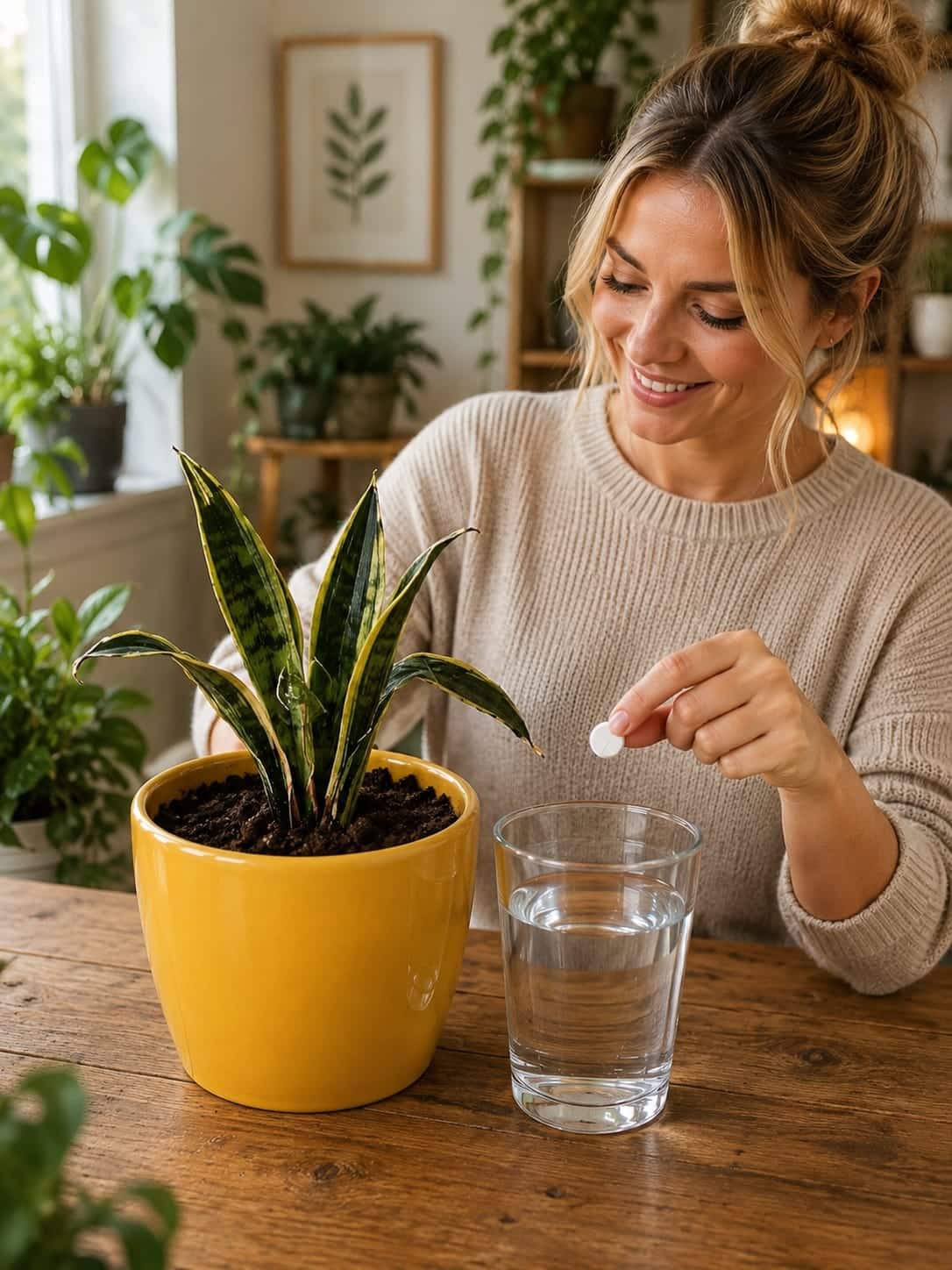
Snake plants are some of the most forgiving indoor plants you can grow, but when their leaves start curling, fading, yellowing, or drying at the tips, many plant lovers look for a quick rescue method. One popular home trick involves dropping a simple white tablet into a glass of water, letting it dissolve, and using that diluted solution around the soil of a tired snake plant.
The image shows exactly that kind of method: a snake plant in a bright indoor room, a glass of water, and a small tablet being prepared before watering. Many gardeners describe this as a gentle “recovery drink” for stressed plants, especially when the plant looks weak after poor watering, old soil, or seasonal stress.
But before using any tablet mixture on a snake plant, it is important to understand the safest way to do it.
Snake plants do not like strong feeding. They do not like wet soil. They do not recover faster when flooded with homemade mixtures. The right approach is mild, occasional, and carefully diluted.
This guide explains how the tablet-in-water method is used, what kind of plant stress it may help with, how to prepare it safely, when not to use it, and how to combine it with proper snake plant care for stronger roots, firmer leaves, and healthier new growth.
Why Snake Plants Sometimes Look Weak
Snake plants, also called Sansevieria or Dracaena trifasciata, store water inside their thick upright leaves. That is why they can survive neglect better than many houseplants. However, this toughness can be misleading. A snake plant may tolerate poor conditions for months before suddenly showing stress.
Common signs of stress include:
Yellowing leaves
Dry brown tips
Wrinkled or folded leaves
Leaves leaning or collapsing
Slow or no new growth
Soft leaf bases
Pale leaf color
Soil staying wet too long
Soil becoming hard and dry
When these signs appear, the plant may need better watering, fresh soil, brighter light, or root inspection. A tablet-water trick should never be the first solution if the roots are rotting or the soil is soaked.
What Is the Tablet-in-Water Method?
The tablet-in-water method usually involves dissolving a mild household tablet in water and applying the diluted solution to plant soil. In many gardening circles, this is commonly associated with aspirin water, because aspirin contains acetylsalicylic acid, a compound related to salicylic acid, which plants naturally use in stress-response processes.
Some gardeners believe a very weak aspirin-water solution may help plants cope with stress. However, it should be used carefully and sparingly. It is not a fertilizer, and it is not a miracle cure.
For snake plants, the safest way to think of it is this:
It may be used as an occasional mild stress-support rinse, but it should never replace correct watering, drainage, soil mix, or light.
Important Safety Warning Before Using Any Tablet
Not every white tablet is safe for plants. Some tablets contain coatings, sweeteners, dyes, caffeine, painkillers, or extra ingredients that can harm soil and roots.
Only use a plain, uncoated aspirin tablet if you are using this method. Do not use:
Ibuprofen
Paracetamol or acetaminophen
Effervescent cold tablets
Vitamin tablets
Sleeping tablets
Antibiotics
Tablets with sweeteners or flavorings
Strong medication of any kind
If you are not sure what the tablet is, do not use it on your plant.
Can Aspirin Water Help a Snake Plant?
A very diluted aspirin-water solution may support a stressed plant in a mild way, but it will not fix serious care problems. If the plant is dying because of root rot, compacted soil, or no drainage, aspirin water will not save it.
It may be useful only when the plant is generally healthy but slightly stressed from:
Recent repotting
Mild transplant shock
Seasonal growth slowdown
Light leaf stress
Temporary dehydration
Minor environmental change
It should not be used on a snake plant with soggy soil, mushy leaves, or rotten roots.
The Most Important Rule: Dilution
Snake plants are sensitive to overwatering and root burn. A strong tablet solution can stress the roots instead of helping them.
For a snake plant, always use a weak mixture.
Safe Mild Aspirin Water Recipe
- 1 plain uncoated aspirin tablet
- 1 liter of water
Let the tablet dissolve fully. Stir well. Use only a small amount around the outer edge of the soil.
For extra safety, you can make it even weaker by using half a tablet in 1 liter of water.
How to Make the Tablet Water for Snake Plants
Fill a clean container with 1 liter of room-temperature water.
Add 1 plain uncoated aspirin tablet.
Wait until it dissolves completely.
Stir the water well.
Check that no tablet pieces remain at the bottom.
Use immediately.
Do not store the mixture for days. Fresh solution is safer and cleaner.
How to Apply It to a Snake Plant
Application matters more than people think. Do not pour the mixture into the center of the plant. Do not let water collect between the leaves. Moisture trapped in the crown can lead to rot.
Safe Application Method
Check that the soil is dry at least halfway down.
Pour a small amount around the outer edge of the pot.
Avoid the leaf base and central crown.
Let excess water drain fully.
Empty the saucer after watering.
Do not repeat often.
For a small to medium snake plant, you do not need to use the entire liter. Use only enough to lightly moisten the soil.
How Often Should You Use It?
This method should be occasional. Snake plants grow slowly and do not need frequent treatments.
A safe routine is:
Once after repotting, if the plant is healthy
Once during active growing season if the plant looks mildly stressed
No more than once every 6 to 8 weeks
Not during winter dormancy unless conditions are warm and bright
Using it weekly is too much for most snake plants.
When You Should Not Use Tablet Water
There are times when this method can make the problem worse.
Do not use it if:
The soil is wet
The pot has no drainage hole
The leaves are mushy
The plant smells rotten
The roots are black or slimy
The plant was recently overwatered
The room is cold and dark
You already fertilized recently
You do not know what kind of tablet it is
In these cases, fix the root or soil issue first.
Check the Soil Before Using Any Treatment
Before adding anything to a snake plant, press your finger into the soil. If the top looks dry but the lower soil is still damp, wait.
Snake plants prefer to dry between watering. Many problems happen because people water again too soon.
Soil Check Guide
| Soil Condition | What It Means | What to Do |
|---|---|---|
| Dry halfway down | Safe time to water lightly | Use plain water or weak solution |
| Wet at the bottom | Risk of root rot | Do not water |
| Hard and compacted | Poor airflow | Consider repotting |
| Sour smell | Possible rot | Inspect roots |
| Water runs off surface | Soil is hydrophobic | Rehydrate slowly or repot |
Why Proper Soil Matters More Than Any Trick
A snake plant in poor soil will continue struggling no matter what homemade method you use. Dense potting soil holds too much moisture around the roots. Old soil can become compacted, salty, and low in oxygen.
The best soil for snake plants is fast-draining and airy.
Simple Snake Plant Soil Mix
- 2 parts cactus or succulent mix
- 1 part perlite or pumice
- 1 part coarse sand or orchid bark
This mix helps prevent root rot and gives the roots room to breathe.
Best Pot for a Snake Plant
The pot in the image is decorative and bright, which looks beautiful indoors. But the most important feature is not the color. It is drainage.
A snake plant pot should have:
At least one drainage hole
A saucer that can be emptied
A stable shape
A size only slightly larger than the root ball
Breathable material if possible
Terracotta pots are excellent because they dry faster, but ceramic pots can work if they drain well.
How to Tell If the Plant Needs Water or Recovery
Snake plants can show similar symptoms for opposite problems. Wrinkled leaves may mean underwatering, but they can also appear when roots have rotted and cannot absorb water.
That is why root and soil checks are important.
Underwatered Snake Plant Signs
Soil bone dry
Leaves wrinkled or folding inward
Dry brown tips
Pot feels very light
Leaves still firm at the base
Overwatered Snake Plant Signs
Soft yellow leaves
Mushy base
Bad smell
Wet soil for many days
Leaves falling over
Black or slimy roots
If the plant is underwatered, careful watering can help. If it is overwatered, adding more liquid will make it worse.
Step-by-Step Snake Plant Recovery With Tablet Water
Step 1: Inspect the Plant
Look for soft leaves, yellowing, brown tips, or dry curled edges. Remove any fully dead leaves with clean scissors.
Step 2: Check the Soil
Make sure the soil is dry enough to receive water. Do not use any solution on wet soil.
Step 3: Prepare the Mild Solution
Dissolve 1 plain uncoated aspirin tablet in 1 liter of water. Stir well.
Step 4: Apply Carefully
Pour a small amount around the outer soil edge. Avoid the center of the plant.
Step 5: Drain Completely
Let the pot drain. Empty the saucer so the roots do not sit in water.
Step 6: Wait and Watch
Do not repeat the treatment quickly. Watch the plant for 2 to 4 weeks. New growth takes time.
Continue to Page 2
Continue to page 2 for more details about this article and the key points many readers miss on the first page.