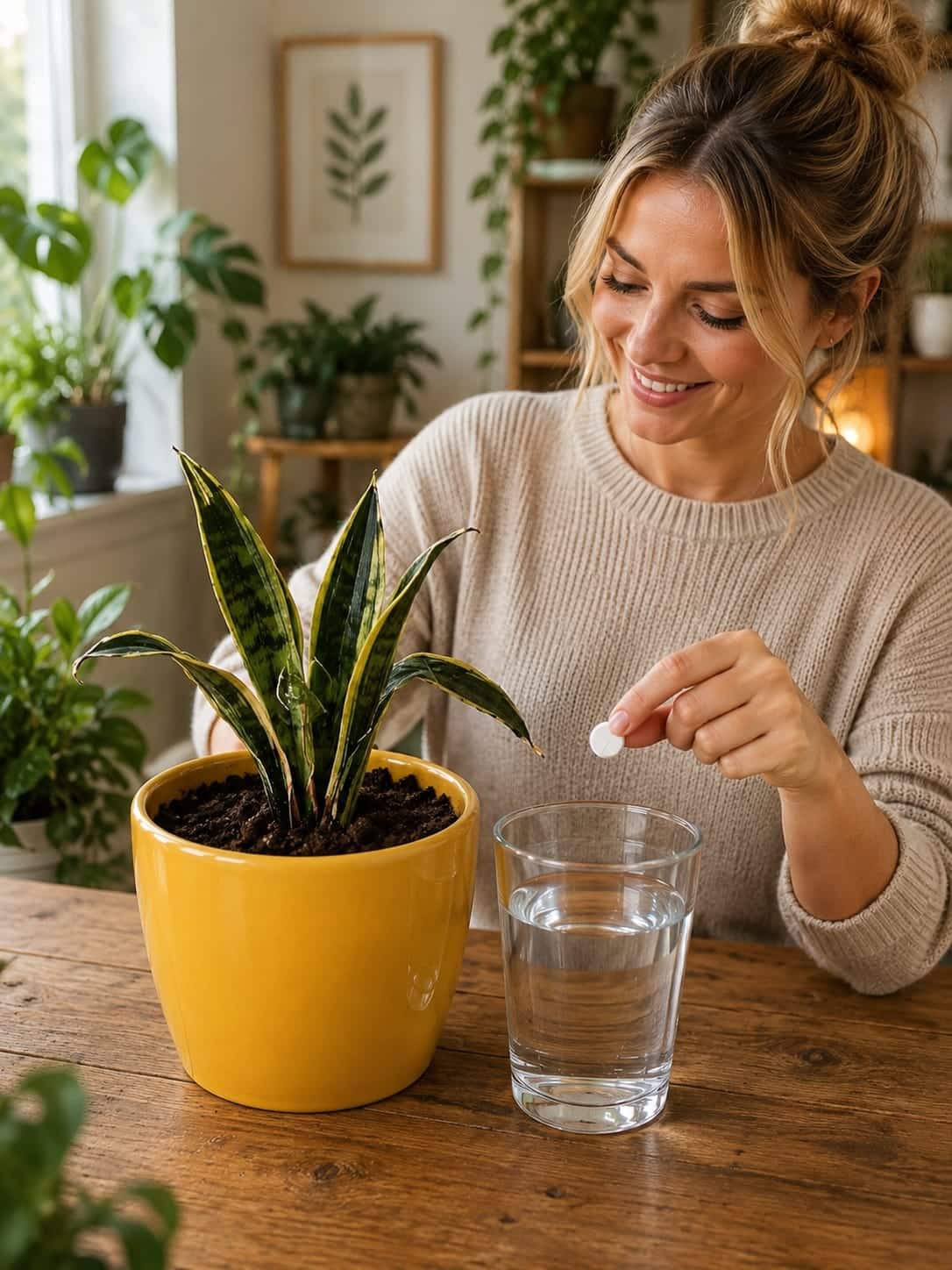
What Results Can You Expect?
This method will not turn damaged leaves perfect again. Brown tips and yellow patches do not disappear. The real signs of improvement appear in new growth and firmer existing leaves.
Possible improvements include:
- Leaves feel firmer
- Plant stops declining
- New shoots appear near the soil
- Color becomes more stable
- Roots begin growing better in warm conditions
Expect gradual recovery, not overnight transformation.
How Long Does Snake Plant Recovery Take?
Snake plants are slow-growing. Even when care is perfect, they may take weeks or months to show visible improvement.
| Time | What May Happen |
|---|---|
| First week | Plant stabilizes if roots are healthy |
| 2–4 weeks | Leaves may feel firmer |
| 1–2 months | New shoots may appear in warm bright light |
| 3–6 months | Plant may look fuller and stronger |
Do not keep adding treatments because you do not see fast results. Snake plants respond slowly.
Can Tablet Water Replace Fertilizer?
No. Aspirin water is not a fertilizer. It does not provide the main nutrients plants need, such as nitrogen, phosphorus, and potassium.
If your snake plant needs nutrition, use a diluted cactus fertilizer or balanced houseplant fertilizer during the growing season.
Best Fertilizer Routine
- Feed only in spring and summer
- Use ¼ to ½ strength fertilizer
- Feed every 6 to 8 weeks at most
- Do not fertilize dry roots
- Do not fertilize sick or rotting plants
Snake plants prefer underfeeding to overfeeding.
Can You Mix Aspirin Water With Fertilizer?
No, it is better not to mix them. Combining treatments can make the soil too concentrated and may stress the roots.
Use one method at a time. If you use aspirin water, wait several weeks before fertilizing. If you recently fertilized, skip the tablet method.
Should You Spray It on the Leaves?
For snake plants, soil application is safer than leaf spraying. Spraying can leave residue on the leaves and may collect in the leaf base.
If moisture sits between snake plant leaves, it can encourage rot.
Apply only to the soil, and keep the crown dry.
Best Light After Using the Method
After applying any recovery treatment, place the snake plant in bright indirect light. Light helps the plant use water and rebuild energy.
Good spots include:
- Near an east-facing window
- A bright room with filtered sunlight
- A few feet from a south-facing window
- Bright indirect patio shade
- Under a grow light indoors
Avoid sudden harsh direct sun, especially if the plant is already stressed.
Common Mistakes With the Tablet-in-Water Trick
Using the wrong type of tablet
Making the solution too strong
Using it too often
Pouring it into wet soil
Letting water sit in the saucer
Pouring it into the plant crown
Expecting damaged leaves to turn green again
Ignoring root rot
Using it instead of repotting old soil
The method must be gentle. Snake plants do not respond well to extreme care.
Better Long-Term Care for a Strong Snake Plant
Once the plant is stable, focus on simple care habits.
Snake Plant Care Routine
Use fast-draining soil
Keep the pot in bright indirect light
Water only when soil dries well
Empty the saucer after watering
Feed lightly in spring and summer
Keep away from cold drafts
Clean dust from leaves occasionally
Repot only when needed
The healthiest snake plants are usually the ones that are not fussed over too much.
What If the Plant Keeps Getting Worse?
If the snake plant continues yellowing or collapsing after treatment, remove it from the pot and inspect the roots. The problem may be hidden below the soil.
If roots are rotten:
Remove the plant from the pot.
Cut off mushy roots and leaves.
Keep only firm rhizomes.
Let cut areas dry for 24 hours.
Repot into dry cactus mix.
Wait several days before watering.
Place in bright indirect light.
If any leaves remain firm, you can also propagate healthy sections.
Can You Propagate a Snake Plant If It Is Dying?
Yes, if you still have firm healthy leaf sections. Cuttings can grow new roots and pups.
Leaf Propagation Method
- Cut a firm healthy leaf into 3 to 4-inch sections.
- Keep track of which end is the bottom.
- Let the pieces dry for 1 to 2 days.
- Plant the bottom end in cactus mix.
- Keep soil barely moist.
- Place in bright indirect light.
- Wait for roots and new pups.
Variegated snake plants may lose their yellow edges when propagated from leaf cuttings. Division is better if you want to keep the same pattern.
Tablet Water vs Proper Snake Plant Care
| Method | What It Can Do | What It Cannot Do |
|---|---|---|
| Mild aspirin water | May support mild stress response | Cannot fix root rot |
| Fresh cactus soil | Improves drainage and airflow | Cannot repair dead leaves |
| Bright indirect light | Supports energy and new growth | Cannot reverse mushy roots |
| Correct watering | Prevents most problems | Cannot save completely rotten rhizomes |
| Light fertilizer | Supports growth in season | Cannot replace healthy roots |
Quick Recipe Card
Ingredients
- 1 plain uncoated aspirin tablet
- 1 liter room-temperature water
Instructions
- Dissolve the tablet completely in water.
- Stir well.
- Use only when the soil is dry enough to water.
- Pour a small amount around the outer soil edge.
- Avoid the crown and leaf base.
- Let the pot drain fully.
- Repeat only occasionally, not weekly.
Short Caption for This Trick
“For a mildly stressed snake plant, dissolve 1 plain uncoated aspirin tablet in 1 liter of water and use a small amount around the outer soil edge only when the soil is dry. Keep the crown dry, drain the pot fully, and repeat only occasionally. Healthy roots and fast-draining soil matter more than the tablet.”
Frequently Asked Questions
Can I put aspirin in water for snake plants?
You can use a very weak aspirin-water solution occasionally, but only if it is plain uncoated aspirin and the plant does not have root rot.
How much aspirin should I use for plants?
For snake plants, use a mild mixture: 1 plain aspirin tablet in 1 liter of water. For extra safety, use half a tablet per liter.
Can aspirin water save a dying snake plant?
Not if the plant has root rot, soggy soil, or dead rhizomes. It may only support mild stress when the roots are still healthy.
Should I pour tablet water directly into the center of the plant?
No. Pour around the outer edge of the soil. Keep the leaf base and crown dry.
How often can I use aspirin water on a snake plant?
No more than once every 6 to 8 weeks, and only during active growing conditions. Do not use it weekly.
Can I use any white tablet?
No. Do not use random medication, vitamins, painkillers, or effervescent tablets. Only plain uncoated aspirin is commonly used for this method.
Is aspirin water a fertilizer?
No. It does not replace plant fertilizer. It does not provide complete nutrients for growth.
Why are my snake plant leaves yellow?
Yellowing can be caused by overwatering, underwatering, root rot, old soil, poor drainage, cold damage, or fertilizer burn.
What is the best soil for snake plants?
A fast-draining cactus or succulent mix with added perlite, pumice, coarse sand, or orchid bark is best.
Will yellow snake plant leaves turn green again?
No. Fully yellow or damaged leaves usually do not turn green again. The goal is to stop decline and encourage healthy new growth.
Final Thoughts
The tablet-in-water trick can look simple and powerful, but with snake plants, gentle care is always the safest path. A mild aspirin-water solution may be used occasionally for a plant that is slightly stressed, but it should never be used as a cure for root rot, soggy soil, or serious damage.
Before adding anything, check the soil. Make sure the pot drains well. Keep the crown dry. Use fast-draining soil, bright indirect light, and a careful watering routine. These basics are what truly help a snake plant recover and grow strong again.
When used correctly, the tablet method is only a small support step. The real secret is healthy roots, dry breathing soil, and patience. With steady care, your snake plant can regain strength, produce new shoots, and become a bold, low-maintenance indoor plant again.