Snake plants are known for being low-maintenance houseplants, but that does not mean they never need nutrients. A small amount of fertilizer during their active growing season can support steady new growth and help leaves keep their deep green color and strong upright form.
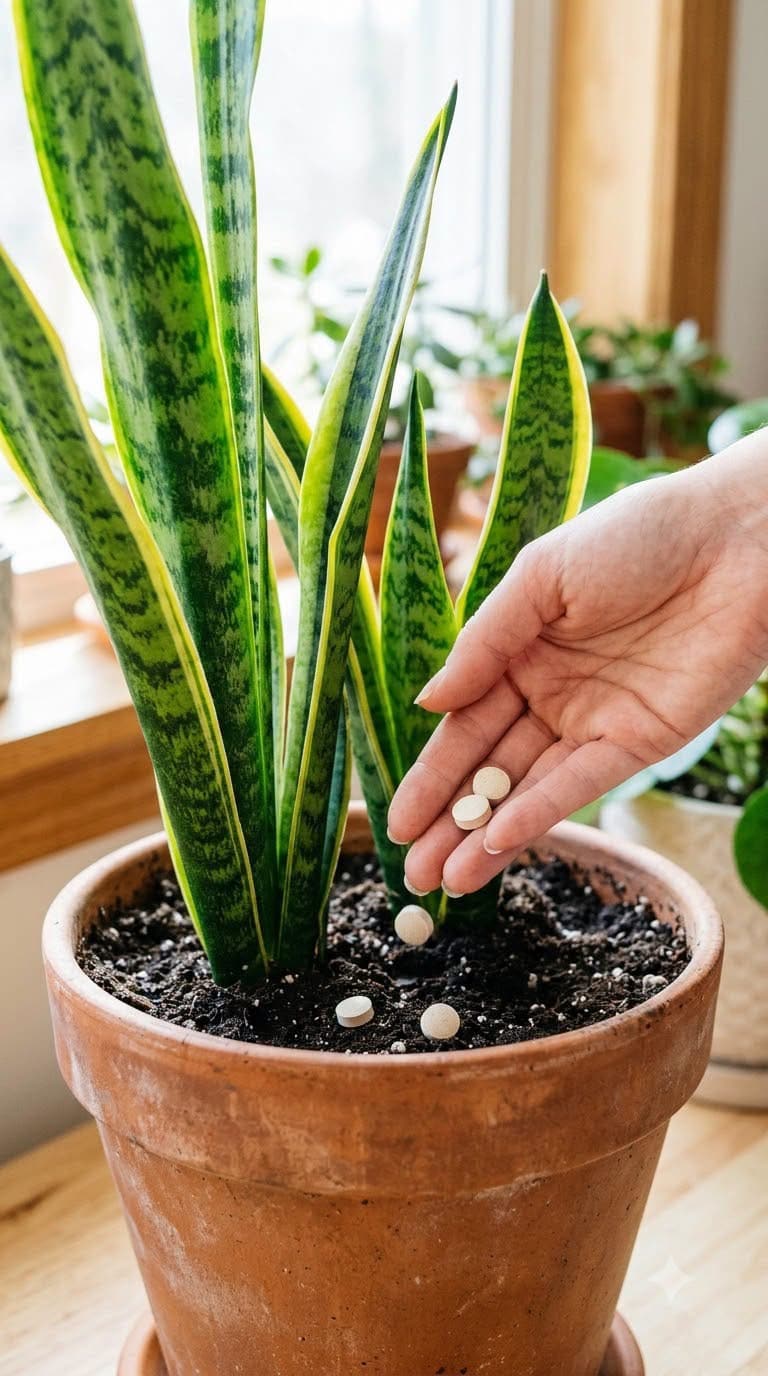
The image shows small fertilizer tablets being placed on the soil of a snake plant. These tablets can be convenient because they release nutrients gradually when the plant is watered. But the dose matters. Snake plants grow slowly, use less water than many houseplants, and are much more likely to struggle from overfeeding than from receiving too little fertilizer.
The safest method is simple: use only a light amount of slow-release fertilizer made for indoor plants, keep it away from the base of the leaves, and apply it only during the growing season. A healthy snake plant does not need frequent feeding or strong plant food.
Why Snake Plants Need a Gentle Fertilizer Routine
Snake plants, also called Sansevieria or Dracaena trifasciata, store water in their thick leaves and roots. This is why they can tolerate missed waterings and lower-light rooms better than many indoor plants.
Their slow-growing nature also means they do not need heavy feeding. Too much fertilizer can build up in the potting mix, stress the roots, cause brown leaf tips, and leave a white crust on the soil or pot.
A gentle, limited routine is much more effective than adding fertilizer often. The goal is not to force fast growth. The goal is to support healthy roots and gradual new leaves while keeping the plant stable.
What Are Slow-Release Fertilizer Tablets?
Slow-release fertilizer tablets are compact pellets or tablets that release nutrients slowly into the soil over time. They are often used for houseplants, container plants, and potted flowers.
When watered, the tablet gradually releases plant nutrients into the potting mix. This can be easier than mixing liquid fertilizer every few weeks, especially for people who prefer a simple care routine.
However, not every tablet is the same. Always read the package label first. Some are designed for outdoor plants or large containers and may be too strong for a small indoor snake plant.
Choose a balanced indoor-plant fertilizer or a product specifically labeled for houseplants. Follow the lowest recommended dose for your pot size.
The Best Time to Fertilize a Snake Plant
The best time to fertilize a snake plant is during spring and summer, when the plant naturally grows more actively.
In most homes, that means feeding from around March through August. During this period, warmer temperatures and brighter light help the plant use nutrients more effectively.
Avoid fertilizing in fall and winter. Snake plants usually grow very slowly during cooler, darker months. Adding fertilizer when the plant is resting can leave unused salts in the soil and put unnecessary pressure on the roots.
If your snake plant is in very low light, grows slowly, or has recently been repotted, use even less fertilizer than normal.
How to Use Fertilizer Tablets Safely
Step 1: Check the pot size
Start by looking at the size of your snake plant pot. A small to medium houseplant pot does not need many tablets.
For a pot around 6 to 8 inches wide, one small tablet is often enough if the product label allows it. For a larger pot, follow the manufacturer’s instructions, but stay on the light side.
More fertilizer does not create a healthier snake plant. It usually creates more risk.
Step 2: Water the plant first if the soil is very dry
Do not place fertilizer into bone-dry soil and then soak the pot heavily. If the soil is extremely dry, give the plant a normal light watering first and let excess water drain away.
This helps protect the roots from a sudden concentration of fertilizer.
Snake plants should never sit in standing water, so always make sure the pot has a drainage hole.
Step 3: Keep tablets away from the crown
Place the fertilizer tablet a few inches away from the central base of the plant, not directly against the leaves or crown.
The crown is where the leaves emerge from the soil. Keeping fertilizer away from this area reduces the chance of concentrated nutrients touching sensitive plant tissue.
For a larger pot, place the tablet near the outer part of the root zone rather than in one tight spot beside the leaves.
Step 4: Cover lightly with soil
Press the tablet gently into the top inch of soil and cover it lightly.
Do not bury it deeply against the roots, and do not leave it sitting openly on the soil surface where it can dissolve unevenly after watering.
Step 5: Water normally
After placing the tablet, continue with your normal snake plant watering routine.
Water only when the potting mix has dried out well. Depending on your home, light level, season, and pot size, that may be every two to four weeks or even less often.
Do not water more often just because fertilizer is in the soil. Overwatering is still the most common problem for snake plants.
How Often Should You Fertilize a Snake Plant?
With slow-release tablets, one light application in spring may be enough for many indoor snake plants.
Some products are designed to feed for several months. If that is the case, do not add another tablet before the first one has finished releasing nutrients.
For liquid fertilizer, a diluted feeding once every 4 to 6 weeks during spring and summer is usually more than enough.
Do not use fertilizer tablets and liquid fertilizer at the same time unless the product instructions specifically say it is safe. Combining different fertilizers can easily lead to overfeeding.
Signs Your Snake Plant May Need Nutrients
A snake plant does not need fertilizer simply because it has not grown quickly. Slow growth is normal for this plant.
But during spring or summer, a healthy plant in good light may benefit from a gentle feeding if you notice:
- New growth has been very limited for a long time
- Leaves look pale rather than naturally green
- The plant has been in the same potting mix for several years
- The plant is root-bound and has not been repotted
- You have not fertilized it at all during the growing season
Before adding fertilizer, check the basics first: light, drainage, watering, and soil condition. Fertilizer cannot fix a snake plant that is sitting in wet soil or receiving almost no light.
Signs of Too Much Fertilizer
Overfeeding often looks like a plant problem, but it is usually easy to avoid.
Watch for these signs after fertilizing:
- Brown or crispy leaf tips
- Yellowing leaves without a watering explanation
- White crust on the soil surface or pot rim
- Drooping or soft leaves
- Slow growth after a recent fertilizer application
- A sour smell from constantly damp soil
If you think the plant has too much fertilizer, stop feeding it. Flush the soil gently with water only if the pot drains well, allowing all excess water to run out. Then let the soil dry before watering again.
If the potting mix is old, compacted, or heavily crusted with fertilizer salts, repot the snake plant in fresh, well-draining soil.
The Best Soil for Snake Plants
Fertilizer works best when the roots are already in suitable soil. Snake plants need a loose, fast-draining mix that does not stay wet for a long time.
A cactus or succulent potting mix is a good choice. You can also improve regular houseplant soil by mixing in perlite, pumice, or coarse sand.
A simple blend can include:
- 2 parts cactus or succulent potting mix
- 1 part perlite or pumice
- 1 part regular indoor potting soil
The goal is to let water move through the pot easily so roots can breathe.
Heavy compact soil holds too much water, and adding fertilizer to constantly wet soil can create even more stress for the plant.
Light and Water Matter More Than Fertilizer
Fertilizer is only a small part of snake plant care. Good light and careful watering have a much bigger effect on how the plant looks.
Snake plants tolerate low light, but they grow best in bright indirect light. A spot near a window with filtered light is ideal. They can also handle some gentle morning sun.
Water only after the soil has dried out well. Push a finger several inches into the soil or lift the pot to check its weight. A dry pot is much lighter than a freshly watered one.
When it is time to water, water thoroughly until a little drains from the bottom. Empty the saucer afterward so the roots are never left sitting in water.
Easy Snake Plant Care Routine
Spring and summer:
- Keep in bright indirect light
- Water only when the soil is dry
- Use one light fertilizer application if needed
- Check leaves for dust and wipe gently with a damp cloth
Fall and winter:
- Reduce watering because the soil dries more slowly
- Do not fertilize
- Keep the plant away from cold drafts
- Make sure the pot drains fully after watering
This simple routine is often all a snake plant needs to stay upright, green, and attractive.
Common Mistakes to Avoid
Do not place fertilizer tablets directly against the plant crown. Keep them a few inches away from the base.
Do not add extra tablets because you want faster growth. Snake plants naturally grow slowly.
Do not fertilize a stressed plant immediately after overwatering, root rot, cold damage, or repotting. Fix the underlying problem first.
Do not fertilize during winter. The plant is usually resting and cannot use extra nutrients well.
Do not use a pot without drainage. Fertilizer and trapped water are a difficult combination for snake plant roots.
Do not water more frequently after fertilizing. The normal dry-between-waterings routine should stay the same.
Frequently Asked Questions
Can I use fertilizer tablets for a snake plant?
Yes, as long as the tablets are suitable for indoor plants and used in a small amount. Follow the package label and avoid overfeeding.
How many fertilizer tablets should I use?
It depends on the product and pot size. For a small or medium pot, use the lowest label recommendation. One small tablet may be enough for many houseplants.
Can I fertilize my snake plant in winter?
It is usually best not to. Snake plants grow slowly in winter, so they need little or no fertilizer during that time.
Why are my snake plant tips turning brown?
Brown tips can come from several causes, including excess fertilizer, inconsistent watering, very dry air, or mineral buildup. If you recently fertilized, reduce or stop feeding and check the soil.
Can I use regular garden fertilizer?
It is better to use a fertilizer labeled for indoor or container plants. Outdoor garden products may be too strong or not suited to a small pot.
Will fertilizer make a snake plant grow fast?
No. Fertilizer supports healthy growth, but it will not make a snake plant grow unnaturally fast. Light, warmth, root health, and watering habits all affect growth.
Final Thoughts
Slow-release fertilizer tablets can be a convenient way to feed a snake plant, but the best approach is always gentle and limited. Use a houseplant product, keep it away from the base of the leaves, and apply only a small amount during the active growing season.
A snake plant does not need constant fertilizer to look beautiful. Give it bright indirect light, a draining pot, dry soil between waterings, and light feeding only when needed. That simple care routine helps it stay strong, green, and easy to enjoy for years.