Say goodbye to crooked, stunted carrots! Discover the simple seed paste hack that ensures perfect spacing and straight roots. This easy planting technique will transform your carrot harvest.
Let me tell you about the gardening trick that turned my carrot patch from a tangle of twisted roots into a picture-perfect harvest.
I love growing carrots. There’s something magical about pulling a bright orange root from the soil—especially when it’s straight, smooth, and ready to eat. But for years, my carrots looked like they’d been through a war. Forked, stumpy, and tangled together, they were a far cry from the uniform, market‑worthy carrots I dreamed of.
I tried everything: painstakingly thinning seedlings with tweezers, switching to pelleted seeds, even building raised beds. Nothing gave me the clean, evenly spaced rows I wanted. Then a veteran gardener shared a simple trick: mix your carrot seeds into a paste and pipe them into the soil.
It sounded strange, but I tried it. Within weeks, I had perfectly spaced seedlings growing in neat, straight lines. That season, my carrots were the best I’d ever grown—straight, uniform, and plentiful.
In this guide, I’ll share this seed paste hack, along with everything else you need to know to grow beautiful, healthy carrots. Whether you’re a beginner or a seasoned gardener, this method will change the way you plant carrots forever.
Why Carrots Go Wrong (And How to Fix It)
The Spacing Problem
Carrot seeds are tiny—about the size of a grain of sand. When you sow them by hand, it’s nearly impossible to space them evenly. Overcrowded seedlings compete for nutrients and space, resulting in twisted, stunted roots.
The traditional solution is to thin seedlings after they sprout, but thinning is tedious, wasteful, and often damages nearby roots. The seed paste method solves this problem at the source: you control spacing from the very beginning.
Soil Matters
Carrots need deep, loose, rock‑free soil to grow straight. Compacted soil or hidden pebbles force roots to fork or bend. Raised beds are ideal because you can fill them with a light, fluffy mix that lets roots glide down unimpeded.
Moisture Consistency
Inconsistent watering can cause carrot roots to split or become woody. Even moisture is key, especially during germination and early root development.
The Seed Paste Hack: How It Works
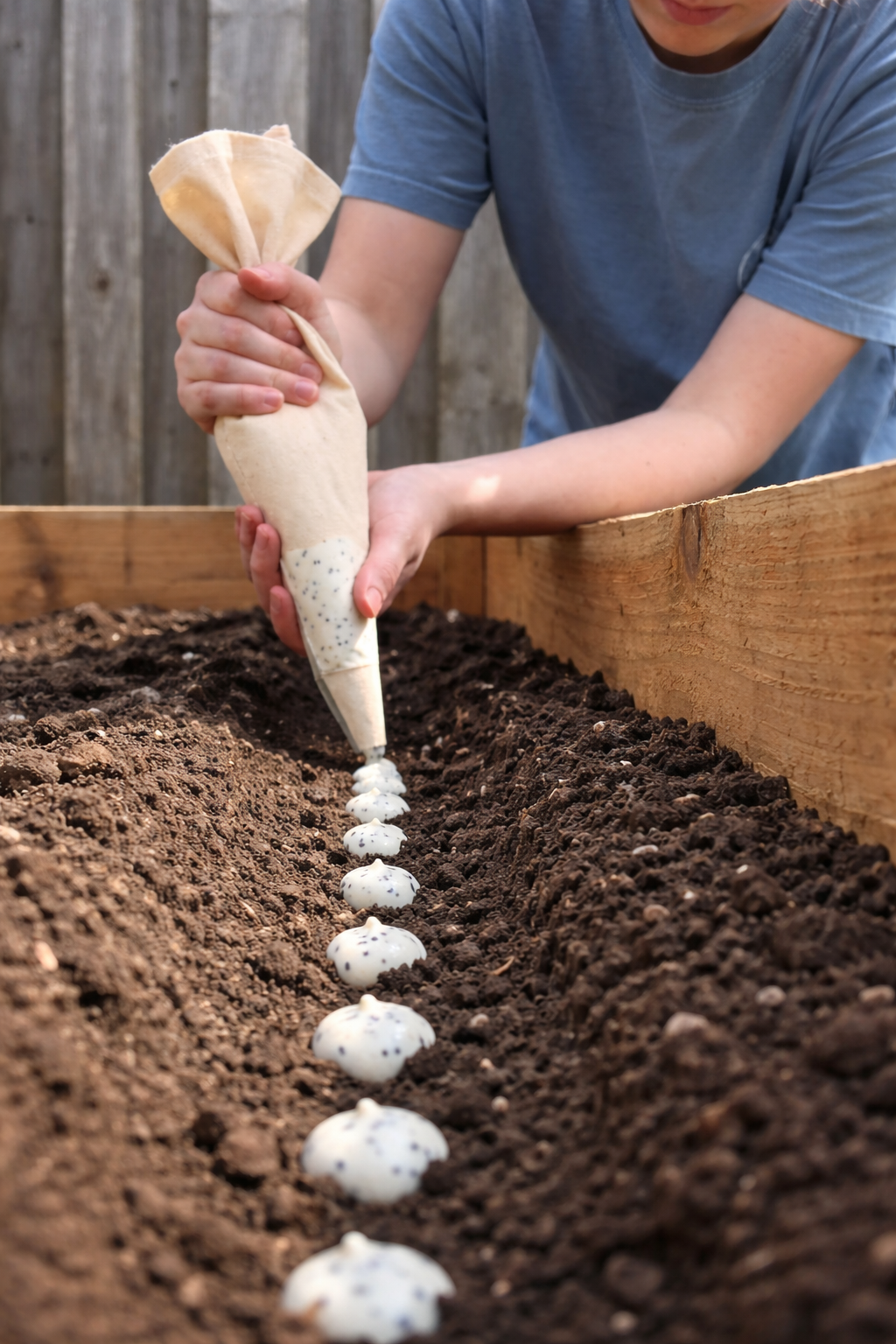
The idea is simple: create a liquid paste that carries individual seeds suspended in a flowable mixture. You pipe this paste directly into shallow furrows, depositing seeds at precise intervals. When the paste dries, it leaves the seeds perfectly spaced, eliminating the need for thinning.
Why This Method Is So Effective
· Precise Spacing – You control exactly how far apart each seed lands.
· Even Distribution – No more clumps of seedlings fighting for space.
· Reduces Thinning – Less waste, less work, less root disturbance.
· Great for Tiny Seeds – Works for carrots, lettuce, and other fine‑seeded crops.
What You’ll Need
Materials:
· Carrot seeds (fresh, high‑quality seeds)
· All‑purpose flour (or cornstarch for a smoother paste)
· Water
· Small bowl and spoon
· Piping bag (a plastic sandwich bag with a corner snipped off works perfectly)
· Garden trowel or hoe
· Raised bed or well‑prepared garden soil
Optional Additions:
· Fine sand – mixing seeds with sand is another popular method, but the paste gives more control
· Slow‑release granular fertilizer – mixed into soil before planting
· Compost – to enrich planting beds
Step-by-Step Instructions
Step 1: Prepare Your Soil
Carrots need deep, loose soil. If you’re using a raised bed, fill it with a mix of potting soil, compost, and a little sand for drainage. For in‑ground beds:
· Loosen soil to at least 10–12 inches deep.
· Remove rocks, clumps, and debris.
· Work in 2–3 inches of compost to improve texture and fertility.
Step 2: Create Shallow Rows
Using a hoe or the edge of a trowel, draw shallow furrows about ¼ inch deep. Rows should be spaced 8–12 inches apart. Keep them straight—this will help later with watering and weeding.
Step 3: Make the Seed Paste
In a small bowl, mix:
· 1 tablespoon flour (or cornstarch)
· 1 tablespoon water
Stir until you have a smooth, thick paste. Add more water a few drops at a time until the mixture is the consistency of thin paint—fluid enough to flow through a piping bag, but thick enough to hold seeds suspended.
Step 4: Add the Seeds
Sprinkle your carrot seeds into the paste and stir gently. Use about ½ teaspoon of seeds per batch of paste. You want a few seeds per inch of row—adjust the seed count based on the length of your furrows.
Step 5: Pipe Into the Furrows
Spoon the seed‑paste mixture into a small plastic bag. Snip off a tiny corner (about ⅛ inch). Squeeze the bag gently, piping the paste in a continuous, thin stream along each furrow. Aim for a steady, even flow.
Step 6: Cover Lightly
Sprinkle a thin layer of fine soil or vermiculite over the seeded furrows. Do not pack down—carrot seeds need light to germinate.
Step 7: Water Gently
Use a fine mist or a watering can with a rose attachment to moisten the soil. Keep the area consistently moist but not waterlogged until seeds germinate. Carrots can take 1–3 weeks to sprout, depending on temperature.
Step 8: Maintain Moisture and Mulch
Once seedlings appear, water deeply once or twice a week. A thin layer of straw or shredded leaves helps retain moisture and suppress weeds.
Pro Tips for Perfect Carrots
- Use Fresh Seeds
Carrot seeds lose viability quickly. Buy new seeds each year or use seeds stored properly in a cool, dry place.
- Plant at the Right Time
Carrots are cool‑season crops. Sow seeds as soon as soil can be worked in spring, or plant in late summer for a fall harvest.
- Keep Soil Weed‑Free
Weeds compete for nutrients and can shade young seedlings. Hand‑pull carefully or use mulch to suppress them.
- Water Evenly
Avoid letting the soil dry out, then soaking it. Erratic moisture can cause splitting. A soaker hose or drip irrigation helps maintain consistent moisture.
- Thin If Needed
Even with perfect spacing, sometimes a few extra seeds sprout. If seedlings are too close, snip the extras at the soil line with scissors—don’t pull, as that can disturb nearby roots.
Delicious Variations
- Rainbow Carrots
Plant a mix of orange, purple, yellow, and white carrot seeds. The paste method works for all colors.
- Short‑Season Varieties
If your soil is shallow, try ‘Chantenay’ or ‘Parisian’ types. They stay compact and still grow straight.
- Succession Planting
Sow a new row every 2–3 weeks for a continuous harvest through the season.
- Container Carrots
Use the paste method in deep containers (at least 12 inches). Fill with loose potting mix and follow the same steps.
Troubleshooting Common Carrot Problems
Problem Likely Cause Solution
Forked or twisted roots Compacted soil or rocks Deep‑loosen soil, remove stones, plant in raised beds
Stunted growth Overcrowding Use seed paste for proper spacing, thin if needed
Cracked roots Inconsistent watering Water deeply and evenly; use mulch
Pale or bitter taste Heat stress or old seeds Harvest before hot weather; use fresh seeds
Poor germination Soil crusting or dry conditions Keep soil moist; cover with vermiculite
Frequently Asked Questions (FAQs)
Q: Can I use cornstarch instead of flour?
A: Yes. Cornstarch makes a smoother paste and works equally well. Both are fine.
Q: How long does the seed paste last?
A: Use it immediately. The paste will start to dry and become difficult to pipe within an hour.
Q: Do I need to refrigerate the mixture?
A: No. Just mix and use right away.
Q: Will the flour attract pests?
A: It’s unlikely in small amounts. Once covered with soil, pests aren’t attracted.
Q: Can I use this method for other vegetables?
A: Absolutely! Lettuce, radishes, onions, and other tiny‑seeded crops work beautifully with the same technique.
Q: How many seeds should I put in the paste?
A: For a standard 4‑foot row, about ¼ teaspoon of seeds per batch is plenty. Adjust based on your row length.
Nutritional Information (per 1 medium carrot)
Nutrient Amount
Calories 25
Carbohydrates 6g
Fiber 2g
Vitamin A 200% DV
Vitamin K 10% DV
Potassium 7% DV
Source: USDA
Conclusion
Growing perfect carrots doesn’t have to be a struggle. With the seed paste hack, you can say goodbye to crooked, crowded roots and hello to a harvest of straight, healthy carrots. This simple method gives you control over spacing from the moment you plant, saving time and frustration.
I hope this guide has given you the confidence to try this technique in your own garden. Whether you’re working with a large raised bed or a few containers on a patio, the seed paste method will help you grow carrots that look as good as they taste.
Now it’s your turn! Grab your seeds, mix up a batch of paste, and get planting. When you pull your first perfect carrot, we’d love to hear about it. Leave a comment below and share your success!
And if you’re looking for more garden tips and tricks, check out our guides for Growing Potatoes in Bags, Container Tomatoes, and Succession Planting for Continuous Harvests.
Happy gardening! 🥕🌱✨
Did you try the seed paste hack? We’d love to see your carrot harvest! Leave a comment below and share your photos. Don’t forget to pin this guide for your spring planting plans!
More Recipes You Might Like
-

Why Some Homeowners Are Using Onion Water Around Orchids and What Usually Helps More for Strong Roots, Healthy Leaves, and Long-Lasting Blooms
Orchids are among the most elegant indoor flowering plants for homeowners who want graceful stems, glossy green leaves, long-lasting blooms, and a refined decorative display that fits beautifully in living rooms, bedrooms, apartments, home offices, bright kitchens, windowsills, covered patios, commercial interiors, luxury home staging, and premium indoor plant styling. A healthy orchid can turn…
-

Why Some Homeowners Are Pouring Aloe Water Around Orchids and What Usually Helps More for Strong Roots, Healthy Leaves, and Long-Lasting Blooms
Orchids are among the most elegant indoor flowering plants for homeowners who want graceful blooms, sculptural roots, glossy leaves, and a premium decorative display that fits beautifully in living rooms, bedrooms, apartments, home offices, bright kitchens, balcony gardens, covered patios, commercial interiors, luxury home staging, and refined indoor plant styling. A healthy orchid can make…
-
Why Some Homeowners Are Adding Brown Powder Around Snake Plants and What Usually Helps More for Strong Roots, Fuller Growth, and Healthy Indoor Leaves
Snake plant is one of the most dependable indoor plants for homeowners who want strong upright leaves, bold green patterning, yellow-edged variegation, easy maintenance, and a clean decorative display that fits beautifully in living rooms, bedrooms, apartments, home offices, bright kitchens, entry corners, sunny windowsills, plant shelves, commercial interiors, luxury home staging, and premium indoor…