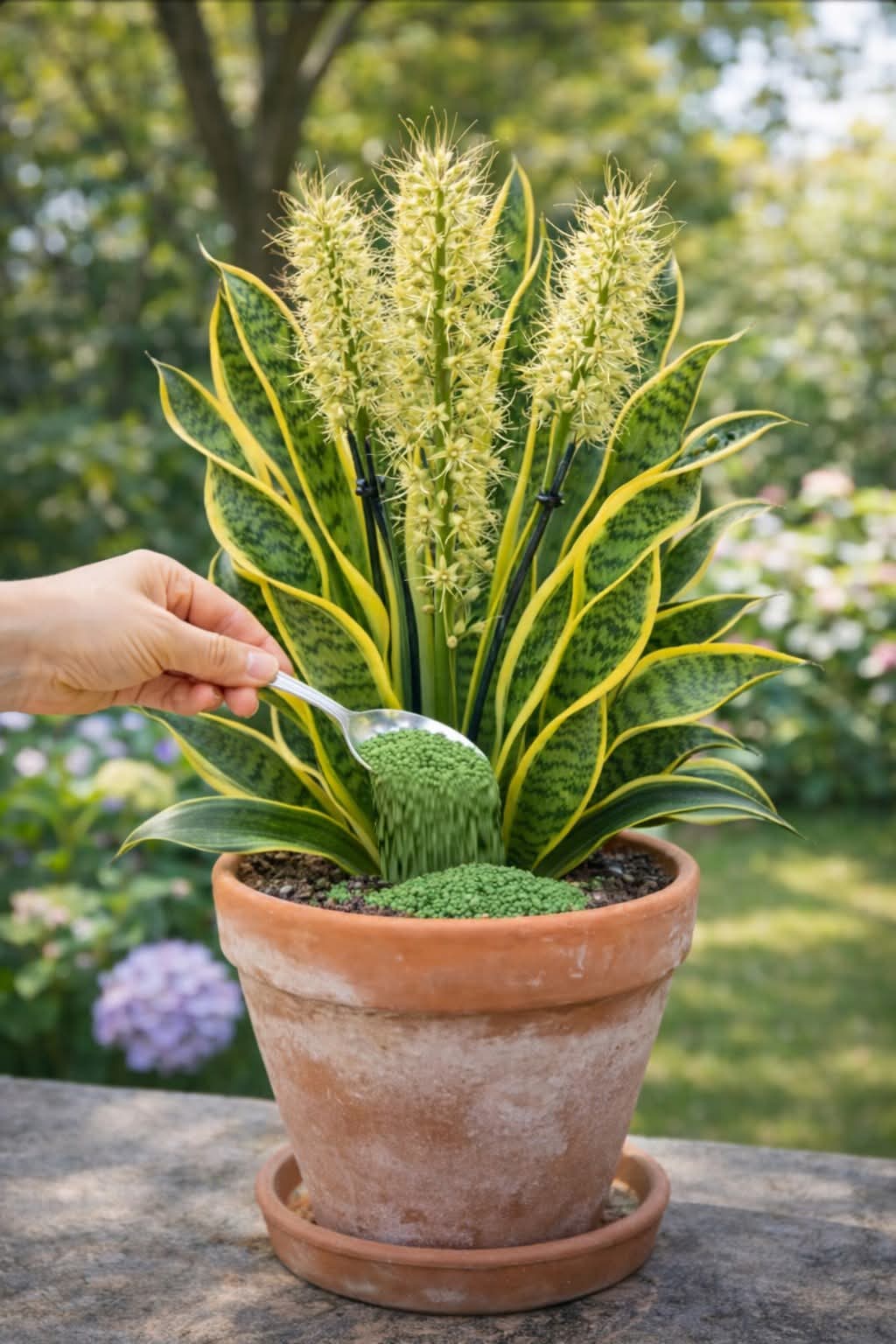
Those tiny green pellets for snake plants are going viral! 🌱 Learn what they are, whether they actually work, and how to safely use slow-release fertilizer for your Sansevieria. Plus, 7 essential care tips!
If you’ve been scrolling through plant TikTok or Instagram lately, you’ve probably seen it: those little green pellets being sprinkled into snake plant pots with captions like “This changed everything!” or “Why didn’t anyone tell me this sooner?” 🌿
The plant community is buzzing about these tiny fertilizer pellets, and people are claiming everything from faster growth to more pups to miraculously revived dying plants. But before you run to the store or add them to your cart, let’s take a closer look.
As someone who’s been growing snake plants (Sansevieria, now reclassified as Dracaena trifasciata) for years, I’ve learned that these hardy plants don’t need much—but when you give them the right nutrients, they can absolutely thrive . The secret isn’t magic pellets; it’s understanding what your plant actually needs.
In this guide, I’ll break down what those “tiny green pellets” really are, whether they actually work, and most importantly—how to keep your snake plant healthy and thriving for years to come.
What Are Those Tiny Green Pellets?
The mysterious green pellets you’ve been seeing everywhere are most likely slow-release fertilizer pellets or controlled-release fertilizer granules.
These small, often green or beige pellets are designed to release nutrients gradually over time—typically 3 to 9 months, depending on the formulation . They’re commonly found in:
· Commercial potting mixes (pre-mixed into the soil)
· Standalone fertilizer products (meant to be sprinkled on top of soil)
· “Plant food spikes” or capsules
What’s Actually Inside Them?
Most slow-release fertilizers contain a balanced blend of:
· Nitrogen (N) – Promotes healthy leaf growth and rich green color
· Phosphorus (P) – Supports root development and encourages new pups
· Potassium (K) – Strengthens the plant overall and aids disease resistance
A balanced formula like 10-10-10 or 20-20-20 is often recommended for snake plants . Some products may also contain micronutrients like iron, magnesium, and calcium.
Do These Pellets Actually Work for Snake Plants?
Short answer: Yes, but with important caveats.
When Fertilizer Helps
Snake plants are famously low-maintenance and can survive for long periods without fertilizer . However, if you want to encourage faster growth, more pups, or revive a plant that’s looking pale and weak, a gentle nutrient boost can make a real difference .
Signs your snake plant might benefit from fertilizer:
· Leaves look pale or yellowish
· Growth has slowed significantly or stopped
· The plant hasn’t produced any new pups in over a year
· It’s been in the same soil for 2+ years without fresh nutrients
The Risks of Using Pellets Incorrectly
Here’s where the “hack” can go wrong. Snake plants are sensitive to over-fertilizing, and too much—or the wrong kind—can actually damage them .
Problems from over-fertilizing include:
· Fertilizer burn – brown or crispy leaf tips and edges
· Salt buildup – a white crust on the soil surface
· Root damage – mushy, rotting roots
· Leaf yellowing or drooping
· Death in severe cases
I’ve seen reviews where people lost their snake plants after using certain fertilizer pellets—one reviewer said their plant of over four years died after adding a product . While the specific product in that case may have been poor quality or misused, it’s a reminder that more isn’t always better.
How to Use Slow-Release Fertilizer Pellets Safely
If you decide to try slow-release pellets, follow these guidelines to protect your plant:
- Choose the Right Product
· Look for a balanced formula (10-10-10 or similar)
· Opt for slow-release pellets, not instant liquid fertilizer
· If possible, choose a product specifically labeled for succulents or indoor plants
- Apply During Growing Season Only
· Snake plants grow actively in spring and summer
· Do not fertilize in fall or winter when the plant is semi-dormant
· Fertilizing during dormancy can lead to weak, leggy growth
- Use Half the Recommended Strength
· Most experts recommend diluting or using half the amount suggested on the package
· With pellets, use about half what the label says for other houseplants
· You can always add more later, but you can’t remove excess once it’s in the soil
- Water First
· Always water your snake plant before applying fertilizer
· Fertilizing dry soil can concentrate salts and cause root burn
· Pellets work best when the soil is slightly moist
- Apply Evenly and Don’t Overcrowd
· Sprinkle pellets evenly around the base of the plant, not touching the leaves
· Keep them away from the center (crown) where new leaves emerge
· Don’t pile them up—spread them out
- Watch Your Plant’s Response
· If you notice brown tips, yellowing, or any signs of stress, stop fertilizing
· Flush the soil with plain water to remove excess nutrients
The “Golden Liquid” Alternative: Natural Fertilizers That Work
If you’re hesitant about chemical pellets, there’s a whole world of natural, kitchen-scrap fertilizers that snake plants love—and they’re totally free.
Banana Peel Water (The “Golden Liquid”)
This is one of the most popular natural fertilizers for snake plants . It’s rich in potassium and phosphorus, which support root strength and encourage new pups .
How to make it:
- Chop 1–2 banana peels into small pieces
- Soak them in 1 liter of room-temperature water for 24–48 hours
- Strain out the peels
- Use the golden liquid to water your plant once a month during spring and summer
Coffee Grounds
Used coffee grounds provide a gentle source of nitrogen, which supports healthy leaf growth .
How to use: Dry the grounds completely, then mix a small amount (1–2 tablespoons) into the topsoil every 4–6 weeks .
Rice Water
The cloudy water from rinsing rice contains B vitamins, starch, and trace minerals that can gently nourish your plant .
How to use: Use the rinse water (plain, unsalted) to water your snake plant once every 2–3 weeks .
Eggshell Powder
Crushed eggshells provide calcium, which strengthens cell walls and supports overall plant structure .
How to use: Rinse and dry eggshells, grind into a fine powder, and sprinkle on the soil .
Epsom Salt Solution
Epsom salt provides magnesium and sulfur, which can improve leaf color and help roots absorb nutrients more effectively .
How to use: Mix 1 tablespoon of Epsom salt in 1 liter of water. Use once a month during the growing season .
The Golden Rule: Less Is More
Across every source I’ve consulted—from university extensions to master gardeners—one message is clear: snake plants thrive on neglect .
These plants are native to tropical West Africa and are built to survive in tough conditions. In your home, they don’t need constant attention, fancy products, or heavy feeding .
How Often Should You Fertilize?
· During growing season (spring & summer): Once every 4–8 weeks
· During dormancy (fall & winter): No fertilizer at all
Most experts recommend using a balanced fertilizer diluted to half strength . For slow-release pellets, a single application in spring can last the whole season.
7 Essential Care Tips for a Thriving Snake Plant (Beyond the Pellets)
Fertilizer is just one piece of the puzzle. Here’s everything else your snake plant needs to grow strong and healthy.
- Give It Bright, Indirect Light 🌞
This is the most important factor for growth. Snake plants are often labeled “low-light,” but they won’t grow much in dim conditions .
What to do:
· Place near an east-facing window for gentle morning sun
· A south- or west-facing window works too, but use a sheer curtain to filter harsh afternoon rays
· Aim for 6–8 hours of bright, indirect light daily
· Rotate the pot every 10–14 days so all sides grow evenly
Signs of too much light: Bleached patches or crispy leaf edges
Signs of too little light: Pale leaves, slow growth, or the plant leaning toward the window
- Water Deeply but Infrequently 💧
Overwatering is the #1 killer of snake plants . Remember, these are succulents—they store water in their thick leaves and rhizomes.
What to do:
· Let the soil dry out completely between waterings
· In bright, warm conditions: water every 2–3 weeks
· In low light or winter: water every 4–6 weeks
· When you water, give it a deep, thorough soak until water runs out the drainage holes
· Never let the plant sit in standing water
- Use Well-Draining Soil and a Pot with Drainage Holes
Regular potting soil holds too much moisture for snake plants.
What to use:
· Cactus or succulent mix is ideal
· Or make your own: mix regular potting soil with perlite and sand (about 1:1:1 ratio)
· Choose terracotta pots—they wick away excess moisture better than plastic
- Keep the Plant Slightly Root-Bound
Snake plants grow best when they feel a little crowded. Don’t rush to repot .
What to do:
· Only repot when roots are cracking the pot or growing out of drainage holes
· When repotting, only go one size up (2 inches wider)
· Many snake plants can go 5 years or more without repotting
- Keep Temperatures Warm
As tropical plants, snake plants prefer warmth and dislike cold drafts .
Ideal conditions:
· Daytime: 70–80°F (21–27°C)
· Nighttime: 60–70°F (15–21°C)
· Avoid placing near drafty windows, exterior doors, or AC vents
- Don’t Separate the Pups
When your snake plant produces baby shoots (pups), leaving them attached creates a fuller, bushier plant .
What to do:
· If you want one big, thick plant, keep the pups with the mother plant
· Only separate pups if you want to propagate new plants
· Pups also help support the base and prevent leaning
- Dust the Leaves Regularly
Dust buildup blocks light absorption and can make leaves look dull .
What to do:
· Wipe leaves with a soft, damp cloth once a month
· Support each leaf from behind while wiping the front
· Avoid leaf shine products—they clog the pores on leaves
Frequently Asked Questions
Q: Can I use those green fertilizer pellets on my snake plant?
A: Yes, but use them sparingly. Choose a balanced slow-release formula, apply only during spring/summer, and use about half the recommended amount. Always water first .
Q: How often should I fertilize my snake plant?
A: Once every 4–8 weeks during the growing season (spring and summer). No fertilizer in fall or winter .
Q: My snake plant has brown tips. Did I over-fertilize?
A: Brown tips can indicate fertilizer burn, but also low humidity, underwatering, or too much direct sun. Stop fertilizing and flush the soil with water .
Q: What’s the best natural fertilizer for snake plants?
A: Banana peel water (“golden liquid”) is excellent for encouraging pups. Coffee grounds provide gentle nitrogen, and rice water offers trace minerals .
Q: Why isn’t my snake plant growing?
A: Most likely issues: not enough light, overwatering, or lack of nutrients. Move it to a brighter spot, let the soil dry completely between waterings, and add gentle fertilizer during spring .
Q: How do I know if my snake plant needs fertilizer?
A: Signs include pale leaves, very slow growth, no new pups for over a year, or soil that hasn’t been refreshed in 2+ years .
Conclusion
Those tiny green pellets floating around plant social media aren’t magic, but they can be helpful—if used correctly. The real secret to a thriving snake plant isn’t a viral hack or a single product; it’s understanding what this resilient plant actually needs: bright light, infrequent watering, well-draining soil, and just a little food during growing season .
Before you reach for any fertilizer—pellets, liquid, or homemade—check your plant’s foundation first. Is it getting enough light? Is the soil drying out properly? Are the roots healthy?
If those basics are covered, a gentle nutrient boost can absolutely help your snake plant grow faster, produce more pups, and look its best. Just remember the golden rule of snake plant care: less is more .
Have you tried any snake plant hacks? What’s worked for you? Share your experiences in the comments below!
And if you’re looking for more plant care tips, check out our guides for How to Propagate Snake Plants, Natural Fertilizers for Houseplants, and The Best Soil Mix for Succulents.
Happy planting! 🌿✨
Did this article help? Share it with a fellow plant lover who’s been asking about those green pellets!
More Recipes You Might Like
-

Why Some Homeowners Are Using Onion Water Around Orchids and What Usually Helps More for Strong Roots, Healthy Leaves, and Long-Lasting Blooms
Orchids are among the most elegant indoor flowering plants for homeowners who want graceful stems, glossy green leaves, long-lasting blooms, and a refined decorative display that fits beautifully in living rooms, bedrooms, apartments, home offices, bright kitchens, windowsills, covered patios, commercial interiors, luxury home staging, and premium indoor plant styling. A healthy orchid can turn…
-

Why Some Homeowners Are Pouring Aloe Water Around Orchids and What Usually Helps More for Strong Roots, Healthy Leaves, and Long-Lasting Blooms
Orchids are among the most elegant indoor flowering plants for homeowners who want graceful blooms, sculptural roots, glossy leaves, and a premium decorative display that fits beautifully in living rooms, bedrooms, apartments, home offices, bright kitchens, balcony gardens, covered patios, commercial interiors, luxury home staging, and refined indoor plant styling. A healthy orchid can make…
-
Why Some Homeowners Are Adding Brown Powder Around Snake Plants and What Usually Helps More for Strong Roots, Fuller Growth, and Healthy Indoor Leaves
Snake plant is one of the most dependable indoor plants for homeowners who want strong upright leaves, bold green patterning, yellow-edged variegation, easy maintenance, and a clean decorative display that fits beautifully in living rooms, bedrooms, apartments, home offices, bright kitchens, entry corners, sunny windowsills, plant shelves, commercial interiors, luxury home staging, and premium indoor…