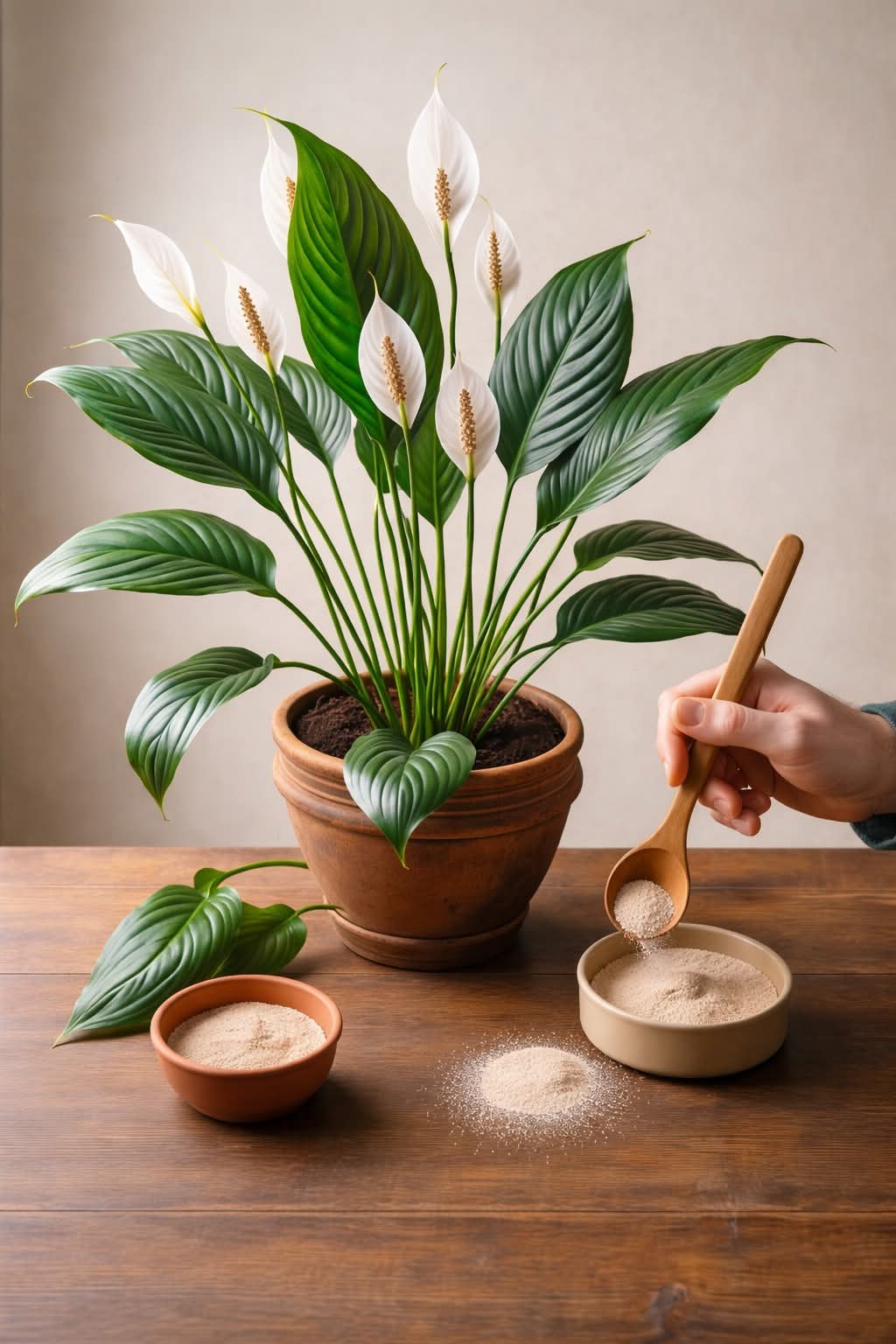
Is your peace lily refusing to bloom? You’re not alone. Discover the simple one‑cup natural mix that can encourage those elegant white flowers to reappear. Easy, organic, and surprisingly effective.
If your peace lily isn’t blooming as much as you’d like, you’re not alone. Many plant lovers struggle to get those elegant white flowers to appear consistently. You water it regularly, you’ve placed it in what you think is the perfect spot, and yet… nothing. Just lush green leaves, but no blooms.
I’ve been there. My first peace lily was a gift, and when it arrived it was covered in gorgeous white spathes. But after a few months, the flowers faded and never returned. I tried moving it, adjusting my watering, even talking to it (don’t judge). It wasn’t until I discovered a simple, natural boost that everything changed.
The good news? A gentle, homemade one‑cup mix can make a big difference—and it takes almost no effort. In this guide, I’ll show you exactly how to give your peace lily the nutrients it craves to produce those stunning blooms again. No expensive products, no complicated routines. Just a few kitchen ingredients and a little patience.
Why Peace Lilies Stop Blooming
Before we dive into the solution, let’s understand why peace lilies sometimes refuse to bloom even when they look healthy.
- Light (The #1 Factor)
Peace lilies are often marketed as “low‑light plants,” but that’s a bit misleading. They survive in low light, but they won’t bloom there. Without enough bright, indirect light, the plant focuses all its energy on leaves and simply doesn’t have the resources to produce flowers.
- Nutrient Deficiency
Over time, potting soil becomes depleted of essential nutrients, especially phosphorus and potassium—the two nutrients most responsible for flowering. Even with regular watering, the plant can be quietly starving.
- Pot Size & Root Bound
Peace lilies actually bloom best when they’re slightly root‑bound. If you’ve recently repotted into a very large container, the plant may be putting all its energy into root growth instead of flowers.
- Temperature & Humidity
As tropical plants, peace lilies prefer warm temperatures (65–80°F) and moderate humidity. Cool drafts or dry air can stress the plant and inhibit blooming.
- Age
Young peace lilies may need a year or two to mature before they begin flowering regularly. If your plant is still small, patience is key.
The One‑Cup Natural Boost That Works
After researching and testing various methods, I found that a simple, diluted organic supplement can give peace lilies the gentle push they need to produce flowers. The key ingredients? Rice water or mild compost tea. Both are rich in the nutrients that support blooming—especially potassium and phosphorus—without the risk of chemical burn.
Why Rice Water?
When you rinse rice, the water becomes cloudy with starches, B vitamins, and trace minerals. These feed beneficial soil microbes and provide a gentle source of phosphorus and potassium. Many gardeners swear by rice water for encouraging blooms in a variety of houseplants, and peace lilies are no exception.
Why Compost Tea?
If you have a compost bin, steeping finished compost in water creates a nutrient‑dense “tea” packed with beneficial bacteria, fungi, and a balanced array of plant nutrients. It’s nature’s perfect fertilizer.
Step‑by‑Step: How to Make and Apply Your One‑Cup Boost
Option 1: Rice Water
Ingredients:
· ½ cup uncooked rice (white, brown, or jasmine)
· 2 cups water (filtered or dechlorinated is best)
· A jar or bowl
Instructions:
- Place the rice in a bowl and cover with 2 cups of water. Swirl gently for about 30 seconds.
- Strain the rice, reserving the cloudy water. (You can cook the rice as usual—no waste!)
- Let the rice water sit at room temperature for up to 24 hours if you like, but it can be used immediately.
- Dilute the rice water with an equal amount of plain water (1:1 ratio) before using. This prevents any chance of nutrient overload.
Option 2: Mild Compost Tea
Ingredients:
· 1 cup finished compost (from your compost bin or bagged organic compost)
· 1 gallon water (filtered or dechlorinated)
· A cloth bag or old pantyhose (optional, for easy straining)
Instructions:
- Place the compost in a cloth bag or directly into a large container with water.
- Let it steep for 24–48 hours, stirring occasionally.
- Strain the liquid through a fine‑mesh sieve or cheesecloth to remove solids.
- Dilute the compost tea with an equal amount of plain water (1:1) for a gentle strength.
How to Apply
· Water first – Always water your peace lily with plain water before applying any fertilizer. This prevents root burn.
· Pour one cup of your diluted mix gently into the soil around the plant, avoiding the leaves.
· Frequency – Apply once every 2–3 weeks during the growing season (spring through early fall). Stop in winter when the plant rests.
Pro Tips for Maximum Blooms
The one‑cup boost works best when combined with proper care. Here’s how to set your peace lily up for success.
- Give It Bright, Indirect Light
Place your peace lily near an east‑facing window where it can get gentle morning sun. A north‑facing window also works. If you only have a south or west window, set the plant a few feet back or use a sheer curtain to filter harsh rays. Aim for 6–8 hours of bright, indirect light daily.
- Water Correctly
Peace lilies are dramatic—they droop when thirsty. Water when the top inch of soil feels dry, using room‑temperature, filtered water if possible. Never let the pot sit in standing water.
- Increase Humidity
These tropical beauties love humidity. If your home is dry (especially in winter):
· Mist the leaves lightly every few days
· Place the pot on a pebble tray filled with water
· Run a small humidifier nearby
- Clean the Leaves
Dust blocks light absorption. Wipe the large, glossy leaves with a damp cloth every few weeks to keep them photosynthesizing efficiently.
- Keep Temperatures Consistent
Aim for daytime temperatures of 65–80°F (18–27°C) and nighttime temperatures slightly cooler. Avoid placing the plant near drafty windows, air conditioners, or heating vents.
- Don’t Repot Too Often
Peace lilies bloom best when slightly root‑bound. Only repot when roots are visibly crowded or when the plant dries out extremely quickly. When you do repot, go up just one pot size.
Delicious Variations: Other Natural Boosters
Rice water and compost tea are my favorites, but you can also experiment with these gentle alternatives.
Banana Peel Water
Soak 1–2 banana peels in 1 liter of water for 24–48 hours. Strain and dilute with an equal amount of plain water. Banana peels are rich in potassium, which directly supports flower production.
Eggshell Water
Rinse and crush a few eggshells, then soak in water for 2–3 days. Strain and use. Eggshells provide calcium, which strengthens cell walls and helps flowers last longer.
Molasses Water
Mix 1 teaspoon of unsulfured blackstrap molasses into 1 liter of water. Molasses feeds beneficial soil microbes, which in turn help roots absorb nutrients more efficiently. Use sparingly (once a month).
Epsom Salt Solution
Dissolve 1 teaspoon of Epsom salt in 1 gallon of water. Use once every 6–8 weeks during the growing season. The magnesium and sulfur support chlorophyll production and nutrient absorption.
Frequently Asked Questions
Q: How long after using this boost will my peace lily bloom?
A: With consistent care and proper light, you may see buds forming within 4–8 weeks. Patience is key—if your plant is healthy, it will respond.
Q: Can I use rice water every time I water?
A: No. Use it only once every 2–3 weeks. Over‑fertilizing can lead to salt buildup and brown leaf tips.
Q: My peace lily has brown tips. What’s wrong?
A: Brown tips usually indicate low humidity, tap water chemicals, or inconsistent watering. Switch to filtered water, increase humidity, and water when the top inch of soil is dry.
Q: Should I cut off old flower stalks?
A: Yes. Once a flower fades, cut the stalk at the base. This directs the plant’s energy toward new growth and future blooms.
Q: Can I use this method on other flowering houseplants?
A: Absolutely! Peace lilies, orchids, African violets, and many others benefit from gentle natural fertilizers.
Q: Is it safe to use rice water on peace lilies?
A: Yes, as long as it’s diluted and used moderately. Avoid salted or seasoned rice water.
Q: Why are my peace lily leaves turning yellow?
A: Yellowing can be a sign of overwatering, underwatering, or natural aging. If it’s the lower leaves, it’s normal. If it’s widespread, check your watering routine.
Final Thoughts: Small Changes, Big Results
When my peace lily finally bloomed again after months of nothing, I felt like I’d discovered a secret superpower. But the truth is, it wasn’t magic—it was simply giving the plant the gentle nutrients it was missing.
The one‑cup rice water or compost tea trick is a simple, natural way to boost your peace lily’s health and encourage those beautiful white blooms. Combined with proper light, watering, and a little patience, you’ll be rewarded with lush foliage and flowers that brighten any room.
Now it’s your turn! Have you tried a natural fertilizer for your peace lily? What worked for you? Share your experiences in the comments below.
And if you’re looking for more plant care tips, check out our guides for Reviving a Snake Plant, Making Orchids Rebloom, and Natural Pest Control for Houseplants.
Happy blooming! 🌿🌸✨
Did this trick work for your peace lily? We’d love to see your before and after photos! Leave a comment below and share your success.