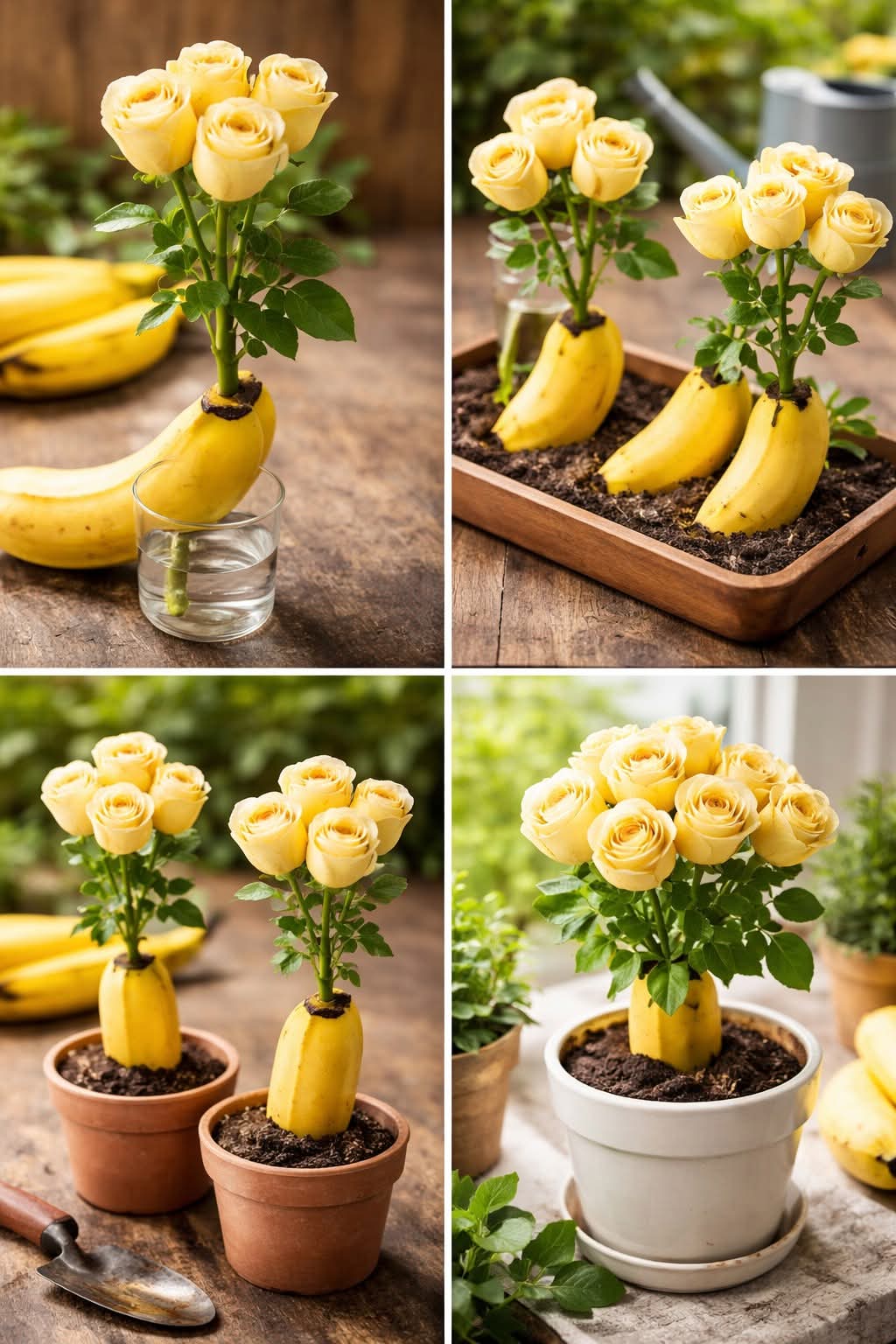
If you love roses but have struggled to propagate them successfully, you’re not alone. Rose cuttings can be notoriously finicky—they often dry out or rot before roots ever form. But there’s a surprising, natural solution that might already be in your kitchen: a simple banana.
This method has been gaining attention among gardeners for its effectiveness, and today I’ll show you exactly how to do it, step by step.
Why Bananas Work for Rose Propagation
Before diving into the technique, let’s understand why this humble fruit is so effective:
· Natural Rooting Hormones – Bananas contain small amounts of auxins, plant hormones that naturally stimulate root development
· Rich in Nutrients – Packed with potassium, phosphorus, magnesium, and calcium—all essential for strong root growth
· Moisture Retention – The soft, moist texture keeps cuttings hydrated during the critical rooting period
· Antimicrobial Properties – Compounds in bananas help protect cuttings from rot and fungal infections
· Slow-Release Fertilizer – As the banana decomposes, it releases nutrients gradually, feeding the developing roots
What You’ll Need
· Healthy rose cuttings – 6–8 inches long, from a disease-free bush
· Ripe organic bananas (1–2, depending on how many cuttings you’re propagating)
· Sharp pruning shears or knife
· Small pots or containers with drainage holes
· Well-draining potting soil (mix 2 parts garden soil, 1 part sand, and 1 part coarse sand for best results)
· Clear plastic bag or plastic wrap (to create humidity)
· Watering can
Method 1: The Banana Piece Method (Simplest)
This is the most straightforward technique—perfect for beginners.
Step 1: Prepare Your Rose Cutting
- Select a healthy rose stem about the thickness of a pencil.
- Cut a 6–8 inch section at a 45° angle, just below a leaf node (the small bump where leaves emerge) .
- Remove all leaves from the bottom half of the cutting, leaving only 1–2 leaves at the top.
- Gently scrape away a thin strip of bark from the bottom 1–2 inches of the stem. This exposes the cambium layer where roots will form .
Step 2: Prepare the Banana
Take a ripe banana and cut it into 2–3 large chunks. Using your knife or finger, make a small hole in the center of each piece—deep enough to insert the rose cutting .
Step 3: Insert the Cutting
Gently push the bottom of your rose cutting into the hole you made. Make sure the area where you removed the bark is fully surrounded by banana flesh .
Step 4: Plant It
Dig a hole in your pot large enough to accommodate the banana chunk. Place the banana with the cutting into the soil and cover completely, leaving only the top of the rose stem exposed .
Step 5: Create Humidity
Cover the pot with a clear plastic bag or wrap to create a mini greenhouse. This traps moisture and encourages rooting. Make sure the plastic doesn’t touch the leaves—use small sticks to prop it up if needed .
Step 6: Water and Wait
Keep the soil moist but not waterlogged. Place the pot in a warm spot with bright, indirect sunlight. Avoid direct sun, which can overheat the cutting .
Method 2: Banana Paste Method (Even Easier)
This version uses mashed banana as a rooting gel.
Step 1: Prepare the Cutting
Follow the same steps as above to prepare your rose cutting (45° cut, remove lower leaves, gently scrape the bottom) .
Step 2: Make Banana Paste
Mash a ripe banana into a smooth paste using a fork .
Step 3: Coat the Cutting
Dip the cut end of the rose cutting into the banana paste, coating it thoroughly .
Step 4: Plant
Insert the coated cutting into a pot filled with well-draining potting soil. Gently firm the soil around it .
Step 5: Create Humidity and Care
Cover with a plastic bag and water lightly, keeping the soil moist. Place in indirect light .
How Long Does It Take?
· 3–4 weeks – You should see new growth at the top of the cutting, a good sign that roots are forming below
· 4–6 weeks – Gently tug on the cutting; if you feel resistance, roots have developed
· 2 months – After about 60 days, the banana will have decomposed into rich, fertile soil, and your cutting will have a strong, healthy root system ready for transplanting
Method 3: Advanced Air Layering Technique (For Larger Branches)
This technique works on branches still attached to the mother plant and is ideal if you want a more established new bush.
Step 1: Choose a Branch
Select a healthy, pencil-thick branch on an established rose bush. Make an oblique cut about a third of the way through the branch, just below a leaf node, leaving it attached .
Step 2: Apply Banana
Rub the cut with fresh banana pulp. The natural growth hormones will help stimulate root production .
Step 3: Create a Pot Around the Branch
Cut the bottom off a plastic bottle to create a small pot (about 3–4 inches tall). Slip it over the branch and fill with moist coconut coir or potting soil. Wrap it in a black bag to block light (roots grow better in darkness) .
Step 4: Wait and Harvest
After 1.5–2 months, roots will form inside the pot. Cut the branch below the pot and plant your new rose bush .
Troubleshooting: Common Issues
Problem Likely Cause Solution
Cutting rots instead of rooting Too much water; banana was too ripe Use slightly firmer banana, ensure good drainage, reduce watering
No roots after 8 weeks Too much direct sun; temperature too cool Move to indirect light; keep in warm spot (65–75°F)
Leaves turn yellow Overwatering; poor drainage Let soil dry slightly between waterings
Cutting dries out Not enough humidity Ensure plastic cover is secure; mist inside bag occasionally
Mold on soil surface Too much moisture; poor air circulation Remove plastic briefly daily for ventilation
Why Gardeners Love This Method
· Zero cost – You’re repurposing something that might otherwise be thrown away
· All-natural – No synthetic rooting hormones or chemical fertilizers needed
· Beginner-friendly – Forgiving and easy to follow
· Sustainable – Kitchen waste becomes garden treasure
Frequently Asked Questions
Q: Do I need to use organic bananas?
A: Organic is best if you’re concerned about pesticide residues, but any ripe banana will work .
Q: Can I use just the peel?
A: Yes! The peel contains many of the same nutrients. Wrap a strip of peel (flesh side in) around the base of the cutting .
Q: How many cuttings can I propagate from one banana?
A: One banana can handle 2–3 cuttings, depending on size .
Q: Does this work for other plants?
A: Gardeners report success using similar methods with hydrangeas, gardenias, and other woody ornamentals .
Q: When is the best time to propagate roses?
A: Spring and early summer are ideal, when the plant is actively growing .
Q: Should I leave leaves on the cutting?
A: Remove leaves from the bottom half, but leave 1–2 small leaves at the top so the plant can photosynthesize .
Q: Does this work for store-bought roses?
A: Fresh-cut roses from a florist can work, but they often have preservatives that may inhibit rooting. Garden cuttings from healthy bushes have the highest success rate .
Final Thoughts
Propagating roses doesn’t have to be complicated or expensive. This banana method is proof that sometimes the simplest natural solutions are the most effective. With a little patience and the right conditions, you can turn a single rose bush into a garden full of blooming beauty—all thanks to a humble banana.
Have you tried this method before? What’s your experience been? Share your tips and results in the comments below!
Happy gardening! 🌹🍌✨
More Recipes You Might Like
-

Why Some Homeowners Are Using Onion Water Around Orchids and What Usually Helps More for Strong Roots, Healthy Leaves, and Long-Lasting Blooms
Orchids are among the most elegant indoor flowering plants for homeowners who want graceful stems, glossy green leaves, long-lasting blooms, and a refined decorative display that fits beautifully in living rooms, bedrooms, apartments, home offices, bright kitchens, windowsills, covered patios, commercial interiors, luxury home staging, and premium indoor plant styling. A healthy orchid can turn…
-

Why Some Homeowners Are Pouring Aloe Water Around Orchids and What Usually Helps More for Strong Roots, Healthy Leaves, and Long-Lasting Blooms
Orchids are among the most elegant indoor flowering plants for homeowners who want graceful blooms, sculptural roots, glossy leaves, and a premium decorative display that fits beautifully in living rooms, bedrooms, apartments, home offices, bright kitchens, balcony gardens, covered patios, commercial interiors, luxury home staging, and refined indoor plant styling. A healthy orchid can make…
-
Why Some Homeowners Are Adding Brown Powder Around Snake Plants and What Usually Helps More for Strong Roots, Fuller Growth, and Healthy Indoor Leaves
Snake plant is one of the most dependable indoor plants for homeowners who want strong upright leaves, bold green patterning, yellow-edged variegation, easy maintenance, and a clean decorative display that fits beautifully in living rooms, bedrooms, apartments, home offices, bright kitchens, entry corners, sunny windowsills, plant shelves, commercial interiors, luxury home staging, and premium indoor…