Struggling to get your anthurium to bloom in winter? Discover how used coffee grounds can trigger gorgeous flowers all season long. Natural, simple, and surprisingly effective.
Let me tell you about the anthurium that finally decided to show off.
I’d owned my anthurium for years. It was healthy—glossy green leaves, sturdy stems—but it had a stubborn habit of refusing to bloom. Every winter, while I dreamed of bright red spathes brightening the gray days, my plant just sat there, green and silent. I tried moving it to brighter spots, adjusting humidity, even whispering encouragement. Nothing worked.
Then a friend who runs a small greenhouse asked me a simple question: “What are you feeding it?”
I admitted I rarely fertilized. She smiled. “Anthuriums are heavy feeders, especially in winter. They need gentle, steady nutrition to produce those flowers. And the best fertilizer? It’s probably already in your kitchen.”
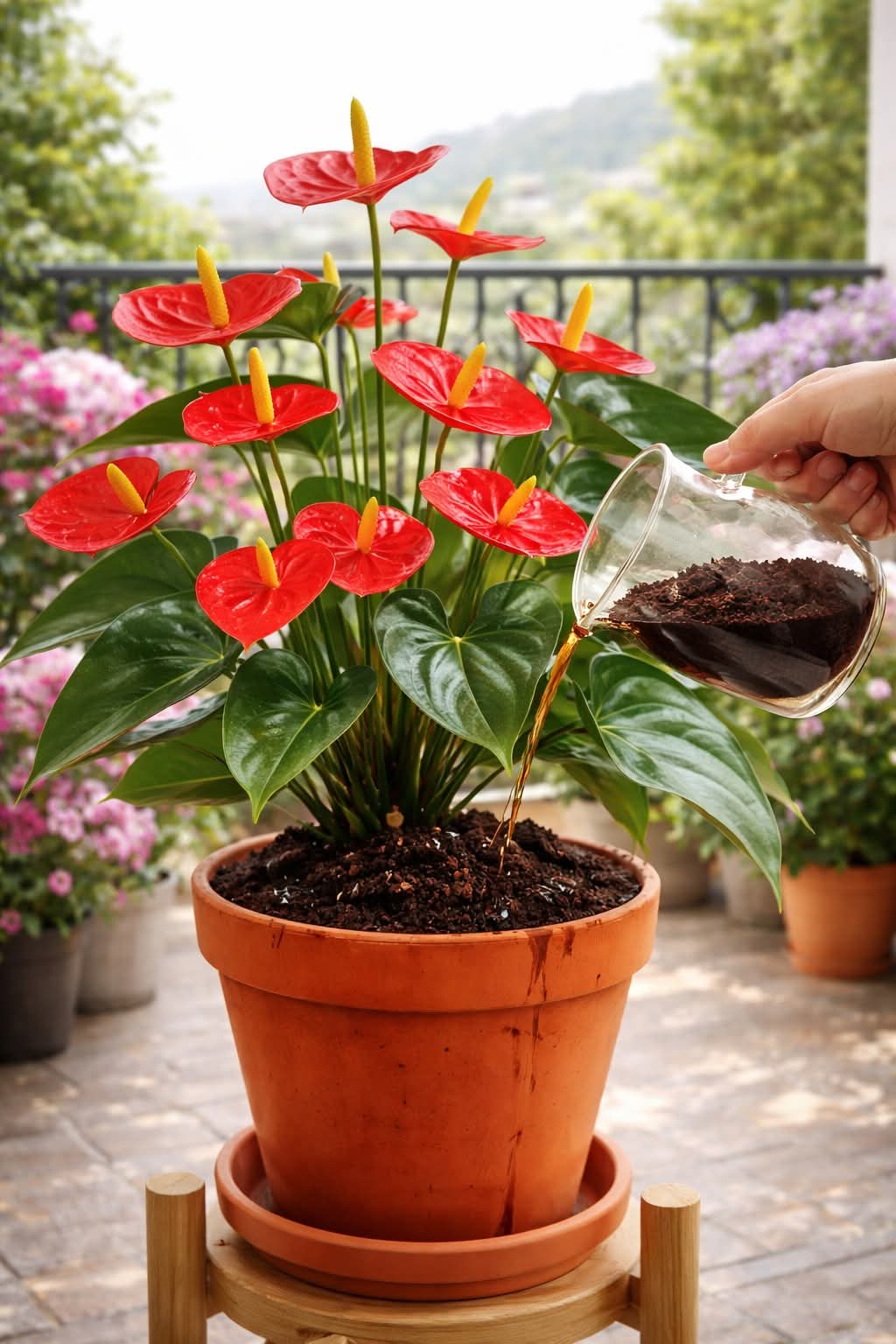
She showed me her secret: used coffee grounds. I was skeptical. Coffee grounds in my fancy houseplant? But I was desperate. I started sprinkling a thin layer of dried grounds on the soil every few weeks and occasionally watering with diluted “coffee tea.” Within a month, my anthurium produced its first flower in over a year. By midwinter, it had three more. The blooms lasted for weeks, and the plant looked healthier than ever.
Now I use this trick every year, and my anthurium rewards me with flowers from November through March. In this guide, I’ll share exactly how to use coffee grounds to make your anthurium bloom all winter long—plus the essential care that makes it work.
Why Anthuriums Need Extra Help in Winter
Anthuriums (Anthurium andraeanum) are tropical epiphytes native to the rainforests of Colombia and Ecuador. In their natural habitat, they grow under tree canopies with consistent warmth, high humidity, and a steady supply of organic nutrients from decomposing leaves and other forest debris .
When we bring them indoors, winter becomes a challenge:
· Lower light levels (shorter days, weaker sun)
· Dry indoor air from heating systems
· Cooler temperatures (often below their comfort zone)
· No natural nutrient replenishment
Under these conditions, even healthy anthuriums often stop blooming. They conserve energy, focusing on survival rather than flower production.
But with the right gentle boost, you can mimic their natural environment and encourage winter blooms. That’s where coffee grounds come in.
Why Coffee Grounds Work: The Science
Used coffee grounds aren’t just kitchen waste. They’re a surprisingly balanced, slow-release organic fertilizer.
What Coffee Grounds Contain
Nutrient Benefit for Anthuriums
Nitrogen (N) Promotes lush, healthy foliage (but too much can inhibit blooms)
Phosphorus (P) Essential for flower development and strong roots
Potassium (K) Supports overall plant health and disease resistance
Magnesium (Mg) Aids chlorophyll production and nutrient uptake
Calcium (Ca) Strengthens cell walls, helping flowers last longer
Trace minerals Iron, copper, zinc – all important for plant metabolism
The Acid Factor
Coffee grounds are slightly acidic (pH around 6.5–6.8 after brewing). Anthuriums prefer slightly acidic soil (pH 5.5–6.5), so used grounds can help maintain that ideal range .
Slow Release
Unlike synthetic fertilizers that deliver a quick burst, coffee grounds break down slowly, feeding your plant gently over weeks. This is perfect for anthuriums, which are sensitive to over-fertilizing.
Microbial Boost
Coffee grounds feed beneficial soil microbes, which in turn help your anthurium absorb nutrients more efficiently. A healthy soil microbiome is essential for vibrant blooms.
The Right Way to Use Coffee Grounds on Anthuriums
While coffee grounds are beneficial, using them incorrectly can harm your plant. Follow these steps for safe, effective application.
Step 1: Dry the Grounds
Fresh, wet coffee grounds can mold. After brewing, spread the used grounds on a paper towel or baking sheet and let them dry completely. This takes a day or two. Dried grounds are easier to handle and won’t encourage fungal growth.
Step 2: Choose Your Application Method
Option A: Sprinkle on Soil (Simplest)
· Lightly sprinkle a thin, even layer of dried grounds over the top of the soil, keeping them away from the plant’s stem and leaves.
· Water normally so the nutrients slowly work into the soil.
How often: Once every 3–4 weeks during the growing season (spring through fall). In winter, once every 4–6 weeks is plenty.
Option B: Coffee Ground “Tea”
· Place ½ cup of dried coffee grounds in a jar and cover with 2 cups of room-temperature water.
· Let steep for 24–48 hours, stirring occasionally.
· Strain out the grounds (compost them) and use the liquid to water your anthurium.
How often: Once a month, diluted with an equal amount of plain water.
Step 3: Watch for Signs
Your anthurium will tell you if it’s happy. Expect:
· New leaf growth within a few weeks
· Brighter, glossier leaves
· Appearance of flower buds (usually after 4–6 weeks)
If you see yellowing leaves, brown tips, or any signs of stress, reduce the frequency or skip a feeding.
Essential Care for Winter Anthurium Blooms
Coffee grounds are a powerful boost, but they work best alongside proper winter care. Here’s what your anthurium needs to bloom when the days are short.
- Light: The #1 Factor
Anthuriums need bright, indirect light to bloom. In winter, move them to the brightest spot you have—an east-facing window is ideal. If you only have south or west windows, place the plant a few feet back or use a sheer curtain to filter harsh sun.
What to avoid: Low light = no blooms. If your plant is in a dim corner, even coffee grounds won’t help.
Supplemental light: Consider a full-spectrum LED grow light if natural light is insufficient. Keep it 12–18 inches above the plant for 8–10 hours daily.
- Temperature
Anthuriums love warmth. During the day, aim for 70–80°F (21–27°C) . Nighttime temperatures can drop to 65°F (18°C) , but avoid anything below 60°F.
Winter tip: Keep your plant away from drafty windows, exterior doors, and heating vents. Sudden temperature swings can cause bud drop.
- Humidity
This is critical. Anthuriums need 60–80% humidity to thrive, especially in winter when indoor air is dry.
How to increase humidity:
· Use a humidifier near the plant.
· Place the pot on a pebble tray filled with water (the pot should sit on pebbles, not in water).
· Group plants together to create a microclimate.
· Mist the leaves lightly in the morning, but avoid getting water on the flowers.
- Watering
Anthuriums like to stay evenly moist but never soggy. Water when the top inch of soil feels dry.
Use room-temperature, filtered water if possible. Tap water can contain chlorine and minerals that build up over time.
Never let the pot sit in standing water—root rot is the fastest way to kill an anthurium.
- Soil & Pot
Anthuriums need a chunky, well-draining mix. A blend of orchid bark, perlite, and a small amount of peat or coco coir works perfectly. Avoid heavy potting soil.
Repotting: Only repot every 2–3 years, and only go up one pot size. Anthuriums bloom better when slightly root-bound.
- Fertilizing Beyond Coffee Grounds
Coffee grounds provide gentle, slow-release nutrients, but they’re not a complete fertilizer. For best blooms, use a balanced, water-soluble fertilizer (like 20-20-20) diluted to half strength once a month during spring and summer. In winter, rely on coffee grounds alone or switch to a high-phosphorus formula (like 10-30-10) to support flowers.
Delicious Variations: Other Natural Boosters
Coffee grounds are my go-to, but you can combine them with other kitchen scraps for even more benefits.
- Banana Peel Powder
Dried, ground banana peels are rich in potassium, which directly supports flowering. Mix 1 tablespoon into the soil every few months.
- Eggshell Powder
Crushed, dried eggshells add calcium, which strengthens flowers and helps them last longer. Sprinkle a small amount on the soil occasionally.
- Rice Water
The starchy water from rinsing rice contains B vitamins and trace minerals. Use it (diluted) to water your anthurium once a month.
- Epsom Salt
Dissolve 1 teaspoon of Epsom salt in 1 gallon of water and use once every 2 months. The magnesium boosts chlorophyll production and helps the plant use phosphorus.
Troubleshooting: Why Isn’t My Anthurium Blooming?
Problem Likely Cause Solution
No flowers after coffee grounds Light insufficient Move to brighter spot; add grow light
Temperature too cool Keep above 65°F
Plant too young Young plants need 2–3 years to mature
Flowers appear but drop quickly Dry air Increase humidity; mist leaves
Drafts or temperature swings Move away from doors, vents
Yellow leaves Overwatering Let soil dry more between waterings
Too much fertilizer Flush soil with plain water; reduce feeding
Brown leaf tips Low humidity Increase humidity; use filtered water
Fertilizer burn Flush soil; reduce coffee grounds
Pro Tips for Winter Success
- Start in Early Fall
Begin your coffee grounds routine in early autumn, before the plant enters its winter slowdown. This builds nutrient reserves that fuel blooms.
- Clean the Leaves
Dust blocks light. Wipe anthurium leaves gently with a damp cloth every few weeks to maximize photosynthesis.
- Don’t Overdo It
More is not better. Over-fertilizing can cause salt buildup and burn roots. Stick to the recommended frequency.
- Use Organic, Unflavored Coffee
Avoid grounds from flavored coffees—they may contain additives that harm plants. Plain, black coffee grounds are best.
- Combine with Humidity
Even the best nutrients won’t trigger blooms if humidity is too low. Make humidity a priority.
Frequently Asked Questions
Q: Can I use fresh coffee grounds directly from the coffee maker?
A: It’s better to let them dry first. Wet grounds can mold and may acidify the soil too quickly.
Q: How often should I apply coffee grounds?
A: Once every 3–4 weeks during active growth, and once every 4–6 weeks in winter.
Q: Will coffee grounds make the soil too acidic?
A: Used coffee grounds are nearly neutral (pH 6.5–6.8) and won’t significantly change soil pH when used in moderation.
Q: Can I use coffee grounds on other houseplants?
A: Yes! African violets, peace lilies, and many tropical plants also appreciate the gentle nutrition.
Q: My anthurium has brown tips after using coffee grounds. What went wrong?
A: This could be from over-fertilizing or from using grounds that were too fresh. Flush the soil with plain water and reduce frequency.
Q: Do I still need to use regular fertilizer?
A: Coffee grounds provide gentle, slow-release nutrients, but they aren’t a complete fertilizer. Use a balanced liquid fertilizer during spring and summer for best results.
Q: How long does it take to see blooms?
A: If your plant is otherwise healthy, you may see buds within 4–6 weeks of starting the coffee grounds routine.
Nutritional Information (Per Tablespoon of Used Coffee Grounds)
Nutrient Approximate Amount
Nitrogen 0.1%
Phosphorus 0.03%
Potassium 0.3%
Magnesium Trace
Calcium Trace
Values are estimates and will vary. Coffee grounds are a supplement, not a primary fertilizer.
My Final Thoughts
When I first sprinkled coffee grounds on my anthurium, I had no idea it would transform into the winter bloomer it is today. That simple kitchen scrap, combined with proper light, humidity, and care, unlocked a flowering potential I didn’t know my plant had.
Now, every winter, I look forward to the deep red spathes that brighten my home during the grayest months. And I love knowing that I’m using something that would otherwise be tossed in the trash to create something beautiful.
If you’ve been struggling to get your anthurium to bloom, I encourage you to give this coffee grounds trick a try. Start in early fall, be consistent, and give your plant the other essentials it needs. With a little patience, you’ll be rewarded with flowers that last through winter and beyond.
Now it’s your turn! Have you tried coffee grounds on your anthurium? What’s your secret for winter blooms? Share your experience in the comments below.
And if you’re looking for more natural plant care tips, check out our guides for Reviving a Peace Lily, Making Orchids Rebloom, and Best Fertilizers for Tropical Plants.
Happy blooming! 🌸✨
Did this coffee grounds trick work for your anthurium? We’d love to see your winter blooms! Leave a comment below and share your photos. Don’t forget to pin this guide for your winter plant care routine!
More Recipes You Might Like
-

Why Some Homeowners Are Using Onion Water Around Orchids and What Usually Helps More for Strong Roots, Healthy Leaves, and Long-Lasting Blooms
Orchids are among the most elegant indoor flowering plants for homeowners who want graceful stems, glossy green leaves, long-lasting blooms, and a refined decorative display that fits beautifully in living rooms, bedrooms, apartments, home offices, bright kitchens, windowsills, covered patios, commercial interiors, luxury home staging, and premium indoor plant styling. A healthy orchid can turn…
-

Why Some Homeowners Are Pouring Aloe Water Around Orchids and What Usually Helps More for Strong Roots, Healthy Leaves, and Long-Lasting Blooms
Orchids are among the most elegant indoor flowering plants for homeowners who want graceful blooms, sculptural roots, glossy leaves, and a premium decorative display that fits beautifully in living rooms, bedrooms, apartments, home offices, bright kitchens, balcony gardens, covered patios, commercial interiors, luxury home staging, and refined indoor plant styling. A healthy orchid can make…
-
Why Some Homeowners Are Adding Brown Powder Around Snake Plants and What Usually Helps More for Strong Roots, Fuller Growth, and Healthy Indoor Leaves
Snake plant is one of the most dependable indoor plants for homeowners who want strong upright leaves, bold green patterning, yellow-edged variegation, easy maintenance, and a clean decorative display that fits beautifully in living rooms, bedrooms, apartments, home offices, bright kitchens, entry corners, sunny windowsills, plant shelves, commercial interiors, luxury home staging, and premium indoor…