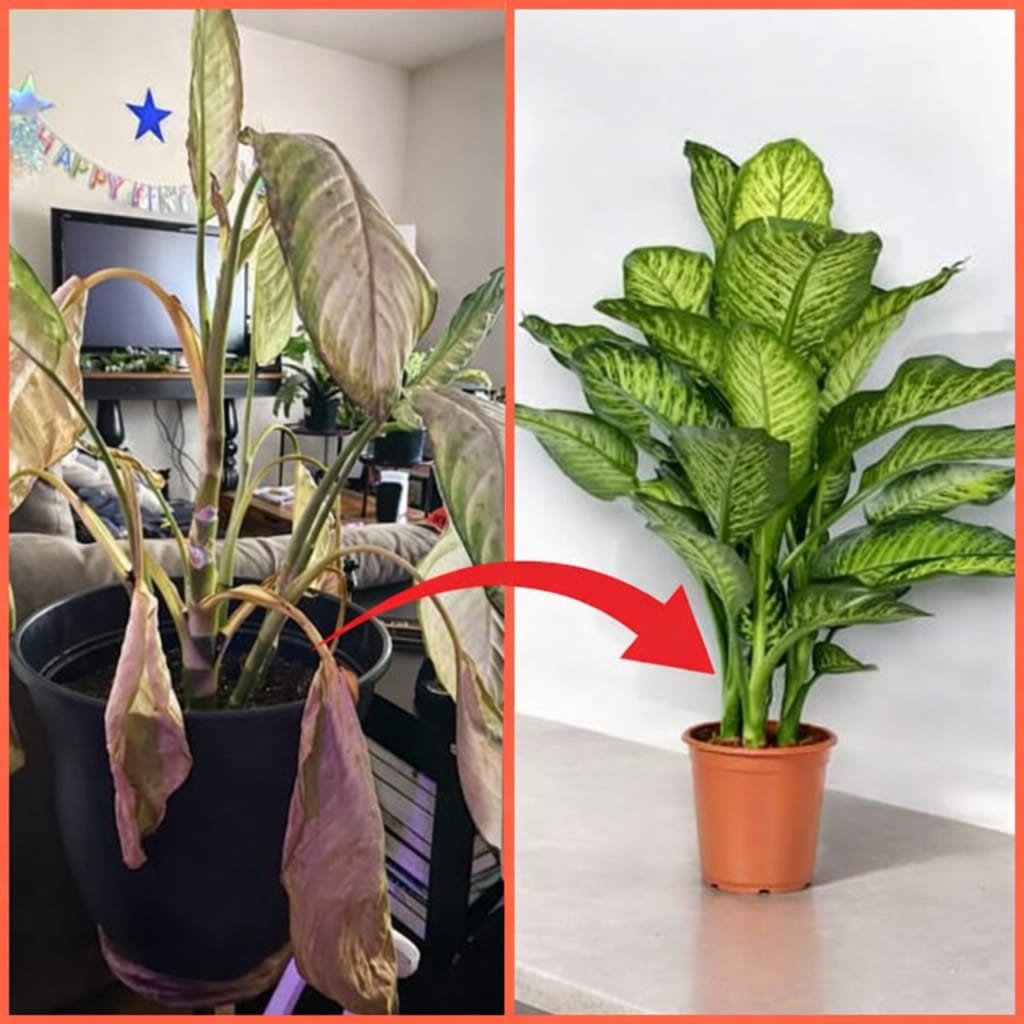
Is your Dieffenbachia (Dumb Cane) looking unhealthy? Discover the 7 most common causes of wilting, yellowing, and browning leaves—and the quick fixes that will bring your plant back to life!
Introduction: Don’t Give Up on Your Dieffenbachia Yet!
You brought home a lush, vibrant Dieffenbachia (also called Dumb Cane), with its stunning cream and green variegated leaves. Now, weeks or months later, you’re staring at drooping stems, yellowing foliage, and brown, crispy leaf tips. You might be wondering if it’s too late to save your plant.
Good news: it’s probably not too late.
Dieffenbachia are resilient tropical plants that can bounce back surprisingly well if you identify and fix the underlying problem. I’ve helped countless plant owners revive their struggling Dumb Canes, and in this guide, I’ll walk you through exactly how to diagnose what’s wrong and the specific steps to bring your plant back to life.
Quick Diagnosis: What’s Wrong With Your Dieffenbachia?
Before diving into fixes, use this flowchart to narrow down the issue:
Symptom Most Likely Cause Quick Fix
Wilting leaves + wet soil Overwatering / Root rot Stop watering immediately; check roots
Wilting leaves + dry, crispy edges Underwatering Deep soak immediately
Brown, crispy leaf tips Low humidity, mineral buildup, or over-fertilizing Increase humidity; flush soil
Yellowing lower leaves Normal aging OR overwatering Snip yellow leaves; check soil moisture
Pale, weak new growth Too little light Move to brighter location
Brown, scorched patches Too much direct sun Move away from window
Sticky residue or tiny webs Pests (mealybugs, spider mites) Isolate and treat immediately
- Overwatering & Root Rot (The #1 Killer)
Dieffenbachia are prone to root rot if left in soggy soil. According to horticulture experts at the Cooperative Extension Foundation, “If the soil is kept too wet and/or not draining well, roots can die back and the resulting impact on foliage will be discoloration and wilting” .
How to Identify Overwatering:
· Leaves are wilting or drooping even though the soil is wet
· Yellowing leaves, especially lower ones
· Soft, mushy stems near the base
· A foul, sour smell from the soil
· Dark, mushy roots when you inspect them
How to Fix It:
- Stop watering immediately. Let the soil dry out completely.
- Check the roots: Gently remove the plant from its pot. Healthy roots are firm and white or off-white. Rotting roots are dark, mushy, and may pull apart easily .
- Trim away dead roots: Use sterilized scissors to cut away any black, mushy roots.
- Repot in fresh, well-draining soil: Use a mix of regular potting soil with added perlite or coarse sand for drainage. Make sure the pot has drainage holes.
- Water sparingly until it recovers: Wait until the top 1-2 inches of soil are dry before watering again.
Pro Tip: “Roots that are dying due to rot will pull apart fairly easily with a light tug, and you will see the stringy inner core separate from the outer sheath; they’ll also be a bit mushy and may smell a bit sour” .
- Underwatering (The Simple Fix)
If the soil is bone-dry and your Dieffenbachia’s leaves are wilted, wrinkled, and crispy, it’s simply thirsty. Underwatering is much easier to fix than overwatering .
How to Identify Underwatering:
· Leaves are wilting, wrinkled, and crunchy
· Brown, crispy leaf tips
· No new growth
· Soil is dry several inches down
How to Fix It:
- Give it a deep, thorough soak: Place the pot in a sink or bucket of room-temperature water. Let it sit for 20-30 minutes until the soil is fully saturated.
- Let it drain completely: Remove and let excess water drain out.
- Establish a consistent watering routine: Water when the top 1-2 inches of soil feel dry. Use your finger to test—don’t rely on a schedule .
- Light Problems: Too Little or Too Much
Dieffenbachia are native to forest floors where they receive filtered, dappled sunlight. Getting the light right is crucial for healthy growth .
Too Little Light (Low Light Stress)
Symptoms:
· New leaves are small, weak, and spindly
· Leggy growth with long gaps between leaves
· Leaves lose their vibrant variegation
· Plant leans toward the light source
Solution: Move your plant closer to a window. Dieffenbachia thrives in bright, indirect light. An east-facing window is ideal. If you only have south or west windows, place the plant a few feet back or use a sheer curtain to filter harsh rays .
Too Much Light (Sunburn)
Symptoms:
· Brown, irregular patches on leaves
· Yellowing around the brown spots
· Leaves appear scorched or bleached
Solution: Move your plant away from direct sunlight. While they can handle a few hours of gentle morning sun, harsh afternoon rays will burn the leaves .
- Temperature Stress & Cold Damage
Dieffenbachia are tropical plants that hate the cold. According to gardening experts, “Any dipping below temperatures of 50°F (10°C) and your plant will suffer cold damage” .
How to Identify Cold Damage:
· Wilting leaves after exposure to cold drafts
· Mushy, brown foliage that turns black and crunchy over time
· Slow or no new growth
How to Fix It:
- Move the plant away from drafty windows, doors, and air conditioning vents.
- Maintain temperatures between 65-75°F (18-24°C).
- Cut off damaged leaves to allow the plant to focus energy on new growth.
- If the plant is severely damaged, you can propagate healthy stem cuttings as a backup .
- Humidity Issues & Mineral Buildup
Brown, crispy leaf tips are one of the most common complaints with Dieffenbachia. According to Ask Extension experts, “Low ambient humidity, water high in minerals, over-fertilization, under- and over-watering, and pest damage are all possible factors” .
How to Identify:
· Brown, crispy leaf tips (the most common symptom)
· Leaf edges turning brown
· White crust on soil surface (mineral buildup)
How to Fix It:
For Low Humidity:
· Mist your plant regularly (morning is best)
· Use a pebble tray filled with water
· Run a humidifier nearby
· Group plants together to create a microclimate
For Mineral Buildup:
· Switch to filtered or distilled water instead of tap water
· Flush the soil periodically: Run room-temperature water through the pot for several minutes to leach out accumulated salts
· Repot annually with fresh soil to reset salt levels
- Pests: The Sneaky Invaders
Dieffenbachia are “particularly susceptible to nuisance insects” . Check your plant regularly for these common pests.
Common Pests & How to Identify Them:
Pest What to Look For
Spider Mites Fine webbing under leaves; tiny yellow/white specks on leaves
Mealybugs White, cotton-like clusters in leaf joints and under leaves
Scale Small brown bumps on stems and leaves that don’t move
Aphids Small green, black, or pink bugs clustered on new growth
Fungus Gnats Tiny black flies around soil; larvae in soil
How to Treat Pests:
- Isolate the plant immediately to prevent spreading to other houseplants.
- Wipe off visible pests with a cotton swab dipped in 70% rubbing alcohol (especially effective for mealybugs and scale) .
- Spray with insecticidal soap or a solution of mild castile soap and water.
- For spider mites: Increase humidity (they hate moist conditions) and spray with neem oil .
- For fungus gnats: Allow soil to dry out more between waterings; use yellow sticky traps .
Warning: “Spider mites don’t like humidity, but Dieffenbachia does. Maintain a humidity level above 50% to prevent infestations” .
- Fertilizer Problems & Nutrient Deficiency
Dieffenbachia are moderate feeders, but too much fertilizer can cause as many problems as too little .
Over-Fertilizing:
Symptoms:
· Brown leaf tips and margins
· Curling foliage
· White crust on soil surface
· Salt buildup in saucer
Solution: Flush the soil with water to leach out excess salts. Place the plant in a sink or tub and let water run through for several minutes .
Under-Fertilizing:
Symptoms:
· Pale, yellowing leaves (especially older ones)
· Slow growth
· Faded variegation
Solution: Feed with a balanced houseplant fertilizer diluted to half strength. Apply only during spring and summer (growing season) and stop in winter . Fertilize “at least twice a month” during active growth .
When to Repot Your Dieffenbachia
If you’ve addressed all the above issues and your plant is still struggling, it might need fresh soil or a larger pot.
Signs It Needs Repotting:
· Roots are circling the inside of the pot or growing out of drainage holes
· Water runs straight through without soaking in
· The plant is top-heavy and tips over easily
· It’s been in the same pot for 2+ years
How to Repot:
- Choose a pot only 1-2 inches larger in diameter—too large can lead to overwatering .
- Use fresh, well-draining potting mix.
- Gently loosen roots before placing in new pot.
- Water lightly and place in bright, indirect light to recover .
Propagation: Your Safety Net
If your Dieffenbachia is in really bad shape—bare stems, no leaves, or severe root rot—don’t throw it away! You can propagate new plants from healthy stem cuttings .
Stem Cutting Propagation:
- Cut healthy stems into 2-inch sections, each with at least one node (the bump where leaves attach).
- Let cuttings dry for a few hours to callus over.
- Lay them horizontally on well-draining potting mix, burying the bottom half.
- Keep soil moist and warm (use a plastic bag to create humidity if needed).
- New growth appears in 2-4 weeks .
Gardening Expert Tip: “Revive a declining Dieffenbachia with a bit of pruning and start a few new plants from cane cuttings” .
Prevention: Keeping Your Dieffenbachia Thriving
Once your plant recovers, follow these maintenance tips to prevent future problems:
Care Factor Ideal Condition
Light Bright, indirect light (east-facing window ideal)
Water Water when top 1-2 inches of soil are dry
Humidity 50-60% (use pebble tray or humidifier)
Temperature 65-75°F (18-24°C); avoid cold drafts
Soil Well-draining potting mix with perlite or sand
Fertilizer Half-strength, every 2-4 weeks during growing season
Pot Ensure drainage holes; avoid over-potting
Important Safety Note: Dieffenbachia is Toxic
Before you handle your plant, know this: Dieffenbachia is toxic to humans and pets.
According to the ASPCA and multiple gardening sources, the plant contains calcium oxalate crystals that can cause:
· Oral irritation, burning, and swelling
· Drooling and difficulty swallowing
· Vomiting
· In severe cases, airway obstruction
Always wear gloves when pruning or repotting, and keep the plant out of reach of curious children and pets .
Frequently Asked Questions
Q: Should I cut off dying leaves?
A: Yes. Remove yellow, brown, or mushy leaves to redirect energy to healthy growth. Use sterilized scissors or pruners.
Q: How often should I water my Dieffenbachia?
A: Water when the top 1-2 inches of soil feel dry. This may be every 7-10 days in summer and every 14-21 days in winter.
Q: Why are the lower leaves turning yellow?
A: Some lower leaf loss is normal as the plant grows. If it’s widespread, check for overwatering or nutrient issues .
Q: Can I put my Dieffenbachia outside for the summer?
A: Yes, but keep it in full shade—under a tree or covered porch. Direct sun will scorch the leaves .
Q: How do I know if my plant has root rot?
A: Remove the plant from its pot. Healthy roots are firm and white. Rotten roots are dark, mushy, and may smell bad .
Conclusion: Your Dieffenbachia Can Be Saved!
Don’t give up on your Dieffenbachia! Most problems are fixable with the right diagnosis and consistent care. Start by checking the soil moisture—overwatering and underwatering account for the majority of issues. Then move on to light, humidity, and pest inspection.
With patience and these proven techniques, your Dumb Cane can bounce back to its lush, vibrant self. And if all else fails, remember that propagation can give you a fresh start from healthy cuttings.
Have you successfully revived a struggling Dieffenbachia? What symptoms did your plant show, and what worked for you? Share your experience in the comments below!
And if you found this guide helpful, please share it with a fellow plant lover who might be struggling with their Dumb Cane. 🌿
More Ideas You Might Like
-

Why Some Homeowners Are Using Onion Water Around Orchids and What Usually Helps More for Strong Roots, Healthy Leaves, and Long-Lasting Blooms
Orchids are among the most elegant indoor flowering plants for homeowners who want graceful stems, glossy green leaves, long-lasting blooms, and a refined decorative display that fits beautifully in living rooms, bedrooms, apartments, home offices, bright kitchens, windowsills, covered patios, commercial interiors, luxury home staging, and premium indoor plant styling. A healthy orchid can turn…
-

Why Some Homeowners Are Pouring Aloe Water Around Orchids and What Usually Helps More for Strong Roots, Healthy Leaves, and Long-Lasting Blooms
Orchids are among the most elegant indoor flowering plants for homeowners who want graceful blooms, sculptural roots, glossy leaves, and a premium decorative display that fits beautifully in living rooms, bedrooms, apartments, home offices, bright kitchens, balcony gardens, covered patios, commercial interiors, luxury home staging, and refined indoor plant styling. A healthy orchid can make…
-
Why Some Homeowners Are Adding Brown Powder Around Snake Plants and What Usually Helps More for Strong Roots, Fuller Growth, and Healthy Indoor Leaves
Snake plant is one of the most dependable indoor plants for homeowners who want strong upright leaves, bold green patterning, yellow-edged variegation, easy maintenance, and a clean decorative display that fits beautifully in living rooms, bedrooms, apartments, home offices, bright kitchens, entry corners, sunny windowsills, plant shelves, commercial interiors, luxury home staging, and premium indoor…