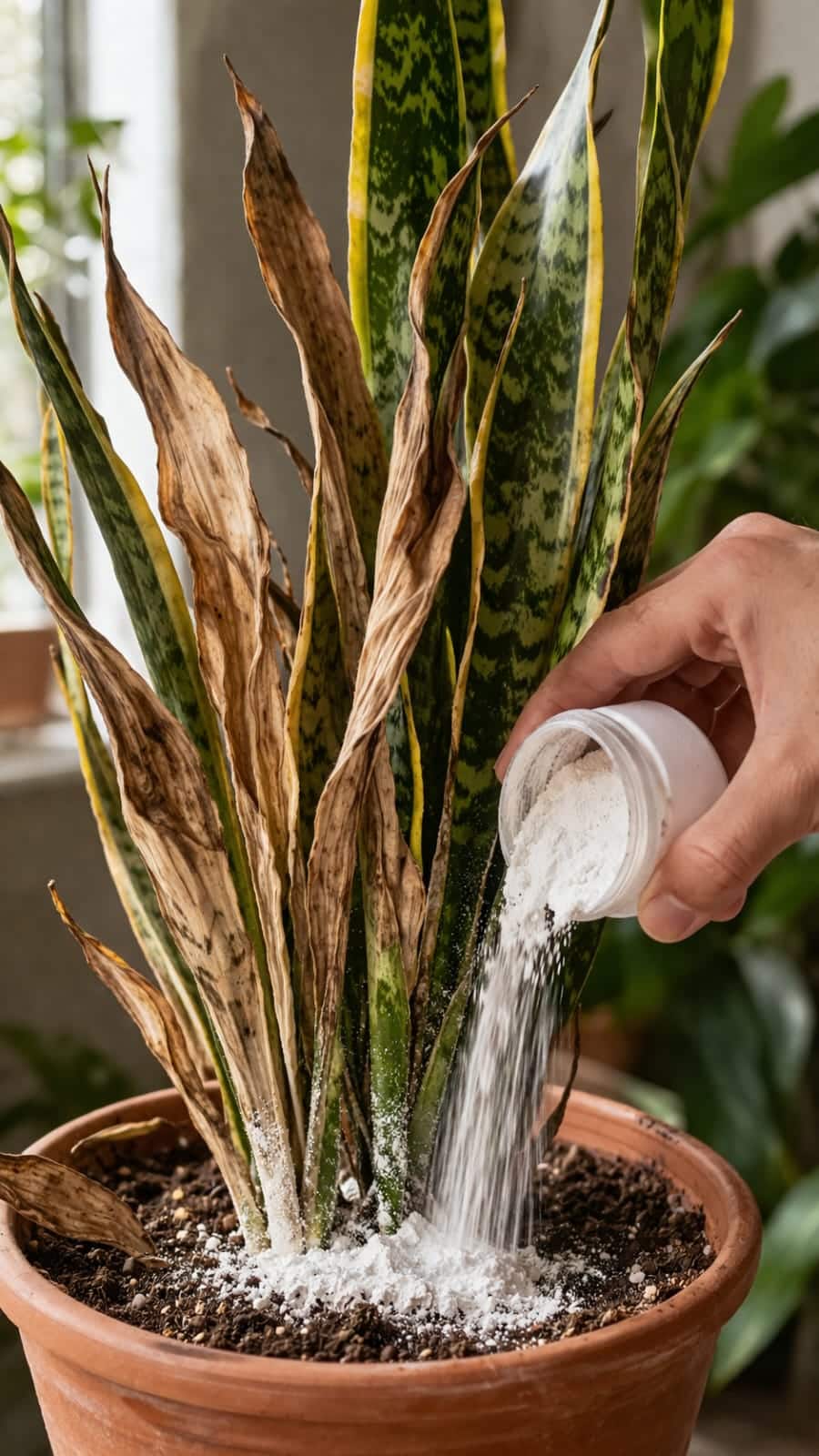
Is your snake plant turning brown, dry, and lifeless? Don’t toss it. Learn how to revive it with a simple powder (cinnamon or baking soda) and proper care. Save your plant today.
Let’s be honest: it’s heartbreaking to see your once‑beautiful snake plant turning brown, dry, and crispy. The leaves that used to stand tall and vibrant now droop, shrivel, and look beyond saving. Many people assume the plant is dead and throw it away. But in most cases, it’s not.
Snake plants (Sansevieria, now Dracaena) are incredibly resilient. They’ve earned their reputation as “almost impossible to kill” for a reason. Even when they look like they’re on their last leg, they often have life left in their roots or rhizomes. With the right care – and one simple, inexpensive ingredient – you can often bring your plant back to life.
In this guide, I’ll show you how to diagnose what went wrong, the simple powder trick that can save your plant (cinnamon or baking soda), and the step‑by‑step revival process. You’ll also learn how to adjust your care routine to prevent future problems.
Don’t throw that snake plant away yet. Let’s fix it.
What’s Going Wrong? – Common Causes of a Dying Snake Plant
Before you can revive your plant, you need to understand what killed it in the first place. The symptoms in the image – dry, crispy leaves, browning, shriveling, weak growth – are almost always caused by one of these issues.
- Overwatering (The #1 Killer)
Snake plants are succulents. They store water in their thick leaves and roots. When you water too often, the soil stays soggy, roots can’t breathe, and they begin to rot. The first signs of overwatering are:
· Yellowing, mushy leaves
· Soft, brown roots
· Foul smell from the soil
· Leaves falling over at the base
If left unchecked, root rot spreads, and the leaves dry out as the plant can no longer take up water – leading to the crispy, brown appearance in the image.
- Poor Drainage
Even if you water correctly, a pot without drainage holes or heavy, compacted soil can trap water around the roots. Snake plants need well‑draining soil (cactus mix or regular potting soil mixed with perlite/sand).
- Fungal or Bacterial Issues
Excess moisture creates the perfect environment for fungi like Fusarium or Rhizoctonia, which attack the roots and leaves. This often appears as brown, mushy spots that later dry out.
- Salt or Mineral Buildup
Tap water contains minerals (fluoride, chlorine, salts). Over time, these can accumulate in the soil, causing brown leaf tips and edges. Fertilizer salts can also build up.
- Extreme Temperatures or Drafts
Cold drafts (below 50°F / 10°C) or sudden temperature changes can damage leaves, causing them to turn brown and dry.
The Powder Trick – Why People Use It (And How It Helps)
In the image, a white powder is being added to the soil. This is often cinnamon powder or baking soda. Both are popular natural remedies among plant owners, but they work differently.
🌿 Cinnamon – The Natural Antifungal
Cinnamon is not just for baking. It has powerful antifungal and antibacterial properties. Studies have shown that cinnamon oil can inhibit the growth of common plant pathogens like Fusarium and Pythium.
Why it helps:
· Fights fungus in the soil
· Dries out excess moisture (absorbs humidity)
· Protects cut roots and leaves from infection
· Mildly stimulates root growth
Best for: Root rot, fungal issues, and treating cut surfaces after pruning.
🧂 Baking Soda – The pH Balancer
Baking soda (sodium bicarbonate) is sometimes used as a mild fungicide. It can help raise soil pH slightly and prevent fungal spores from germinating. However, it’s less effective than cinnamon and can build up salt in the soil if overused.
Best for: Minor surface mold or as a preventive spray (mixed with water).
For reviving a dying snake plant, cinnamon is the better choice. It’s gentler, doesn’t add sodium, and has proven antifungal properties.
How to Use the Powder Properly – Step‑by‑Step Revival Guide
If your snake plant looks like the one in the image, follow these steps. This process works for most overwatered, root‑rotted, or fungus‑affected snake plants.
Step 1: Remove the Plant from Its Pot
Gently slide the plant out of its pot. If it’s stuck, tap the sides or run a knife around the edge. Shake off excess soil to expose the roots.
Step 2: Inspect and Trim Dead Parts
· Leaves: Cut off any completely brown, dry, or mushy leaves at the base with clean, sharp scissors. Leave any green or partially green leaves – they can still photosynthesize.
· Roots: Look for healthy roots (firm, white or light tan). Trim away any black, mushy, or foul‑smelling roots. If the root rot is extensive, you may need to cut away all rotten roots and treat the remaining rhizome (the thick, horizontal stem).
Step 3: Apply the Powder (Cinnamon)
Sprinkle cinnamon powder generously over:
· The cut edges of leaves and roots (to prevent infection)
· The remaining healthy roots and rhizome
· The soil surface after repotting (to inhibit fungal growth)
Do not use too much – a light dusting is enough. Cinnamon is natural and won’t burn the plant.
Step 4: Let the Plant Dry (If Roots Were Rotted)
If you had to remove a lot of rotten roots, let the plant sit out on a newspaper or paper towel for 1–2 days. This allows the cut areas to callus over, reducing the chance of further rot.
Step 5: Repot in Fresh, Well‑Draining Soil
· Soil mix: Use a cactus/succulent mix, or make your own: 2 parts potting soil + 1 part perlite + 1 part coarse sand.
· Pot: Ensure the pot has drainage holes. If reusing the old pot, wash it with soap and water (or a diluted bleach solution) to kill any remaining fungus.
· Repotting: Place the plant at the same depth it was before. Do not bury the leaves. Water lightly (just enough to settle the soil).
Step 6: Adjust Care Going Forward
· Light: Place in bright, indirect light. Snake plants need light to recover – don’t put them in a dark corner.
· Watering: Do not water again until the top 2–3 inches of soil are completely dry. This could take 2–4 weeks. When you do water, water thoroughly and let excess drain.
· Do not fertilize for at least 2 months. Fertilizing a stressed plant can burn the roots.
Step 7: Be Patient
Recovery takes time. You may not see new growth for several weeks or even months. The existing leaves may not recover, but new shoots (pups) will eventually emerge from the soil.
Can Banana Peels Really Boost Orchid Growth? Continue to Page 2
Discover the safer method, the real risks, and the smart orchid care details that many gardeners miss on the first page.