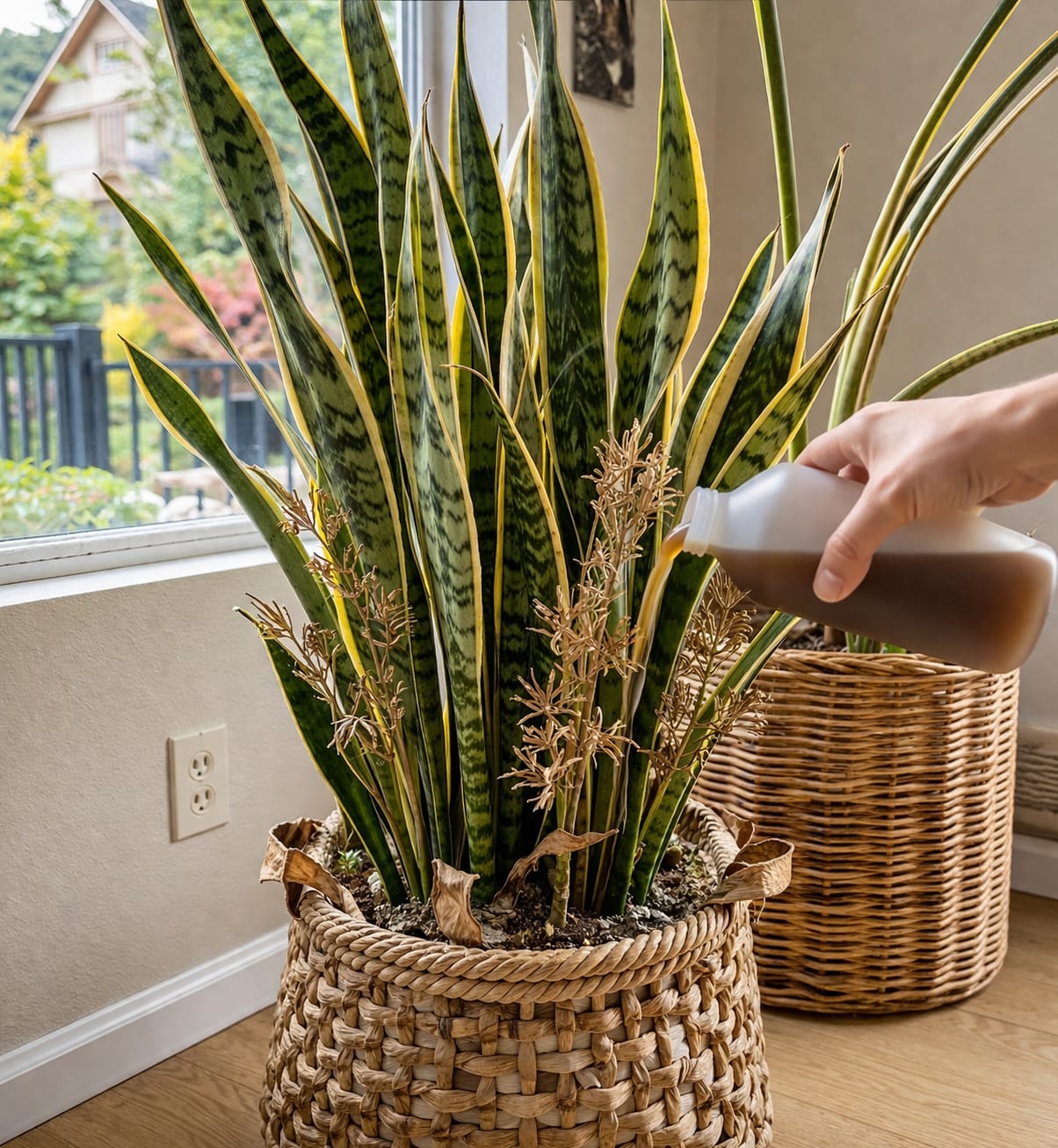
Snake plants can bloom indoors – but it’s rare. Learn how a simple organic fertilizer, combined with proper light, watering, and root‑bound stress, can encourage those fragrant, creamy white flowers.
Let’s be honest: snake plants (Sansevieria, now reclassified as Dracaena) are famous for being nearly indestructible. They survive low light, infrequent watering, and general neglect. They’re the plant you buy when you’re not sure you can keep anything alive. But what many people don’t realize is that under the right conditions, snake plants can produce rare and beautiful indoor blooms.
If you’ve never seen a snake plant flower, you’re not alone. It’s uncommon – but not impossible. And when it happens, it’s a delightful surprise: tall stalks covered in small, creamy white or pale green flowers that release a sweet, delicate fragrance, especially at night.
So what triggers this elusive blooming? The viral answer is often a “simple ingredient” – usually a mild organic liquid fertilizer like diluted compost tea, rice water, or weak plant food. But the truth is more nuanced. Fertilizer can help, but it’s not a magic bullet. The real secret lies in a combination of factors: gentle stress, bright light, proper watering, and a slightly root‑bound pot.
In this guide, I’ll explain exactly how to encourage your snake plant to bloom indoors. You’ll learn what the “secret ingredient” really does, the critical conditions that trigger flowering, and a safe, step‑by‑step approach to using fertilizer without harming your plant.
Let’s unlock the mystery of snake plant blooms.
Do Snake Plants Really Bloom Indoors?
Yes – but it’s rare. In their native habitat of West Africa, snake plants bloom seasonally, producing tall flower spikes (up to 3 feet!) covered in small, fragrant flowers. Indoors, the conditions are rarely perfect, so blooms are sporadic. However, with the right care, you can tilt the odds in your favor.
What Snake Plant Flowers Look Like
Feature Description
Color Creamy white to pale green
Shape Small, tubular, clustered along a tall stalk
Fragrance Sweet, jasmine‑like, strongest at night
Timing Typically late fall to early spring
Duration Blooms last 2–4 weeks
The flowers are a sign that your plant is mature and thriving – but also slightly stressed. That’s the paradox: a little bit of stress (not too much) triggers the plant to reproduce.
The “Secret Ingredient” – What It Is and What It Does
In many viral posts, you’ll see someone pouring a brownish liquid onto a snake plant, claiming it’s the “secret” to blooms. That liquid is usually a mild organic fertilizer – diluted compost tea, rice water (from rinsing rice), diluted fish emulsion, or a weak solution of balanced plant food.
Why It’s Used
Ingredient What It Provides How It Helps
Diluted compost tea Trace nutrients, beneficial microbes Improves soil health and root function
Rice water Starch, small amounts of nitrogen, phosphorus, potassium Gentle nutrient boost
Weak balanced fertilizer (e.g., 10-10-10 at ¼ strength) Nitrogen, phosphorus, potassium Supports overall plant health
These mild fertilizers can help by:
· Providing trace nutrients missing from regular potting soil
· Encouraging stronger root development
· Supporting overall plant health – which is a prerequisite for blooming
⚠️ Important: It’s Not a Magic Bullet
Adding nutrients alone won’t make your snake plant bloom. The real magic happens when several factors come together. Think of fertilizer as the final nudge – not the cause.
The 5 Critical Factors That Trigger Snake Plant Blooms
If you want your snake plant to flower, you need to create the right environment. Here’s what matters most.
☀️ 1. Bright, Indirect Light (The #1 Factor)
Snake plants are famous for tolerating low light, but they thrive – and bloom – in brighter conditions.
Light Level Bloom Potential
Low light (dark corner, north window) Very low – plant will survive but rarely bloom
Medium light (few feet from east/west window) Possible, but unlikely
Bright, indirect light (right by east/west window, or filtered south window) Highest chance
Pro tip: If your snake plant has been in a dark corner for years, move it gradually to brighter light over a few weeks to avoid shock. A few hours of gentle morning sun is excellent.
💧 2. Controlled Watering – Slight Stress Encourages Blooms
Snake plants are succulents. They store water in their thick leaves and roots. Overwatering is the #1 killer, but underwatering – to a point – can actually trigger blooming.
· Normal watering: Water when the top 2 inches of soil are completely dry.
· Bloom encouragement: Allow the soil to dry out a little more than usual between waterings. The mild stress signals to the plant that conditions are becoming unfavorable, prompting it to reproduce (bloom) before it’s too late.
· Caution: Do not let the plant wilt severely or the leaves become shriveled. Slight stress, not torture.
🪴 3. Slightly Root‑Bound – Crowded Roots Encourage Flowers
Snake plants are more likely to bloom when they are slightly root‑bound. When roots fill the pot, the plant senses that it’s running out of space and shifts energy toward reproduction (flowering) rather than vegetative growth.
· Best practice: Repot only every 2–3 years, or when roots are visibly growing out of the drainage holes.
· Pot size: Choose a pot that is just 1–2 inches larger than the root ball. Too large = too much soil = too much moisture = less stress = fewer blooms.
🌡️ 4. Stable Environment – Avoid Stress from Changes
Snake plants bloom when they feel secure but slightly challenged. Frequent moves, temperature swings, or drafts can cause bud drop.
· Keep the plant in one spot during the bud formation period (late summer through fall).
· Avoid cold drafts (below 50°F / 10°C) and sudden temperature changes.
· Ideal temperature: 65–80°F (18–27°C) during the day; slightly cooler at night (55–65°F) can encourage blooming.
🌱 5. Gentle Fertilization – The Supporting Role
Once the other conditions are met, a mild fertilizer can provide the nutrients needed to produce flowers.
· When to fertilize: Spring and summer (active growing season). Do not fertilize in fall/winter.
· What to use: A balanced, water‑soluble fertilizer (like 10-10-10) diluted to ¼ strength. Or use organic options like diluted compost tea, worm casting tea, or rice water (see recipe below).
· How often: Once every 4–6 weeks. Over‑fertilizing can burn roots and discourage blooms.
Can Banana Peels Really Boost Orchid Growth? Continue to Page 2
Discover the safer method, the real risks, and the smart orchid care details that many gardeners miss on the first page.