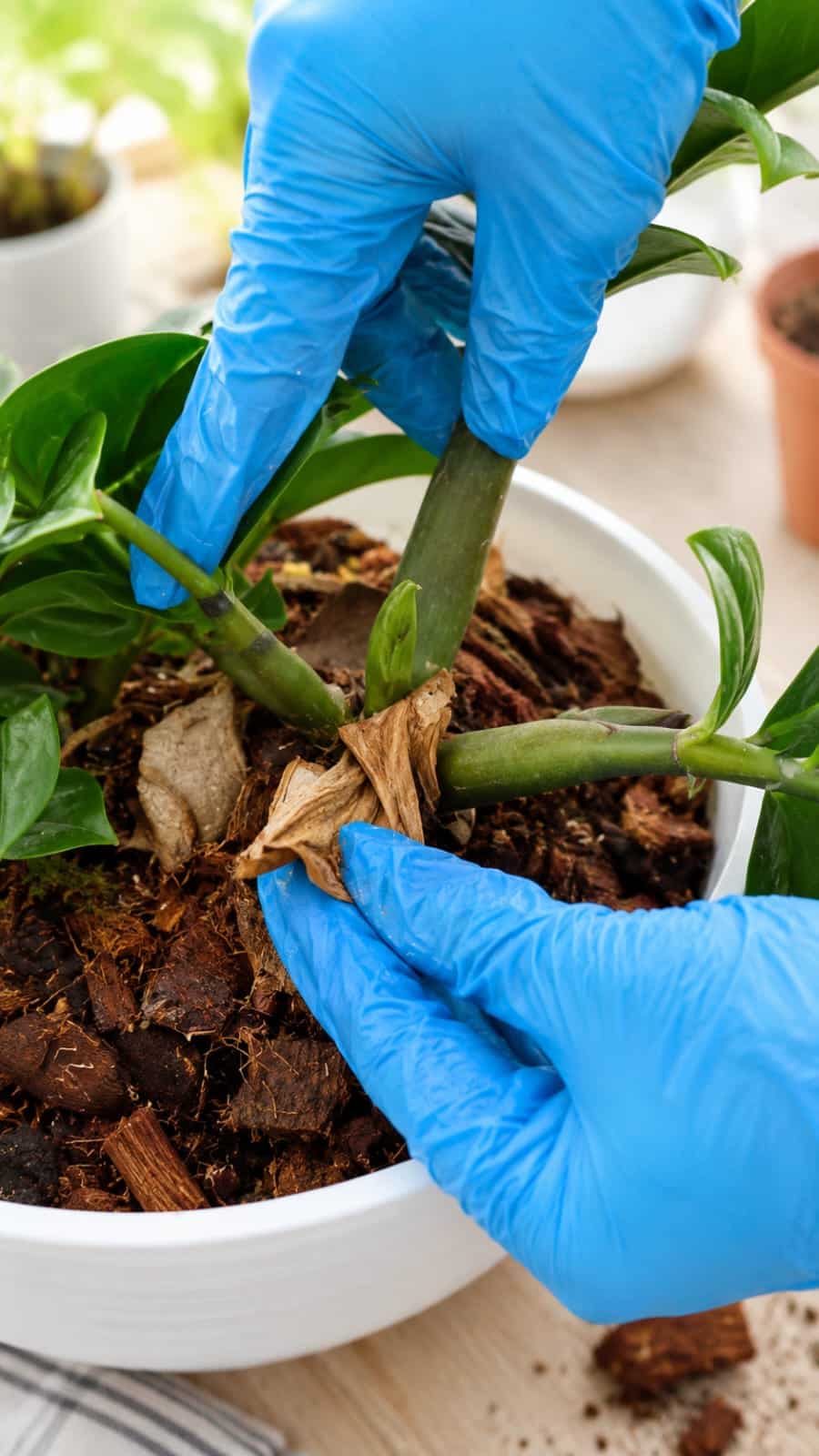
ZZ plants have become one of the most popular indoor plants in modern homes because they look elegant, survive neglect, tolerate low light, and produce thick glossy leaves that instantly make any room feel alive. But recently, a new viral plant care method has exploded across social media after gardeners discovered a hidden trick around the base of the ZZ plant that may help improve growth, reduce stress, and encourage healthier stems.
In the viral gardening video, gloved hands gently peel away dry brown layers around the thick stem base of a mature ZZ plant. Plant lovers immediately became curious because the transformation looked dramatic. The video suggests that cleaning old dry coverings near the rhizomes and lower stems can improve airflow, reduce moisture problems, and help the plant focus energy on healthy growth.
This simple indoor gardening method has now become one of the most searched ZZ plant care tricks online. Houseplant owners everywhere want to know whether removing old dried sheaths from the plant base can really improve root health and stimulate fresh new shoots.
The truth is that ZZ plants are fascinating tropical plants with underground rhizomes that store water and nutrients. Understanding how these rhizomes work explains why proper maintenance around the base of the plant can sometimes improve overall health and appearance.
This complete guide explains the viral ZZ plant root cleaning method, how rhizomes work, why dead plant material accumulates around stems, how to safely maintain indoor ZZ plants, and the best natural strategies for encouraging lush glossy growth indoors.
Why ZZ Plants Became So Popular
ZZ plants became indoor gardening favorites because they combine beauty with incredible resilience. Unlike many delicate houseplants, ZZ plants tolerate:
- Low light rooms
- Irregular watering
- Dry indoor air
- Beginner mistakes
- Indoor temperature fluctuations
- Neglected care schedules
Their thick waxy leaves naturally reflect light, creating a polished appearance that looks expensive and luxurious in modern interiors.
Interior designers frequently use ZZ plants because they maintain a clean sculptural look with minimal maintenance.
What Are ZZ Plant Rhizomes?
The most important part of the ZZ plant actually lives beneath the soil.
ZZ plants grow from thick potato-like underground structures called rhizomes. These rhizomes act as water and nutrient storage systems that help the plant survive drought conditions.
The rhizomes:
- Store moisture
- Store energy
- Support new shoot growth
- Help the plant survive stress
- Regulate long-term growth
This underground storage system explains why ZZ plants survive missed watering better than most indoor plants.
Why Dry Layers Form Around the Base
As ZZ plants mature, older protective leaf sheaths naturally dry out around the lower stems.
Over time, gardeners may notice:
- Brown papery layers
- Dried stem coverings
- Dead lower material
- Compact debris near the crown
This process is normal aging.
However, excessive buildup around stems may trap moisture and reduce airflow near sensitive plant tissue.
The Viral ZZ Plant Cleaning Method
The trending indoor gardening trick involves carefully removing loose dried coverings near the base of mature ZZ stems.
Gardeners claim this may help:
- Improve airflow
- Reduce trapped moisture
- Prevent fungal buildup
- Keep stems cleaner
- Encourage healthier appearance
- Expose healthy growth points
The process must be done gently because ZZ plant stems can break if forced.
Why Airflow Matters for Indoor Plants
Many indoor plant problems begin when stagnant moisture stays trapped around stems or roots.
Poor airflow may encourage:
- Fungus growth
- Mold
- Rot
- Soft stems
- Bacterial issues
Keeping the crown area clean and dry helps indoor plants remain healthier over time.
How to Safely Clean Around ZZ Plant Stems
Step 1: Inspect the Plant Carefully
Look for completely dry loose material around the lower stem area.
Step 2: Use Clean Hands or Gloves
Gentle handling reduces damage risk.
Step 3: Remove Only Loose Dry Layers
Never pull healthy green tissue.
Step 4: Avoid Damaging Rhizomes
The underground rhizomes are essential for long-term health.
Step 5: Improve Air Circulation
Allow the base area to remain dry and breathable.
The Biggest ZZ Plant Mistake
The number one killer of ZZ plants is overwatering.
Because rhizomes store water naturally, constantly wet soil creates dangerous conditions that often lead to:
- Root rot
- Yellow leaves
- Mushy stems
- Rhizome decay
- Fungal infections
ZZ plants prefer drying between waterings.
Why ZZ Plants Thrive on Neglect
Many beginners accidentally care too much for ZZ plants.
These plants evolved to survive periods of drought, which means they usually perform better with:
- Less water
- Minimal disturbance
- Moderate feeding
- Indirect light
- Good drainage
This low-maintenance nature explains why ZZ plants are considered nearly indestructible houseplants.
Best Soil for ZZ Plants
ZZ plants need fast-draining soil that allows oxygen around the rhizomes.
A healthy ZZ soil mix may contain:
- Potting soil
- Perlite
- Orchid bark
- Coconut coir
- Coarse sand
Heavy compact soil traps water and increases rot risk.
How Often Should You Water a ZZ Plant?
Watering frequency depends on:
- Light exposure
- Temperature
- Humidity
- Pot size
- Season
Most indoor ZZ plants prefer allowing soil to dry significantly before watering again.
In many homes, watering every few weeks is enough.
Continue to Page 2
Continue to page 2 for more details about this article and the key points many readers miss on the first page.