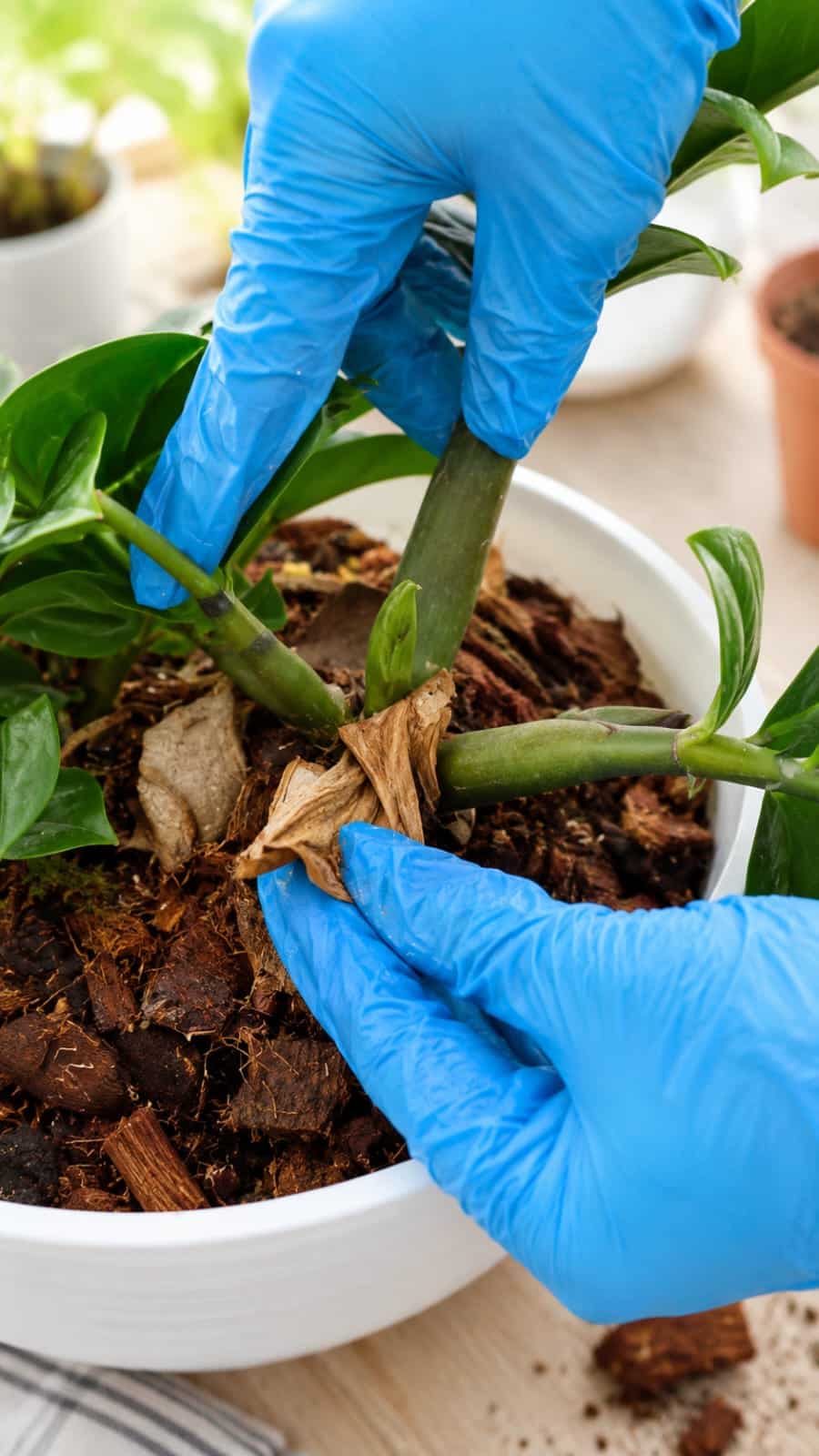
Signs Your ZZ Plant Is Healthy
- Firm upright stems
- Glossy leaves
- New shoots emerging
- Strong green color
- Stable growth pattern
Signs of ZZ Plant Stress
Yellow Leaves
Often linked to excess moisture.
Soft Mushy Stems
Usually indicates root or rhizome rot.
Wrinkled Stems
May signal dehydration.
Brown Spots
Can result from overwatering or fungal issues.
Why ZZ Plants Produce New Shoots Slowly
ZZ plants grow slower than pothos or philodendrons because they focus heavily on rhizome energy storage.
New shoots emerge only when:
- Enough energy is stored
- Roots remain healthy
- Lighting is sufficient
- Stress stays low
Patience is essential with ZZ plants.
Can Cleaning the Base Trigger Growth?
Cleaning alone does not magically force growth.
However, removing dead compact material may:
- Improve hygiene
- Reduce moisture buildup
- Increase airflow
- Make the plant easier to monitor
- Support healthier stem conditions
Combined with good care, the plant may become healthier overall.
Best Lighting for ZZ Plants
ZZ plants tolerate low light but grow better with:
- Bright indirect light
- Filtered sunlight
- Moderate indoor brightness
Extremely dark rooms slow growth significantly.
Should You Fertilize ZZ Plants?
ZZ plants need very little fertilizer.
Too much feeding may damage roots or create weak stretched growth.
Most gardeners use:
- Light feeding during spring
- Light feeding during summer
- Minimal fertilizer in winter
Why ZZ Plants Work So Well in Modern Homes
Modern indoor spaces often contain:
- Air conditioning
- Dry indoor air
- Limited sunlight
- Busy lifestyles
ZZ plants adapt beautifully to these conditions.
Their glossy architecture also matches minimalist home décor trends perfectly.
Can ZZ Plants Survive Low Light Forever?
Yes, but survival and thriving are different.
Low light may keep the plant alive, but moderate indirect brightness usually creates:
- Faster growth
- Larger stems
- More vibrant leaves
- Healthier appearance
Why Rhizomes Matter So Much
The rhizome system acts like a survival battery.
Healthy rhizomes allow ZZ plants to recover from:
- Missed watering
- Temporary stress
- Low humidity
- Indoor neglect
Protecting rhizome health is the key to long-lasting ZZ plants.
Can You Divide ZZ Plants?
Yes.
Mature ZZ plants can eventually be divided by separating rhizome clusters during repotting.
This allows gardeners to create multiple plants from one mature specimen.
Best Pot Type for ZZ Plants
Drainage matters more than appearance.
Healthy ZZ pots should include:
- Drainage holes
- Fast-draining soil
- Moderate depth
- Stable structure
Decorative outer pots should never trap standing water.
How Repotting Helps ZZ Plants
Repotting becomes useful when:
- Roots crowd the container
- Rhizomes expand heavily
- Soil compacts
- Drainage weakens
Fresh soil improves oxygen and nutrient access.
Can ZZ Plants Purify Indoor Air?
Many people associate ZZ plants with cleaner indoor environments because plants naturally contribute to healthier-feeling spaces.
Large leafy plants visually soften indoor rooms and create calming green environments.
Why Indoor Gardening Keeps Growing Worldwide
People increasingly use houseplants to:
- Reduce stress
- Create relaxing spaces
- Decorate naturally
- Improve mood
- Build sustainable hobbies
Low-maintenance plants like ZZ plants make indoor gardening accessible even for complete beginners.
The Psychology of Caring for Plants
Watching new stems emerge from a ZZ plant creates satisfaction because growth feels rewarding and hopeful.
Simple routines like watering, pruning, and cleaning plants often become calming daily habits.
Can Dust Harm ZZ Plant Leaves?
Yes.
Dust accumulation reduces light absorption and dulls the glossy appearance.
Occasional gentle leaf cleaning helps maintain:
- Healthy shine
- Better photosynthesis
- Cleaner appearance
Should You Mist ZZ Plants?
Usually unnecessary.
ZZ plants tolerate average household humidity very well.
Excessive misting may increase fungal risk around stems.
Why Viral Plant Videos Become So Popular
Houseplant content performs extremely well online because it combines:
- Relaxing visuals
- Transformation effects
- Simple tutorials
- Affordable hobbies
- Home improvement aesthetics
People enjoy seeing dramatic growth and discovering easy indoor gardening tricks.
The Importance of Patience with ZZ Plants
ZZ plants are naturally slow growers.
Many viral videos compress months of progress into seconds, creating unrealistic expectations.
Healthy long-term care matters more than chasing instant growth.
Can ZZ Plants Live for Years?
Absolutely.
With proper care, ZZ plants can remain healthy for many years indoors.
Some mature specimens become massive statement plants with thick stems and large glossy foliage.
Final Thoughts
The viral ZZ plant root cleaning trick highlights something important about indoor gardening: sometimes simple maintenance creates noticeable improvements. Carefully removing loose dead material around the base of mature ZZ plants may help improve airflow, reduce trapped moisture, and support healthier growing conditions around the rhizomes.
Still, the true secret behind thriving ZZ plants remains balance. Proper watering, healthy drainage, moderate light, and patience matter far more than any single gardening hack.
ZZ plants became beloved worldwide because they reward calm consistent care instead of constant attention. Their underground rhizomes quietly store energy while glossy leaves continue transforming indoor spaces into peaceful green environments.
For indoor gardeners, few things feel more satisfying than watching a healthy ZZ plant slowly produce strong fresh shoots year after year.