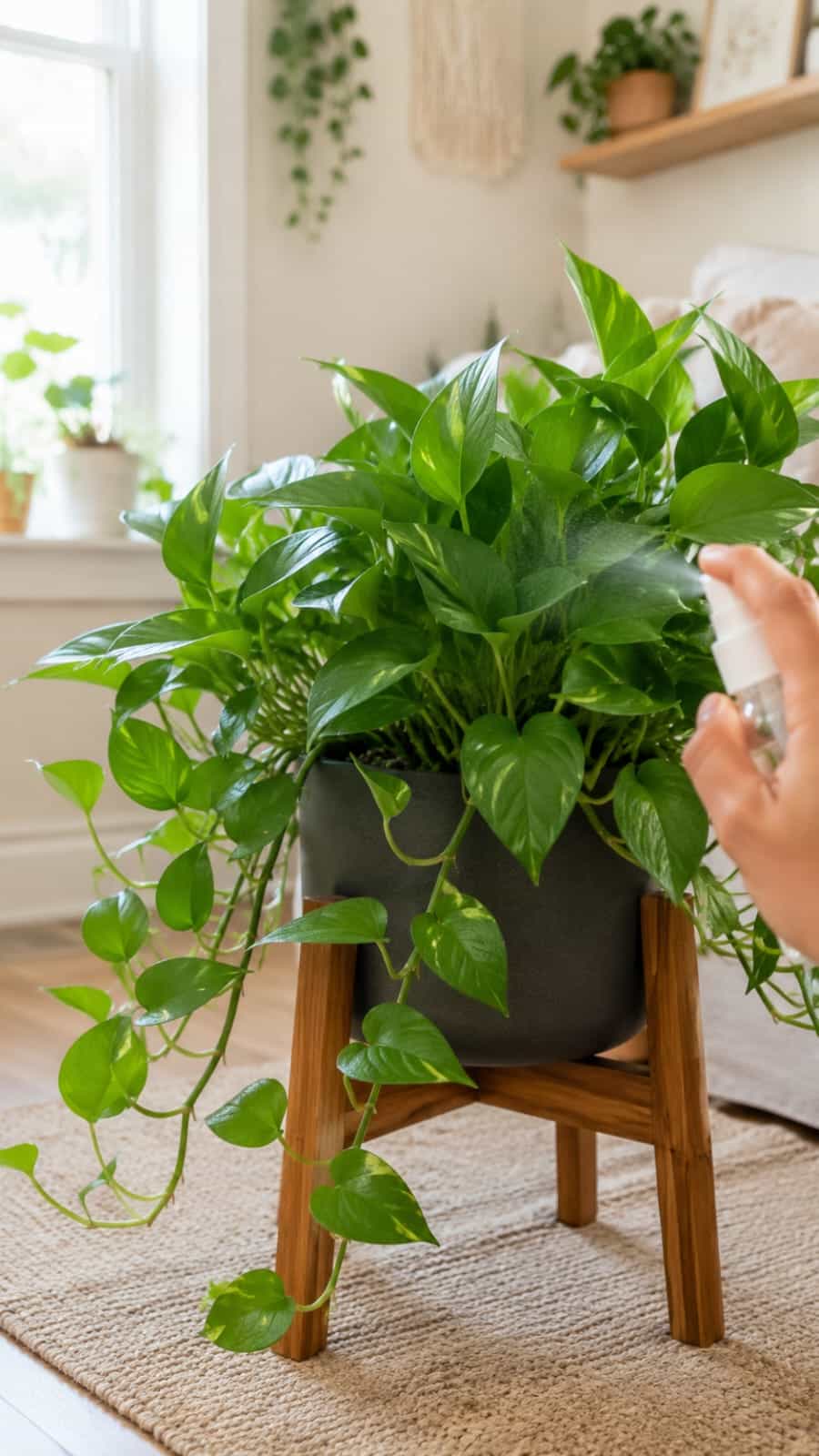
Pothos plants are among the most loved indoor plants in the world because they are easy to grow, beautifully trailing, and incredibly forgiving for beginners. But recently, indoor gardeners have started using a simple humidity trick that many believe helps pothos plants develop larger leaves, healthier vines, and a more vibrant tropical appearance indoors.
In the viral houseplant video spreading across social media, a fine mist is sprayed around a lush pothos plant hanging indoors. The creator explains that increasing humidity around pothos may improve leaf appearance and support healthier growth, especially in dry indoor environments where air conditioning and heating systems constantly remove moisture from the air.
This easy indoor gardening routine has quickly become one of the most discussed natural houseplant care methods online because pothos plants originally evolved in warm humid tropical forests. When indoor conditions become too dry, pothos plants sometimes develop slower growth, curled leaves, dry tips, or reduced vigor.
Many plant lovers are now searching for affordable ways to improve humidity naturally without buying expensive indoor greenhouse equipment. As a result, simple misting routines, pebble trays, plant grouping, and humidity boosting methods are becoming increasingly popular among indoor gardening enthusiasts.
This complete guide explains how humidity affects pothos plants, why tropical houseplants love moisture in the air, the safest ways to improve indoor humidity, common humidity mistakes, and how to create the ideal environment for lush trailing pothos vines naturally.
Why Pothos Plants Became Indoor Gardening Favorites
Pothos plants dominate indoor gardening because they combine beauty with resilience. Unlike delicate tropical plants that demand constant attention, pothos adapts to many indoor conditions while still looking attractive.
Pothos plants are popular because they:
- Grow quickly indoors
- Produce long trailing vines
- Tolerate beginner mistakes
- Handle low light conditions
- Require minimal maintenance
- Create lush tropical home décor
- Propagate easily in water
Their ability to remain attractive even with imperfect care makes pothos one of the best beginner houseplants ever.
Why Humidity Matters for Indoor Plants
Humidity refers to the amount of moisture present in the air.
Tropical plants like pothos naturally evolved in humid rainforest environments where the air constantly contains moisture. Indoors, however, humidity often drops dramatically because:
- Air conditioners dry the air
- Indoor heating removes moisture
- Closed windows reduce airflow
- Winter weather lowers humidity
- Dry climates affect indoor conditions
When tropical plants lose moisture faster than they can absorb it, leaves may begin showing signs of stress.
Signs Your Pothos Needs More Humidity
Pothos plants tolerate average humidity surprisingly well, but very dry indoor air may sometimes cause:
- Brown leaf edges
- Crispy leaf tips
- Curled leaves
- Smaller new growth
- Slower vine development
- Dull foliage appearance
Humidity support often becomes more important during winter when heating systems continuously dry indoor air.
The Viral Humidity Mist Trick Explained
The social media trend shows gardeners lightly misting the air around pothos plants using a spray bottle. The goal is to increase temporary moisture around the foliage and mimic tropical conditions more closely.
Plant owners claim this simple routine helps:
- Refresh foliage appearance
- Reduce dry leaf tips
- Support leaf unfurling
- Improve overall tropical look
- Create healthier-looking vines
However, humidity management works best when combined with proper lighting, watering, and airflow.
Can Misting Really Help Indoor Plants?
Misting provides only temporary humidity increases, but it may still offer benefits in certain situations.
Light misting can:
- Refresh dusty leaves
- Increase short-term moisture nearby
- Create a tropical atmosphere
- Help some plants during dry weather
Still, excessive misting can sometimes create problems if leaves remain constantly wet.
The Safest Way to Mist Pothos Plants
Use Clean Water
Mineral-heavy water may leave white residue on leaves.
Mist Lightly
Avoid soaking the foliage completely.
Maintain Airflow
Good circulation helps prevent fungal issues.
Mist During Daytime
Leaves dry more safely with daylight and airflow.
Avoid Constant Wetness
Overly wet leaves may encourage disease problems.
Continue to Page 2
Continue to page 2 for more details about this article and the key points many readers miss on the first page.