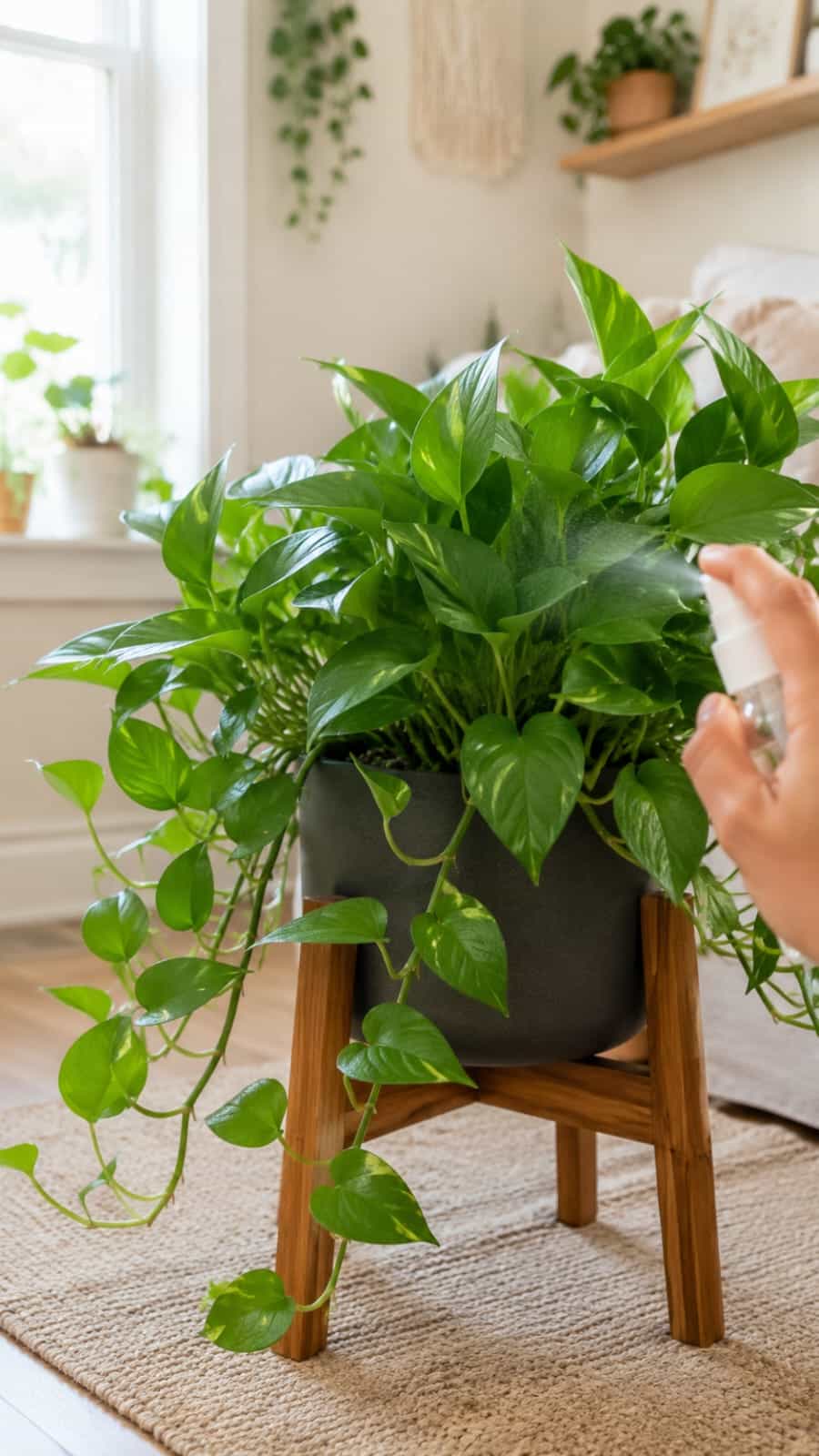
Better Alternatives to Constant Misting
Many experienced indoor gardeners prefer long-term humidity solutions rather than constant spraying.
Plant Grouping
Keeping multiple plants together naturally raises humidity nearby.
Pebble Trays
Water evaporating from pebble trays adds gentle moisture to the surrounding air.
Humidifiers
Small indoor humidifiers provide more stable humidity levels.
Bathrooms with Natural Light
Bathrooms often contain naturally higher humidity.
Why Pothos Plants Thrive in Tropical Conditions
Wild pothos plants grow in humid forests where they climb trees and receive filtered sunlight under dense canopies.
These tropical conditions include:
- Warm temperatures
- Moist air
- Filtered sunlight
- Frequent rainfall
- High humidity
Replicating parts of this environment indoors often improves plant appearance significantly.
How Humidity Affects Leaf Growth
Higher humidity helps tropical plants lose moisture more slowly through their leaves.
This may support:
- Smoother leaf unfurling
- Larger leaves
- Reduced edge browning
- Healthier foliage texture
Balanced humidity can make pothos appear more vibrant and lush.
The Biggest Mistake with Indoor Humidity
Too much moisture without airflow becomes dangerous.
Overly wet conditions may encourage:
- Mold
- Fungal growth
- Leaf spots
- Mildew
- Bacterial issues
Healthy indoor gardening always balances humidity with ventilation.
Why Pothos Plants Are So Easy to Grow
Pothos adapts beautifully because it combines drought tolerance with tropical resilience.
It handles:
- Missed watering
- Indoor lighting changes
- Average humidity
- Temperature fluctuations
- Minor neglect
This flexibility explains why pothos remains one of the best indoor plants for apartments, offices, and homes.
Best Light for Pothos Plants
Humidity alone cannot create healthy growth if lighting is poor.
Pothos grows best in:
- Bright indirect light
- Filtered sunlight
- Rooms with natural daylight
Very low light often causes:
- Smaller leaves
- Long stretched vines
- Slower growth
- Reduced variegation
Why Indoor Heating Damages Tropical Plants
Heaters dry indoor air aggressively during colder months.
This can create humidity levels far lower than tropical plants prefer.
As indoor air dries, plants lose moisture faster through their leaves.
How to Tell If Your Home Air Is Too Dry
Common signs include:
- Dry skin
- Static electricity
- Dry plant leaf tips
- Rapid soil drying
- Curling foliage
If multiple tropical plants develop dry edges simultaneously, humidity may be too low.
Can Humidity Increase Growth Speed?
Proper humidity supports healthier growing conditions, but it is only one factor affecting growth.
Fast pothos growth still depends mostly on:
- Lighting
- Watering balance
- Healthy roots
- Nutrients
- Temperature
Humidity works best as part of an overall healthy environment.
Why Grouping Plants Works So Well
Plants naturally release moisture into the air through transpiration.
When multiple plants sit together, the surrounding area becomes slightly more humid naturally.
This creates a small beneficial microclimate indoors.
Can Bathrooms Be Great for Pothos?
Yes, if enough natural light exists.
Bathrooms often provide:
- Warm temperatures
- Frequent humidity
- Stable moisture levels
Many pothos plants thrive beautifully in bright bathrooms.
Should You Wipe Pothos Leaves?
Absolutely.
Dust buildup blocks light absorption and reduces the glossy tropical appearance.
Gently wiping leaves helps:
- Improve photosynthesis
- Enhance shine
- Keep foliage healthy
- Remove residue
Why Pothos Plants Trail So Beautifully
Pothos vines naturally search for light and climbing support.
Indo