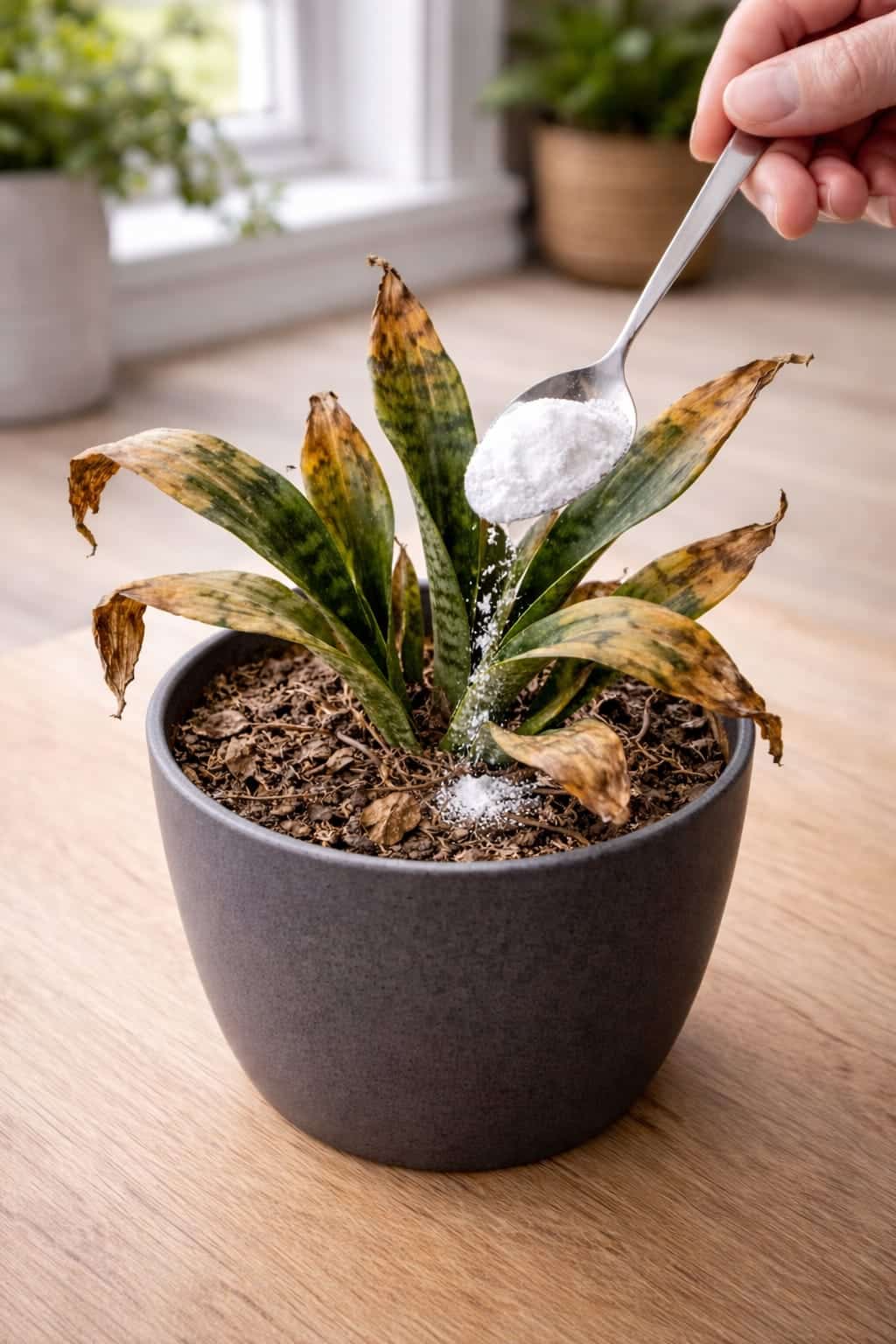
Is your snake plant turning yellow with soft leaves? Learn the simple powder trick that helps – but only when you fix overwatering, poor drainage, and light first. Step‑by‑step recovery guide inside.
Let’s be honest: snake plants (Sansevieria, now Dracaena) are known for being tough – but even they can start to decline when conditions aren’t right. Yellowing leaves, dry tips, or soft bases are all signs something is off. Recently, many homeowners have been trying a simple recovery method using a light natural powder (often cinnamon or a moisture‑absorbing agent), combined with better care habits.
But here’s the truth most people miss:
👉 The “trick” isn’t the powder — it’s fixing the root problem first.
In this guide, you’ll learn why snake plants start dying, what the powder trick really is, how to use it safely, and – most importantly – the correct step‑by‑step recovery method: checking soil, removing damaged leaves, improving drainage, letting soil dry, and providing bright indirect light. No magic, just practical plant care.
🌿 Why Snake Plants Start Dying
Before applying anything, it’s important to understand the real cause. Snake plants are resilient, but they decline when conditions are consistently wrong.
Common Reasons for Decline
Cause Effect
Overwatering (most common) Roots suffocate, turn mushy; leaves yellow.
Poor drainage soil Water pools; roots rot.
Lack of light Weak growth, pale leaves.
Root rot Soft base, foul smell, plant collapses.
Sudden temperature changes Stress, leaf damage.
Once roots are stressed, the leaves start to decline quickly. The solution is not a powder – it’s correcting the environment.
🧂 The “Powder Trick” Explained
Some homeowners lightly sprinkle a natural, dry powder on the soil surface. The most common powders used are:
· Cinnamon – natural antifungal, helps keep soil surface dry.
· Diatomaceous earth – absorbs moisture, deters pests (use carefully).
· Baking soda – not recommended for snake plants (can alter pH).
This is believed to:
· Absorb excess moisture from the soil surface
· Keep soil conditions more balanced
· Reduce surface mold or fungal issues
· Support a drier environment
· Help stabilize recovery conditions
⚠️ But it only works if used very lightly and occasionally. It is not a substitute for fixing watering and drainage.
⚠️ What Most People Do Wrong
Using too much powder or applying it incorrectly can make things worse
Avoid These Mistakes
Mistake Why It’s Harmful
Heavy layers covering the soil Creates a crust that repels water and blocks airflow.
Mixing unknown substances into soil Can alter soil chemistry or harm roots.
Using it as a replacement for proper care No powder fixes overwatering or root rot.
Watering immediately after applying Powder clumps, becomes ineffective, may mold.
Ignoring root damage Powder won’t heal rotten roots.
Snake plants don’t need “fixes” — they need corrections. Fix the cause, then use powder as a minor support
🌱 The Correct Recovery Method (Step‑by‑Step)
If your plant looks like the image (yellow leaves, soft base, slow growth), follow this proven recovery plan.
Step 1: Check the Soil
· If it’s wet or compact → stop watering immediately.
· If it smells sour → root rot has started.
· If the pot has no drainage holes → repot now.
Step 2: Remove Damaged Leaves
· Cut off completely dry, yellow, or mushy leaves at the base.
· Use clean, sharp scissors.
· This redirects energy to healthy parts.
Step 3: Improve Drainage
· Repot if necessary: Use cactus/succulent soil or add 30% perlite to regular potting soil.
· Choose a pot with drainage holes – terracotta is ideal.
· Do not use a pot that is too large – excess soil holds moisture
Step 4: Let Soil Dry Fully
· Do not water for at least 1–2 weeks after repotting or after discovering wet soil.
· Wait until the top 2–3 inches of soil are completely dry.
Step 5: Place in Bright Indirect Light
· Ideal: East or west window.
· Avoid: Dark corners (no energy for recovery) and direct harsh sun (stress).
· Light helps the plant photosynthesize and regrow roots.
Step 6: Optional – Very Light Powder Use
· Only after soil is dry – sprinkle a light dusting of cinnamon on the soil surface.
· Amount: A pinch, not a layer.
· Do not water immediately – let the powder sit.
· Frequency: Once a month at most.
Step 7: Resume Minimal Watering
· After the soil has been dry for 1–2 weeks, water lightly.
· Frequency: Every 2–3 weeks depending on dryness.
· Always check soil moisture before watering.
Snake Plant Recovery Guide – Quick Reference
Issue Cause Solution
Yellow leaves Overwatering Reduce watering; let soil dry completely.
Soft base Root rot Dry soil; repot; remove rotten roots.
Brown tips Dry air or stress Stabilize conditions; avoid drafts.
No growth Low light Move to brighter indirect light.
Weak, floppy leaves Poor drainage Change soil mix (add perlite).
How to Use Cinnamon Powder Safely – Step by Step
If you want to try the powder method, follow these guidelines.
- Ensure soil is dry – never apply to wet soil.
- Use a light dusting – a pinch or two, not a thick layer.
- Sprinkle on the top layer only – do not mix deep into the pot.
- Do not water after applying – wait until the next normal watering.
- Use occasionally – once a month at most.
- Stop if you see mold – cinnamon is antifungal, but excess moisture can still cause issues.
Frequently Asked Questions (FAQs)
Q: Can a dying snake plant recover?
Yes, if roots are not fully damaged. Even plants with root rot can recover if you trim the rotten parts, repot in fresh dry soil, and water correctly
Q: Should I repot immediately?
Only if soil is wet or compact. If the soil is still good and dry, you can simply adjust watering and light.
Q: Is the powder necessary?
No, it’s optional. The real recovery comes from fixing overwatering, drainage, and light. Powder is a minor support.
Q: How long does recovery take?
Several weeks to months. New growth (leaves or roots) may appear in 4–8 weeks under good conditions.
Q: Should I cut damaged leaves?
Yes, to help new growth. Remove fully yellow, brown, or mushy leaves. Leave partially green leaves – they still photosynthesize.
Q: Can I water after applying powder?
Better to wait until soil is dry. Powder works best on dry soil. Watering immediately can clump it and reduce its effect.
Q: What’s the biggest mistake people make?
Overwatering – it is the #1 killer of snake plants. Let the soil dry completely between waterings.
Q: Can roots regrow after rot?
Yes, in proper conditions. After trimming rotten roots and repotting in dry, well‑draining soil, new roots will eventually grow.
Q: Do snake plants need fertilizer during recovery?
No, keep it minimal. Fertilizer can burn tender new roots. Wait until the plant shows new growth (2–3 months), then use a very diluted balanced fertilizer.
Q: Where should I place the plant during recovery?
Bright indirect light is best – an east or west window. Avoid dark corners and direct afternoon sun.
Printable Snake Plant Recovery Checklist
☐ Check soil moisture – if wet, stop watering immediately
☐ Remove plant from pot and inspect roots
☐ Trim any black, mushy, or foul‑smelling roots
☐ Cut off completely yellow or mushy leaves
☐ Repot in fresh, well‑draining cactus/succulent soil
☐ Use a pot with drainage holes (terracotta preferred)
☐ Place in bright, indirect light (east/west window)
☐ Do not water for 1–2 weeks
☐ Optional: lightly dust soil surface with cinnamon (once, after soil is dry)
☐ Resume watering only when top 2–3 inches of soil are completely dry
☐ Water every 2–3 weeks (depending on light)
☐ Do not fertilize until new growth appears
☐ Be patient – recovery takes weeks to months
Final Thoughts – Fix the Cause, Then Support
The “powder trick” is not a magic solution. A light dusting of cinnamon can help keep the soil surface dry and discourage fungus, but it will never replace fixing overwatering, improving drainage, and providing adequate light.
If your snake plant is struggling, don’t reach for a powder first. Check the soil, stop watering, inspect the roots, repot if needed, and move it to a brighter spot. Once those basics are right, a little powder can be a small boost – but it’s never the cure.
With patience and the right care, your snake plant can recover, grow new leaves, and become strong again
Now it’s your turn! Have you tried a powder on your snake plant? What worked – or didn’t? Drop a comment below – I’d love to hear your experience.
And if you found this guide helpful, share it with a friend who’s struggling with a snake plant. Pin it for later, and subscribe to our newsletter for more practical plant care.
Stay dry, stay bright, and watch your snake plant recover. 🌿✨