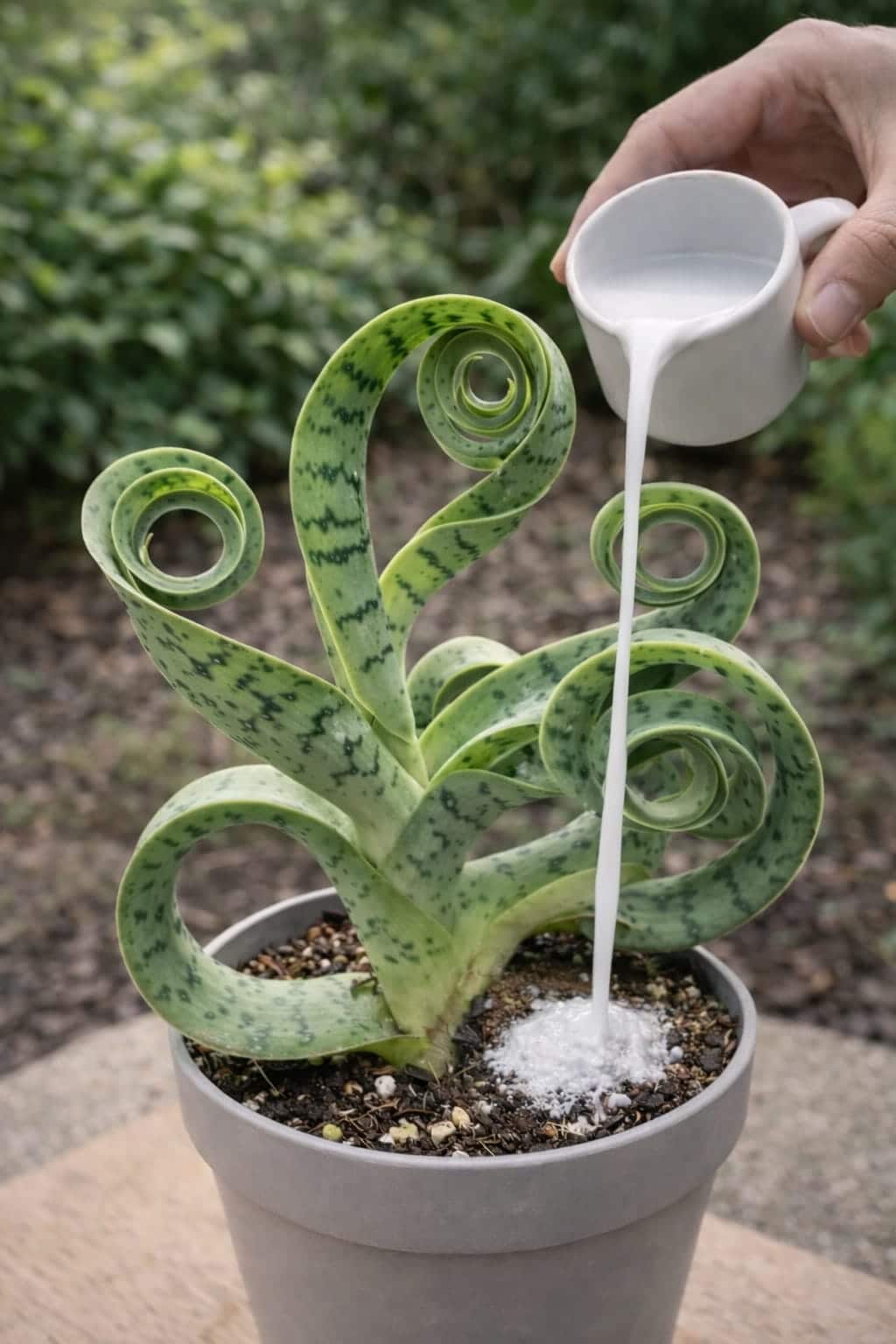
Discover the simple, natural liquid method that luxury homeowners use to keep snake plants thriving. Minimal input, maximum stability – plus the real secrets: light, water, and drainage.
Let’s be honest: snake plants (Sansevieria, now Dracaena) have become a signature element in modern interiors — especially in high‑end homes where simplicity, cleanliness, and natural balance define the space. Their vertical, sculptural leaves create clean visual lines that complement minimalist and luxury decor. Recently, a growing number of homeowners are adopting a simple, natural liquid method to maintain healthier, more vibrant indoor plants.
It’s not about complicated fertilizers — it’s about gentle, consistent care that supports the plant without overwhelming it. In this guide, you’ll learn why snake plants are perfect for modern homes, what the “simple liquid” approach really is, why less is more, and the real secrets to thriving snake plants: proper drainage, controlled watering, indirect light, stable temperatures, and occasional light feeding.
No magic, just practical care.
🌿 Why Snake Plants Are Perfect for Modern Homes
Snake plants are one of the most popular indoor plants for a reason:
· Extremely low maintenance – they forgive neglect.
· Adapt to different lighting conditions – from low light to bright indirect.
· Require minimal watering – perfect for busy lifestyles.
· Clean, architectural appearance – upright leaves add structure.
· Fit perfectly in luxury and minimalist interiors – they complement any design style
Their vertical structure makes them ideal for creating clean visual lines in any room – from living rooms and bedrooms to offices and entryways.
💧 The “Simple Liquid” Approach Explained
Instead of heavy feeding schedules, many homeowners use a light, diluted natural liquid occasionally to support plant health. This is often a very diluted seaweed extract, compost tea, or a mild liquid fertilizer (at quarter strength). The liquid may appear slightly golden or brown, not a bright color.
This approach focuses on:
· Maintaining balanced moisture
· Supporting root stability
· Avoiding nutrient overload
· Encouraging steady, natural growth
· Keeping soil conditions stable
The key is not the ingredient itself — it’s how gently and rarely it’s used. A small amount every 4–6 weeks during spring and summer is plenty. Over‑feeding is far more harmful than under‑feeding.
Continue to Page 2
Continue to page 2 for more details about this article and the key points many readers miss on the first page.