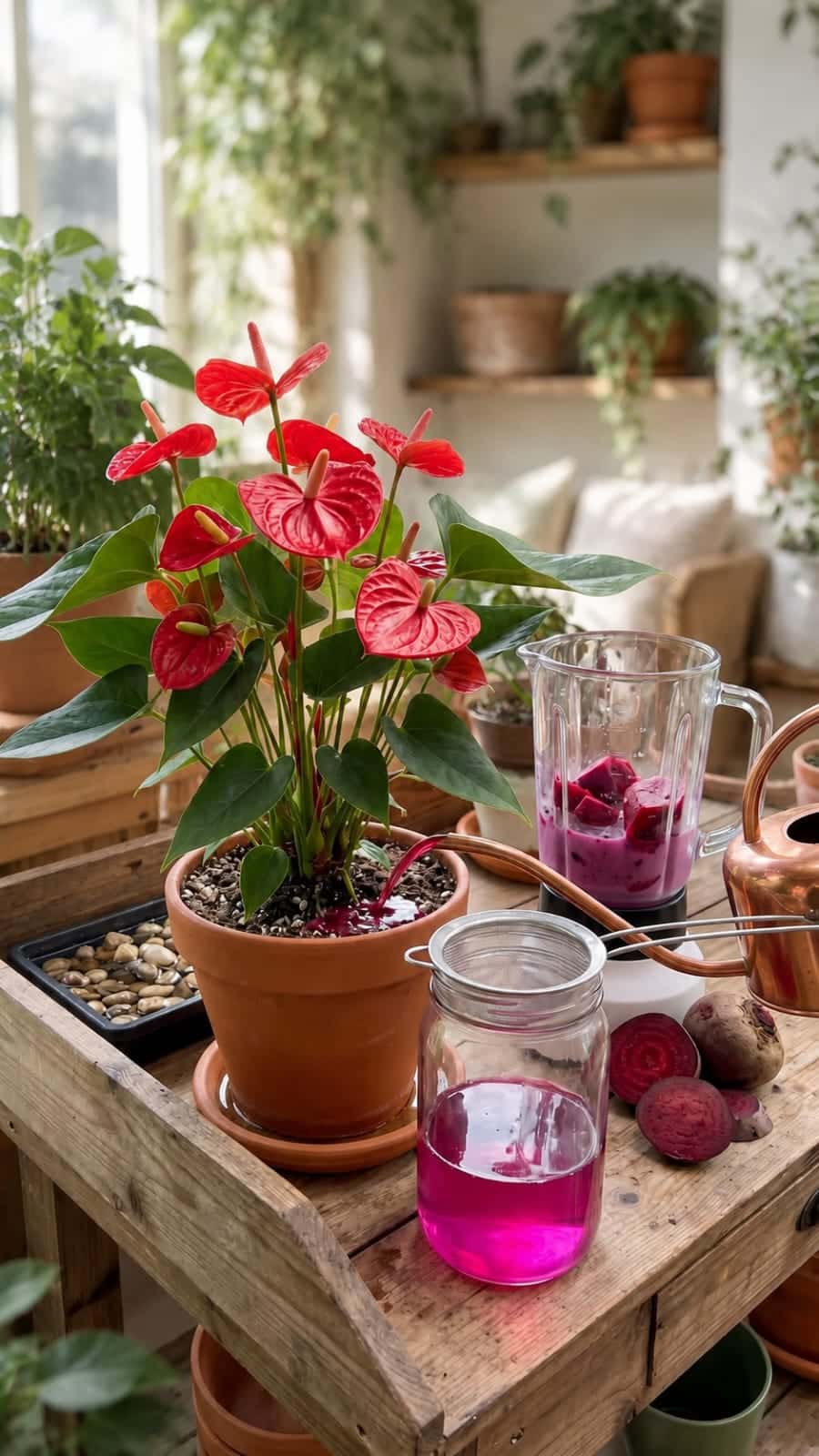
Anthuriums are among the most elegant flowering houseplants you can grow at home. Their glossy green leaves and bright, heart-shaped blooms make them look luxurious even when they are sitting on a simple windowsill. A healthy Anthurium can flower again and again throughout the year, producing long-lasting red, pink, white, or purple spathes that bring color to indoor spaces, balconies, and plant shelves.
Because Anthuriums are so beautiful when they bloom, it is easy to become disappointed when the flowers slow down. Many plant owners begin searching for a natural way to encourage more blooms, stronger leaves, and better color. One homemade idea that attracts attention is beetroot water. The deep pink liquid looks rich, vibrant, and full of plant energy, so it is often presented as a natural flowering tonic.
Beetroot water can be used as a gentle homemade supplement for Anthurium, but it must be used carefully. It is not a magic liquid, and it will not force a weak plant to bloom overnight. It will not repair rotten roots, fix poor drainage, replace sunlight, or turn an unhealthy Anthurium into a flowering machine in a few days. However, when used in a mild, strained, and diluted form, beetroot water can become part of a thoughtful care routine for a plant that is already healthy enough to grow.
The real secret to Anthurium flowering is not one single ingredient. It is the combination of bright indirect light, airy soil, correct watering, warm temperatures, moderate humidity, healthy roots, and gentle feeding. Beetroot water may support this routine, but it should never replace the basics.
This guide explains how to use beetroot water for Anthurium safely, when it may help, when to avoid it, and how to build a realistic care plan that supports long-term flowering without harming the plant.
What Is Beetroot Water for Plants?
Beetroot water is a homemade liquid made by blending or soaking beetroot in water, then straining the mixture before applying it to the soil. Beetroot naturally contains organic compounds, minerals, and pigments that give the liquid its deep pink or purple color. In plant-care videos, this color makes the mixture look powerful and attractive.
But color does not automatically mean fertilizer strength. Beetroot water is not the same as a complete plant fertilizer. It does not provide all the nutrients an Anthurium needs in balanced amounts. It is better understood as a mild organic plant tonic that may support soil life and provide small amounts of nutrients when used occasionally.
The most important part of using beetroot water is preparation. A thick beetroot puree poured directly into the soil can cause problems. It may sit on the surface, attract insects, ferment, smell sour, or encourage mold. Anthuriums need an airy root zone, so anything thick, sticky, or decomposing around the roots can become risky.
A safer version is thin, fresh, strained, and diluted. The liquid should look like colored water, not a thick smoothie. This keeps the routine gentle and reduces the chance of soil problems.
Can Beetroot Water Really Help Anthurium Bloom?
Beetroot water may help support a healthy Anthurium indirectly, but it should not be described as a guaranteed bloom booster. Anthuriums flower when the plant has enough energy, healthy roots, proper light, and suitable growing conditions. If one of those essentials is missing, beetroot water will not solve the problem by itself.
If an Anthurium is growing in a dark corner, it may produce beautiful leaves but few flowers. The solution is not more beetroot water. The solution is brighter indirect light. If the potting mix is dense and wet, the roots may struggle. The solution is better drainage and root care, not a homemade liquid. If the plant has not been fed for a long time, a balanced fertilizer may be more reliable than beetroot water alone.
However, if the plant is already stable, has firm leaves, healthy roots, and enough light, beetroot water may be used occasionally as a gentle natural supplement. It can be part of a care routine that keeps the plant hydrated, supported, and actively growing.
The safest expectation is this: beetroot water may support overall plant health, but it does not guarantee instant flowers. The goal is long-term improvement, not a dramatic overnight result.
Why Anthuriums Need Careful Feeding
Anthuriums are tropical plants, but they are not heavy feeders. Many Anthuriums grow naturally in airy, organic environments where their roots receive moisture, oxygen, and small amounts of nutrients over time. They do not like dense, muddy soil or strong fertilizer sitting directly around their roots.
In containers, Anthurium roots need a balance of moisture and airflow. A pot that stays wet for too long can quickly lead to root rot. Once the roots are damaged, the plant cannot properly absorb water or nutrients. This is why adding more homemade mixtures to a struggling plant can sometimes make things worse.
Feeding should be gentle. Whether you use a commercial fertilizer or a natural supplement like beetroot water, the plant should not be overwhelmed. A little support during active growth is useful. Too much organic liquid too often can create buildup, pests, or sour-smelling soil.
For Anthuriums, less is often safer. The plant responds better to steady, balanced care than to strong treatments.
Understanding the Anthurium Flower
What most people call an Anthurium flower is actually a colorful modified leaf called a spathe. The true flowers are tiny and grow along the central spike, known as the spadix. This is why Anthurium blooms look so shiny, structured, and long-lasting.
Because the spathe is part of the plant’s flowering structure, its color and quality depend on the plant’s overall condition. Bright indirect light, stable watering, and healthy roots help the plant produce stronger blooms. Poor conditions can result in fewer flowers, smaller spathes, faded color, or flowers that age quickly.
Beetroot water will not dye the flowers red. It does not work like paint inside the plant. A red Anthurium stays red because of its genetics and healthy growth, not because a red liquid was poured into the soil. The purpose of beetroot water is not to color the plant, but to act as a mild organic supplement.
When Beetroot Water May Be Useful
Beetroot water may be useful when your Anthurium is already healthy and actively growing. Signs of active growth include new leaves, fresh roots, new flower buds, or firm glossy foliage. A plant in this condition can make better use of occasional supplements.
This method may also be useful during spring and summer, when many indoor plants grow more actively because they receive more light and warmth. Anthuriums can grow year-round in warm, bright homes, but they often slow down when light levels drop.
If your Anthurium is blooming but you want to support continued growth, beetroot water can be used as one occasional watering session. It should not be used every week, and it should not be combined with heavy fertilizer routines.
The best time to use beetroot water is when the plant is due for watering. The soil should be slightly dry on top, not already wet. Applying any liquid to wet soil can increase the risk of overwatering.
When You Should Avoid Beetroot Water
Do not use beetroot water if your Anthurium has root rot. Root rot usually appears as mushy roots, a sour smell, drooping despite wet soil, yellowing leaves, or a soft base. A plant with root rot needs fresh soil, trimming, better drainage, and time to recover. Beetroot water will not cure rotten roots.
Do not use beetroot water if the soil already has mold. Mold on the surface can happen when organic material stays too wet. Adding another organic liquid may make the problem worse.
Avoid beetroot water if you have fungus gnats. Fungus gnats are attracted to damp organic soil. Homemade liquids can increase the problem if they keep the top layer moist or leave residue behind.
Do not use beetroot water on a newly repotted Anthurium, especially if roots were trimmed. Freshly disturbed roots need time to settle. Wait until the plant shows stable growth before adding any supplement.
Also avoid using it during cold, dark periods when the plant is not actively growing. Slow-growing plants use fewer nutrients, and extra organic liquid may sit in the soil instead of being used.
How to Make Beetroot Water Safely
To make a gentle beetroot water for Anthurium, start with one small fresh beetroot and clean water. Wash the beetroot well to remove soil or residue. You can peel it if you prefer, especially if the skin looks dirty or rough.
Cut the beetroot into small pieces and blend it with two to three cups of water. Blend only until the water becomes colored. You do not need to make a thick puree. After blending, strain the liquid through a fine sieve, cloth, or coffee filter. This step is very important because the pulp should not go into the plant pot.
After straining, dilute the liquid again. A safe beginner ratio is one part beetroot water to three parts plain water. The final mixture should be thin and watery. It may still be pink, but it should not be thick.
Use the mixture fresh. Do not store it for many days. Beetroot water can ferment, especially in warm rooms. If it smells sour, fizzy, or unpleasant, do not use it on your plant.
Why Straining Matters
Straining is one of the most important safety steps. Beetroot pulp may look natural, but it can create problems in a houseplant pot. Pulp can sit on the soil surface, decay slowly, attract insects, and encourage mold. It may also block airflow in the top layer of the potting mix.
Anthuriums need oxygen around their roots. Their potting mix should stay airy and fresh. Thick organic residue works against that goal. A strained liquid moves through the potting mix more easily and leaves less material behind.
If you want to use the leftover beetroot pulp, add it to an outdoor compost pile instead. Once fully composted, it can become part of a safer soil amendment. Fresh pulp should not be used directly in indoor Anthurium pots.
Step-by-Step Beetroot Water Routine for Anthurium
Step 1: Check the Light
Before using any homemade supplement, look at where your Anthurium is growing. The plant should receive bright indirect light. A bright window with filtered light is ideal. Harsh direct sun can scorch the leaves, while low light can reduce flowering.
If your Anthurium is not flowering, light is often the first thing to improve. Beetroot water cannot replace proper light.
Step 2: Check the Soil Moisture
Touch the top layer of the potting mix. If it is still wet, wait. If the top feels slightly dry and the pot is ready for watering, you can use the diluted beetroot water.
Never pour beetroot water into a pot that is already soggy. Anthurium roots need moisture, but they also need oxygen.
Step 3: Prepare a Fresh, Diluted Mixture
Blend a small amount of beetroot with water, strain it very well, and dilute it with plain water. The mixture should be mild and fresh. Do not use old fermented beetroot liquid.
Step 4: Pour Around the Soil
Apply the liquid to the potting mix around the base of the plant. Do not pour it on the leaves or flowers. Wet foliage can collect residue, and organic liquid on leaves may encourage spots or dust buildup.
Step 5: Let the Pot Drain
Water should drain from the bottom of the pot. If your Anthurium is in a decorative pot or saucer, empty any extra liquid. Do not let the plant sit in beetroot water.
Step 6: Watch the Plant
After application, observe the plant for one to two weeks. A healthy response means the plant remains firm, the soil smells fresh, and no mold or gnats appear. If the soil becomes sour, moldy, or too wet, stop using the mixture.
How Often Should You Use Beetroot Water?
For Anthurium, beetroot water should be occasional. Once every four to six weeks during active growth is enough. This gives the plant time to respond without overloading the soil with organic material.
Do not use beetroot water every time you water. Anthuriums usually need a balanced and predictable routine. Frequent homemade liquids can make the soil unstable, especially in indoor pots.
If you already use a commercial fertilizer, use beetroot water less often. For example, you might use a balanced fertilizer one month and beetroot water another month, instead of using both at the same time.
During colder or darker months, reduce or stop beetroot water use. If the plant is not actively growing, it does not need extra supplements.
Can Beetroot Water Make Anthurium Flowers Redder?
Beetroot water will not permanently make Anthurium flowers redder. The flower color comes from the plant’s genetics and overall health. A red Anthurium can produce brighter red spathes when it is healthy, but pouring red liquid into the soil does not directly dye the flowers.
If your Anthurium flowers are coming out pale, faded, or greenish, check the light first. Too little light can reduce flower quality. Aging flowers can also fade naturally. Some Anthurium varieties change color as the blooms mature.
Healthy roots and balanced nutrition also support better flower quality. Beetroot water may be part of a supportive routine, but it is not a color treatment.
The Real Secret to More Anthurium Flowers
The most important factor for Anthurium flowering is bright indirect light. Without enough light, the plant may grow leaves but produce few flowers. Place it near a bright window where it receives plenty of filtered light. Avoid harsh afternoon sun that can burn the leaves.
The second factor is root health. Anthurium roots should be firm and growing in an airy mix. If the soil is dense or waterlogged, the plant may stop blooming because the roots are stressed.
The third factor is consistent moisture. Anthuriums like lightly moist soil, but not soggy soil. Let the top layer dry slightly before watering again.
The fourth factor is warmth and humidity. Anthuriums prefer stable warm temperatures and moderate humidity. Cold drafts can slow growth and reduce flowering.
The fifth factor is gentle feeding. A plant that has enough light and healthy roots can benefit from mild nutrition. This can include balanced fertilizer and occasional natural supplements like beetroot water.
Best Soil Mix for Anthurium
Anthuriums grow best in a chunky, airy potting mix. A good mix may include potting soil, orchid bark, perlite, coco chips, and a small amount of compost or worm castings. The exact recipe can vary, but the goal is always the same: moisture plus airflow.
Dense soil is one of the most common reasons Anthuriums decline. If the soil stays wet for too long, roots may rot. If roots rot, the plant cannot flower well.
If your Anthurium has stopped blooming and the soil looks old, compacted, or sour-smelling, repotting may help more than beetroot water. Fresh airy mix gives the roots a better environment.
Choose a pot with drainage holes. A beautiful pot without drainage can create hidden water problems. If you use a saucer, empty it after watering.
Continue to Page 2
Continue to page 2 for more details about this article and the key points many readers miss on the first page.