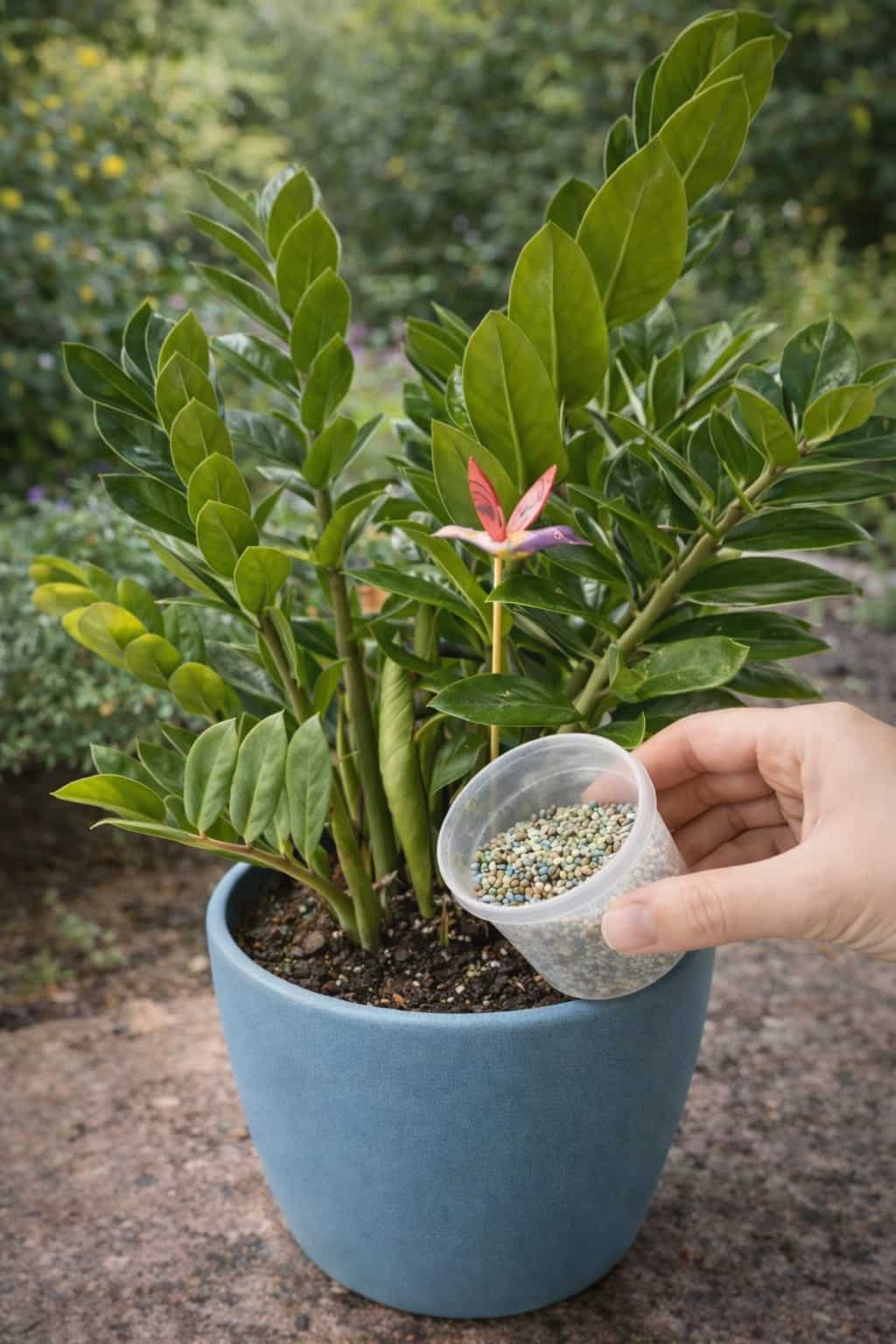
Can slow‑release pellets boost your ZZ plant’s growth? Learn what these pellets do, how to apply them safely, and why light, soil, and watering matter most. Surprising results inside.
Let’s be honest: the ZZ plant (Zamioculcas zamiifolia) has become one of the most popular indoor plants in modern homes. Known for its glossy leaves and incredible resilience, this plant thrives even in low‑light environments where many other plants struggle. It’s the go‑to choice for offices, bedrooms, and living rooms – anywhere you want a touch of green without constant attention.
Despite its reputation as a nearly indestructible plant, ZZ plants can still benefit from balanced soil conditions and proper nutrient support. Recently, many indoor gardeners have been experimenting with adding small nutrient pellets to the soil to encourage stronger growth and healthier foliage.
But here’s the truth: the pellets are not magic. They work best as a gentle, slow‑release supplement when used correctly – and only when the plant already has the right conditions: well‑draining soil, proper watering, and adequate light. In this guide, you’ll learn why ZZ plants respond to soil improvements, what these pellets do, how to apply them safely, and the ideal environment for a thriving ZZ plant.
Let’s help your ZZ plant reach its full potential.
🌿 Why ZZ Plants Respond Well to Soil Improvements
Unlike fast‑growing tropical plants, ZZ plants grow slowly but steadily. Their thick underground rhizomes store water and nutrients, allowing them to survive long periods without watering. This is why they are so forgiving – they have built‑in reserves.
However, healthy soil conditions can help the plant:
· Support steady leaf production – new stems emerge more regularly.
· Encourage stronger stems – upright, firm growth.
· Maintain deep green leaf color – glossy, vibrant appearance.
· Improve root and rhizome stability – overall plant health.
· Promote long‑term plant health – years of steady growth.
Because ZZ plants grow slowly, small soil improvements may gradually lead to noticeable results over time. Don’t expect overnight changes – but over weeks and months, you may see healthier, more robust growth.
🪴 What These Pellets Usually Do
The pellets some gardeners add to the soil are typically slow‑release nutrient pellets (often labeled as slow‑release fertilizer or controlled‑release plant food). Common examples include:
Pellet Type What It Does Best For
Slow‑release balanced fertilizer (e.g., 10-10-10 or 14-14-14) Releases nitrogen, phosphorus, potassium gradually over 2–6 months General health, steady growth
Osmocote or similar resin‑coated pellets Dissolves with each watering; nutrients released slowly Low‑maintenance feeding
Organic slow‑release pellets (e.g., Jobes, Dr. Earth) Made from natural ingredients; gentle on roots Organic plant care
These pellets may help provide:
· Balanced nutrients over time – avoids spikes and burns.
· More stable feeding routines – set and forget for months.
· Reduced need for frequent fertilizing – ideal for busy plant owners.
· Gentle nutrient release into the soil – prevents root stress.
Since they dissolve slowly, they can support plant growth without overwhelming the roots. This is especially important for ZZ plants, which are sensitive to over‑fertilizing.
💧 How Gardeners Typically Apply the Pellets
Indoor gardeners usually apply nutrient pellets carefully to avoid overfeeding. Because ZZ plants store nutrients efficiently, only small amounts are needed.
Continue to Page 2
Continue to page 2 for more details about this article and the key points many readers miss on the first page.