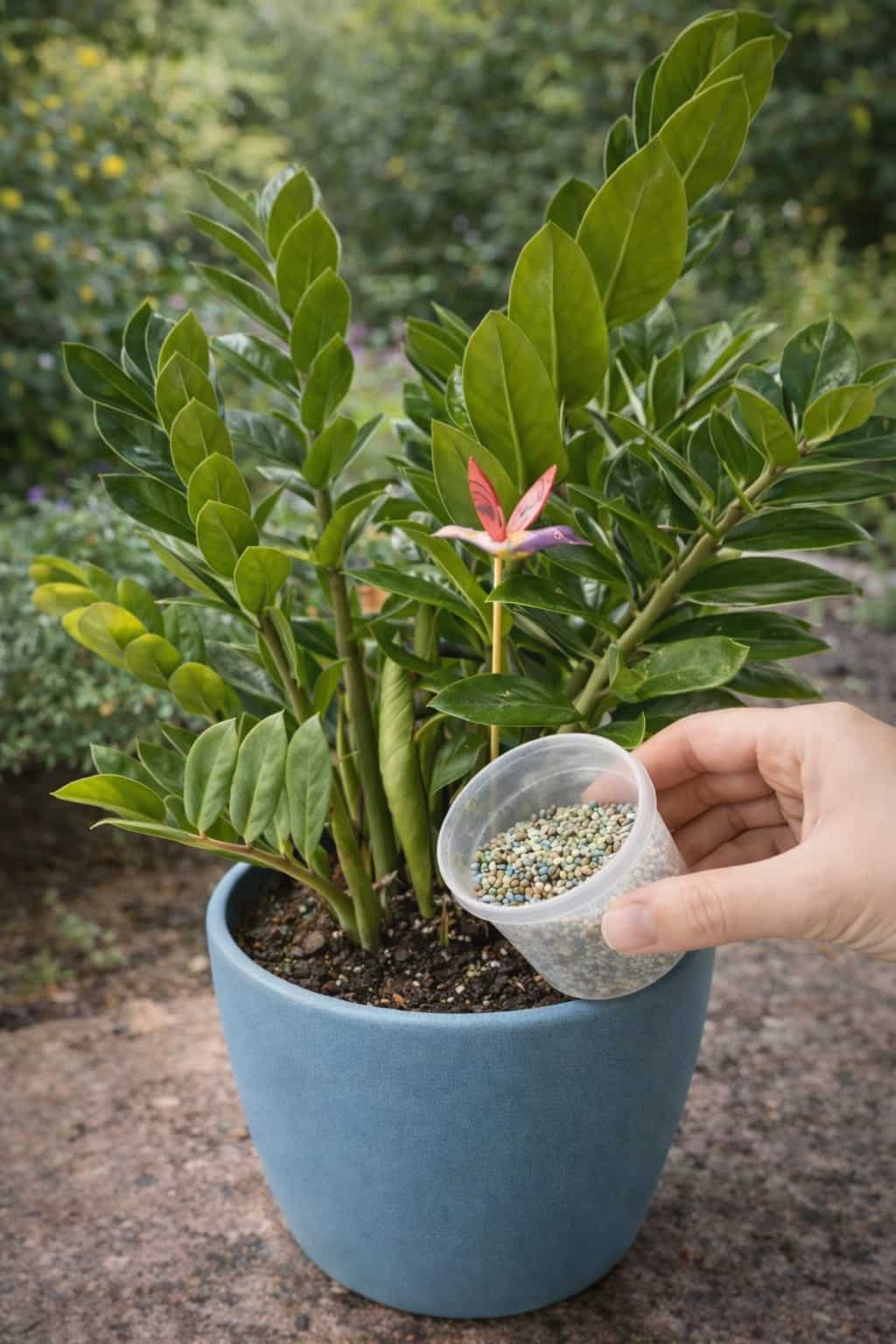
Typical Application Method – Step by Step
- Choose a slow‑release pellet – look for a balanced formula (e.g., 10-10-10 or 14-14-14) labeled for indoor plants.
- Sprinkle a small amount of pellets around the soil surface – about ½ to 1 teaspoon for a standard 6‑inch pot.
- Avoid placing pellets directly against the stems – keep them near the edges of the pot.
- Water lightly to activate slow nutrient release – the pellets need moisture to start dissolving.
- Reapply only every few months if needed – follow package directions (usually every 3–6 months).
- Monitor plant growth – if you see signs of over‑feeding (yellow tips, leaf burn), reduce amount next time.
What to Avoid
· Using too many pellets – more is not better; can burn roots.
· Placing pellets on dry soil without watering – they won’t activate and may sit unused.
· Applying during winter – ZZ plants rest in cool months; feed only in spring/summer.
· Ignoring light and watering – pellets won’t fix poor care.
⚠️ Common ZZ Plant Care Mistakes
Although ZZ plants are very forgiving, some common mistakes can affect their growth. The pellets will not fix these problems.
Frequent Issues to Avoid
Mistake Why It’s Harmful Correct Approach
Watering too often Root rot, yellow leaves Let soil dry completely between waterings.
Soil that stays wet too long Suffocates rhizomes Use well‑draining cactus mix.
Heavy fertilizer use Burns roots, brown tips Use slow‑release pellets or very diluted liquid fertilizer.
Pots without drainage holes Water pools at bottom Always use pots with holes.
Very dark indoor locations Weak growth, pale leaves Move to bright indirect light.
ZZ plants actually prefer slightly dry soil between waterings. Overwatering is the #1 killer.
🌱 Ideal Growing Conditions for ZZ Plants
To maintain healthy growth and glossy leaves, ZZ plants thrive when their environment remains stable. The pellets can help, but only if these basics are already right.
Best Conditions for ZZ Plants
Factor Ideal Condition Why It Matters
Light Bright indirect light or moderate indoor light Steady growth, vibrant leaves
Soil Loose, well‑draining mix (cactus soil + perlite) Prevents root rot, supports rhizomes
Water Infrequent – let soil dry completely Protects rhizomes, prevents rot
Temperature Warm indoor climate (18–30°C / 65–86°F) Stable growth year‑round
Feeding Occasional light nutrients (slow‑release pellets or diluted fertilizer) Supports leaf health
Under these conditions, ZZ plants can continue producing new stems for many years – some have been known to live for decades.
How to Use Slow‑Release Pellets Safely – Step by Step
If you want to try this method, follow this simple plan.
- Choose the right pellets – balanced slow‑release fertilizer for indoor plants.
- Apply in spring – the start of the growing season.
- Sprinkle lightly on soil surface – follow package dose for pot size (usually ½–1 tsp for small pots).
- Water gently to activate.
- Do not reapply for 3–6 months – slow‑release pellets last.
- Observe your plant – if growth improves, continue; if leaves show brown tips, use less next time.
Pro tip: If you prefer liquid fertilizer, use it at quarter strength once a month in spring/summer – but slow‑release pellets are more convenient and harder to overdo.
ZZ Plant Care Overview – Quick Reference Table
Factor Ideal Condition Benefit
Light Moderate or indirect light Steady growth
Soil Well‑draining mix (cactus + perlite) Prevents root rot
Water Infrequent – let soil dry completely Protects rhizomes
Temperature Warm indoor climate (18–30°C) Stable growth
Feeding Occasional nutrients (slow‑release pellets or diluted liquid) Supports leaf health
Pellets Light application, slow‑release, spring/summer only Gentle, long‑term support
Frequently Asked Questions (FAQs)
Q: Why are ZZ plants so popular indoors?
They tolerate low light and irregular watering – perfect for busy people and offices.
Q: How often should ZZ plants be watered?
Usually every 2–3 weeks depending on light and temperature. Always check that the soil is completely dry before watering.
Q: Can ZZ plants grow in low light?
Yes, they adapt well to indoor environments. Growth will be slower, but they survive.
Q: Why do ZZ plant leaves turn yellow?
Often caused by overwatering. Check soil moisture and roots. If roots are rotten, trim and repot.
Q: Do ZZ plants need fertilizer often?
Only occasionally during active growth (spring and summer). Once or twice a year is plenty.
Q: Can ZZ plants live for many years?
Yes, they are extremely long‑lived houseplants – some live for decades with proper care.
Q: Are ZZ plants beginner‑friendly?
Yes, they are among the easiest plants to care for – very forgiving.
Q: Why do ZZ plants grow slowly?
Their rhizomes store energy and release growth gradually – slow growth is normal.
Q: Can ZZ plants grow in offices?
Yes, they are perfect for indoor workplaces – they tolerate low light and infrequent watering.
Q: Do ZZ plants improve indoor decor?
Yes, their glossy leaves create a modern, elegant aesthetic – they fit minimalist and luxury interiors.
Printable ZZ Plant Care Checklist
☐ Place in bright, indirect light (east/west window) – tolerates low light
☐ Use a pot with drainage holes (terracotta preferred)
☐ Fill with fast‑draining cactus/succulent soil (add perlite)
☐ Water only when soil is completely dry (check with finger)
☐ Water deeply, then empty saucer
☐ Do not water again for 2–4 weeks (depending on light)
☐ Apply slow‑release pellets once in spring (follow package dose)
☐ Or use diluted liquid fertilizer once a month in spring/summer
☐ Do not feed in fall/winter
☐ Wipe leaves with damp cloth monthly
☐ Inspect rhizomes annually – repot if crowded
☐ Be patient – slow growth is normal
Final Thoughts – Gentle Support, Strong Fundamentals
Adding slow‑release pellets to your ZZ plant’s soil can be a convenient, gentle way to provide balanced nutrients over time. But it will never replace the fundamentals: well‑draining soil, infrequent watering, and adequate light.
If your ZZ plant is struggling, don’t reach for pellets first. Check the soil, adjust your watering, and move it to a brighter spot. Once those basics are right, a small amount of slow‑release pellets once or twice a year can give it a gentle nudge – but it’s never the cure.
With patience and the right care, your ZZ plant will reward you with glossy leaves, strong stems, and years of beauty.
Now it’s your turn! Have you tried slow‑release pellets on your ZZ plant? What results did you see? Drop a comment below – I’d love to hear your experience.
And if you found this guide helpful, share it with a friend who loves ZZ plants. Pin it for later, and subscribe to our newsletter for more practical plant care.
Stay dry, stay bright, and watch your ZZ plant thrive. 🌿✨