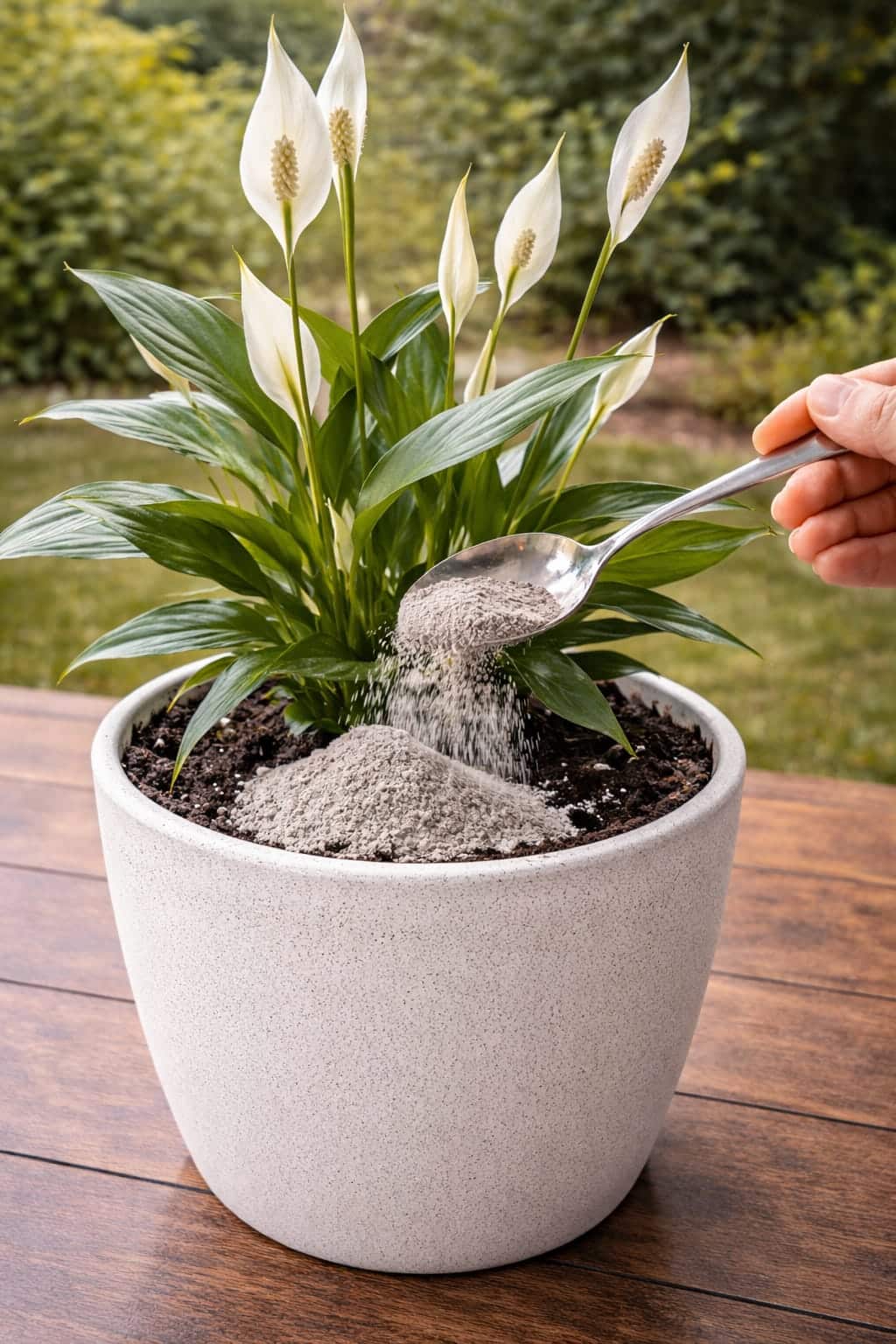
Is your peace lily struggling to bloom? Learn why indoor gardeners are using natural mineral powders (crushed eggshells, dolomite lime) to improve soil health and encourage stronger growth. Unexpected results inside.
Let’s be honest: peace lilies (Spathiphyllum) are one of the most loved indoor plants – and for good reason. Their glossy green leaves and elegant white blooms bring a calm, fresh atmosphere to living rooms, bedrooms, and offices. They’re known for thriving in indoor environments and are often recommended for beginners.
But even easy plants can struggle. Yellowing leaves, brown tips, or a complete lack of flowers are common frustrations. That’s why many indoor gardeners are constantly searching for gentle, natural ways to support their peace lilies without resorting to harsh chemicals.
Recently, a new trend has emerged: adding a light mineral powder to the soil of peace lilies. At first glance, it looks like a simple trick – a sprinkle of white powder, a little water, and suddenly the plant seems healthier. But what’s really happening? And is it safe?
In this guide, you’ll learn what this powder is, why gardeners use it, how to apply it correctly, and the ideal conditions that truly make peace lilies thrive. No magic, just practical plant care.
🌿 What Is the Powder Used on Peace Lilies?
The powder commonly seen in examples like this usually represents natural mineral‑based soil conditioners. It is not a strong fertilizer. Instead, it’s a gentle amendment used to maintain soil mineral balance over time..
Common Options Gardeners Use:
Powder What It Is Purpose
Finely crushed eggshell powder Dried, ground eggshells Adds calcium gradually; helps prevent blossom end rot (not common in peace lilies, but supports cell walls).
Dolomite lime Ground limestone containing calcium and magnesium Raises soil pH if too acidic; provides calcium and magnesium.
Calcium‑rich mineral powders Commercial products like gypsum or calcite Improves soil structure and provides calcium.
Natural soil conditioning blends Pre‑mixed organic amendments Supports overall soil health.
These materials do not act as strong fertilizers. Instead, they can help maintain soil mineral balance over time, which may support healthier root systems and more stable growth.
🌱 Why Peace Lilies May Respond to Soil Minerals
Peace lilies grow best in soil that stays lightly moist but still drains well. Healthy soil structure plays a major role in their growth. When soil becomes depleted or compacted, the plant may struggle to absorb nutrients – even if you water and fertilize correctly.
Balanced soil minerals may help support:
· Stronger root systems – calcium strengthens cell walls.
· Improved nutrient absorption – balanced pH makes nutrients available.
· Healthier leaf growth – glossy, deep green leaves.
· More stable soil structure – prevents compaction.
Because peace lilies are sensitive to harsh fertilizers, gentle soil amendments are sometimes preferred by gardeners. A light dusting of mineral powder once every few months can supplement the soil without the risk of chemical burn.
💧 How Gardeners Apply the Powder – Step by Step
Most plant growers apply very small amounts of mineral powder. Overdoing it can disrupt soil balance, so moderation is key.
Typical Method:
- Sprinkle a light layer over the soil surface – about 1 teaspoon for a standard 6‑inch pot.
- Spread evenly around the base of the plant, avoiding the crown.
- Water lightly so the powder blends into the soil.
- Repeat occasionally – once every 2–3 months, not weekly.
- Observe your plant – if leaves become pale or soil develops a crust, reduce amount.
What to Avoid
· Heavy layers – can block water absorption and alter pH too quickly.
· Applying to dry soil – water first to help it settle.
· Mixing multiple powders without knowing their effects.
Pro tip: Always test a small amount on one plant before applying to all your peace lilies.
⚠️ Common Peace Lily Care Mistakes (That Powder Won’t Fix)
Peace lilies are fairly easy to grow, but certain mistakes can affect their health. The powder is a supplement – it will not fix poor care.
Common Issues to Avoid
Mistake Why It’s Harmful Correct Approach
Overwatering Root rot, yellow leaves Let top inch of soil dry before watering.
Heavy fertilizer use Burns roots, brown tips Use diluted fertilizer sparingly.
Direct intense sunlight Leaf scorch, pale color Provide bright, indirect light.
Poor drainage containers Waterlogged roots Use pots with drainage holes.
Extremely dry indoor air Brown leaf tips Increase humidity with pebble tray.
Peace lilies prefer consistent moisture and gentle care. If your plant is struggling, fix these basics before reaching for a powder.
🪴 Ideal Growing Conditions for Peace Lilies (For Long‑Term Health)
Healthy peace lilies usually thrive under these conditions. The powder can be a small boost, but these fundamentals matter far more.
Factor Ideal Condition Why It Matters
Light Bright, indirect (east/north window) Supports flowering
Soil Moist but well‑draining (potting soil + perlite) Protects roots
Water Moderate – water when top inch dries Maintains hydration
Temperature 65–80°F (18–27°C), avoid drafts Stable growth
Humidity 50–60% (pebble tray or humidifier) Prevents brown tips
Feeding Light natural amendments or diluted fertilizer Balanced soil
Under ideal conditions, peace lilies regularly produce beautiful white flowers above their glossy leaves.
How to Use Mineral Powder Safely – A Simple Plan
If you want to try this method, follow this safe routine.
- Choose a powder – crushed eggshells (finely ground) or dolomite lime (small pinch).
- Ensure soil is slightly moist – not wet, not bone dry.
- Sprinkle a light dusting – about ½ to 1 teaspoon for a 6‑inch pot.
- Gently water to settle it into the top layer.
- Use once every 2–3 months – not more often.
- Stop if you see white crust on the soil surface – that’s salt buildup.
Pro tip: If you use eggshell powder, bake the shells at 200°F for 10 minutes to dry them, then grind in a coffee grinder until very fine. Large pieces won’t break down.
Peace Lily Care Overview – Quick Reference
Factor Ideal Condition Why It Matters
Light Bright, indirect Supports flowering
Soil Moist but draining Protects roots
Water Moderate (water when top inch dries) Maintains hydration
Temperature Warm indoor climate Stable growth
Feeding Light natural amendments Balanced soil
Powder Occasional, light dusting (every 2–3 months) Gentle mineral supplement
Frequently Asked Questions (FAQs)
Q: Why are peace lilies popular indoor plants?
A: They are elegant, low‑maintenance, and produce beautiful white flowers. They also tolerate low light and are excellent air purifiers.
Q: How often should peace lilies be watered?
A: Usually when the top inch of soil begins to dry. In typical indoor conditions, every 7–10 days.
Q: Can peace lilies grow in low light?
A: Yes, although flowering may be reduced. For blooms, provide bright, indirect light.
Q: Why do peace lily leaves droop?
A: Most common cause: lack of water. They perk up quickly after watering. If they droop despite wet soil, check for root rot.
Q: Do peace lilies need fertilizer often?
A: Light feeding during the growing season (spring/summer) is usually enough. Once a month with diluted balanced fertilizer is plenty.
Q: Can peace lilies bloom indoors?
A: Yes, they bloom regularly with proper care – bright indirect light, consistent moisture, and occasional feeding.
Q: What soil works best for peace lilies?
A: Loose, well‑draining indoor plant mix. Add perlite (20%) for extra drainage.
Q: Are peace lilies beginner‑friendly?
A: Yes, they are excellent starter plants. They are forgiving but do best with consistent care.
Q: Do peace lilies improve indoor decor?
A: Yes, their elegant white blooms and glossy leaves enhance any interior style.
Q: Can peace lilies live for many years?
A: Yes, with proper care they can thrive for decades. Repot every 2–3 years and refresh the soil.
Printable Peace Lily Mineral Powder Checklist
☐ Use a light mineral powder (crushed eggshells or dolomite lime)
☐ Grind eggshells very fine – large pieces won’t break down
☐ Apply only when soil is slightly moist
☐ Sprinkle a light dusting (½–1 tsp for a 6‑inch pot)
☐ Spread evenly around the base, avoid the crown
☐ Water lightly to settle
☐ Use once every 2–3 months (not weekly)
☐ Do not use if soil is already heavy or compacted
☐ Stop if you see white crust on soil surface
☐ Always prioritize proper light, water, and humidity first
Final Thoughts – A Gentle Supplement, Not a Miracl
The “powder trick” for peace lilies is not magic. A light dusting of crushed eggshells or dolomite lime can provide trace minerals and help maintain soil balance over time. But it will never replace the fundamentals: bright indirect light, consistent moisture, well‑draining soil, and moderate humidity.
If your peace lily isn’t blooming or looks unhealthy, don’t reach for a powder first. Check the soil, adjust your watering, move it to a brighter spot, and increase humidity. Once those basics are right, a little mineral powder every few months can give it a gentle nudge – but it’s never the cure.
With patience and the right care, your peace lily will reward you with glossy leaves and elegant white blooms for years to come.
Now it’s your turn! Have you tried a mineral powder on your peace lily? What worked – or didn’t? Drop a comment below – I’d love to hear your experience.l
And if you found this guide helpful, share it with a friend who loves peace lilies. Pin it for later, and subscribe to our newsletter for more practical plant care.
Stay bright, stay balanced, and watch your peace lily thrive. 🌿🤍✨