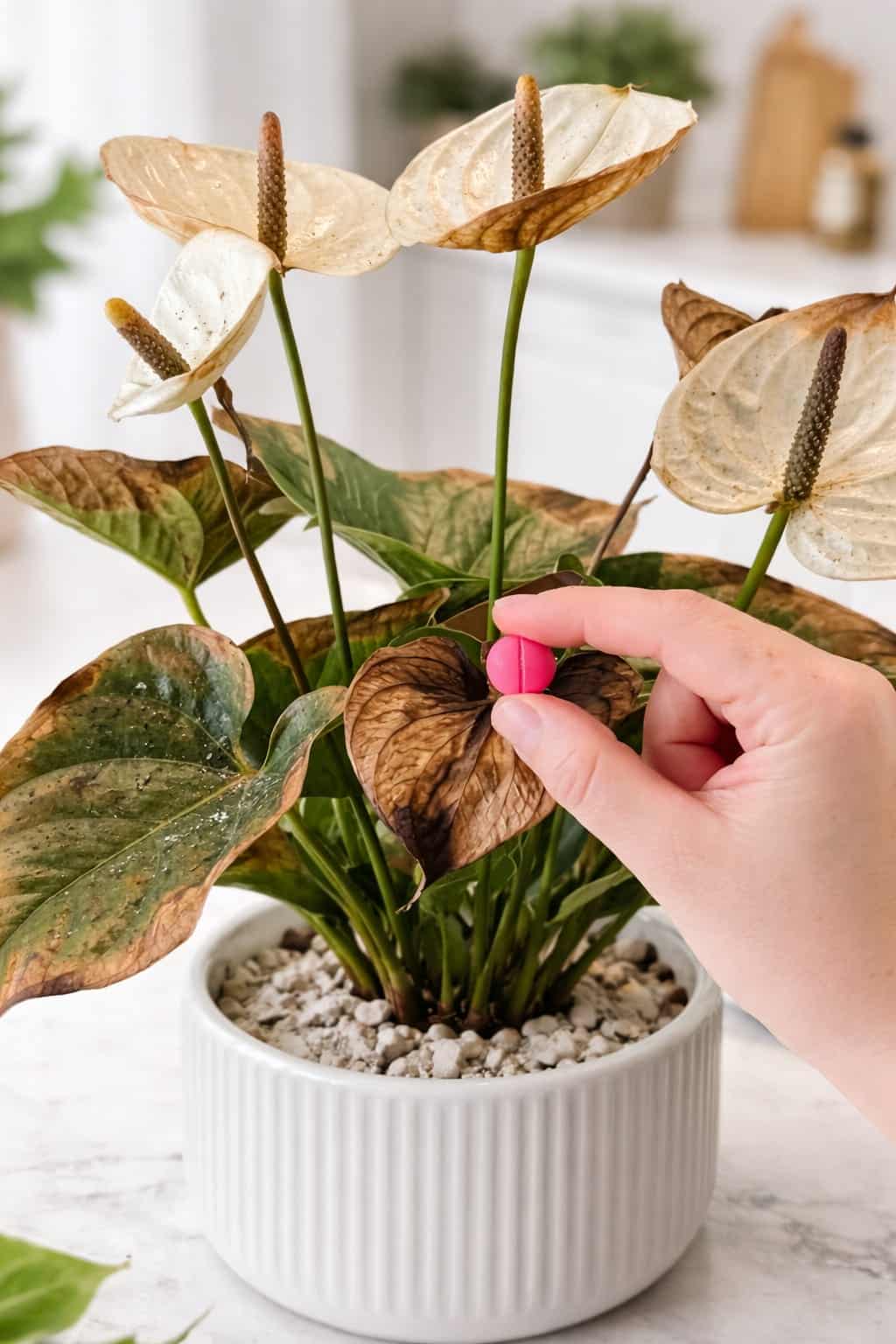
Learn how to grow stunning white Anthuriums with glossy leaves and elegant blooms. Discover light, water, humidity, soil, and fertilizer tips – plus common mistakes to avoid. Perfect for beginners.
Let’s be honest: white Anthuriums (Anthurium andraeanum) are among the most elegant houseplants you can grow. Their glossy, heart‑shaped leaves and striking white spathes bring a sense of calm, sophistication, and modern luxury to any room. Unlike their flashy red or pink cousins, white Anthuriums have a quiet, understated beauty that complements minimalist and tropical interiors alike.
But here’s the challenge: Anthuriums have a reputation for being a bit finicky. They’re not as forgiving as a snake plant or pothos. Get the light wrong, and the leaves scorch. Overwater, and the roots rot. Ignore humidity, and the leaf tips turn brown.
Over the years, I’ve learned how to nurture these beauties, and I want to share my experience so you can enjoy their grace without the frustration. In this complete guide, I’ll walk you through everything you need to know – from creating the perfect environment to watering, soil, fertilizing, repotting, pruning, and avoiding common mistakes. Plus, I’ll share my secret milk‑based fertilizer trick for unstoppable growth.
Let’s dive into the world of white Anthuriums.
Why White Anthuriums Are Special
White Anthuriums are more than just a pretty face. They are long‑blooming, air‑purifying plants that can flower for weeks – sometimes months – at a time. The “flowers” are actually modified leaves called spathes, with a spadix (the spike) in the center. When conditions are right, a healthy Anthurium can produce new blooms continuously from spring through fall.
Their glossy, dark green leaves are equally striking, making the plant a stunning focal point even when not in bloom.
Creating the Perfect Environment for White Anthuriums
Light: Balancing Brightness and Shade
White Anthuriums need bright, indirect light to thrive. Place them in a well‑lit room but out of direct sunlight. Too much sun can scorch their leaves and fade their vibrant spathes, while too little light will limit their blooms.
Light Level Effect
Bright, indirect (east window, or south window with sheer curtain) Ideal – glossy leaves, regular blooms
Direct sun Leaf scorch, brown patches, faded spathes
Low light Slow growth, few or no blooms
What to do: East‑facing windows are ideal. If you only have south‑facing windows, use sheer curtains to diffuse the light. I’ve found that my Anthuriums bloom best when they get about 6–8 hours of bright, filtered light each day.
Pro tip: Rotate your plant every week so all sides receive even light. This prevents lopsided growth.
Temperature: Warmth Equals Growth
Maintaining a temperature between 65–80°F (18–27°C) is crucial for white Anthuriums. Sudden drops below 50°F (10°C) can cause leaf damage and stunt their growth.
What to avoid: Cold drafts from windows, doors, or air conditioning vents. Also, keep them away from heating vents, which can dry out the leaves.
Pro tip: If your home tends to get chilly in winter, consider using a heat mat to keep the soil warm. Anthuriums are tropical – they don’t like the cold.
Humidity: Mimicking the Tropics
These tropical plants thrive in humidity levels of 60–80%, which can be a challenge in dry indoor environments – especially during winter when heating is on.
How to increase humidity:
· Use a small humidifier near your Anthuriums.
· Place pots on trays filled with water and pebbles (pot sits on pebbles, not in water).
· Mist the leaves a couple of times a week, but be careful not to soak them – excess moisture can lead to fungal problems.
· Group plants together to create a humid microclimate.
Pro tip: If you see brown, crispy leaf tips or edges, low humidity is the most likely culprit.
Watering White Anthuriums – The Goldilocks Zone
These plants prefer consistent moisture but cannot tolerate soggy soil. I’ve learned to water only when the top inch of soil feels dry to the touch.
Watering Guidelines
Condition Action
Top inch of soil dry Water thoroughly until it runs out drainage holes
Soil still damp Wait – check again in 1–2 days
Leaves yellowing, mushy stems Overwatering – reduce frequency
Leaves wilting, dry soil Underwatering – water immediately
Important: Use room‑temperature water – cold water can shock the roots. After watering, let the excess drain completely. Standing water is a surefire way to invite root rot.
Pro tip: If you tend to overwater, use a terracotta pot – it wicks away excess moisture. If you tend to underwater, a plastic pot retains moisture longer.
The Right Soil for Anthuriums
White Anthuriums are epiphytic by nature, meaning they grow on trees in their native habitat rather than in dense soil. To replicate this, use a well‑draining potting mix with good airflow.
Best Soil Mix
Component Purpose
Peat moss Retains moisture without becoming waterlogged
Perlite Increases drainage and aeration
Orchid bark Creates air pockets, mimics natural environment
DIY mix: Equal parts peat moss, perlite, and orchid bark.
Soil pH: Slightly acidic, between 5.5 and 6.5. You can test this using a simple soil pH kit.
Pro tip: Never use heavy garden soil or regular potting mix alone – it will suffocate the roots.
Fertilizing for Vibrant Growth
During the growing season (spring and summer), I feed my Anthuriums every 4–6 weeks with a balanced liquid fertilizer diluted to half strength. Over‑fertilizing can harm the roots, so it’s better to use less than too much.
Fertilizer Schedule
Season Frequency Type
Spring & Summer Every 4–6 weeks Balanced liquid fertilizer (e.g., 20-20-10), half strength
Fall & Winter Once every 2–3 months (or skip) Reduce or stop
Calcium Boost (My Secret)
Adding a touch of calcium can help strengthen cell walls and support blooming. I crush dried eggshells into a fine powder and sprinkle a small amount on the soil surface once a month. Alternatively, you can use a calcium‑supplemented fertilizer.
Pro tip: Over‑fertilizing causes brown leaf tips and salt buildup. If you see a white crust on the soil, flush with plain water.
Repotting for Healthier Roots
Anthuriums don’t like being cramped, but they also don’t need constant repotting. When their roots start poking out of the pot or growth slows down, it’s time to repot.
Repotting Schedule
· Every 2–3 years – ideally in spring.
· Pot size: Choose a pot just 1–2 inches larger in diameter than the current one to prevent overwatering issues.
· Refresh the soil with a new mix to provide additional nutrients.
Step‑by‑step repotting:
- Gently remove the plant from its old pot.
- Loosen the root ball and trim any dead or rotten roots.
- Place a layer of fresh soil mix in the new pot.
- Position the plant at the same depth it was growing.
- Fill with fresh soil, water lightly, and keep in a shaded spot for a few days to reduce transplant shock.
Pro tip: If the roots are very crowded, you can divide the plant into two or more sections, each with leaves and roots, to create new plants.
Pruning for Continuous Blooms
Regular pruning keeps white Anthuriums looking their best. It also redirects energy to new growth and flowers.
What to Prune
· Yellow or brown leaves – cut at the base.
· Spent flowers – once the white spathe turns green and fades, cut the stem at the base.
· Damaged or diseased leaves – remove promptly.
When to prune: I like to prune mine in early spring to give them a fresh start for the growing season. You can also prune lightly throughout the year as needed.
Pro tip: Use clean, sharp scissors to make cuts close to the base. Wipe blades with rubbing alcohol between cuts to prevent disease spread.
Common Mistakes to Avoid (And How to Fix Them)
- Overwatering
Problem: Yellowing leaves, mushy stems, root rot.
Solution: Always check the soil’s moisture before watering. Ensure the pot has drainage holes. If overwatering has occurred, let the soil dry out completely, and if root rot has set in, repot with fresh, dry mix and trim rotten roots.
- Direct Sunlight
Problem: Scorched leaves with brown, crispy patches; faded spathes.
Solution: Move the plant to bright, indirect light. Use sheer curtains if the only window is south‑facing.
- Ignoring Humidity
Problem: Brown leaf tips and edges, slow growth, fewer blooms.
Solution: Invest in a humidifier or create a humidity tray. Mist leaves occasionally (avoid soaking).
- Using Dense Soil
Problem: Compact soil suffocates roots, leading to rot and poor growth.
Solution: Use a loose, well‑draining mix of peat, perlite, and orchid bark. Never use garden soil.
- Temperature Fluctuations
Problem: Leaf damage, stunted growth, bud drop.
Solution: Keep Anthuriums away from cold drafts or sudden heat changes. Maintain stable temperatures between 65–80°F.
- Over‑Fertilizing
Problem: Brown leaf tips, white crust on soil, weak growth.
Solution: Flush the soil with plain water. Reduce fertilizer frequency and always dilute to half strength.
- Pot Too Large
Problem: Excess soil holds too much moisture, leading to root rot and fewer blooms.
Solution: Choose a pot that is only 1–2 inches larger than the root ball. Snug is better.
My Secret to Unstoppable Growth – Milk Fertilizer
One trick I’ve used to supercharge my Anthuriums is a milk‑based fertilizer. I mix 1 part whole milk with 2 parts water and water the plant with this solution once a month (instead of plain water). The calcium, proteins, and trace nutrients in milk strengthen the plant’s roots and leaves, making them more resistant to stress and diseases.
Important: Do not overuse milk fertilizer – once a month is plenty. Too much can cause sour soil or mold. Also, use whole milk, not skim.
Troubleshooting – Common Problems & Solutions
Problem Likely Cause Solution
Yellow leaves Overwatering Reduce watering; check drainage
Brown leaf tips Low humidity or fluoride/chlorine in tap water Increase humidity; use filtered or rainwater
No blooms Insufficient light Move to brighter indirect light
Leaves curling Underwatering or cold drafts Water thoroughly; move away from drafts
Black spots on leaves Fungal infection from wet leaves Avoid misting; improve air circulation
Root rot Overwatering, poor drainage Repot in fresh, dry mix; trim rotten roots
Frequently Asked Questions (FAQs)
Q: How often do white Anthuriums bloom?
With proper care, they can bloom continuously from spring through fall, with each flower lasting 2–4 weeks. After a rest period, they often rebloom.
Q: Why are my Anthurium leaves turning yellow?
Most common cause: overwatering. Check soil moisture and drainage. Also possible: nutrient deficiency or old age (lower leaves).
Q: Can I grow Anthuriums in water?
They are not true aquatic plants. While you can root cuttings in water, long‑term growth requires well‑draining soil.
Q: Are Anthuriums toxic to pets?
Yes – they contain calcium oxalate crystals, which cause mouth irritation, drooling, and vomiting. Keep out of reach of cats and dogs.
Q: How do I make my Anthurium bloom more?
Provide bright indirect light, consistent moisture, high humidity, and a balanced fertilizer with a touch of calcium. Also, keep it slightly root‑bound.
Q: Can I use tap water for my Anthurium?
Tap water containing chlorine and fluoride can cause brown tips. Use filtered, distilled, or rainwater for best results.
Q: Why are my Anthurium flowers turning green?
As flowers age, the white spathe naturally turns green. This is normal. Cut the stem at the base to encourage new blooms.
Q: Should I cut off the brown tips on leaves?
Yes – trim just the brown part, following the natural leaf shape. This improves appearance and prevents further damage.
Printable White Anthurium Care Checklist
☐ Place in bright, indirect light (east window or filtered south)
☐ Maintain temperature 65–80°F (18–27°C)
☐ Keep humidity 60–80% (humidifier, pebble tray, misting)
☐ Water when top inch of soil is dry
☐ Use room‑temperature, filtered water
☐ Use well‑draining soil mix (peat + perlite + orchid bark)
☐ Fertilize every 4–6 weeks in spring/summer with half‑strength balanced fertilizer
☐ Add calcium (crushed eggshells) once a month
☐ Repot every 2–3 years in spring, only 1–2 inches larger pot
☐ Prune yellow leaves and spent flowers
☐ Use milk fertilizer (1 part milk + 2 parts water) once a month (optional)
☐ Avoid overwatering, direct sun, low humidity, and temperature drafts
Final Thoughts – Elegance Within Reach
White Anthuriums are not the easiest houseplants, but they are far from impossible. With the right balance of light, water, humidity, and soil, they will reward you with glossy, luxurious leaves and elegant white blooms that last for weeks.
Don’t be discouraged by a few brown tips or a missed watering. Learn from the common mistakes, adjust your care, and be patient. Once you find the rhythm, your white Anthurium will become a stunning centerpiece in your home.
Now it’s your turn! Have you grown white Anthuriums? What’s your biggest challenge – humidity, watering, or light? Drop a comment below – I’d love to hear your experience.
And if you found this guide helpful, share it with a friend who loves tropical plants. Pin it for later, and subscribe to our newsletter for more plant care wisdom.
Stay bright, stay humid, and enjoy those elegant blooms. 🌿🤍✨