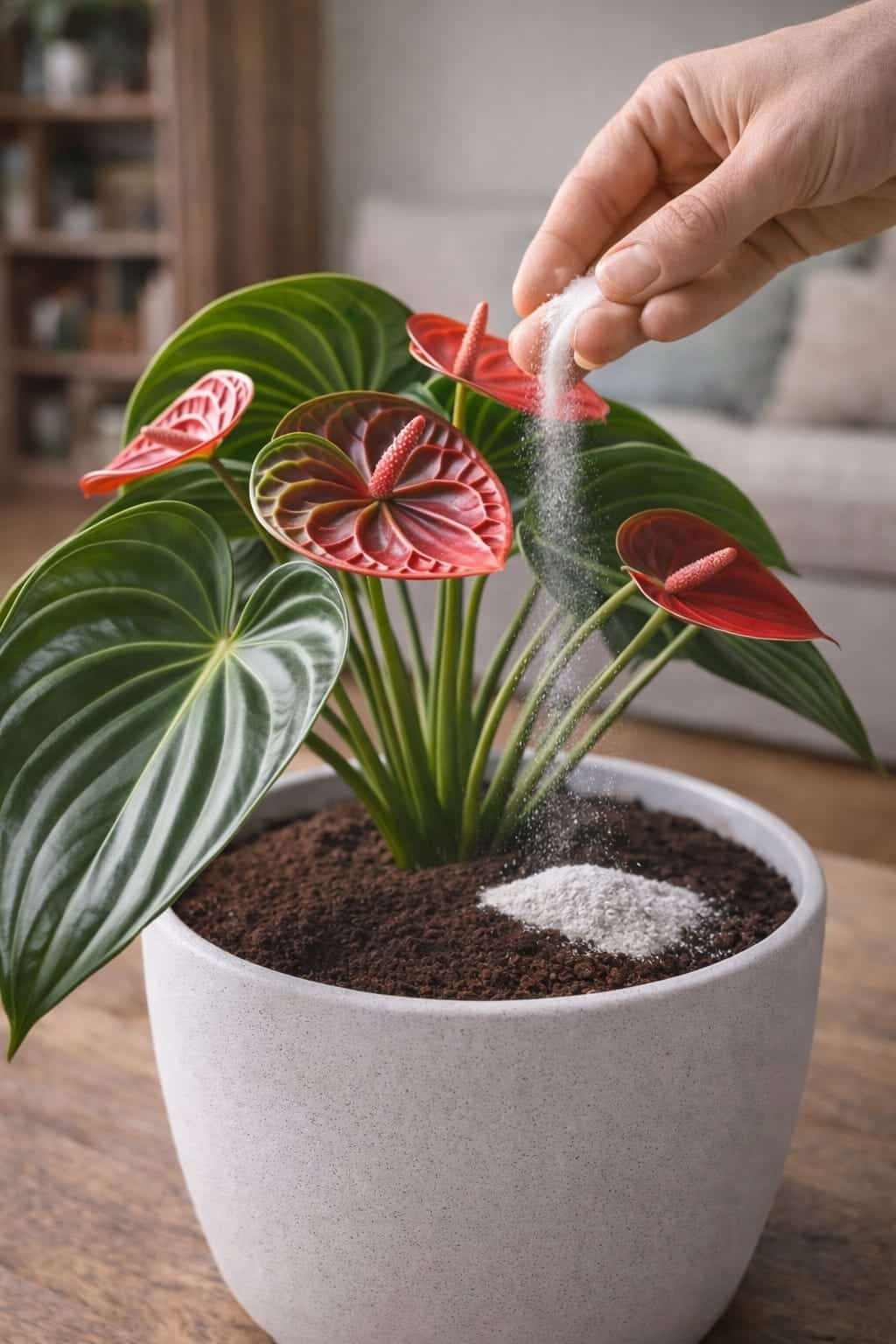
Discover why gardeners use white mineral powder (dolomite lime, crushed eggshells) on Anthuriums – to balance soil, strengthen roots, and encourage more blooms. Safe application tips inside.
Let’s be honest: Anthuriums are among the most striking indoor plants thanks to their glossy leaves and long‑lasting heart‑shaped flowers. Their red, pink, white, or purple spathes can brighten any room for weeks or even months. Because these tropical plants bloom repeatedly under the right conditions, many gardeners experiment with simple soil additions that help stabilize nutrients and improve root health.
Recently, some plant enthusiasts have been lightly adding fine white mineral powders to the soil surface of Anthuriums. When used properly, these powders can help balance soil conditions and support steady plant growth. The goal isn’t to overload the plant with nutrients – it’s to create a stable soil environment that allows the roots to function efficiently.
In this guide, you’ll learn what this white powder is, why Anthuriums respond to mineral soil additions, how to apply it safely, and the ideal conditions for healthy, blooming Anthuriums. Plus, you’ll discover common mistakes to avoid and answers to frequently asked questions.
Let’s dive in.
🌿 What Is the White Powder Gardeners Use?
The white powder seen in situations like this often represents natural mineral soil amendments. These are not strong fertilizers. Instead, they are gentle additives that help balance soil chemistry and provide trace minerals over time.
Common Types of White Mineral Powders
Powder What It Is Benefits for Anthuriums
Dolomite lime Ground limestone containing calcium and magnesium Raises soil pH if too acidic; provides calcium and magnesium for cell strength
Crushed eggshell powder Dried, finely ground eggshells Adds calcium gradually; supports root and leaf structure
Calcium‑based garden minerals (e.g., gypsum, calcite) Natural mineral supplements Improves soil structure, adds calcium without altering pH much
Mild soil‑balancing additives Pre‑mixed blends for houseplants Helps maintain stable soil conditions
These materials are sometimes used to gently adjust soil chemistry while supplying trace minerals that support plant structure and flowering. For tropical houseplants like Anthuriums, balanced soil conditions are often more important than heavy fertilization.
🌱 Why Anthuriums Respond to Mineral Soil Additions
Healthy Anthurium plants rely on a delicate balance of moisture, airflow, and nutrients around their roots. They are native to tropical rainforests, where they grow on the forest floor with rich, organic, well‑draining soil.
Light mineral amendments can sometimes help by:
· Supporting strong root structure – calcium strengthens cell walls.
· Improving nutrient availability in potting mixes – balanced pH makes nutrients accessible.
· Stabilizing soil conditions over time – prevents rapid fluctuations.
· Supporting healthy leaf and bloom development – trace minerals prevent deficiencies.
Because Anthuriums grow slowly and steadily, gentle soil adjustments often work better than strong fertilizer spikes. A light dusting of mineral powder once every few months can supplement the soil without the risk of chemical burn.
💧 How Gardeners Apply Powdered Soil Minerals – Safely
Most experienced growers follow simple guidelines when using mineral powders. Moderation is the key when working with soil amendments.
Step‑by‑Step Application
- Choose a fine powder – dolomite lime, crushed eggshells (very finely ground), or a calcium‑based mineral supplement.
- Sprinkle a very small amount on the soil surface – about ½ to 1 teaspoon for a 6‑inch pot.
- Avoid placing powder directly against stems – keep it near the edges of the pot.
- Spread lightly across the potting mix – even distribution prevents concentrated areas.
- Water the plant gently – this allows minerals to gradually integrate into the soil.
- Apply only occasionally – once every 2–3 months, not weekly.
What to Avoid
· Using too much – a thick layer can block airflow and alter pH too quickly.
· Applying to dry soil – water first to help it settle.
· Mixing with strong fertilizers – can cause salt buildup.
· Using on a plant that is already stressed – fix watering or light issues first.
Pro tip: If you use eggshell powder, bake the shells at 200°F for 10 minutes to dry them, then grind in a coffee grinder until very fine. Large pieces won’t break down.
Continue to Page 2
Continue to page 2 for more details about this article and the key points many readers miss on the first page.