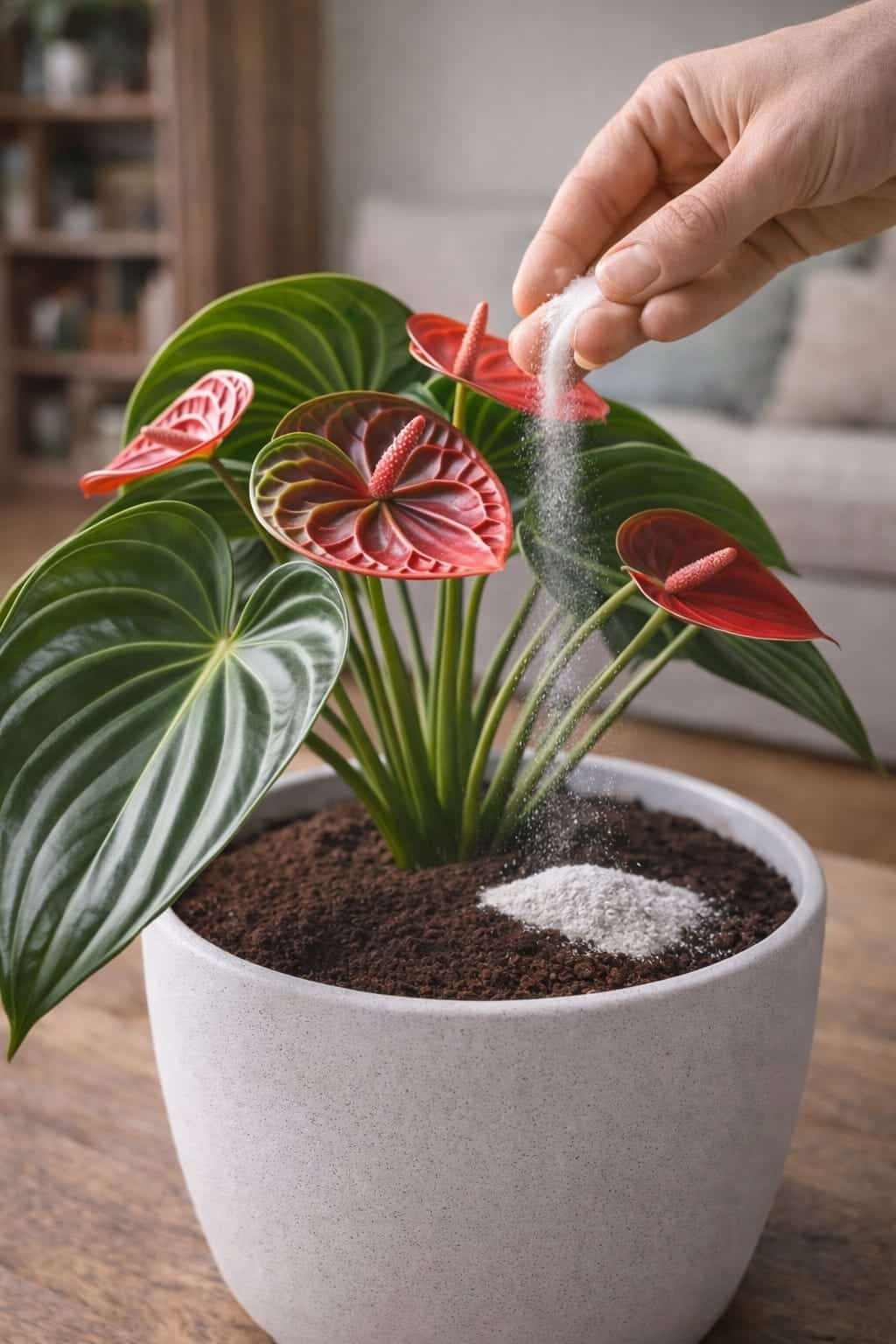
⚠️ Common Anthurium Care Mistakes (That White Powder Won’t Fix)
Even though Anthuriums are fairly forgiving, several common mistakes can slow their growth. The powder is a supplement – it will not fix these problems..
Avoid These Issues
Mistake Why It’s Harmful Correct Approach
Overwatering heavy soil Root rot, yellow leaves Use well‑draining mix; water when top inch is dry.
Poor drainage containers Waterlogged roots Use pots with drainage holes.
Direct harsh sunlight Leaf scorch, faded blooms Provide bright, indirect light.
Excess fertilizer buildup Brown tips, salt crust Flush soil with plain water; reduce feeding.
Allowing water to sit around roots Root rot Empty saucer after watering.
Anthuriums thrive in airy, well‑draining potting mixes that mimic tropical forest floors. Get these basics right before reaching for any powder.
🪴 Ideal Conditions for Anthurium Growth (Long‑Term Success)
Healthy Anthuriums bloom more consistently when their environment matches their natural habitat. The white powder can be a small boost, but these fundamentals matter far more.
Factor Ideal Condition Why It Matters
Light Bright, indirect (east/west window) Supports flowering and leaf color
Temperature 65–80°F (18–27°C) Stable growth
Humidity 60–80% (use pebble tray or humidifier) Mimics tropical climate
Soil Loose, airy mix (peat + perlite + orchid bark) Protects roots, allows drainage
Water Moderate – water when top inch is dry Prevents rot
Feeding Light seasonal feeding (balanced fertilizer, half strength, every 4–6 weeks in spring/summer) Encourages blooms
White powder Occasional light dusting (every 2–3 months) Gentle mineral supplement
Under these conditions, plants often produce new blooms throughout the year.
How to Use White Mineral Powder Safely – A Simple Plan
If you want to try this method, follow this safe routine.
- Choose a powder – dolomite lime (for pH balance) or finely ground eggshells (for calcium).
- Test your soil pH first (optional) – Anthuriums prefer slightly acidic to neutral soil (5.5–6.5). Only use dolomite lime if your soil is too acidic.
- Ensure soil is slightly moist – not wet, not bone dry.
- Sprinkle a light dusting – about ½ teaspoon for a 6‑inch pot.
- Water gently to settle.
- Use once every 2–3 months – not more often.
- Observe your plant – if leaves become greener and blooms more abundant, continue. If you see white crust on soil, reduce amount.
Pro tip: If you’re unsure about your soil pH, use crushed eggshells – they are very gentle and won’t alter pH significantly.
Anthurium Care Overview – Quick Reference
Factor Ideal Condition Why It Matters
Light Bright, indirect Supports flowering
Soil Loose & airy (peat + perlite + bark) Protects roots
Water Moderate – water when top inch dries Prevents rot
Humidity Medium to high (60–80%) Mimics tropical climate
Feeding Light seasonal feeding (spring/summer) Encourages blooms
White powder Occasional light dusting (every 2–3 months) Gentle mineral supplement
Frequently Asked Questions (FAQs)
Q: Why do Anthurium leaves turn yellow?
A: Usually from overwatering or poor drainage. Check soil moisture and ensure the pot has drainage holes.
Q: How often should Anthuriums bloom?
A: Healthy plants may bloom multiple times a year – each flower can last 2–3 months. With good care, you can have flowers continuously from spring through fall.
Q: Do Anthuriums need humidity?
A: Yes, they prefer higher humidity (60–80%). Use a pebble tray, humidifier, or group plants together.
Q: Can Anthuriums grow in low light?
A: They tolerate it, but bloom less often. For best results, provide bright, indirect light.
Q: Should Anthuriums be fertilized often?
A: Light feeding during active growth (spring/summer) is usually enough – once a month with a diluted balanced fertilizer.
Q: Do Anthuriums like large pots?
A: They often perform better slightly root‑bound. Choose a pot that is only 1–2 inches larger than the root ball.
Q: What soil mix works best for Anthuriums?
A: A mix containing bark, perlite, and peat works well. DIY: 2 parts peat moss + 1 part perlite + 1 part orchid bark.
Q: Can mineral powders replace fertilizer?
A: No – they are soil amendments, not full fertilizers. They provide calcium and trace minerals but lack nitrogen, phosphorus, and potassium.
Q: Why are my Anthurium flowers small?
A: Often due to low light or poor nutrients. Increase light and feed with a balanced fertilizer during the growing season.
Q: Should Anthuriums be repotted often?
A: Usually every 2–3 years, or when roots are crowded. Repot in spring with fresh, well‑draining mix.
Printable Anthurium Care Checklist (with White Powder)
☐ Place in bright, indirect light (east/west window)
☐ Use a pot with drainage holes
☐ Fill with loose, airy mix (peat + perlite + orchid bark)
☐ Water when top inch of soil is dry
☐ Water thoroughly, then empty saucer
☐ Maintain humidity 60–80% (pebble tray or humidifier)
☐ Keep temperature 65–80°F (18–27°C)
☐ Fertilize with diluted balanced fertilizer once a month in spring/summer
☐ Optional: lightly dust soil with white mineral powder (dolomite lime or crushed eggshells) every 2–3 months
☐ Avoid direct sun, overwatering, and large pots
☐ Remove spent flowers and yellow leaves
☐ Repot every 2–3 years when root‑bound
Final Thoughts – Gentle Support, Strong Blooms
The “white powder” trend for Anthuriums is not magic. A light dusting of dolomite lime or crushed eggshells can provide calcium and help balance soil pH, supporting stronger cell walls and healthier roots. But it will never replace the fundamentals: bright indirect light, well‑draining soil, proper watering, high humidity, and light feeding.
If your Anthurium isn’t blooming, don’t reach for a powder first. Check the light, adjust your watering, and increase humidity. Once those basics are right, a little mineral powder every few months can give it a gentle nudge – but it’s never the cure.
With patience and the right care, your Anthurium will reward you with glossy leaves and those stunning, heart‑shaped blooms for months on end.
Now it’s your turn! Have you tried a white mineral powder on your Anthurium? What results did you see? Drop a comment below – I’d love to hear your experience.
And if you found this guide helpful, share it with a friend who loves Anthuriums. Pin it for later, and subscribe to our newsletter for more practical plant care.
Stay bright, stay balanced, and watch your Anthurium bloom. 🌸✨